

Entertainment
‘No intelligence suggests’ Iran planned to attack US first, Pentagon tells Congress

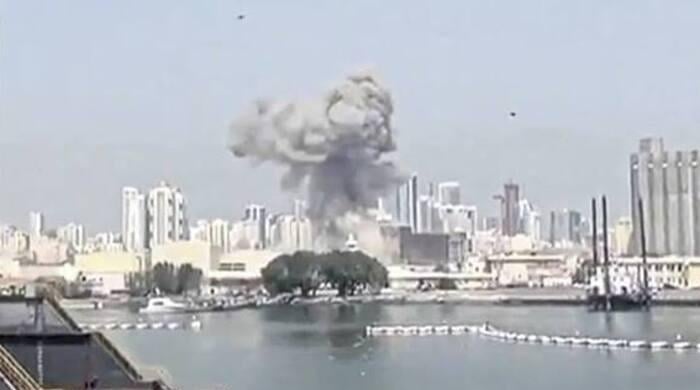
- Democrats criticise Trump for waging “war of choice”.
- Three US troops killed, more wounded so far.
- Trump calls for Iranians to “take back” their country.
Trump administration officials acknowledged in closed-door briefings with congressional staff on Sunday that there was no intelligence suggesting Iran planned to attack US forces first, two people familiar with the matter said.
The United States and Israel launched their most ambitious attacks on Iran in decades on Saturday, martyring Supreme Leader Ayatollah Ali Khamenei, sinking Iranian warships and hitting more than 1,000 targets so far, officials say.
But Sunday’s remarks to Congress appeared to undercut one of the key arguments for the war made by senior administration officials.
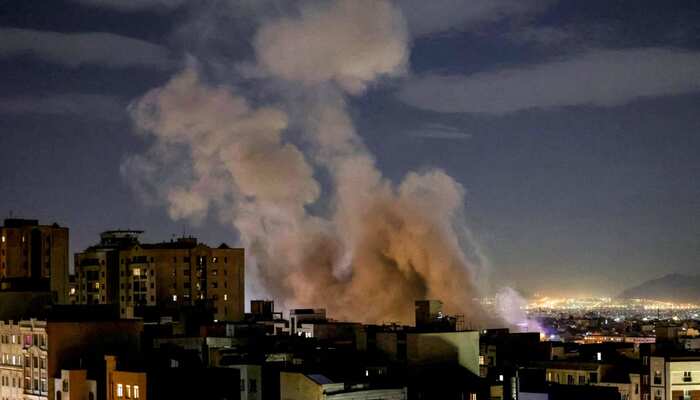
They told reporters the day before that President Donald Trump decided to launch the attacks in part because of indicators that Iranians might strike US forces in the Middle East “perhaps preemptively.”
Trump, one of the officials said, was not going to “sit back and allow American forces in the region to absorb attacks.”
Pentagon briefings lasted over 90 minutes
Pentagon officials briefed Democratic and Republican staff of several national security committees in both the Senate and the House of Representatives for more than 90 minutes on the unfolding US attack in Iran, White House spokesperson Dylan Johnson said earlier.
In the briefings, administration officials emphasised that Iran’s ballistic missiles and proxy forces in the region posed an imminent threat to US interests, but there was no intelligence about Tehran attacking US forces first, the two sources, speaking on condition of anonymity, told Reuters.
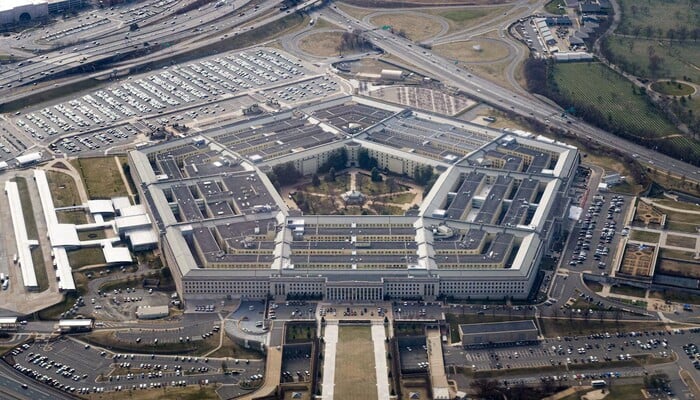
Trump said the attack, which is expected to run for weeks, aimed to ensure Iran could not have a nuclear weapon, contain its missile program and eliminate threats to the United States and its allies.
He has urged Iranians to rise up and topple the government.
Democrats criticise ‘war of choice’
Still, Democrats have accused Trump of waging a war of choice and have taken aim at his arguments for abandoning peace talks that mediator Oman said still held promise.
Trump has argued, without presenting evidence, that Iran was on track to soon secure the ability to strike the United States with a ballistic missile.
His missile claim was not backed by US intelligence reports, and appeared to be exaggerated, sources familiar with the reports have told Reuters.
Questions about the justification for the war come as the US military revealed on Sunday the first American casualties of the conflict.
Scepticism on regime change
Following the martyrdom of Iran’s Supreme Leader Khamenei, many senior US officials remain sceptical that the US and Israeli military operation against the Islamic Republic will lead to regime change in the near term.
Before and after the start of the attack, US officials, including US President Trump, had suggested that toppling the nation’s repressive governing system was one of several US goals, in addition to crippling Iran’s ballistic missile and nuclear programs.
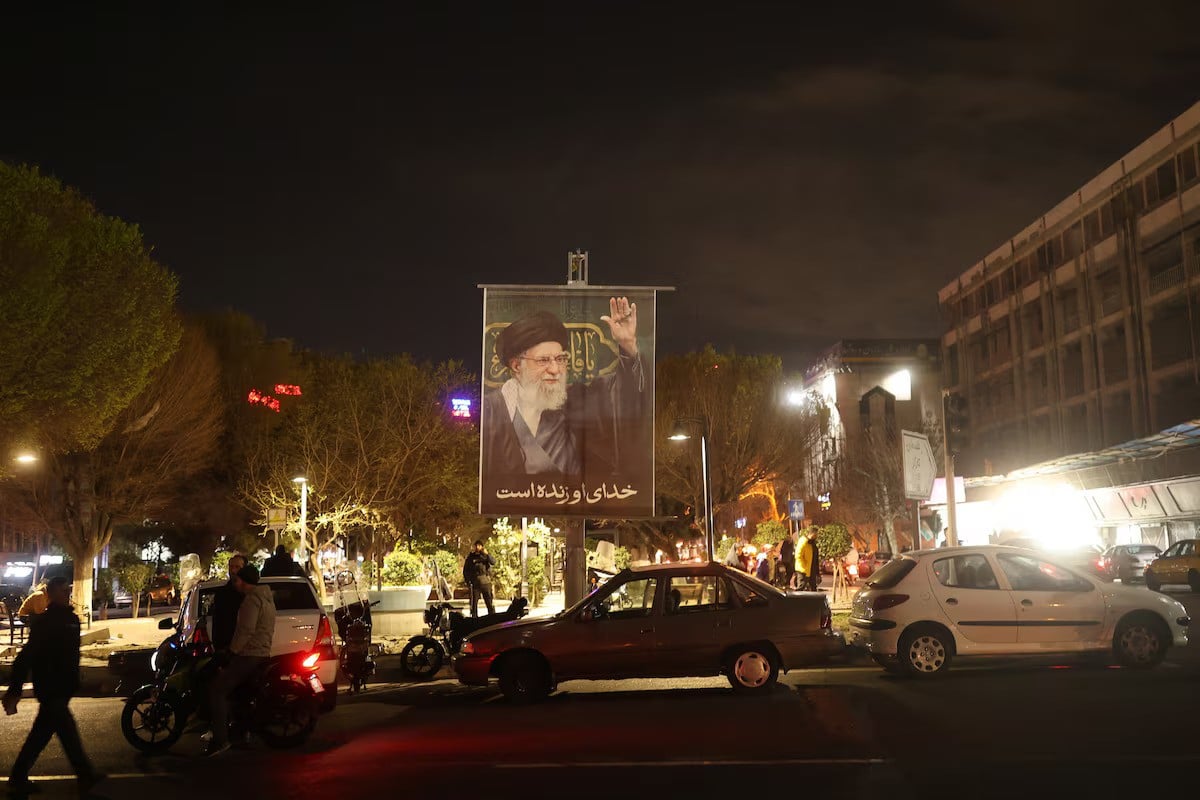
“I call upon all Iranian patriots who yearn for freedom to seize this moment … and take back your country,” Trump said on Sunday in a video posted on Truth Social.
But three US officials familiar with US intelligence said there is serious scepticism that Iran’s battered opposition can topple the theocratic, authoritarian governing system that has been in place since 1979.
No officials consulted by Reuters completely ruled out the possibility of the fall of Iran’s government, which currently is buffeted by key personnel losses from ongoing US and Israeli air strikes and is deeply unpopular following a January round of extraordinarily violent repression.
But it is far from likely or even probable in the near term, they said.
Reuters reported earlier that Central Intelligence Agency assessments presented to the White House in the weeks before the Iran attack concluded that if Khamenei was killed, he could be replaced by hard-line figures from the Islamic Revolutionary Guard Corps or equally hard-line clerics, two sources said.
One US official with knowledge of internal White House deliberations said IRGC officials are unlikely to voluntarily capitulate in part because they have benefited from a vast patronage network designed to maintain internal loyalty.
The CIA assessments followed at least one report from a separate US intelligence agency which noted that there had been no IRGC defections during a massive round of anti-government protests in January that was met with brutal force by Iranian security forces.
Such defections would likely be a precondition of any successful revolution, according to three additional sources. Those sources requested that the specific intelligence agency not be named.
All of the sources Reuters spoke with for this story requested anonymity to discuss intelligence assessments.
Trump himself said on Sunday he planned to reopen communications with Iran, suggesting Washington does not see the government going anywhere, at least in the immediate term.
The White House did not immediately respond to a request for comment, while the CIA declined to comment.
Lots of debate, less consensus
On Sunday, Iranian President Masoud Pezeshkian said a leadership council composed of himself, the judiciary head and a member of the powerful Guardian Council had temporarily assumed the duties of Supreme Leader.
Security chief Ali Larijani accused the United States and Israel of trying to plunder and disintegrate Iran and warned “secessionist groups” of a harsh response if they attempted any action, state television said on Sunday, after the two countries launched a wave of air attacks on Iran that included the bombing of a girls’ primary school. Reuters could not independently confirm the reports from the state media.
The US intelligence discussions about the implications of a possible Khamenei assassination have not been limited to whether it might lead to a change in government leadership.
Two of the US officials said that, since January, there has been significant debate – but no consensus – among officials of various agencies about the extent to which Khamenei’s assasination would lead to a significant shift in the way Iran approached negotiations with the US regarding its nuclear program.
US officials have also debated the extent to which Khamenei’s death or ouster would deter the country from rebuilding its missile or nuclear facilities and capacities, said those officials, who requested anonymity to discuss sensitive internal conversations.
Following the January protests, Steve Witkoff, Trump’s special envoy and a key ally, spoke several times with Iranian opposition figure Reza Pahlavi, the exiled son of Iran’s last shah, raising questions about the extent to which the administration would support his installment should Iran’s government fall, two officials said.
But in recent weeks, senior US officials have become increasingly pessimistic that any opposition figure backed by Washington would realistically be able to control the country, those officials added.
“At the end of the day, once US and Israeli strikes stop, if the Iranian people come out, their success in promoting the end of the regime will depend on the rank and file standing aside or aligning with them,” said Jonathan Panikoff, a former high-ranking US intelligence official who is now at the Atlantic Council think tank in Washington.
“Otherwise, the remnants of the regime, those with the weapons, are likely to use them to keep power.”
Three US troops killed
Three US troops were killed and five seriously wounded, US Central Command said on Sunday, adding that several other US troops suffered minor shrapnel injuries and concussions.
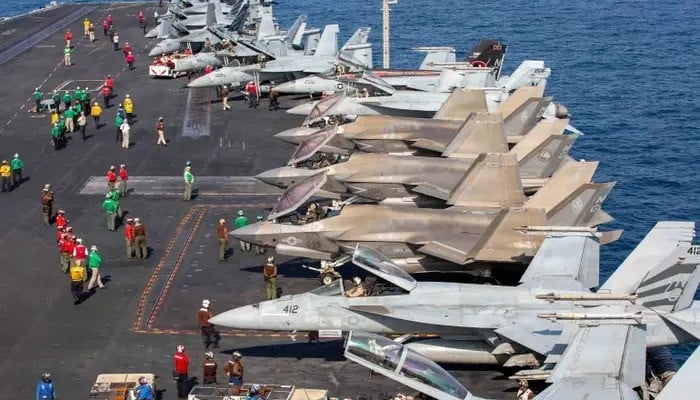
US aircraft and warships have struck more than 1,000 Iranian targets since Trump ordered the start of major combat operations, the military said.
The strikes include B-2 stealth bombers dropping 2,000-lb (900-kg) bombs on hardened, underground Iranian missile facilities.
A Reuters/Ipsos poll on Sunday showed 27% of Americans approved of the strikes, while 43% disapproved and 29% were not sure.
- IBO conducted on reported presence of India-backed militants: ISPR.
- Says weapons and ammunition also recovered from killed terrorists.
- Sanitisation operation continues to eliminate any other militants.
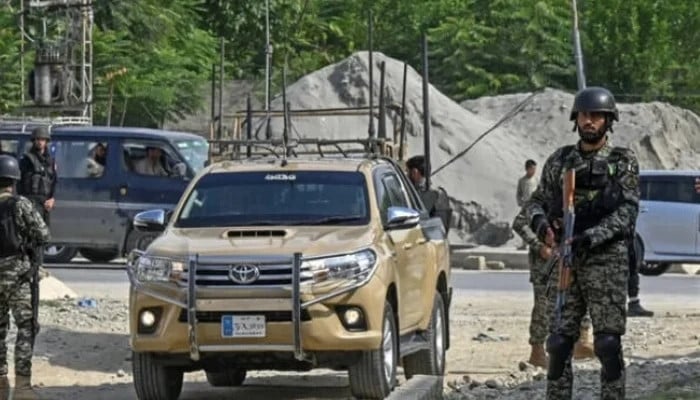
Security forces and law enforcement agencies neutralised at least 22 India-sponsored terrorists during an intelligence-based operation in the Khyber district of Khyber Pakhtunkhwa on April 21, a statement issued by the Inter-Services Public Relations (ISPR) said on Friday.
According to the military’s media wing, the joint operation was conducted in response to the reported presence of India-backed militants, also known as Fitna al-Khawarij.
It added that during the operation, the terrorists resorted to indiscriminate firing out of panic and in an attempt to avoid capture. As a result, a 10-year-old innocent child was martyred.
The ISPR added that weapons and ammunition were also recovered from killed India-sponsored terrorists, who remained actively involved in numerous terrorist activities in the area.
“Sanitisation operation is being conducted to eliminate any other Indian-sponsored kharji found in the area,” the ISPR said, adding that the relentless counter-terrorism campaign under vision “Azm-e-Istehkam” will continue at full pace to wipe out the menace of foreign-sponsored and supported terrorism from the country.
“Such sacrifices of our innocent civilians further strengthen our resolve.”
Pakistan has witnessed a spike in cross-border militant activity, particularly in Khyber Pakhtunkhwa and Balochistan, both of which share a border with Afghanistan, since the Afghan Taliban took control in 2021.
In response to the escalating attacks, Pakistan launched “Operation Ghazab lil-Haq,” during which approximately 796 Afghan Taliban fighters and allied militants were killed, according to Information Minister Attaullah Tarar.
More than 1,000 Afghan Taliban fighters and terrorists were also injured during the Operation Ghazab lil-Haq. The minister had said that 286 posts of the Afghan Taliban regime had been destroyed and 44 captured.
In October 2025, the two countries were also involved in border clashes after Afghan Taliban fighters and allied militants carried out unprovoked assaults on Pakistan’s border positions.
The ensuing fighting resulted in the deaths of over 200 Taliban and affiliated militants, while 23 Pakistani soldiers were martyred in the line of duty.
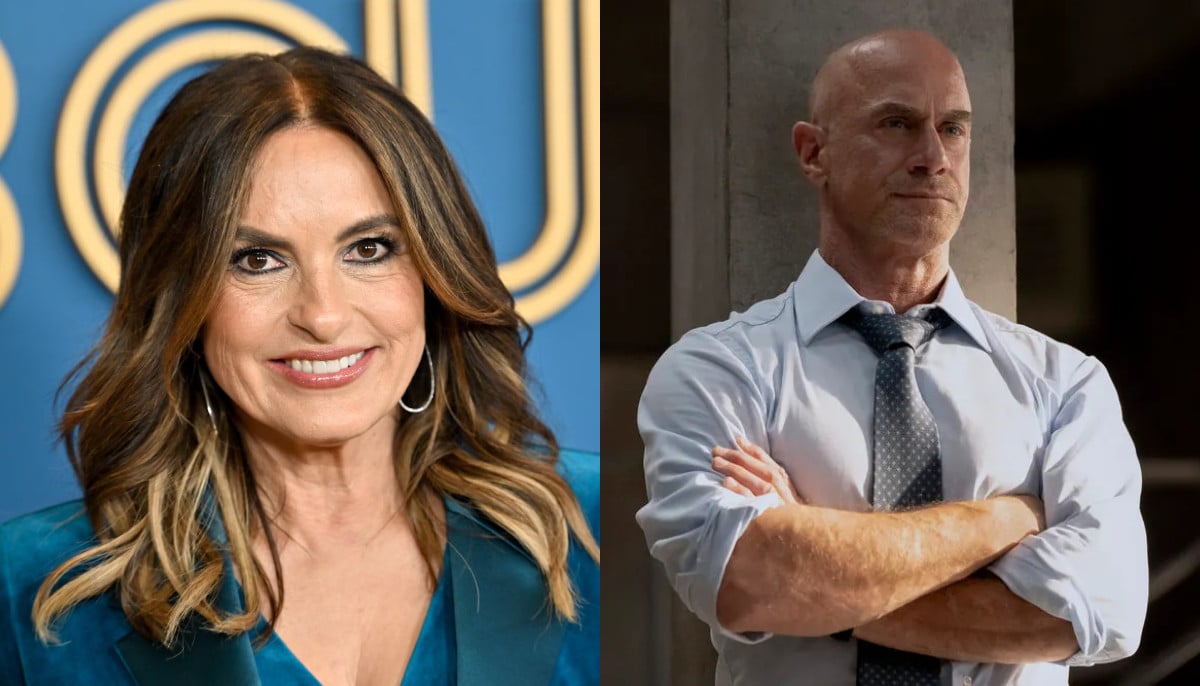
Mariska Hargitay has revealed she was moved to tears after seeing Christopher Meloni’s emotional response to the cancellation of Law & Order: Organized Crime, describing it as the closing of a significant chapter for her longtime co-star and friend.
Speaking to Extra, Hargitay said she watched Meloni’s Instagram video about the show ending and was immediately overcome.
“I saw it and burst out in tears, first of all,” she said.
“I immediately burst out in tears because it has, just like [Meloni] said, and he was so beautiful and open, because it has been a great ride. And it has been so beautiful and intimate and such a huge part of his life and was life-changing for him.”
She also said the news had come as a genuine shock.
“Chris is working and in demand and such a magnificent actor. But it’s, in a way, closing a chapter. So when that happens, one needs to take inventory. It’s a real marker in your life.”
Law & Order: Organized Crime was officially cancelled after five seasons earlier this month.
Meloni marked the occasion with a heartfelt video on Instagram.
“I wanted to take this moment to say thank you to the fans who not only helped give the character of Elliot Stabler life and longevity, but for sticking with him and welcoming him back. It was a good ride,” he said.
The series, which premiered in 2021, followed Stabler, the character Meloni first played on Law & Order: Special Victims Unit, as he returned to New York after a decade away to rebuild his life and take on organised crime.
It aired on NBC for its first four seasons before moving to Peacock for its fifth and final season, which concluded in June 2025.
The cast also included Danielle Moné Truitt, Rick Gonzalez, Ainsley Seiger and Dean Norris.

Luke Grimes has been playing cowboy Kayce Dutton on Yellowstone since 2018, but some fans are still coming to terms with a fundamental truth: he is an actor, not an actual cowboy.
The 42-year-old, who now continues the character’s story in the CBS spinoff Marshals, told Toronto radio station CHUM 104.5 that the strangest fan encounters often involve a version of the same realisation.
Some viewers, he said, “loved that show so much that they were, on a certain level, upset that it wasn’t real.”
The most common version of this comes in the form of a complaint. “A lot of times you’ll get the, ‘You’re not a real cowboy.'”
His response is straightforward.
“Well, of course I’m not, I’m an actor. That’s why I’m able to do this. If I was a real cowboy, I’d be, like, herding cattle right now. I wouldn’t be on this show.”
Even his one-year-old son, whom he shares with wife Bianca Rodrigues Grimes, has his own take on the cowboy persona.
“My son thinks my cowboy hat is really funny,” Grimes told PEOPLE at the Marshals LA premiere.
“He doesn’t understand why I have that big thing on my head.” That said, the baby loves visiting the set and got excited when he was brought along.
New episodes of Marshals air Sundays at 8pm ET on CBS.


Vietnam-India seminar boosts textile, leather ties

22 India-backed terrorists killed in Khyber intelligence-based operation, says ISPR

Former Giants co-owner Steve Tisch seen in team’s draft room

-

 Fashion1 week ago
France’s LVMH Q1 revenue falls 6%, shows resilience amid Iran war
-

 Entertainment1 week ago
Is Claude down? Here’s why users are seeing errors
-

 Sports1 week ago
PSL 11: Peshawar Zalmi win toss, opt to field first against Quetta Gladiators
-

 Tech1 week ago
The Deepfake Nudes Crisis in Schools Is Much Worse Than You Thought
-
 Business1 week ago
Standard Life buys rival in £2b deal to create savings giant
-

 Tech1 week ago
CYBERUK ’26: UK lagging on legal protections for cyber pros | Computer Weekly
-

 Fashion1 week ago
Raymond unveils luxury Chairman’s Collection Store in Mumbai
-

 Sports4 days ago
NCAA men’s gymnastics championship: All-time winners list