

Business
Electric cars eligible for £3,750 discount announced

Pritti MistryBusiness reporter, BBC News
 Ford
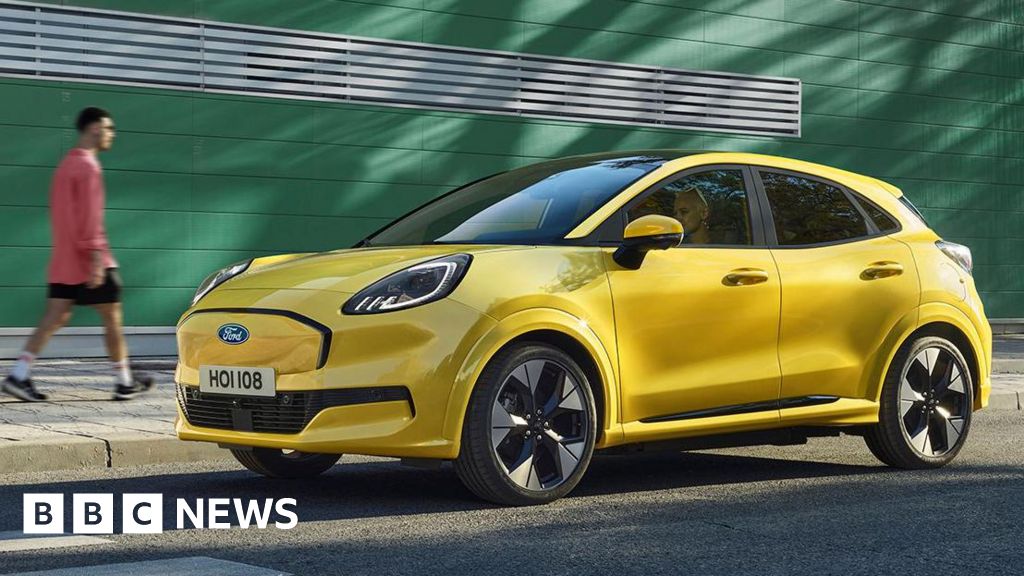
FordThe first electric vehicles (EV) eligible for the £3,750 discount under the government’s grant scheme have been announced.
The Department for Transport confirmed Ford’s Puma Gen-E or e-Tourneo Courier would be discounted as part of plans to encourage drivers to move away from petrol and diesel vehicles.
Under the grant scheme, the discount applies to eligible car models costing up to £37,000, with the most environmentally friendly ones seeing the biggest reductions. Another 26 models have been cleared for discounts of £1,500.
Carmakers can apply for models to be eligible for grants, which are then automatically applied at the point of sale.
More vehicles are expected to be approved in the coming weeks and the DfT said the policy would bring down prices to “closely match their petrol and diesel counterparts”.
The government has pledged to ban the sale of new fully petrol or diesel cars from 2030.
But many drivers cite upfront costs as a key barrier to buying an EV and some have told the BBC that the UK needs more charging points.
According to Ford’s website, the recommended retail price (RRP) for a new Puma Gen-E starts from £29,905 while a petrol equivalent is upward of £26,060. With the reduction applied, buyers would be looking in the region of £26,155 for the EV version.
The grants to lower the cost of EVs will be funded through the £650m scheme, and will be available for three years.
There are around 1.3 million electric cars on Britain’s roads but currently only around 82,000 public charging points.
Full list of EVs eligible for the £1,500 discount
- Citroën ë-C3 and Citroën ë-C3 Aircross
- Citroën ë-C4 and Citroën ë-C4 X
- Citroën ë-C5 Aircross
- Citroën ë-Berlingo
- Cupra Born
- DS DS3
- DS N°4
- Nissan Ariya
- Nissan Micra
- Peugeot E-208
- Peugeot E-2008
- Peugeot E-308
- Peugeot E-408
- Peugeot E-Rifter
- Renault 4
- Renault 5
- Renault Alpine A290
- Renault Megane
- Renault Scenic
- Vauxhall Astra Electric
- Vauxhall Combo Life Electric
- Vauxhall Corsa Electric
- Vauxhall Frontera Electric
- Vauxhall Grandland Electric
- Vauxhall Mokka Electric
- Volkswagen ID.3
The up-front cost of EVs is higher on average than for petrol cars.
According to Autotrader, the average price of a new battery electric car was £49,790 in June 2025, based on manufacturers’ recommended prices for 148 models.
The equivalent for a petrol car was £34,225, but the average covers a broad range of prices.
Transport Secretary Heidi Alexander said the grant scheme was making it “easier and cheaper for families to make the switch to electric”.
Edmund King, president of the AA, said drivers “frequently tell us that the upfront costs of new EVs are a stumbling block to making the switch to electric”.
“It is great to see some of these more substantial £3,750 discounts coming online because for some drivers this might just bridge the financial gap to make these cars affordable.”
Heineken has announced a substantial investment exceeding £44 million into hundreds of its pubs across the UK, a move expected to create approximately 850 jobs.
The Dutch brewing giant’s Star Pubs operation, which manages 2,350 sites nationwide, is undertaking this significant financial commitment despite a challenging period for the pub sector.
The industry has faced considerable pressure over the past year, grappling with escalating labour costs and increases in national insurance contributions.
Concurrently, consumer spending has been constrained by concerns over inflation and rising unemployment, further impacting pub revenues. However, pubs did receive additional business rates support from the government last month, aimed at alleviating some of these financial burdens.
Lawson Mountstevens, managing director of Star Pubs, indicated that the investment strategy is partly designed to bolster revenues and help the group navigate the recent “sustained increases in running costs”.
This year, £44.5 million will be allocated to upgrades for 647 pubs. A notable 108 of these venues are earmarked for particularly significant cash injections, with each transformation costing at least £145,000.
Heineken clarified that while the majority of its pubs are group-owned, they are independently operated by local licensees. A key focus for this investment, particularly in the lead-up to the 2026 football World Cup, will be on sports-focused venues.
The pub firm and brewer has a history of significant investment in British pubs, having pumped £328 million into the sector since 2018. Work has already commenced at 52 locations, including eight projects dedicated to reopening boarded-up pubs that have endured lengthy closures.
Mr Mountstevens also urged the government to reduce the tax burden on pubs, arguing it would ease cost pressures and foster further job creation within the industry.
He stated: “We can only do so much; the root-and-branch reform of business rates that the industry has been calling for over many years is urgently required, as well as a lowering of the burden of taxation on pubs, including VAT and beer duty.”
He concluded with a direct appeal: “We are calling on the Government to support us in bringing out the best in the Great British pub.”

GameStop’s boss Ryan Cohen says he sees potential to make eBay a much bigger rival to Amazon.
Source link
It comes as the US said on Monday it will begin to help “guide” vessels out of the Strait of Hormuz.
Source link


Tarik Skubal to undergo elbow surgery, sidelining Tigers ace for months ahead of free agency

Jake Paul breaks silence after Olivia Rodrigo’s savage SNL joke

UAE says air defences engage Iranian missiles, drones as flights diverted

-

 Tech1 week ago
A Brain Implant for Depression Is About to Be Tested in Humans
-

 Tech1 week ago
Almost 90% of women leave tech industry within 10 years | Computer Weekly
-
 Business7 days ago
‘I had £20,000 stolen and had to fight a 13-month fraud reporting rule to get it back’
-
 Business1 week ago
Pakistan’s oil market is fuelling the crisis | The Express Tribune
-

 Sports6 days ago
Pro wrestling star Steph De Lander reveals how colleague’s advice helped lead her to title triumph at ACW
-
 Tech6 days ago
This Ambitious Laptop Doesn’t Leave Much Room for Your Hands
-

 Entertainment1 week ago
Norway joins Type 26 Frigate Programme to boost NATO naval power
-

 Entertainment1 week ago
Melania Trump says ABC should ‘take a stand’ on late-night host Kimmel