

Business
Dick’s Sporting Goods raises guidance after second-quarter earnings beat


A Dick’s Sporting Goods store is shown in Oceanside, California, U.S., May 15, 2025.
Mike Blake | Reuters
Dick’s Sporting Goods raised its full-year sales and earnings guidance after delivering fiscal second-quarter results that beat expectations.
The company is now expecting comparable sales to grow between 2% and 3.5%, up from a previous range of 1% and 3% and ahead of analyst estimates of 2.9%, according to StreetAccount.
Dick’s said its earnings per share are now expected to be between $13.90 and $14.50, up from a previous range of $13.80 to $14.40. Analysts were expecting $14.39 per share, according to LSEG.
Here’s how the company performed compared with what Wall Street was anticipating, based on a survey of analysts by LSEG:
- Earnings per share: $4.38 adjusted vs. $4.32 expected
- Revenue: $3.65 billion vs. $3.63 billion expected
The company’s reported net income for the three-month period that ended Aug. 2 was $381 million, or $4.71 per share, compared with $362 million, or $4.37 per share, a year earlier. Excluding one-time items related to its acquisition of Foot Locker and other costs, Dick’s posted earnings per share of $4.38.
Sales rose to $3.65 billion, up about 5% from $3.47 billion a year earlier. During the quarter, comparable sales also grew 5%, well ahead of expectations of 3.2%, according to StreetAccount.
“Our performance shows how well our long-term strategies are working, the strength and resilience of our operating model and the impact of our team’s consistent execution,” CEO Lauren Hobart said in a news release. “Our Q2 comps increased 5.0%, with growth in average ticket and transactions, and we drove second quarter gross margin expansion.”
While Dick’s comparable sales guidance came in ahead of expectations, its full-year revenue outlook was slightly below estimates. The company said it’s expecting revenue to be between $13.75 billion and $13.95 billion, below estimates of $14 billion, according to LSEG.
Dick’s said its raised profit guidance includes the impact of tariffs that are currently in effect. In an interview with CNBC’s Courtney Reagan, Dick’s executive chairman Ed Stack said the company has implemented some price increases to offset the impact of higher duties but has been “surgical” in its approach.
“We’ve been able to do what we need to from a pricing standpoint, whether that’s from the national brands or from our own brands, and then other places where we’ve held price, we’ve been able to do that, and we’ve offset it someplace else, which is what you have to do in these in these situations, and the team’s done a great job doing that,” Stack said.
Hobart said during Thursday’s call with analysts that the retailer hasn’t seen its shoppers balking at the “small-level” price increases that have gone into effect.
Hobart said broadly Dick’s hasn’t seen any signs of a consumer spending slowdown as a result of tariffs. She said Dick’s saw growth across all of its key segments during the quarter.
Foot Locker tie-up
The company said its guidance doesn’t include any potential impact from its acquisition of Foot Locker, such as costs or results from the planned takeover, which is expected to close on Sept. 8.
In May, Dick’s announced it would be acquiring its longtime rival for $2.4 billion, giving it a competitive edge in the wholesale sneaker market, most importantly for Nike products, along with a bigger global presence.
Nike is a critical brand partner for both Dick’s and Foot Locker and, at times, their performance is reliant on how well the sneaker brand is doing. During the quarter, Stack said new drops from Nike’s revamped running portfolio, including the Pegasus Premium and the Vomero Plus, are performing so well, it can’t keep the shoes in stock.
“Anything that’s new, innovative and kind of the cool factor, is blowing out,” Stack said.
However, the acquisition also comes with risks. Foot Locker’s business has been in the midst of an ambitious turnaround under CEO Mary Dillon but the company is still struggling.
In the quarter ended Aug. 2, Foot Locker’s sales fell 2.4% and it posted a loss of $38 million. The company faces a range of existential challenges, including its heavy mall footprint, its small online business and a core consumer that often has less discretionary income than the core Dick’s consumer.
Once the businesses are combined, Foot Locker’s struggles could ultimately weigh on Dick’s overall results. On the other hand, the combined company will become the No. 1 seller of athletic footwear in the U.S., which will allow it to better compete against its next biggest rival, JD Sports.
Stack acknowledged to CNBC that Foot Locker’s earnings “were not great” but said the company has a strategy.
“We have a game plan of how to turn this around,” Stack told Reagan. “We think that we can return Foot Locker to its rightful place in the top of this industry and we’re excited to roll up our sleeves and get started with that.”
Dick’s plans to operate Foot Locker as a separate entity. Moving forward, Stack said the company plans to break out details on how each brand is performing when releasing quarterly results. It’ll provide separate details on how Dick’s performed and how Foot Locker performed so investors can get a sense of what’s going on in each part of the business.
Hobart said during Thursday’s earnings call that as part of the acquisition, Dick’s plans to invest in Foot Locker stores and marketing. She also said Dick’s sees opportunities in merchandising and bringing in a new assortment of products.
“As Foot Locker becomes part of the Dick’s family, we are an even more important brand to our wholesale partners, and that’s part of the thesis,” Hobart said.
Earlier this week, Dick’s said it had received all regulatory approvals associated with the transaction. It’s unclear if it had to divest any stores to satisfy the FTC’s requirements.
— CNBC’s Ali McCadden contributed to this report.




Heineken has announced a substantial investment exceeding £44 million into hundreds of its pubs across the UK, a move expected to create approximately 850 jobs.
The Dutch brewing giant’s Star Pubs operation, which manages 2,350 sites nationwide, is undertaking this significant financial commitment despite a challenging period for the pub sector.
The industry has faced considerable pressure over the past year, grappling with escalating labour costs and increases in national insurance contributions.
Concurrently, consumer spending has been constrained by concerns over inflation and rising unemployment, further impacting pub revenues. However, pubs did receive additional business rates support from the government last month, aimed at alleviating some of these financial burdens.
Lawson Mountstevens, managing director of Star Pubs, indicated that the investment strategy is partly designed to bolster revenues and help the group navigate the recent “sustained increases in running costs”.
This year, £44.5 million will be allocated to upgrades for 647 pubs. A notable 108 of these venues are earmarked for particularly significant cash injections, with each transformation costing at least £145,000.
Heineken clarified that while the majority of its pubs are group-owned, they are independently operated by local licensees. A key focus for this investment, particularly in the lead-up to the 2026 football World Cup, will be on sports-focused venues.
The pub firm and brewer has a history of significant investment in British pubs, having pumped £328 million into the sector since 2018. Work has already commenced at 52 locations, including eight projects dedicated to reopening boarded-up pubs that have endured lengthy closures.
Mr Mountstevens also urged the government to reduce the tax burden on pubs, arguing it would ease cost pressures and foster further job creation within the industry.
He stated: “We can only do so much; the root-and-branch reform of business rates that the industry has been calling for over many years is urgently required, as well as a lowering of the burden of taxation on pubs, including VAT and beer duty.”
He concluded with a direct appeal: “We are calling on the Government to support us in bringing out the best in the Great British pub.”
GameStop’s boss Ryan Cohen says he sees potential to make eBay a much bigger rival to Amazon.
Source link
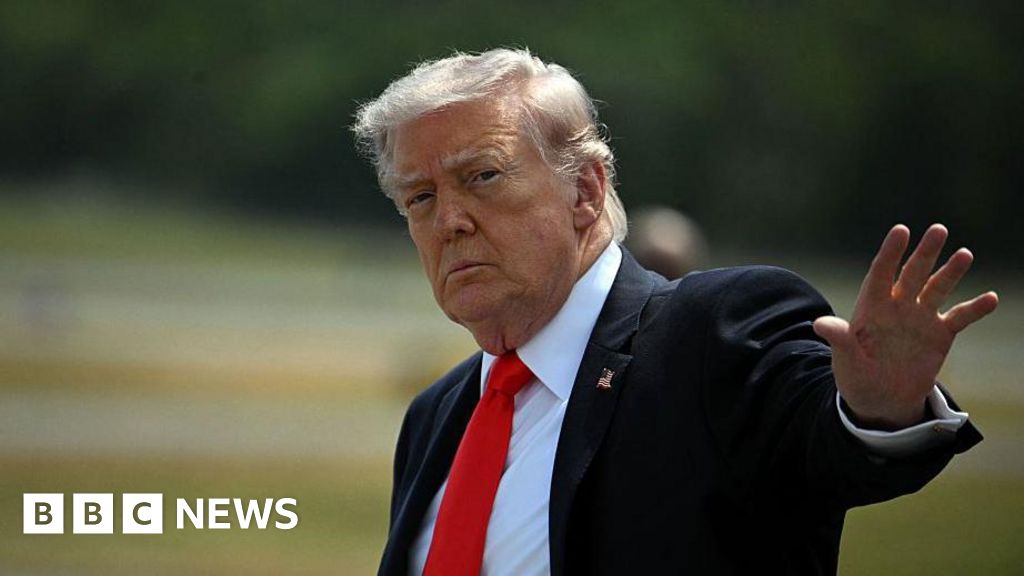
It comes as the US said on Monday it will begin to help “guide” vessels out of the Strait of Hormuz.
Source link


Dwayne Johnson shocks everyone with bold Met Gala outfit

Greg Brockman Defends $30B OpenAI Stake: ‘Blood, Sweat, and Tears’

Met Gala 2026 “Costume Art” red carpet pictures from New York City

-

 Tech1 week ago
A Brain Implant for Depression Is About to Be Tested in Humans
-

 Tech1 week ago
Almost 90% of women leave tech industry within 10 years | Computer Weekly
-
 Business1 week ago
Pakistan’s oil market is fuelling the crisis | The Express Tribune
-
 Business1 week ago
‘I had £20,000 stolen and had to fight a 13-month fraud reporting rule to get it back’
-

 Sports7 days ago
Pro wrestling star Steph De Lander reveals how colleague’s advice helped lead her to title triumph at ACW
-

 Entertainment1 week ago
Norway joins Type 26 Frigate Programme to boost NATO naval power
-

 Entertainment1 week ago
Melania Trump says ABC should ‘take a stand’ on late-night host Kimmel
-
 Tech7 days ago
This Ambitious Laptop Doesn’t Leave Much Room for Your Hands