

Business
Discount Deleted: Has The West Asia War Ended India’s ‘Cheap Russian Oil’ Era?


Last Updated:
With Urals now costing more than the global standard and Brent itself hovering near $92 per barrel, the pressure on domestic fuel prices and the Indian rupee is deepening




The era of ‘cheap Russian oil’ was a cornerstone of India’s post-pandemic recovery and its efforts to manage the current account deficit. Representational pic/Reuters
In a dramatic reversal of the global energy order, Russian Urals crude is now trading at a premium to the international Brent benchmark at Indian ports. This unprecedented shift follows the severe disruption of the Strait of Hormuz amidst the escalating West Asia conflict, which has effectively severed India’s traditional energy arteries from the Persian Gulf. For nearly four years, India’s “Russian pivot” was defined by steep discounts that shielded the domestic economy from global volatility; however, as of March 2026, the “sanctions discount” has been replaced by a “scarcity premium”.
From Discount to Scarcity Premium
Since the 2022 invasion of Ukraine and subsequent Western sanctions, Russian Urals typically sold at a significant discount—often reaching $15 to $30 per barrel below Brent. Traders now report that for March and April 2026 deliveries, Russian crude is commanding a $4 to $5 premium per barrel on a Delivered at Place (DAP) basis in India. This inversion is driven by a desperate surge in demand as Indian refiners—including Indian Oil Corporation and BPCL—scramble to replace the 1.4 million barrels per day of Iranian and Gulf crude that is currently stranded behind the blockaded Strait of Hormuz.
The Role of the US 30-Day Waiver
The pricing spike has been further legitimised by a strategic move from Washington. Recognising the threat of a global energy collapse, the US Treasury Department has granted a temporary 30-day waiver to Indian refiners. This allows for the legal resumption and clearing of Russian oil purchases that were previously under intense scrutiny or price-cap restrictions. While the waiver is intended as a humanitarian stopgap to prevent hyperinflation in the world’s most populous nation, it has inadvertently emboldened Russian exporters to hike prices, knowing that India has few other immediate alternatives for “secure” molecules that do not pass through the West Asian theatre of war.
Narrowing Gaps in the Baltic
The ripple effects of the Hormuz crisis are being felt as far away as the Baltic Sea. In the Russian port of Primorsk, the traditional discount for Urals has narrowed by approximately $5, settling at around $20 per barrel below Brent at the source. While a discount still exists at the point of loading, the stratospheric rise in maritime insurance and freight costs for the long journey around the Cape of Good Hope has ensured that by the time the oil reaches India’s west coast, the final cost exceeds the Brent benchmark.
Fiscal Pressure on New Delhi
For the Indian government, this inversion represents a significant fiscal challenge. The era of “cheap Russian oil” was a cornerstone of India’s post-pandemic recovery and its efforts to manage the current account deficit. With Urals now costing more than the global standard and Brent itself hovering near $92 per barrel, the pressure on domestic fuel prices and the Indian rupee is deepening. As the 30-day waiver window begins to close, New Delhi finds itself in a precarious position, paying a premium for security in an increasingly volatile global market.
March 06, 2026, 23:10 IST
Read More









Last Updated:
The layoffs account for 3-4% of Flipkart’s workforce, which is higher than the company’s practice of letting go of 1-2% of employees in the lowest performance bracket every year.
Flipkart Layoffs 2026.
Flipkart Layoffs 2026: Flipkart, the Walmart-owned e-commerce giant, has reportedly asked around 400-500 employees to exit the company this year following its annual performance review process. According to a report by The Economic Times, the layoffs account for roughly 3-4% of Flipkart’s workforce, which is higher than the company’s usual practice of letting go of 1-2% of employees in the lowest performance bracket every year.
Why Has Flipkart Laid Off Employees?
Responding to queries, Flipkart said the move is part of its routine evaluation process. “Flipkart conducts regular performance reviews aligned with clearly defined expectations. As part of this process, a small percentage of employees may transition from the organisation. We are supporting affected employees with transition support,” the company said, according to Mint.
Layoffs Across Teams, Hiring Continues For Senior Roles
The job cuts have reportedly impacted employees across multiple departments and job levels. At the same time, the company continues to recruit senior executives as it prepares for a potential initial public offering (IPO).
According to a report by ANI, Flipkart has recently strengthened its leadership team with several senior appointments.
These include Somnath Das as vice-president (supply chain), Digbijay Mishra as vice-president (corporate communications), Vipin Kapooria as vice-president (business finance), Yogita Shanbhag as vice-president (human resources), and Amer Hussain as vice-president (supply chain for its grocery and quick-commerce businesses).
Flipkart Preparing For India IPO
In December 2025, Flipkart received approval from the National Company Law Tribunal to shift its legal domicile from Singapore to India, a key step ahead of a potential domestic listing.
The restructuring involved merging eight Singapore-based entities into Flipkart Internet Pvt Ltd, simplifying the group’s holding structure across businesses such as fashion, health and logistics.
Loss Widens Despite Revenue Growth
Financial data shows that Flipkart continues to expand its business, although losses have widened.
According to data from Tofler, Flipkart India reported a consolidated loss of Rs 5,189 crore in FY25, compared with Rs 4,248.3 crore in FY24.
However, revenue from operations rose 17.3% to Rs 82,787.3 crore, up from Rs 70,541.9 crore a year earlier.
Total expenses also increased 17.4% to Rs 88,121.4 crore, largely due to higher stock-in-trade purchases, which climbed to Rs 87,737.8 crore, compared with Rs 74,271.2 crore in the previous financial year.
 Click here to add News18 as your preferred news source on Google.
Follow News18 on Google. Join the fun, play games on News18. Stay updated with all the latest business news, including market trends, stock updates, tax, IPO, banking finance, real estate, savings and investments. To Get in-depth analysis, expert opinions, and real-time updates. Also Download the News18 App to stay updated.
March 07, 2026, 14:51 IST
Read More
Business
Want To Buy A House In Karnataka? Know About The ‘Namma Mane’ Scheme With Affordable Housing & Subsidies
Last Updated:
The programme aims to make land ownership more accessible for eligible residents while supporting the government’s wider goal of providing housing for all.
Under the ‘Namma Mane’ housing scheme 50,000 residential plots will be distributed at concessional rates over the next two years.
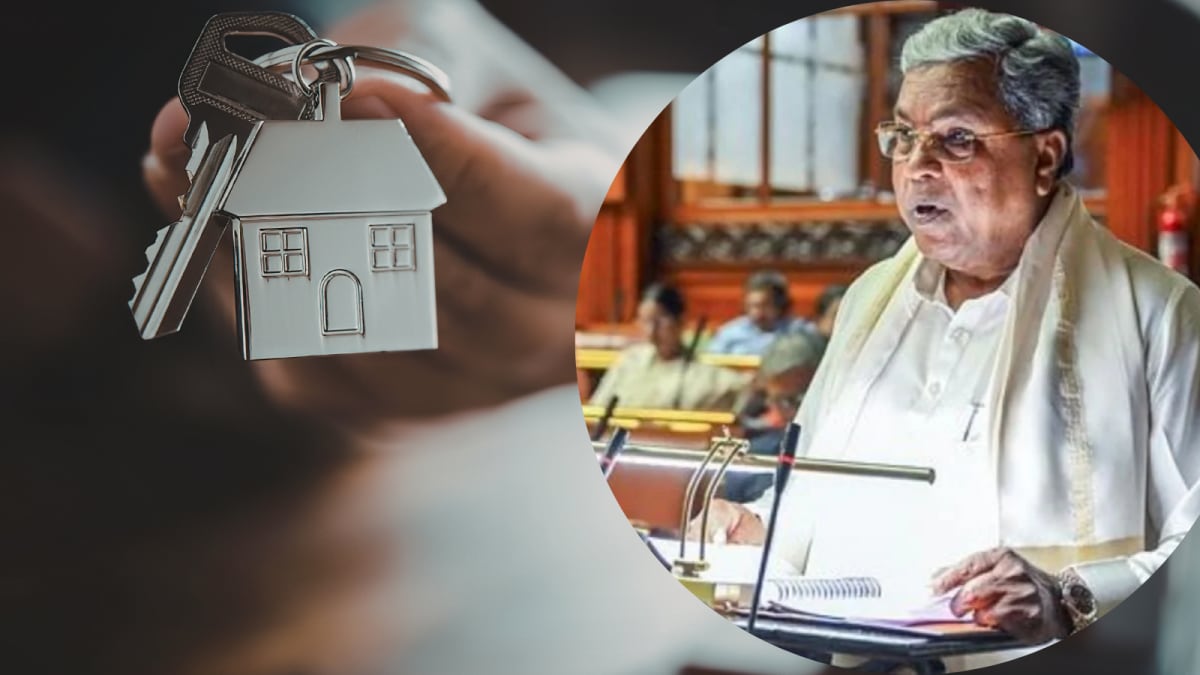
What if owning a home became a little more achievable? In the latest Karnataka Budget, the state government has announced a series of housing initiatives aimed at expanding access to affordable homes and residential plots. From the ‘Namma Mane’ scheme offering concessional sites to increased subsidies for beneficiaries and plans for a massive sports complex in Anekal, the announcements signal a renewed push towards housing development across the state.
The Karnataka government has unveiled several housing and infrastructure initiatives in the latest state budget, including the distribution of thousands of residential plots and the construction of a large sports complex in Bengaluru’s Anekal taluk. The announcements are part of broader efforts to expand housing access and improve public infrastructure across the state.
Karnataka Budget Housing Scheme: Key Benefits
One of the key proposals is the introduction of the ‘Namma Mane’ housing scheme, under which 50,000 residential plots will be distributed at concessional rates over the next two years. The programme aims to make land ownership more accessible for eligible residents while supporting the government’s wider goal of providing housing for all.
The Housing Department has also set a new target of sanctioning one lakh houses under various housing schemes in the state. These houses will be approved based on the Beneficiary Led Construction (BLC) model, which allows eligible beneficiaries to construct their own homes with financial support from the government.
As part of this initiative, the government has increased the subsidy amount provided under housing schemes. For beneficiaries in the general category, the subsidy has been raised from Rs 1.20 lakh to Rs 2 lakh. Meanwhile, beneficiaries from Scheduled Castes and Scheduled Tribes will receive increased assistance, with the subsidy rising from Rs 2 lakh to Rs 3 lakh.
The budget also introduces a change in the process used to select beneficiaries for state housing schemes. Instead of the traditional manual lottery system, selections will now be conducted through an online lottery in Gram Sabhas. The move is expected to improve transparency and streamline the allocation process.
In addition to housing initiatives, the Karnataka Housing Board has announced plans to develop a major sports facility in Anekal taluk of Bengaluru Urban district. The project, titled ‘KHB Surya Krida Grama’, will include the construction of an 80,000-seat cricket stadium designed to host international sporting events.
Meanwhile, the Karnataka Slum Development Board is continuing the implementation of housing projects under the Pradhan Mantri Awas Yojana (AHP). A total of 1.29 lakh houses are being constructed under the scheme, with 79,134 homes dedicated for the year 2025–26. The state government has allocated an additional grant of Rs 1,136 crore to support the project, providing permanent housing to many slum residents.
Since the Congress government came to power, Rs 7,328 crore has been spent on various housing schemes. So far, 4,19,454 houses have been completed and handed over to beneficiaries. The government has set a target to complete three lakh houses during the current year.
Authorities have also stated that steps will be taken to complete the 4.90 lakh houses sanctioned by the previous government, even though they were approved without grants.
March 07, 2026, 10:51 IST

Stay Ahead, Read Faster
Scan the QR code to download the News18 app and enjoy a seamless news experience anytime, anywhere.


New flights to the UK from the Middle East follow days of widespread air travel disruption which had left Britons stranded.
Source link

Flipkart Layoffs 2026: Why Has E-Commerce Firm Sacked Around 500 Employees?

Nepal’s rapper-mayor Balendra Shah poised to become prime minister

Stephanie Buttermore, fitness influencer dies suddenly aged 36: What actually happened

Attock Cement’s acquisition approved | The Express Tribune

India Us Trade Deal: Fresh look at India-US trade deal? May be ‘rebalanced’ if circumstances change, says Piyush Goyal – The Times of India

What are Iran’s ballistic missile capabilities?

-
Business1 week ago
Attock Cement’s acquisition approved | The Express Tribune
-
Business1 week ago
India Us Trade Deal: Fresh look at India-US trade deal? May be ‘rebalanced’ if circumstances change, says Piyush Goyal – The Times of India
-

 Fashion1 week ago
Policy easing drives Argentina’s garment import surge in 2025
-
 Politics1 week ago
What are Iran’s ballistic missile capabilities?
-

 Sports1 week ago
LPGA legend shares her feelings about US women’s Olympic wins: ‘Gets me really emotional’
-

 Fashion1 week ago
South Korea’s Misto Holdings completes planned leadership transition
-

 Entertainment1 week ago
Bobby J. Brown, “The Wire” and “Law & Order: SUV” actor, dies of smoke inhalation after reported fire
-

 Fashion1 week ago
Texwin Spinning showcasing premium cotton yarn range at VIATT 2026