

Business
‘Indians been good actors’: Why US ‘agreed to let’ India resume buying Russian oil temporarily – The Times of India


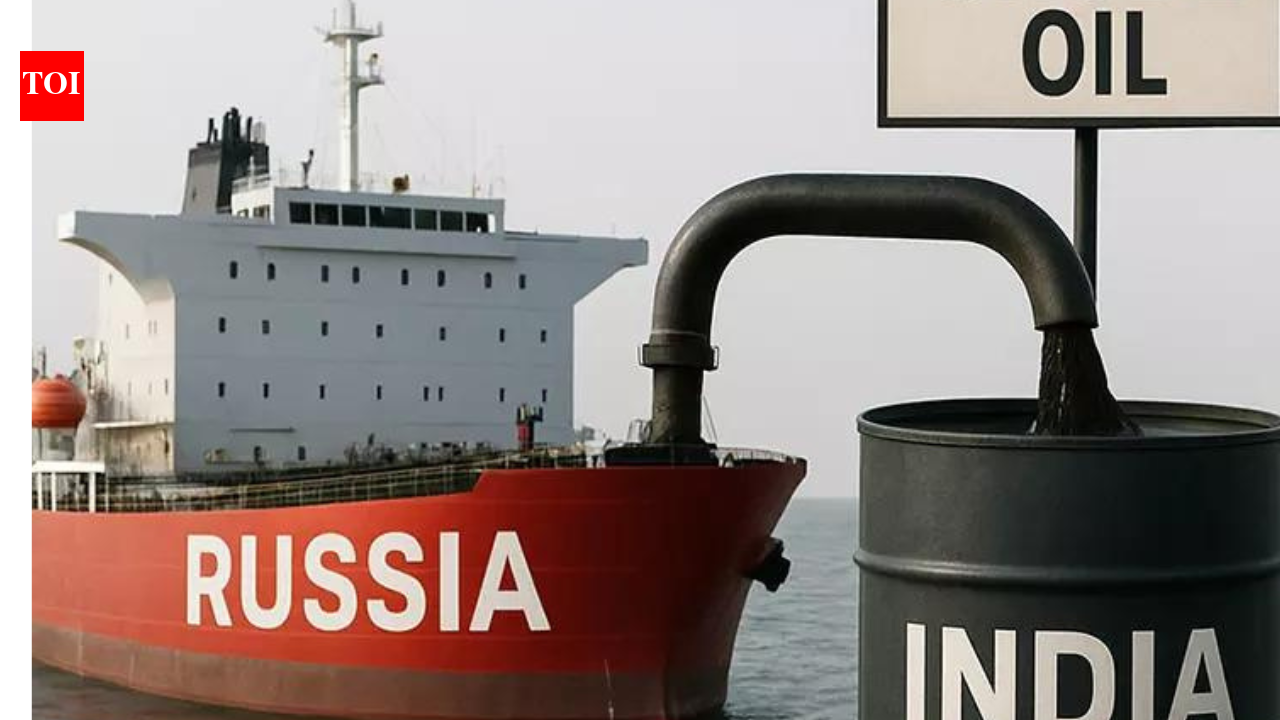
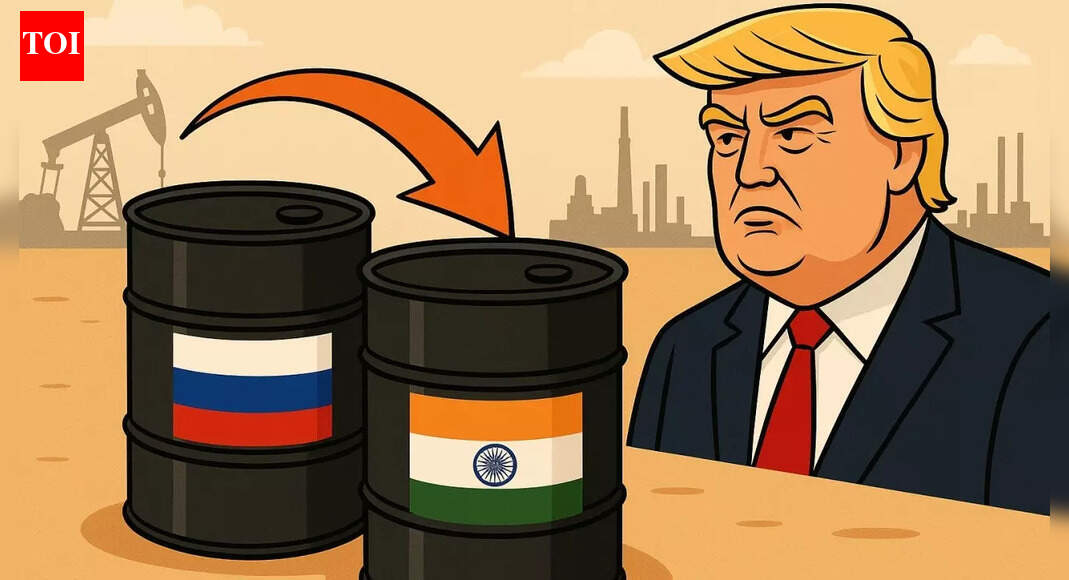
The United States has given “permission” to India to buy Russian oil already stranded at sea issuing a temporary waiver aimed at stabilising global oil supplies amid disruptions caused by the escalating conflict in West Asia.US President Donald Trump’s aide Scott Bessent referred to India as a “very good actor” for previously complying with Washington’s request to halt purchases of sanctioned Russian oil and said the temporary measure would help ease supply pressures in the global market.
The move comes a day after Washington issued a 30-day waiver permitting the sale of Russian crude currently stranded at sea to continue to India.
US cites temporary supply concerns
Speaking to Fox Business, US treasury secretary Bessent said the decision was intended to ease short-term supply constraints during the ongoing crisis.“The world is very well supplied in oil. The Treasury (Department) agreed to let our allies in India start buying Russian oil that was already on the water,” Bessent said.“The Indians had been very good actors. We had asked them to stop buying sanctioned Russian oil this fall. They did. They were going to substitute it with US oil,” he said.“But to ease the temporary gap of oil around the world, we have given them permission to accept the Russian oil. We may unsanction other Russian oil,” he added.Bessent also noted that a large volume of sanctioned crude remains stranded at sea stating that, “There are hundreds of millions of sanctioned barrels of sanctioned crude on the water,” he said, adding that “by unsanctioning them, Treasury can create supply.”“And we are looking at that. We are going to keep a cadence of announcing measures to bring relief to the market during this conflict,” he added.
‘Short term measures to help keep oil prices down’
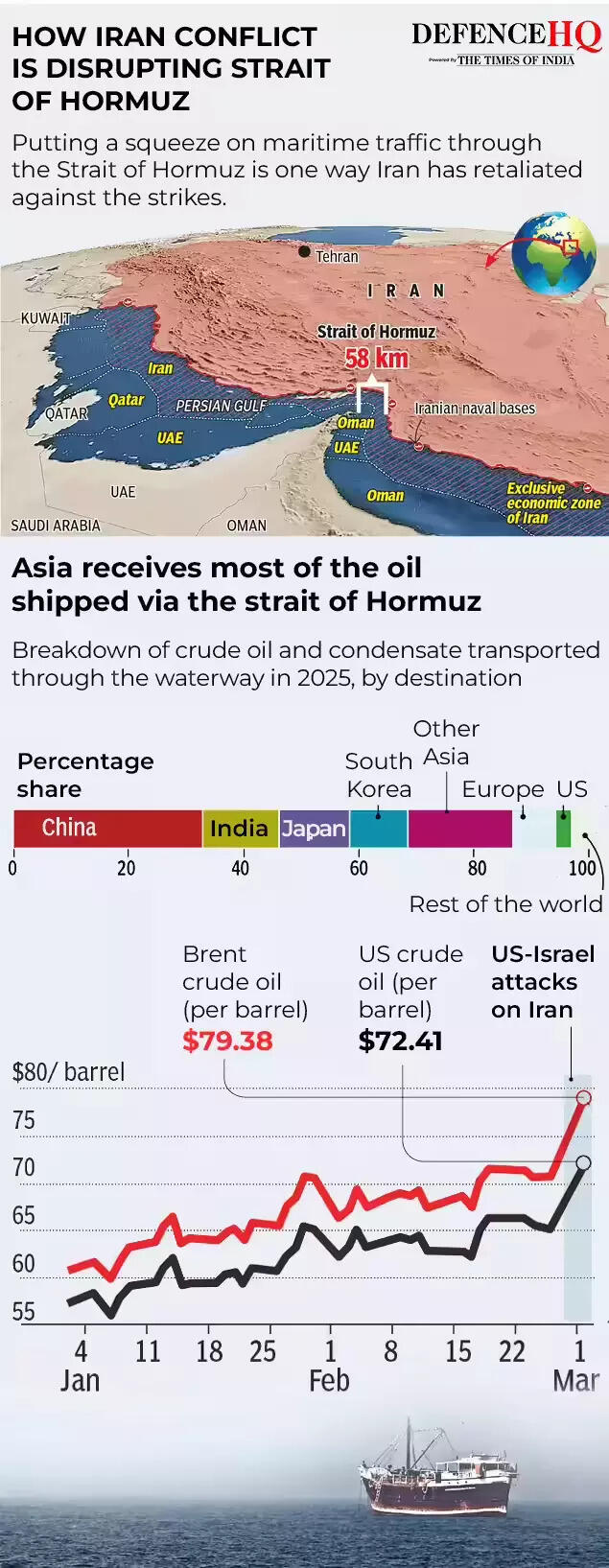
Other officials in the Trump administration have also confirmed that Washington has “permitted” India to buy Russian crude that is already loaded on ships.Earlier, US energy secretary Chris Wright said the step was intended to quickly move existing oil supplies into the market.“We have implemented short term measures to help keep oil prices down. We are allowing our friends in India to take oil that is already on ships, refine it, and move those barrels into the market quickly. A practical way to get supply flowing and ease pressure,” Wright said in a post on X.In an interview with ABC News Live, Wright emphasised that the measure was temporary.“But as oil gets bid up a little bit because of those constraints coming out of the Strait of Hormuz, we’re taking a short-term action to say all this floating Russian oil storage that’s around Southern Asia, it’s China just backed up, China does not treat their suppliers well, so there’s a bunch of floating barrels just sitting there,” he said.“We’ve reached out to our friends in India and said, ‘Buy that oil. Bring it into your refineries’. That pulls stored oil immediately into Indian refineries and releases the pressure on other refineries around the world to buy oil that they’re no longer competing with the Indians for in that marketplace,” Wright added.“So we have a number of measures like that that are short-term and temporary. This is no change in policy towards Russia. This is a very brief change in policy just to keep oil prices down a little bit better than we could otherwise,” he further noted.
Waiver amid Strait of Hormuz tensions
The US Treasury earlier issued an order granting a 30-day licence allowing delivery and sale of Russian crude and petroleum products to India. The decision comes as shipping routes through the strategically important Strait of Hormuz face disruptions due to the ongoing conflict in the region.“President Trump’s energy agenda has resulted in oil and gas production reaching the highest levels ever recorded. To enable oil to keep flowing into the global market, the Treasury Department is issuing a temporary 30-day waiver to allow Indian refiners to purchase Russian oil,” Bessent said earlier.He stressed that the step was a limited measure and would not significantly benefit Moscow.“This deliberately short-term measure will not provide significant financial benefit to the Russian government, as it only authorises transactions involving oil already stranded at sea,” he said.“India is an essential partner of the United States, and we fully anticipate that New Delhi will ramp up purchases of US oil. This stop-gap measure will alleviate pressure caused by Iran’s attempt to take global energy hostage,” he added.
India’s oil supply position
The move comes months after the Trump administration imposed 25% punitive tariffs on India over its purchases of Russian oil, arguing that such imports were helping finance Moscow’s war against Ukraine.However, the tariffs were later lifted after the two countries agreed on a framework for an interim trade agreement and India committed to reducing imports from Russia while increasing purchases of American energy.India currently imports nearly 5.5–5.6 million barrels of crude oil per day, accounting for about 90% of its domestic consumption. Officials say the country’s energy position remains comfortable despite the regional tensions.Around 15 million barrels of crude are currently on tankers in the Arabian Sea and the Bay of Bengal, while vessels carrying another seven million barrels are waiting near Singapore. Additional tankers in the Mediterranean and the Suez Canal are also heading towards Indian ports and could arrive within a week.According to data from Kpler, India imported slightly over 1 million barrels per day of Russian crude in February, compared with 1.1 million bpd in January and 1.2 million bpd in December.Before the Ukraine war in 2022, Russian crude accounted for just 0.2% of India’s imports, but purchases increased sharply after Moscow began offering deep discounts.
Business
Gross GST collections hit record high of Rs 2.43 lakh crore in April 2026 despite US-Iran war concerns – The Times of India

GST collections: The gross Goods and Services Tax (GST) collections touched a new high in April, reflecting continued strength in economic activity even in the midst of the ongoing Middle East conflict.According to government data released on Friday, gross GST revenue for the month reached a record Rs 2.43 lakh crore, registering an 8.7% increase over Rs 2.23 lakh crore collected in April last year.After accounting for refunds, net GST collections stood at Rs 2.11 lakh crore, up 7.3% from the corresponding period a year earlier.Refund disbursements during the month rose sharply, climbing 19.3% year-on-year to Rs 31,793 crore.As a result, net GST revenue for April 2026 came in at Rs 2,10,909 crore.Robust revenues from imports played a major role in driving GST collections during the month. Gross receipts from imports climbed sharply by 25.8% to Rs 57,580 crore, while gross domestic GST collections recorded a comparatively moderate increase of 4.3%, reaching Rs 1.85 lakh crore.The net GST revenue from imports surged 42.9%, significantly outpacing the marginal 0.3% rise in net domestic collections.The April performance follows a strong showing in March, when net GST collections stood at Rs 1.78 lakh crore, up 8.2% from a year earlier. Gross collections in that month had also crossed the Rs 2 lakh crore mark.For the full financial year 2025-26, gross GST revenue increased 8.3% year-on-year to Rs 22.27 lakh crore. Net GST collections for the year rose 7.1% to Rs 19.34 lakh crore.Major contributors such as Maharashtra, Karnataka and Gujarat continued to account for a substantial share of total collections.

NEW DELHI: Government on Friday increased the price Aviation Turbine Fuel for international airlines by 5 per cent.This is the second straight monthly rise amid the global energy crisis.However, there is no change in the ATF price for domestic airlines.ATF prices have been increased by USD 76.55 per kilolitre, or 5.33 per cent, to USD 1511.86 per kl in Delhi, home, according to state-owned oil firms.Under this mechanism, foreign airlines and other carriers will pay market-linked rates, while prices for domestic airlines have been moderated, new agency PTI reported, citing sources.Earlier on April 1, rates for domestic airlines were hiked by 25 per cent to Rs 104,927.18 per kl.Jet fuel prices were deregulated more than two decades ago and have since been linked to international benchmark rates under a written understanding with airlines.However, a surge in global energy prices triggered by the West Asia crisis led to what sources described as the steepest-ever hike in ATF rates, prompting the government and state-run oil companies to take a calibrated approach.Jet fuel prices were deregulated more than two decades ago and have since been linked to international benchmark rates under a written understanding with airlines.
Business
Windfall gains tax cut: Excise duty on diesel exports down to Rs 23/litre, ATF exports to Rs 33/litre – The Times of India
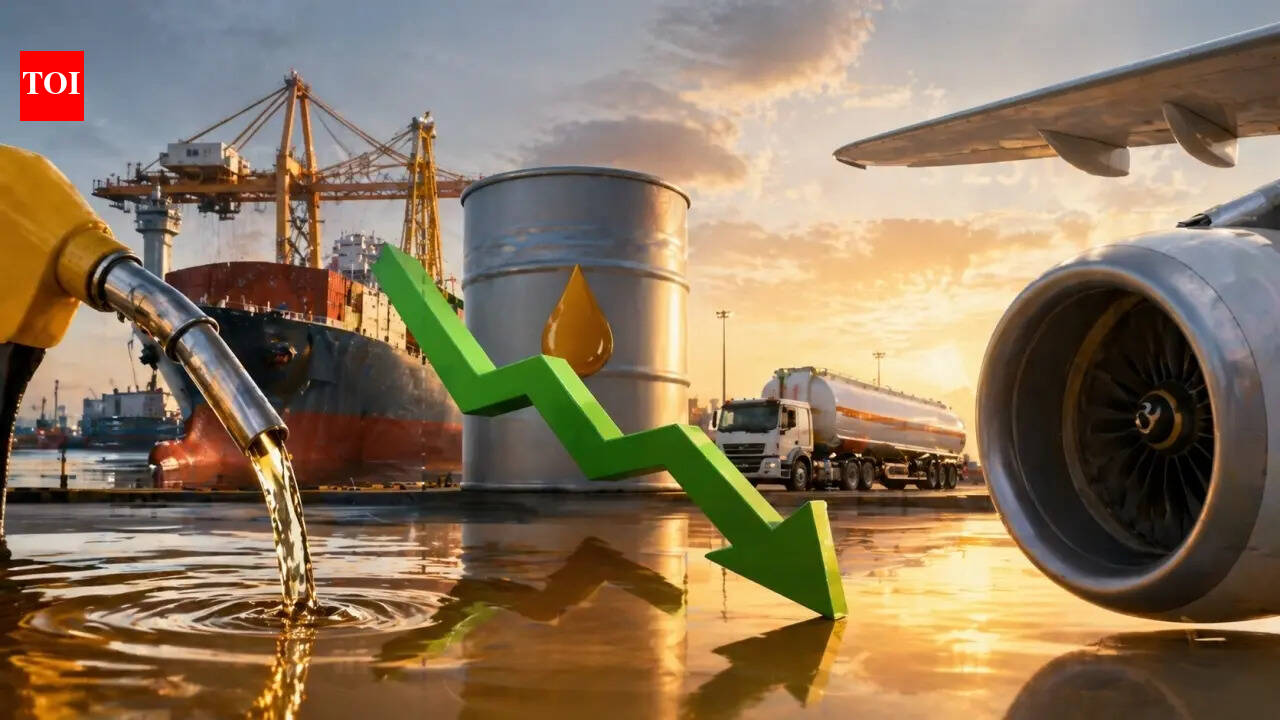
The windfall tax on exports of diesel and aviation turbine fuel (ATF) has been lowered effective May 1, 2026. The excise duty on petrol and diesel sold in the domestic market will remain unchanged. The levy on diesel exports has been reduced to Rs 23 per litre from Rs 55.5 per litre, while the duty on ATF exports has been cut to Rs 33 per litre from the earlier Rs 42 per litre.In a statement, the Finance Ministry also announced that the road and infrastructure cess on diesel exports will be waived for the next fortnight starting May 1. Meanwhile, the export duty on petrol will continue to remain at zero.Earlier, on March 26, the government had imposed export duties of Rs 21.50 per litre on diesel and Rs 29.5 per litre on ATF. These rates were subsequently increased during a review on April 11 to Rs 55.5 per litre for diesel and Rs 42 per litre for ATF.The windfall tax was introduced to ensure that adequate domestic supplies of petroleum products remain available amid supply disruptions arising from the conflict involving the United States, Israel and Iran. It was also intended to prevent exporters from profiting excessively from the widening gap between domestic and international fuel prices as global crude markets rallied sharply.According to the ministry, the export duty framework is aimed at discouraging excessive overseas shipments during the ongoing West Asia crisis, thereby safeguarding domestic fuel availability.Following military strikes by the United States and Israel on Iran on February 28, Tehran responded with extensive retaliation, escalating tensions across the Middle East. India’s oil supply through the Strait of Hormuz remains affected, but its diversified procurement basket and the availability of millions of barrels of Russian crude on water have helped ease the supply bottlenecks for now.Since the outbreak of the conflict, crude oil prices have climbed steeply, rising from around $73 a barrel to a four-year high of $126 a barrel.


Germany’s Adidas posts strong Q1 on DTC momentum, broad demand
Gross GST collections hit record high of Rs 2.43 lakh crore in April 2026 despite US-Iran war concerns – The Times of India

De-risking from China just got easier with India-New Zealand FTA

-

 Sports1 week ago
PSL 11: Hyderabad Kingsmen opt to field after winning toss against Multan Sultans
-
 Business1 week ago
Trump administration in advanced talks for a rescue package for Spirit Airlines, source says
-

 Entertainment1 week ago
Anne Hathaway shares major news about ‘Princess Diaries 3’
-

 Tech1 week ago
Microsoft faces court battle in £2bn Windows Server class action | Computer Weekly
-
 Business1 week ago
Gold prices in Pakistan Today – April 23, 2026 | The Express Tribune
-
 Business1 week ago
High-Skilled Immigration: US tightens screws on high-skilled immigration: Denial rates surge across key visa categories – The Times of India
-

 Fashion1 week ago
Canada forms new advisory committee to strengthen US trade relations
-

 Entertainment1 week ago
Mike Vrabel to miss Patriots’ final NFL draft day —here’s why