

Fashion
Ssense files for bankruptcy protection


Published
August 28, 2025
Ssense is reportedly filing for bankruptcy protection following a move by creditors to initiate the sale of the Canadian luxury retailer, as per a letter sent to employees on Thursday.
In an email sent to staff, the Montreal-based company said the protection move follows the filing of an application to sell the company by its main creditor, without consent from the retailer, under the Companies’ Creditors Arrangement Act (CCAA), according to a B0F report.
Chief executive Rami Atallah explained that Ssense will in response file its own CCAA application within 24 hours “to protect the company, keep control of our assets and operations, and fight for the future of the company,” according to the memo.
“Recently, we have worked closely with financial and legal advisors to develop our own restructuring plan to stabilize the business and rebuild it for the future,” said Atallah, as cited by BoF.
“The court will decide which path we follow, likely within the next week. Until then, our focus remains clear: protect value, stabilize the business, and set up a restructuring plan to secure our future.”
It is unknown which creditor pulled the sale trigger.
The retailer’s CEO went on to explain the headwinds facing his company following the Trump administration’s recent trade policies, which have imposed 25 percent tariffs on goods imported from Canada.
Ssense also cited the closure of the “de minimus” exemption, which allowed packages worth less than $800 to enter the U.S. duty free as a hit operationally for the company.
The bankruptcy protection news follows layoffs at Ssense earlier this year, including 100 positions in May, as the firm tries to lower overheads amid the luxury slowdown affecting demand for high-price goods, especially more younger, aspirational luxury shoppers — Ssense’s target market.
Copyright © 2025 FashionNetwork.com All rights reserved.












A manifestation of how clothes are truly worn, in daily life, their layering here is simultaneously representative of a layering of histories, personal and collective, of memories and experiences. They express a notion of self-determination, agency. Equally, a defined cast of 15 women draws our attention to each within these evolving clothes – it allows an exploration of the infinite, ever-shifting facets of her character. Paradoxically, an apparent simplification can serve to convey complexities.
Prada’s Fall/Winter 2026 collection by Miuccia Prada and Raf Simons explores layering as both a physical and emotional language.
Blending tailoring, sportswear and archival references, the clothes reflect shifting identities, memory and self-determination.
A cast of 15 women embodies evolving character, while aged fabrics and embedded histories echo the multi-century artworks staged at Fondazione Prada.
Perspectives transmute, both in transposition of garment types and their non-hierarchical mixing. Clothes are layered with precision – tailoring, sportswear, embroidered satin dresses, contradictory compositions that also speak to a distinctly Prada language of fashion. Fragments and fractures excite curiosity. Mutations from within, visible to the exterior, anticipate that which may lie beneath.
Fabrications fuse disparate identities, superimposed materials eaten away as a means of revelation. Archival dresses, like memories, can be embedded within other minimal garments – layers discovered, within layers. A passage of time is implied through demarcation and patinating, materials intentionally faded, precious embroideries aged, a new approach to decoration. They have lived.
In an echo of these ideas, the Deposito of the Fondazione Prada is populated by original artworks, significant furniture and objects: tapestry and a painting from the 16th and 17th centuries, 18th century Venetian mirror and consoles; chairs, lamps, and paintings from the 1900s. These artefacts span five centuries, divergent cultures, different places. Like the clothes, their meaning is layered, inherently personal, intimate, and filled with ceaseless possibilities.
Note: The headline, insights, and image of this press release may have been refined by the Fibre2Fashion staff; the rest of the content remains unchanged.
Fibre2Fashion News Desk (RM)
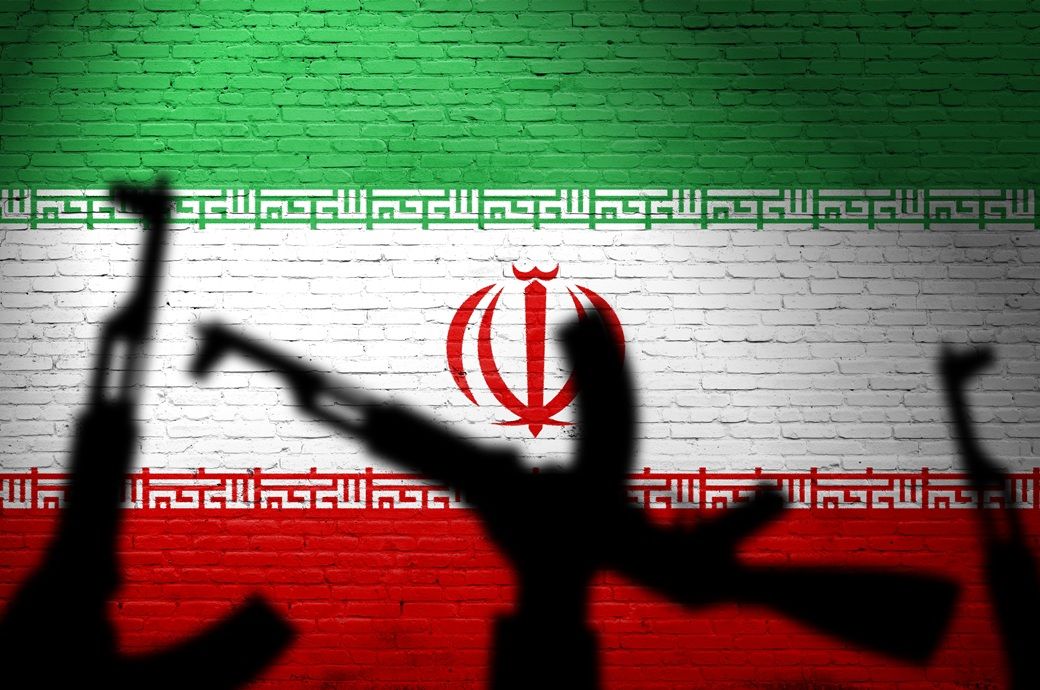
Hydrocarbon exporters could see positive effects. Under Fitch’s baseline scenario, in which the effective closure of the Strait of Hormuz lasts less than a month and major damage to the region’s oil production infrastructure is avoided, risks to emerging market ratings should be contained, but a longer closure or more sustained effects could lead to a more substantial impact.
Iran war could raise additional challenges for some emerging market sovereigns, through such channels as energy imports, remittances, fiscal subsidies, exchange rates and access to international finance, Fitch Ratings has said.
Hydrocarbon exporters could see positive effects.
Prolonged higher energy prices would also raise fiscal strains for governments that have subsidy regimes to shield consumers.
Net fossil fuel imports are large as a share of gross domestic product (GDP) for many small emerging markets. Among the larger economies, Fitch estimates they are equivalent to 3 per cent or more of GDP for Chile, Egypt, India, Morocco, Pakistan, the Philippines, Thailand and Ukraine.
Vulnerabilities to higher import costs will be most acute in markets with already stretched financing capacity, such as Pakistan, or with significant current account deficits.
In December 2025, Fitch had anticipated a significant current account deficit this year in Ukraine (15.4 per cent), with moderate deficits for the Philippines (3.4 per cent) and Egypt (3.0 per cent).
More protracted high energy prices could add to external strains facing these sovereigns, especially if other stresses emerge, for example, disruption to remittances. External finance risks will be limited where sovereigns are running current account surpluses, as in Thailand.
Prolonged higher energy prices would also increase fiscal strains for governments that have subsidy regimes designed to shield consumers, or that launch similar measures in response to higher energy prices, Fitch Ratings said in its release.
A more sustained disruption to global energy supplies from the Gulf than envisaged under Fitch’s baseline scenario could significantly damage global investor sentiment which would result in a stronger US dollar and weaken the market for debt issuance, particularly for highly speculative-grade issuers. Higher energy prices could put upward pressure on inflation, affecting monetary policy decisions globally.
These factors are likely to increase the effective cost of servicing and refinancing debt for emerging market sovereigns.
However, many frontloaded a significant share of their planned foreign-currency issuance for the year in January-February, enhancing their flexibility against temporary market volatility.
Weaker non-oil activity in Gulf Cooperation Council (GCC) states, reflecting damage to logistics and tourism sectors, will hurt countries where exports to the affected region, or remittance flows from it, are a significant economic driver.
Azerbaijan, Iraq and Turkiye could be affected if instability in Iran leads to a major outflow of refugees.
For emerging market net hydrocarbon exporters outside the Gulf, such as Angola, Argentina, Azerbaijan, Brazil, Colombia, Ecuador, Gabon, Kazakhstan, Nigeria and Republic of Congo, a prolonged period of higher energy prices could lead to an export and fiscal windfall, Fitch Ratings added.
Fibre2Fashion News Desk (DS)

BGMEA president Mahmud Hasan Khan raised the issue with US ambassador to Bangladesh, Brent T Christensen during a meeting at the association’s office in Dhaka.
Following the US-Bangladesh trade agreement signed recently, trade body BGMEA sought a clarification on how duty-free access for garments produced using American cotton will work in practice.
The Office of the USTR is working on the mechanism, US envoy to Bangladesh Brent T Christensen responded.
BGMEA also called for US investment in his country’s energy sector to support the expanding industrial base.
The Office of the US Trade Representative (USTR) is working on the mechanism now, Christensen responded.
The agreement, he hoped, would boost American cotton exports to Bangladesh, according to domestic media reports.
The meeting also discussed business uncertainties arising out of recent tariff volatility. Christensen expressed confidence that stability would return soon.
Khan also called for US investment in his country’s energy sector to support the expanding industrial base. As a short-term solution, he suggested US investment in LNG infrastructures, while in the long term, he deemed US technology and investment necessary to enhance domestic gas exploration and extraction.
Christensen said US investors would be interested if Bangladesh adopts a stable, long-term energy policy.
The meeting also included detailed discussions on labour law and the proposed new labour ordinance.
Fibre2Fashion News Desk (DS)


Sherrone Moore’s alleged mistress speaks out, claims ‘years of manipulation’ from disgraced ex-Michigan coach

Tap dancing great Brenda Bufalino reflects on her career and the evolution of the art form

Those who dream of destroying Iran know nothing of its history: Pezeshkian

-
 Politics3 days ago
India let Iran warship dock the day US sank another off Sri Lanka, say officials
-

 Sports4 days ago
Pakistan set for FIH Pro League debut | The Express Tribune
-

 Entertainment3 days ago
Harry Styles kicks off new era with ‘One Night Only’ comeback show
-
 Business3 days ago
Restaurant group changes name after bid to buys pubs across the UK
-
 Business1 week ago
Labour parliamentarians urge UK Government to oppose Rosebank oil field
-
 Business4 days ago
Home heating oil: ‘Most of my pension has gone on home heating oil’
-

 Sports4 days ago
Winners and losers of the 2026 NHL trade deadline
-

 Sports1 week ago
USA vs. Argentina (Mar 1, 2026) Live Score – ESPN