

Tech
Ericsson, Future Technologies scale wireless infrastructure for industrial AI | Computer Weekly


Enterprise and industrial connectivity is becoming critical infrastructure through artificial intelligence (AI) moving into real-world operations, and in response to this changing world, Ericsson and Future Technologies Venture have expanded their existing collaboration to accelerate deployment of enterprise wireless and private 5G networks across industrial and critical infrastructure sectors in North America.
The comms tech giant and connectivity transformation systems integrator believe that as organisations deploy AI into real-world environments – from manufacturing plants and logistics networks to energy infrastructure and transportation systems – they require secure, resilient and deterministic connectivity capable of supporting real-time data movement between connected devices, edge computing platforms and centralised cloud systems.
Moreover, they believe that as industries accelerate adoption of AI-driven operational technologies, scalable wireless infrastructure is emerging as a strategic foundation for modern industrial environments.
They add that such a shift is creating a growing gap between AI compute capacity and the enterprise networks designed to support it, and warn that many traditional enterprise connectivity architectures were not built to deliver the scale, reliability and real-time performance required for modern AI-enabled operations.
To address these requirements, Ericsson and Future Technologies Venture stressed that organisations are increasingly deploying cellular technologies, including private 5G and enterprise wireless WAN (WWAN), to provide secure, deterministic connectivity across complex operational environments.
The new collaboration is based on the conviction that enterprise wireless is becoming a foundational layer enabling AI-driven modernisation across physical industries. The partnership will see Ericsson provide enterprise wireless and private cellular technologies while Future Technologies will deliver systems integration expertise spanning strategy, architecture, deployment and lifecycle services.
In addition, Future Technologies will look to offer overall enterprise wireless transformation initiatives, helping organisations to design and deploy modern connectivity environments across sectors including energy, manufacturing, transportation, logistics and enterprise campus environments.
The organisation also operates customer validation environments including its Living Lab and Lab-on-Wheels mobile demonstration platform to allow enterprises to test real-world connectivity architectures, validate operational use cases and accelerate pilot-to-production deployment timelines.
Ericsson and Future Technologies have already collaborated for more than 13 years across thousands of deployments throughout North America with what is said to be more than $150m in cumulative joint engagement value, spanning public cellular modernisation, private cellular deployments, industrial wireless WAN initiatives and large-scale enterprise connectivity transformation programmes.
Deployments have taken place at manufacturing environments, industrial facilities, and large-scale sports and entertainment venues where secure connectivity enables real-time operational data and advanced digital applications.
Åsa Tamsons, senior vice-president and head of business area enterprise wireless solutions at Ericsson, said: “AI is moving into the physical world, and that fundamentally changes the role connectivity plays inside enterprises. Enterprise wireless is becoming foundational infrastructure for AI-driven operations. Our collaboration with Future Technologies strengthens Ericsson’s ability to help organisations deploy the networks required to power the next generation of industrial innovation.”
Future Technologies CEO Peter Cappiello added: “Connectivity transformation is not simply about upgrading networks, it is about enabling AI modernisation across industrial environments. Ericsson has been a foundational technology partner for more than 13 years. Together we are scaling deterministic enterprise wireless as a utility layer supporting modern infrastructure across North America.”

In the midst of our reporting on Nike’s turbulent year, we failed to emphasize one fact: Even as Nike’s corporate leadership flails in a post-Covid world, the company’s shoes and athletic apparel still make up a huge market segment and are still the leading performance models in the industry. Every marathon shoe is just a copy of the iconic Nike Vaporfly, and the Air Force 1 is still one of the top-selling sneakers in the world. You can restock on your own iconic styles with a Nike promo code. Here’s how.
Score 15% Off App Orders With Our Nike Promo Code
Members get rewarded for shopping directly on the Nike app. Once you log on to the app, you’ll automatically become a member. And if you use Nike promo code APP15, you’ll get 15% off your first app purchase and free shipping on orders of $50 or more. So whether you’re in the market for a new pair of Air Jordans or some new leggings for training for your next Marathon, you’ll want to take advantage of this deal.
Celebrate With Nike Coupons For Your Birthday and Member Discounts Everyday
Nike offers a 10% birthday discount when you sign up on the website. You must be a Nike member and logged into your Nike account in order to redeem the discount. The minimum purchase is $100 and applies to the first $500 of a qualifying purchase. You can use it in combination with the Nike free shipping promo codes only. Nike members also receive exclusive access to certain products and member-exclusive sales and discount codes.
Remember earlier when I said Nike members get rewarded? Be sure to become a Nike Member before your birthday month to receive a special birthday Nike discount. Not only will you get that birthday perk, but as a Nike member you’ll also get free shipping on orders of $50 or more, a free 60-day Wear Test to ensure the purchase is right for you, and returns with receipts.
Nike Student Discount Code: 10% Off
All students over 16 in the US, whether you’re in high school, college, or a university, get 10% off at Nike, Nike.com. and in the Nike app. To get the Nike discount code, you’ll just need to verify your student status. To do this, you need to fill out a verification form, verify age, and you may need to provide documentation to verify your status. Once your status is successfully verified, you’ll be sent a single-use Nike promo code for 10% off most items. You’ll just need to make sure you’re signed in to your Nike Member profile while using your Nike promo code. This 10% Nike discount code can be used on all sorts of the best Nike apparel and shoes, including the bestselling Nike Vomero Plus men’s running shoes that are full-stack, with ultra-soft max cushioning for enhanced comfort while running.
Nike Discount Programs: Teachers, Military, and Healthcare Works Get 10% Off
There are also other Nike discounts, like 10% off for military and spouses, first responders and medical professionals, and teacher discounts after verification. Check to make sure the items you’re shopping are covered by the discount; certain products, like Nike By You, gift cards, select launch and SNKRS products, and Apple products, are not valid.
Teachers get rewarded with 10% too, just follow the steps for verification status. All military personnel, including active, reservist, veteran, retired US military, and spouses and dependents of active personnel also get 10% off at Nike as a thank you for service. Plus, medical professionals and first responders are also eligible for 10% discounts; that means doctors, nurses, technicians, medical researchers, EMTs, firefighters, and law enforcement.
To get any of these discounts, you’ll need to verify with SheerID, where you’ll receive a single-use promo code that can be used once every seven days. Just be aware, the code expires after two weeks, but you can re-verify your identity to receive a new one.
Trending Nike Styles to Score on Sale Today
Nike still outfits some of the top athletes in the world. If you’re a basketball player, I would say skip the Nike Dunks and get a pair of Kobe Protros like Caitlin Clark. If you’re a runner, Nike recently updated the classic running shoe, the Pegasus. If you’re looking for a low-key street shoe that’s not an Adidas Samba, get the Nike Blazers.
There are tons of Nike’s bestselling shoes on sale right now, including: Nike Dunk Low and Dunk Low Retro SE at 24% off (including multiple under $100 options), 24% off Zoom Vomero 5, 32% off Nike Free Metcon 6, and custom Metcon 10 for as low as $155. Plus, classics are also on sale, with Air Max 270 for up to 30% off, up to 33% off Air Force 1 Low Retro, or Air Force 1 ‘07 LV8 for under $80. Be sure to check out these heavy discounts on tons of Nike styles, from classic to contemporary.
Other Nike Products on Our Radar
Nike got its start as a running company and it still makes the best running apparel on the market. My particular favorites are the firm support, high-waisted ⅞ running leggings (because I’m short) and the running rain jacket, which is also understated enough to wear as an everyday rain jacket.
Be sure to check Nike often, with tons of upcoming launches soon to be released. One we’re most excited about is the Team US Collection, inspired by the upcoming Olympic games, with tons of sick US team Olympic apparel. Another hot new release is the Nike SB Dunk Low Pro x Bronx Girls Skate, a cool design inspired by urban landscapes and skate culture, which became available in late January 2026.
Support the US Soccer Team With Official Nike Gear
Show off your soccer pride this season with the Team US Soccer x Nike collab. Merchandise from this showy collaboration includes solid, striped, and patterned jerseys for women, men, and children, as well as replica shorts and jerseys from a multitude of favorite players.
Don’t Miss the Nike Skims Collection
For better or worse, Kim Kardashian is everywhere. Her body contouring undergarment and shapewear line, Skims, has quickly exploded and become one of the top, most sought-after shapewear brands in the world. The new Nike Skims line has been highly anticipated, blending the shapewear women love with the versatile athletic brand Nike. With styles for everything from ballet to HIIT workouts to running, the Nike Skims collection seamlessly blends style and athleticism.

Elon Musk returned to the witness stand on Wednesday to continue telling his side of the story in his legal battle against OpenAI and its CEO Sam Altman. Under cross-examination from OpenAI’s lawyers, Musk was pressed on all the ways he tried to squeeze the organization over a 2017 power struggle that he ultimately lost. Around this time, Musk tried to hire away OpenAI researchers and stopped sending it funding he had previously promised, according to emails presented as evidence in the case.
As the cross-examination began, tension rippled through the courtroom. Judge Yvonne Gonzalez Rogers started the day by reprimanding someone in the gallery for taking a picture of Musk. OpenAI president and cofounder Greg Brockman sat behind his lawyers with a yellow legal pad in his lap, giving Musk a cold stare as he testified. Musk grew visibly frustrated on the witness stand, pausing frequently to tell OpenAI’s lawyer, William Savitt, that he saw his questions as misleading. Meanwhile, Savitt’s cross-examination was derailed by objections, technical issues, and Musk continuously claiming he doesn’t recall key details of OpenAI’s history.
Savitt showed the courtroom emails from September 2017 between Musk, Brockman, and researcher Ilya Sutskever discussing the formation of what would become OpenAI’s for-profit arm. In the thread, Musk demanded the right to choose four members of its board of directors, giving him more voting power than his cofounders, who would be left with three in total. “I would unequivocally have initial control of the company, but this will change quickly,” said Musk in one message. Sutskever wrote back rejecting the idea because he said he feared it would give Musk too much power.
Months before these negotiations started, Musk had halted payments to OpenAI, which was particularly difficult for the organization because he was then its main source of funding. Since 2016, Musk had been sending $5 million payments to OpenAI quarterly as part of a broader $1 billion pledge he made at the organization’s launch. But in the spring of 2017, he stopped sending the money. In another email from August 2017, the head of Musk’s family office, Jared Birchall, asked Musk if he should continue withholding it. Musk responded simply, “Yes.”
Around the time Musk lost the power struggle, emails show that he held discussions with executives at Tesla and Neuralink, his brain-computer interface company, about hiring OpenAI employees. At the time, Musk was still a board member of OpenAI.
Musk sent an email to a Tesla vice president in June 2017 about hiring an early OpenAI researcher, Andrej Karpathy. “Just talked to Andrej and he accepted as joining as director of Tesla Vision,” Musk wrote. “Andrej is arguably the #2 guy in the world in computer vision … The openai guys are gonna want to kill me, but it had to be done.”
On the stand, Musk argued that Karpathy was already interested in leaving OpenAI when he tried to recruit him to Tesla. “Andrej had made his decision. If he’s going to leave OpenAI, he might as well work at Tesla,” Musk said.
In October 2017, Musk also wrote to Ben Rapoport, a cofounder of Neuralink. “Hire independently or directly from OpenAI,” said Musk. “I have no problem if you pitch people at OpenAI to work at Neuralink.”
When pressed about this by Savitt, Musk argued that it would have been illegal for him not to allow Tesla and Neuralink to hire from OpenAI. “It’s illegal to restrict employment. It would be illegal to say you can’t employ people from OpenAI. You can’t have some cabal that stops people from working at the company they want to work at,” Musk said.
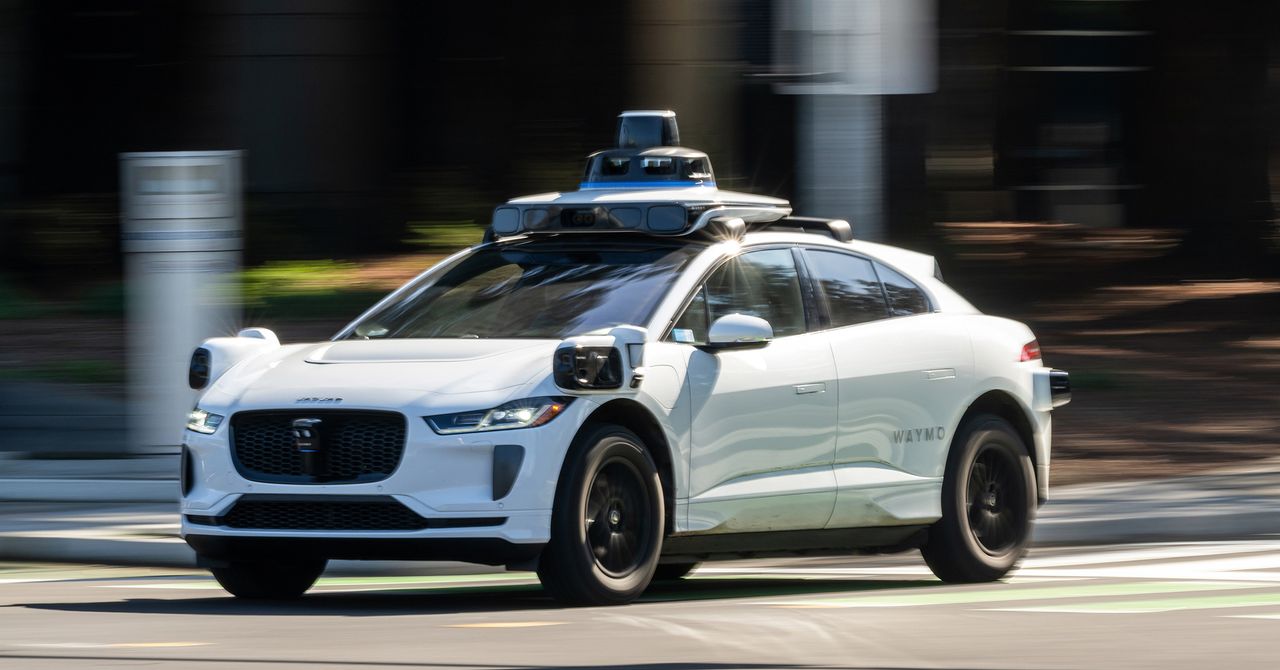
Emergency first-responder leaders told federal regulators in a private meeting last month that they were frustrated with the performance of autonomous vehicles on their streets—that city firefighters, police officers, EMTs, and paramedics are forced to spend time during emergencies resolving issues with frozen or stuck cars. One fire official called them “a safety issue for our crews as well as the victims.” WIRED obtained an audio recording of the meeting.
Officials from San Francisco and Austin, where Waymo has been ferrying passengers without drivers for more than a year, said the vehicles’ performance is getting worse. “We are actually seeing something interesting: backsliding of some things that had improved upon,” Mary Ellen Carroll, the executive director of San Francisco’s Department of Emergency Management, told officials with the National Highway Traffic Safety Administration (NHTSA), which oversees self-driving vehicle safety in the US. “They are committing more traffic violations.”
“We’ve seen some behavior we haven’t seen in a few years … Waymo is frequently now blocking our fire stations from access,” added Chief Patrick Rabbitt, the head of the San Francisco Fire Department. “Their default is to freeze.” The situation can prevent firetrucks from responding to emergencies in a “timely and appropriate” way, he said.
In Austin, first responders have been frequently stymied by Waymos “freezing up,” said Lieutenant William White, head of Highway Enforcement Command at the Austin Police Department. White said that, contrary to what Waymo had told first responders, the vehicles often fail to recognize or respond to officers’ hand signals, which can lead to cascading delays during emergencies or unusual road incidents.
“I believe the technology was deployed too quickly in too vast amounts, with hundreds of vehicles, when it wasn’t really ready,” White said. NHTSA did not respond to WIRED’s request for comment.
The complaints come as Waymo embarks on an ambitious expansion across the US and the world. Today, the company offers driverless rides in parts of 10 US cities, with plans to launch service in 10 more before the end of the year, including London. Waymo said last month that it’s now providing 500,000 paid rides weekly—a figure that’s still dwarfed by human-powered ride-hail services (Uber provides some 400 times that number weekly) but has grown tenfold since last year.
But these comments from cities where the service is already operating threaten to slow the rollout of driverless technology, which, according to Waymo’s data, reduces serious crashes compared to human-driven cars. Waymo is already facing political opposition, especially from organized labor, in several dense, blue, and potentially lucrative cities, including Boston, New York City, Seattle, and Washington, DC.
In a statement, Waymo spokesperson Julia Ilina wrote: “We deeply value our partnership with first responders and our shared commitment to safety. Their ongoing feedback has been instrumental in driving impactful improvements to the Waymo service.” The company says it has conducted in-person training for more than 35,000 emergency responders across the country.
Public Comment Periods
The comments made in the private meeting are blunter than what government officials have generally said in public. But they reflect long-simmering and sometimes vocal frustrations expressed by city leaders since at least late last year. Since autonomous vehicle operations are regulated in California and Texas by state rather than city officials, local first-responder departments and those who represent them can generally only request that developers like Waymo make specific changes to their operations.
On Wednesday, Austin first responders appeared before the City Council to discuss Waymo’s response to an incident last month in which a driverless vehicle blocked an ambulance for two minutes that was responding to a shooting in the city’s downtown, which killed three people and injured at least 14. Though officers were able to connect quickly with Waymo operators to move the vehicle, they reported that it had taken up to three minutes to connect with a remote agent in the past. They reiterated that Waymos don’t always respond well to hand signals, especially ones from police mounted on motorcycles.
Waymo declined to attend the meeting, and two front-row chairs labeled “RESERVED FOR: WAYMO” remained empty throughout the two-hour session.


Trützschler to showcase advanced textile tech at ITM 2026 in Istanbul

Gold, silver price prediction: Will gold head down to Rs 1.40 lakh/10 grams & silver hit Rs 2.20 lakh/kg? – The Times of India

US top commander to brief Trump on new military options against Iran, says report

-

 Politics1 week ago
UK’s Starmer seeks to deflect blame over Mandelson appointment
-
 Business1 week ago
Us-India Trade Talks: US–India trade deal: Where do talks stand & what to expect – explained – The Times of India
-

 Fashion1 week ago
Global energy growth slows to 1.3% in 2025: Report
-
 Business1 week ago
UK inflation accelerates after Iran war drives sharp rise in fuel prices
-

 Tech1 week ago
Nation states responsible for ‘nationally significant’ cyber attacks against UK, says NCSC chief | Computer Weekly
-

 Tech1 week ago
How to Watch the Lyrids Meteor Shower at Its Peak
-

 Tech1 week ago
Microsoft faces court battle in £2bn Windows Server class action | Computer Weekly
-

 Sports1 week ago
PSL 11: Hyderabad Kingsmen opt to field after winning toss against Multan Sultans