

Fashion
India optimistic about renewed SACU trade pact talks: Envoy


The agreement will offer market access for many Indian goods to South Africa, Namibia, Lesotho, Eswatini and Botswana.
He was addressing the second annual India-South Africa Business Conclave.
India’s envoy to South Africa Prabhat Kumar has said that New Delhi is confident about the latest round of talks to finalise the Southern African Customs Union (SACU) Preferential Trade Agreement.
The agreement will offer market access for many Indian goods to South Africa, Namibia, Lesotho, Eswatini and Botswana.
The impetus for such a pact emerged in 2003, but have been stalled for over a decade now.
The impetus for a trade arrangement between India and SACU emerged in 2003, but have been stalled for over a decade now.
A joint study group (JSG) was established to examine the feasibility and potential scope of a trade agreement, followed by a number of meetings in ensuing years in Pretoria, New Delhi and Windhoek, a news agency reported.
Though SACU presented a revised text of the PTA by 2010, the talks considerably slowed down as both sides struggled to reach consensus on the list of products for tariff concessions.
India expressed interest in accessing SACU’s market for its textiles and clothing, which SACU deemed highly sensitive sectors. On the other hand, SACU sought access for its agricultural products and minerals, facing competitive or sensitive responses from India.
Following the economic challenges arising out of the COVID-19 pandemic and, India and SACU revived the PTA discussions.
The diplomat invited delegates to participate in the India-Africa Forum Summit later this year which will bring together the heads of state from African countries in New Delhi.
Fibre2Fashion News Desk (DS)
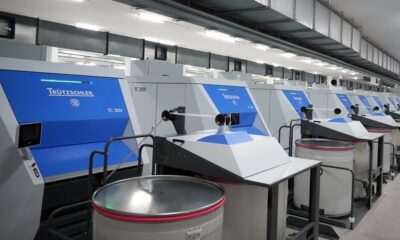
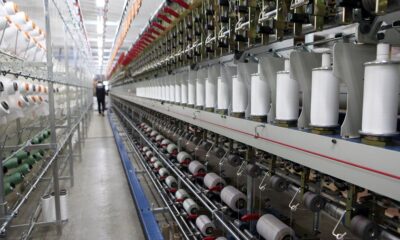









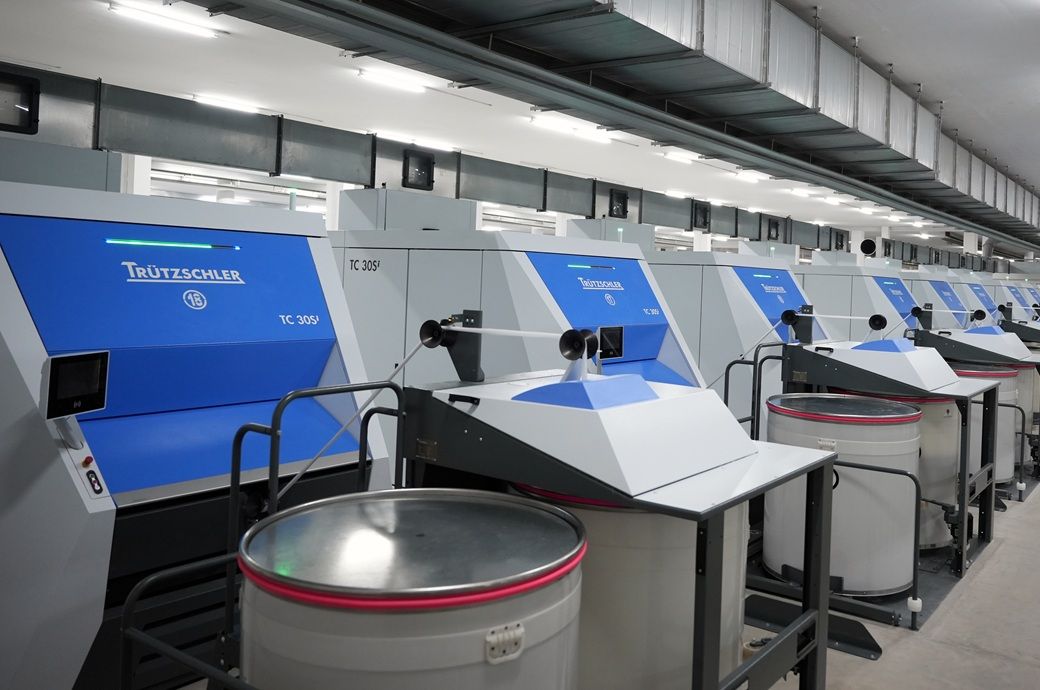
Trützschler Spinning
Trützschler Spinning will focus on technologies that enable highly efficient, stable, and resource-saving spinning preparation, with a strong emphasis on automation and direct spinning. At the heart of our booth, visitors will experience Trützschler’s latest automation highlight: T-CAN – a smart system that intelligently combines self-driving cans with AGV technology and an intuitive software interface. In this way, T-CAN significantly reduces manual handling. The result is lower operational costs, minimized downtime, as well as consistent and reliable material allocation. Developed in response to rising labor costs and increasing labor shortages in the global textile industry, T-CAN represents a key step towards more automated, efficient, and future-ready spinning mills.
Trützschler will present advanced spinning, card clothing and nonwovens solutions at ITM 2026 in Istanbul, Türkiye.
Highlights include the automated T-CAN system, TC 30i card, IDF 3 draw frame and TCO 21XL comber.
The company will also feature digital platforms and sustainable innovations aimed at improving efficiency, productivity and fibre processing performance.
A further highlight is the combination of the next-generation card TC 30i and the integrated draw frame IDF 3, which together form a perfect match for direct spinning. The TC?30i achieves up to 40% higher productivity, while maintaining or even improving yarn quality. Its intelligent feature T-GO enables extremely precise carding gap settings far beyond what is achievable manually. The only proven automatic gap optimizer has successfully demonstrated its value in several thousand customer operations worldwide. The IDF 3 provides a shortened spinning preparation process for rotor and airjet applications without compromising on quality. It is highly valued for its user-friendly operation. A new can changing system increases card efficiency by up to 3%, while advanced measuring devices support more homogeneous slivers and improved yarn quality.
The powerful combination of TC 30i and IDF 3 delivers high productivity, stable yarn parameters, and efficient processing of blends with high short fibre content or recycled materials.
Experts will also be available to discuss Trützschler’s latest advancement in combing technology: the TCO 21XL. This innovation increases productivity by about 50% because it operates twelve heads instead of a typical eight head setup, while delivering the same excellent sliver quality and, at the same time, requiring less energy per head. Equipped with the COUNT CONTROL function, the TCO 21XL further enhances quality assurance in the combing process. The result is a permanently constant sliver count for first-class yarn quality.
Beyond machinery, service and digital solutions will complete our presence at the fair. With local service and technology support teams, local spare parts and wire stocks and Trützschler repair stations, customers can rely on fast assistance and minimized downtime in Türkiye and globally. Our service team will present possibilities to upgrade existing machinery and the latest service tools. In addition, visitors can explore MyMill, Trützschler’s cloud-based platform for monitoring and optimizing spinning mill operations. MyMill is one of several digital services available via the My?Trützschler platform, which serves as the central digital access point for Trützschler customers. My?Trützschler bundles all digital services in one place and provides seamless access to applications such as MyMill, Training and Spare Parts Shop, offering valuable insights and support across the entire Trützschler ecosystem.
Trützschler Card Clothing
At ITM 2026, Trützschler Card Clothing (TCC) will unveil a new flat top, designed for spinning mills that aim for reliability and long-term performance in modern spinning preparation. Engineered for robustness and durability, this innovation is designed to support consistent performance over an extended service life. Fully recyclable and seamlessly compatible with Trützschler’s intelligent carding systems, the new flat top reflects TCC’s commitment to durability, efficiency, and sustainable design in card clothing.
Trützschler Nonwovens
With the T-SUPREMA needle-punching concept, successfully implemented with Texnology, Trützschler Nonwovens targets producers of technical nonwovens with flexible, proven solutions for geotextiles, filter media and other durable applications. The concept is complemented by the new NC-Xe card, a fit-for-purpose and cost-efficient solution that meets strong demand from cost-conscious investors while delivering proven Trützschler product and process quality.
Another focus is Trützschler Nonwovens’ proven carding technology for supersoft air-through bonded (ATB) hygiene nonwovens. With special designs, tailored configurations and dedicated component executions, the NC-X card reliably processes the finest bicomponent microfibres down to 0.4 denier. This enables the formation of highly voluminous, uniform and exceptionally soft webs, ideally suited for high-quality diaper backsheet and topsheet applications.
Globally proven Carded/Pulp and Wet-Laid/Spunlace line solutions for the production of lightweight nonwovens for disposable wipes and moist toilet tissue complete the Trützschler Nonwovens portfolio.
Connect with us in Istanbul!
Whether it’s advanced spinning preparation with T-CAN, TC 30i, IDF 3 and TCO 21XL, a powerful new card clothing innovation, or future-oriented nonwoven technologies – ITM 2026 brings all of our key innovations together. Our experts are looking forward to welcoming you at Hall 7, Booth 714A. Together, we take your fibre processing performance to the next level – boosting productivity, efficiency and cost-effectiveness.
Note: The headline, insights, and image of this press release may have been refined by the Fibre2Fashion staff; the rest of the content remains unchanged.
Fibre2Fashion News Desk (JP)
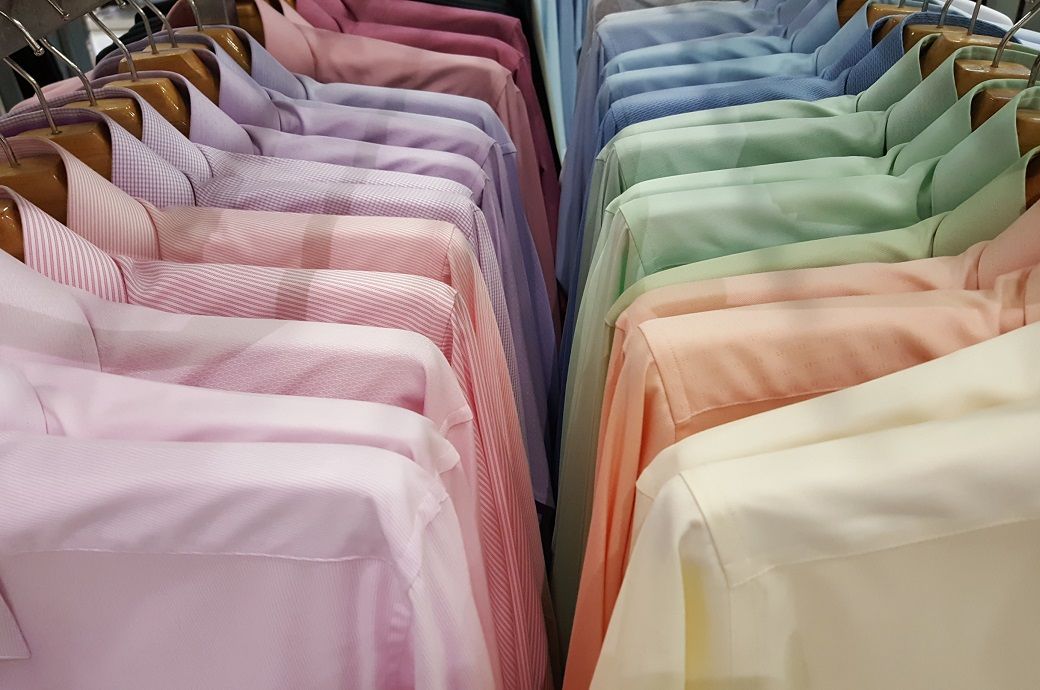
In a statement, SIMA Chairman Durai Palanisamy expressed appreciation to the government for concluding the agreement, noting that it provides 100 per cent duty-free access for Indian textile exports, including apparel, home textiles and made ups. He added that the extension of MFN-equivalent benefits ensures a level playing field for Indian exporters and enhances meaningful market access.
India’s textile industry has welcomed the India-New Zealand Free Trade Agreement (FTA), citing 100 per cent duty-free access as a boost to competitiveness and market diversification.
Industry leaders said the pact will expand exports, support value-added segments, and strengthen resilience amid global disruptions, while creating jobs and enhancing long-term trade growth.
Palanisamy noted that the agreement aligns with India’s broader vision of building a strong manufacturing and export base under the ‘Viksit Bharat 2047’ roadmap and achieving a $350 billion textile and apparel market by 2030. He added that recent FTAs with key global markets are helping secure real market access and support industry expansion.
The industry also pointed to the strategic importance of diversifying export markets amid geopolitical uncertainties, including disruptions linked to the Middle East. Government support through policy measures and supply chain interventions has helped the sector remain resilient, while exporters are being encouraged to explore new markets and focus on value addition.
Echoing similar sentiment, Suketu Shah, CEO of Vishal Fabrics Ltd, said the agreement is a strong step forward, offering duty-free access to a high-potential market and enhancing India’s competitiveness. He noted that with bilateral trade currently around $2.4 billion and scope for further expansion, the pact opens new growth avenues for value-added textile exports and strengthens long-term trade ties between the two countries.
Industry stakeholders believe the FTA will not only deepen bilateral trade but also generate employment in the labour-intensive textile sector while enabling Indian manufacturers to expand their global footprint.
Fibre2Fashion News Desk (KUL)
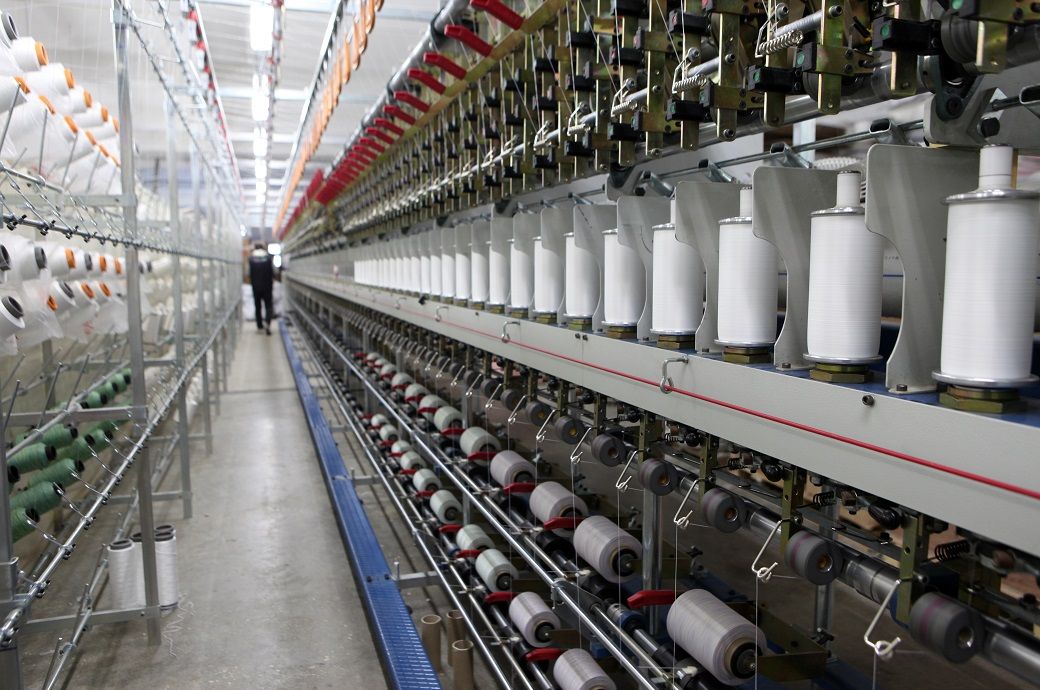
RK Vij, National President of the Textile Association (India) told Fibre2Fashion, “The ongoing US–Israel and Iran conflict has sharply inflated polyester feedstock costs, with prices of PTA and MEG rising 30–32 per cent, However, yarn prices have increased only 12–15 per cent, reflecting subdued downstream demand.”
India’s textile industry is facing acute stress as raw material costs have surged 25–32 per cent, while yarn prices have risen only 12–15 per cent amid weak demand.
Nearly 40 per cent of units have cut or halted operations.
Supply disruptions, high freight, and labour issues deepen losses, prompting urgent calls for GST reform, duty relief, and subsidies to sustain operations and competitiveness.
Supplementing this trend, global market inputs indicate that polyester producers are paying nearly 30 per cent more for petroleum-based raw materials amid Middle East supply disruptions and higher crude prices, intensifying cost pressures across the value chain.
Nearly 40 per cent of fibre and yarn units in India have shut or reduced operations due to unviable economics and weak demand, Vij said, adding that export shipments are also being hit by rising freight costs and logistical delays.
Dr. Jayesh Pathak, President of the Mumbai Yarn Merchants Association, said the industry is witnessing sustained losses as raw material prices have risen by 25–30 per cent while consumption remains slow. He also pointed to reduced PTA and MEG output due to refinery shifts towards LPG, creating supply shortages and further pushing up costs.
Global supply chain signals reinforce these pressures. Textile manufacturers in key hubs have reported production cuts and reluctance to procure high-cost yarn, while labour shortages, partly linked to rising living costs, have added to operational challenges.
Purusottam Parmananka, Joint Managing Director of the Tiruppur based Kasharinandan Knit Fabrics, noted that the polyester value chain is under dual pressure of high costs and weak demand. “This is the second consecutive season where cost pressures may affect export orders, as buyers may not accept price increases,” he said.
Vij underscored the demand-side strain, noting that the sharp rise in input costs has not translated into proportional yarn price increases due to weak market absorption. “While PTA and MEG prices have risen by 30–32 per cent, yarn prices have increased only 12–15 per cent because demand remains slow,” he said, highlighting the widening gap between costs and realisations. He added that downstream segments, including garments, are facing disruptions in both domestic and export markets due to shipment delays and rising freight rates. “The industry is under severe stress as demand is not keeping pace with rising costs, making operations increasingly unviable,” Vij noted, reinforcing the need for immediate policy support.
Vij urged the government to act urgently, saying the industry needs support “to survive amid war and severe disruption”. He called for duty exemptions on PTA and MEG to be extended for at least two more quarters, as the current relief is available only till June-end. He also demanded removal of the inverted GST structure, noting that PTA and MEG attract 18 per cent GST while fibre is taxed at 5 per cent. This, he said, locks up heavy capital in tax credits for long periods, worsening liquidity stress for units already facing closures and production cuts.
Dr. Pathak also called for immediate policy intervention to stabilise the sector, emphasising the need for financial and structural support. “The industry is facing continuous losses due to higher costs and weak demand. Survival is becoming difficult under the current conditions,” he said.
He urged the government to provide subsidies on power, land and machinery imports to ease cost pressures. Pathak added that poor industry economics are forcing units to rely on outdated, second-hand machinery, making modernisation unviable and further impacting long-term competitiveness.
While policymakers remain optimistic that upcoming free trade agreements could boost exports in the long term, stakeholders caution that immediate intervention is critical to prevent further capacity erosion and safeguard the sector’s global competitiveness.
Fibre2Fashion News Desk (KUL)


Queen Camilla makes stunning confession in interview with Jenna Bush Hager

Oil jumps to highest price since 2022 after report Trump to be briefed on new Iran options

Trützschler to showcase advanced textile tech at ITM 2026 in Istanbul
Us-India Trade Talks: US–India trade deal: Where do talks stand & what to expect – explained – The Times of India

UK inflation accelerates after Iran war drives sharp rise in fuel prices

PSL 11: Hyderabad Kingsmen opt to field after winning toss against Multan Sultans

-
Business1 week ago
Us-India Trade Talks: US–India trade deal: Where do talks stand & what to expect – explained – The Times of India
-
Business1 week ago
UK inflation accelerates after Iran war drives sharp rise in fuel prices
-
 Sports1 week ago
PSL 11: Hyderabad Kingsmen opt to field after winning toss against Multan Sultans
-
 Business1 week ago
Trump administration in advanced talks for a rescue package for Spirit Airlines, source says
-

 Tech1 week ago
Nation states responsible for ‘nationally significant’ cyber attacks against UK, says NCSC chief | Computer Weekly
-

 Tech1 week ago
Microsoft faces court battle in £2bn Windows Server class action | Computer Weekly
-

 Fashion1 week ago
Bangladesh RMG units call for allowing local FOC raw material sourcing
-
 Business1 week ago
Gold prices in Pakistan Today – April 23, 2026 | The Express Tribune