

Fashion
Euro area consumers expect higher inflation, slower growth ahead: ECB


Median perceived inflation over the past 12 months rose to 3.5 per cent in March from 3.0 per cent in February. Short-term inflation expectations increased sharply, with one-year ahead expectations climbing to 4 per cent from 2.5 per cent, while three-year expectations rose to 3 per cent from 2.5 per cent. Longer-term expectations edged up slightly to 2.4 per cent from 2.3 per cent, ECB said in a press release.
Euro area consumers grew more pessimistic in March 2026 as inflation expectations rose, with one-year ahead forecasts reaching 4 per cent, as per ECB.
Spending expectations strengthened, while income outlook remained unchanged.
Growth expectations fell to -2.1 per cent and unemployment expectations increased.
Consumers also expected higher house prices and mortgage rates, signalling a cautious outlook.
Across income groups, lower-income households continued to report slightly higher inflation perceptions and expectations than higher-income groups, although the overall trend of rising expectations was broadly consistent. Younger respondents reported lower inflation expectations than older cohorts.
Consumers’ income outlook remained subdued. Expected nominal income growth over the next 12 months was unchanged at 1.2 per cent. However, spending expectations strengthened, with expected spending growth rising to 4.1 per cent from 3.5 per cent, the highest level since May 2023. Perceived spending growth over the past year also increased to 5.1 per cent.
Economic sentiment weakened further. Growth expectations for the next 12 months fell deeper into negative territory at -2.1 per cent, compared with -0.9 per cent in February. At the same time, the expected unemployment rate 12 months ahead rose to 11.3 per cent from 10.8 per cent, with lower-income households anticipating higher joblessness than higher-income groups.
The ECB said the results point to a more cautious consumer outlook, marked by rising inflation concerns, resilient spending expectations, and a deteriorating view of economic growth and labour market conditions.
Fibre2Fashion News Desk (SG)










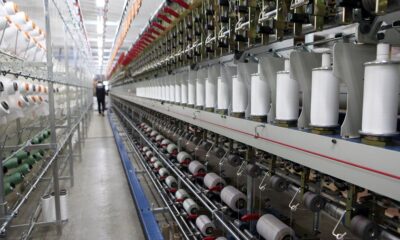


The world is now moving away from China and the subsequent ‘China +*’ sourcing strategy into ‘China plus multiple sourcing’ options to ensure diversification. The FTA with New Zealand now opens India to trade at a vast level, and levelling the trade dynamics, which have been skewed towards China and Bangladesh.
Sravanti Kancharla, executive director of Supriya Spinning Mills Pvt Ltd and vice chairperson of the women entrepreneurs wing at AP Chamber of Commerce & Industry Federation in an interview with Fibre*Fashion said, “Although New Zealand is not a high-volume market, but it is a high-value market and it actually helps in India**;s positioning as a global manufacturing and export hub.”

The Federal Open Market Committee voted to hold the benchmark funds rate in a range between 3.5-3.75 per cent.
The committee seeks to achieve maximum employment and inflation at 2 per cent rate over the longer run.
The US Federal Reserve (Fed) has left its benchmark interest rate unchanged for the third meeting in a row amid a solid expansion of economic activity, persistent inflation, low job gains, and little change in unemployment rate in recent months.
Developments in the Middle East are contributing to a high level of uncertainty about the economic outlook.
Developments in the Middle East are contributing to a high level of uncertainty about the economic outlook, the Fed said in a press release.
Fed chair Jerome Powell, due to step down in mid-May, told a press conference that he plans to continue to serve on the board of governors until an investigation of the Fed is “well and truly over with transparency and finality.” He may remain governor until 2028.
Fibre2Fashion News Desk (DS)
It also launched the Modish Scholars Initiative to provide uniforms to underprivileged children in public schools.
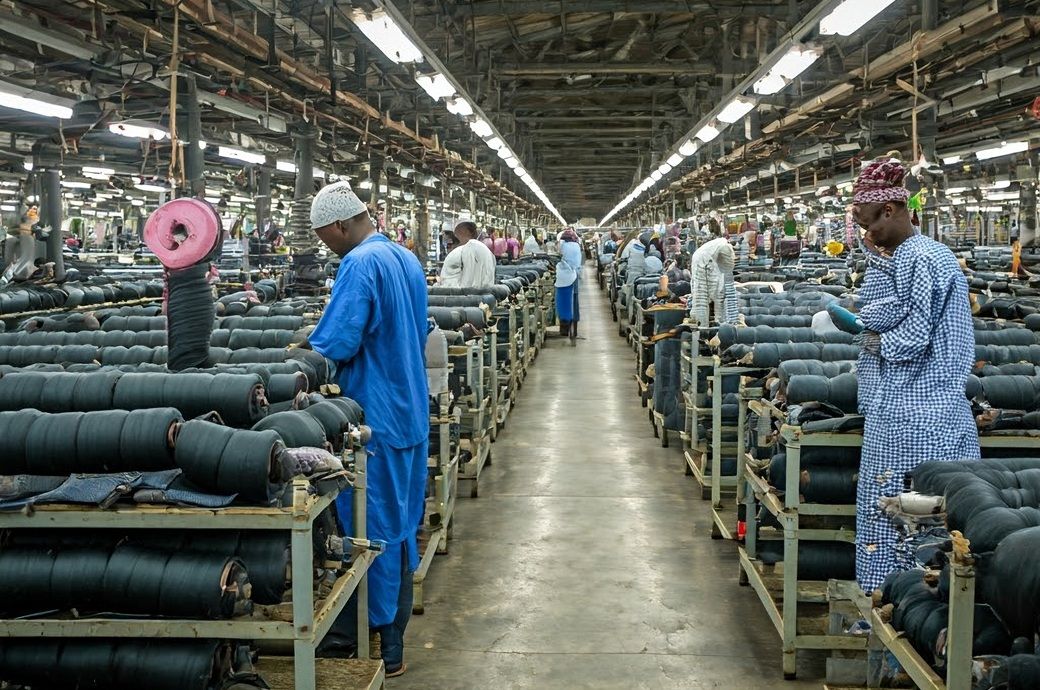
Fashion brand Mo’Afrique recently commissioned a multi-million-dollar garment factory in Nigeria’s capital Abuja as it launched the Modish Formal garments brand.
It also launched the Modish Scholars Initiative to provide uniforms to underprivileged children in public schools.
The factory marks a strategic shift from luxury fashion into industrial-scale manufacturing.
The development reflects the Nigerian government’s industrialisation agenda, Minister of Industry, Trade and Investment Jumoke Oduwole, said at the launch event, stressing that the scale must translate into competitiveness, jobs and exports.
The administration is prioritising policies to support manufacturers, while leveraging regional trade opportunities, she was cited as saying by domestic media outlets.
The factory marks a strategic shift from luxury fashion into industrial-scale manufacturing.
The facility is designed for high-volume production targeting institutional buyers including the military, paramilitary agencies, schools and corporate bodies.
Fibre2Fashion News Desk (DS)


Gross GST collections hit record high of Rs 2.43 lakh crore in April 2026 despite US-Iran war concerns – The Times of India

De-risking from China just got easier with India-New Zealand FTA

US official says Iran war truce ‘terminated’ hostilities for war powers deadline

-

 Sports1 week ago
PSL 11: Hyderabad Kingsmen opt to field after winning toss against Multan Sultans
-
 Business1 week ago
Trump administration in advanced talks for a rescue package for Spirit Airlines, source says
-

 Entertainment1 week ago
Anne Hathaway shares major news about ‘Princess Diaries 3’
-

 Tech1 week ago
Microsoft faces court battle in £2bn Windows Server class action | Computer Weekly
-
 Business1 week ago
Gold prices in Pakistan Today – April 23, 2026 | The Express Tribune
-

 Entertainment1 week ago
Mike Vrabel to miss Patriots’ final NFL draft day —here’s why
-
 Business1 week ago
High-Skilled Immigration: US tightens screws on high-skilled immigration: Denial rates surge across key visa categories – The Times of India
-

 Fashion1 week ago
Canada forms new advisory committee to strengthen US trade relations