

Business
US opens new trade front with Section 301 probes | The Express Tribune

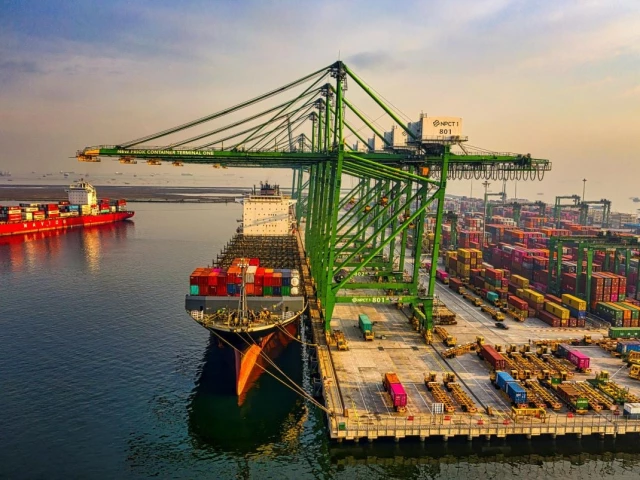
China denounces ‘unilateral’ move as EU and key partners warn decision could deepen global economic uncertainty
US officials have indicated they hope the Section 301 investigations will be completed before that deadline. PHOTO: PEXELS
The United States’ decision to launch sweeping trade investigations against 16 major trading partners has triggered sharp criticism from China and drawn cautious responses from the European Union and several other economies, raising fears of renewed global trade tensions at a time when the international economy is already facing mounting uncertainty.
The investigations, announced on Wednesday by the Office of the US Trade Representative (USTR), will be conducted under Section 301 of the US Trade Act of 1974. They target a broad group of trading partners, including the European Union, China, Japan, Pakistan, India, Mexico, South Korea, Singapore, Switzerland, Taiwan and Vietnam.
Washington says the probes are intended to determine whether certain policies or practices in these economies are “unreasonable or discriminatory” and whether they burden or restrict US commerce.
However, Beijing swiftly condemned the move, warning that unilateral trade measures risk undermining the global economic order and escalating trade disputes.
China’s Foreign Ministry said that Beijing firmly opposes unilateral tariff measures, stressing that tariff and trade wars benefit no one. Foreign Ministry spokesperson Guo Jiakun told a regular press briefing that economic and trade differences between countries should be resolved through consultation on the basis of equality, mutual respect and mutual benefit.
Guo also rejected Washington’s claim that China suffers from “overcapacity” in certain industrial sectors, saying the allegation is unfounded and should not be used as a pretext for political manipulation. “The so-called issue of ‘China’s overcapacity’ does not really exist,” Guo said. “It should not be used as an excuse for unilateral trade actions.”
China’s Ministry of Commerce echoed that position on Friday, calling the investigation a typical unilateralist move that could severely disrupt international trade rules and the global economic order.
A ministry spokesperson said that a panel of the World Trade Organisation (WTO) had previously ruled that tariffs imposed through Section 301 investigations violate WTO rules. The spokesperson added that production and consumption have become deeply integrated across borders, meaning that claims of overcapacity must be viewed within the context of global supply chains.
“There would be no cross-border trade if production in each country only met domestic market demand,” the spokesperson said, urging the US not to define capacity exceeding domestic demand as “overcapacity”.
China also warned that it reserves the right to take necessary measures to safeguard its legitimate rights and interests.
Analysts say the new probe may represent an attempt by Washington to revive tariff policies after previous measures were blocked by the US courts.
US Trade Representative Jamieson Greer speaks to the media, on the day he attends a working lunch with EU ministers responsible for trade, in Brussels, Belgium, November 24, 2025.PHOTO: REUTERS
Last month, the US Supreme Court ruled that sweeping tariffs imposed earlier under emergency authorities were illegal. Those tariffs had been introduced by the Trump administration under a law intended for national emergencies.
Following the ruling, the administration imposed a temporary 10% tariff on imports from all trading partners under Section 122 of the Trade Act of 1974. That measure, however, expires after 150 days on July 24.
US officials have indicated they hope the Section 301 investigations will be completed before that deadline. According to media reports, US Trade Representative Jamieson Greer has said the goal is to wrap up the investigations before the temporary tariff measure expires.
Also Read: Trump imposes 10% global tariffs for 150 days after Supreme Court blocks earlier duties
Some observers believe the new investigations could pave the way for additional tariffs if Washington concludes that foreign trade practices are harming American industries.
Experts argue that the move reflects Washington’s continued reliance on tariffs as an economic policy tool. He Weiwen, a senior fellow at the Centre for China and Globalisation, said the investigation could serve as a replacement for earlier tariff policies that were invalidated by the US Supreme Court. “The announcement suggests the administration still sees tariffs as an important instrument in dealing with trade partners,” he said.
Analysts also questioned the economic rationale behind the investigation, arguing that claims of overcapacity ignore the realities of global industrial specialisation.
Gao Lingyun, a research fellow at the Chinese Academy of Social Sciences, said the global division of labour naturally leads different countries to emphasise different aspects of production and consumption. “On the one hand, the US benefits from affordable, high-quality imported goods,” Gao said. “On the other hand, it complains about so-called overcapacity. This is inherently contradictory.”
Gao added that attempts to force companies to relocate manufacturing to the US through administrative pressure would likely raise production costs and ultimately harm American consumers.
The European Union has also expressed concern about the US investigation. The European Commission said it would carefully examine the details of the probe and respond firmly if Washington takes actions that violate existing trade agreements.
European Commission Deputy Chief Spokesperson Olof Gill said Brussels would ensure that EU interests are fully protected. “The Commission will respond firmly and proportionately to any breach of the joint statement commitments,” Gill said during a press briefing.
The remarks refer to a trade agreement reached between the EU and the US last year, under which the EU agreed to eliminate tariffs on US industrial products and expand tariff-rate quotas for American agricultural goods. In return, Washington committed to setting a ceiling on tariffs applied to most EU exports.
Read More: US tariff rate to hit 15% or more for some nations: trade official
European officials have rejected US allegations that the bloc contributes to global market overcapacity.
Other US trading partners are also closely monitoring the investigation.
Japan’s government said it is reviewing the details of the probe while continuing to implement its existing trade agreement with Washington.
South Korea has indicated it will consult with the US to ensure that its trade benefits under the bilateral agreement are not undermined.
Thailand has formed a working group to prepare for the investigation and is gathering relevant documentation ahead of potential discussions with US authorities.
The responses highlight growing international concern that the investigations could lead to a new wave of unilateral tariffs.
Zhou Mi, a senior researcher at the Chinese Academy of International Trade and Economic Cooperation, said the move has heightened vigilance among US trading partners. “The reactions from multiple economies show widespread concern about the possibility that the US may escalate unilateral tariff measures,” Zhou said.
The timing of the investigation has also raised concerns because it comes during a period of heightened geopolitical tension.
Global trade and supply chains are already facing pressure due to instability in the Middle East, including disruptions to shipping through the Strait of Hormuz and rising oil prices.
Analysts say that introducing new trade frictions at such a moment could further destabilise the global economic environment. “Restarting the Section 301 investigation at this time adds another layer of uncertainty to the global economy,” Zhou said.
He warned that if the probe results in new tariffs, it could disrupt international trade flows and weaken global economic recovery.
Because supply chains are deeply interconnected, the impact would not be limited to targeted economies, he said. “Businesses and consumers around the world — including those in the US — could feel the consequences,” Zhou added.
The outcome of the investigations remains uncertain, but the move has already reignited debate about the future of global trade relations.
If Washington ultimately imposes new tariffs based on the probe’s findings, it could spark retaliatory measures from affected economies and intensify trade tensions among major global players.
For now, many countries are urging dialogue and consultation rather than unilateral actions.
China has reiterated that resolving economic differences through cooperation remains the only sustainable path forward. “China urges the US to correct its erroneous practices and return to the right track of dialogue and consultation,” the Commerce Ministry spokesperson said.
As the investigations proceed, the global trading system may face renewed strain — with policymakers, businesses and investors closely watching how the dispute unfolds.
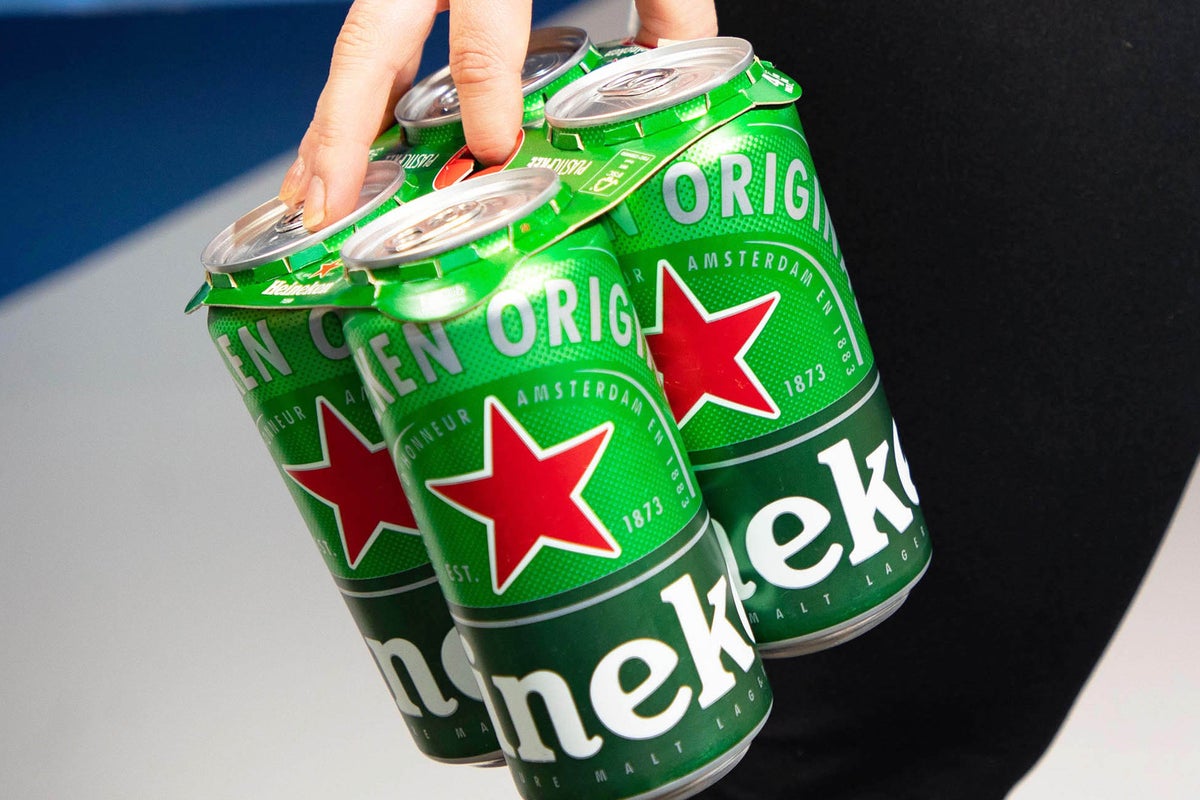
Heineken has revealed plans to invest more than £44 million into improvements for hundreds of its UK pubs.
The Dutch brewing giant said the cash injection into its Star Pubs operation, which runs 2,350 sites across the UK, will create around 850 jobs.
The major investment plan comes despite a challenging backdrop for the pub sector.
Pubs have come under pressure from rising labour costs and increases to national insurance contributions over the past year, while consumer spending has also come under pressure with concerns over inflation and rising unemployment.
However, pubs received additional business rates support from the Government from last month to help ease their cost pressures.
Lawson Mountstevens, Star Pubs’ managing director, said the company’s investment plan is partly aimed at boosting revenues to help the group cope with the recent “sustained increases in running costs”.
The plans will see the business invest £44.5 million this year into upgrades for 647 of its pubs.
It said 108 of its venues will see particularly significant cash injections, with these all set for transformations costing at least £145,000.
Heineken said the majority of pubs are owned by the group but independently operated by locals, with sports-focused venues an emphasis for investment in the run-up to the 2026 football World Cup.
The pub firm and brewer said it has pumped £328 million into British pubs since 2018.
It has already started work in 52 locations, including eight projects where it is reopening boarded-up pubs which have suffered from lengthy closures.
Mr Mountstevens urged the Government to reduce the tax burden on pubs to help ease the cost burden and support more job creation in the industry.
He said: “We can only do so much; the root-and-branch reform of business rates that the industry has been calling for over many years is urgently required, as well as a lowering of the burden of taxation on pubs, including VAT and beer duty.
“We are calling on the Government to support us in bringing out the best in the Great British pub.”

A company law appeals court on Monday rejected a challenge by mining billionaire Anil Agarwal’s Vedanta Ltd to the winning bid by Gautam Adani’s group for bankrupt real estate firm Jaiprakash Associates Ltd (JAL), whose assets include India’s only Formula One circuit. The National Company Law Appellate Tribunal (NCLAT) did not find merit in the issues raised by Vedanta and dismissed its two petitions. A Bench comprising Chairperson Justice (retired) Ashok Bhushan and Technical Member Barun Mitra held that the Committee of Creditors (CoC) were right in preferring Adani Group’s Rs 14,535 crore bid over Vedanta’s resolution plan for JAL. That decision was approved by the National Company Law Tribunal (NCLT), against which Vedanta went into an appeal in NCLAT. “No grounds have been made out by the appellant (Vedanta) to interfere with the decision of the adjudicating Authority (NCLT),” NCLAT order said. “There is no merit in the appeal. Both appeals are dismissed. There shall be no orders to pass.” NCLAT said the decision of the Committee of Creditors was based on “overall consideration of the respective resolution plan and was taken in its commercial wisdom,” said the appellate tribunal. JAL was admitted for insolvency proceedings in June 2024 after it failed to pay bank dues exceeding Rs 57,000 crore. The resolution process drew 28 expressions of interest, with six final bidders including Vedanta, Adani Enterprises and others. Adani and Vedanta emerged as frontrunners, with Adani’s proposal scoring higher on upfront recovery and overall value. The CoC approved Adani’s plan in November 2025 with a 93.81 per cent vote. Vedanta later submitted a revised offer, valued at Rs 16,070 crore, but creditors declined to consider it, citing rules barring post-deadline changes. Vedanta argued the process lacked transparency and that its revised bid offered superior value. Creditors countered that the revised proposal was submitted only after Vedanta became aware it was trailing the winning bid. The appellate tribunal had earlier declined to stay implementation of Adani’s plan, a decision subsequently upheld by the Supreme Court, which directed an expedited hearing while requiring key implementation decisions to receive tribunal approval. Monday’s ruling clears the way for Adani’s takeover of JAL unless Vedanta challenges it in the Supreme Court. In its order, NCLAT also said there has been “no material irregularity committed by Resolution Professional while conducting the plan resolution process.” NCLAT also dismissed Vedanta’s plea, where it had questioned the evaluation metrics adopted and had said its bid was Rs 3,400 crore higher in gross value terms and roughly Rs 500 crore more in net present value compared to the Adani Group’s bid. Rejecting this, NCLAT said “decision of CoC not approving the resolution plan of the appellant with a higher plan value of Rs 3,400 crores and NPV of Rs 500 crore as compared to plan of respondent No 3 (Adani) cannot be said to be arbitrary or perverse.” On March 17, the NCLT, Allahabad bench, approved Adani Enterprises Ltd’s Rs 14,535-crore bid to acquire JAL through the insolvency process. This was challenged by Vedanta before the appellate tribunal NCLAT. On April 23, the insolvency appellate tribunal had concluded its hearing after hearing the petitioner Vedanta and respondents, including the Resolution Professional, Committee of Creditors (CoC) and Adani Enterprises. Vedanta has questioned the evaluation metrics adopted by lenders of JAL, which had selected the lower bid of Rs 3,400 crore from Adani Enterprises for the debt-ridden company and questioned the commercial wisdom of CoC. Earlier, on March 24, NCLAT declined any interim stay over the Vedanta Group’s plea against the order passed by the NCLT approving Rs 14,535-crore bid by the Adani Group for acquiring JAL. However, it had also said the plan would be subject to the outcome of the appeals filed by the Anil Agarwal-led Vedanta Group. This interim order by NCLAT was challenged before the Supreme Court, which also declined to grant a stay. However, the apex court had directed that if the monitoring committee planned to take any major policy decision, it should first obtain the Tribunal’s sanction. Adani Enterprises had outbid Vedanta and Dalmia Bharat to win the bid for JAL. Adani got the maximum 89 per cent votes from creditors, followed by Dalmia Cement (Bharat), and Vedanta Group. The CoC defended its decision, saying the process complied with all Insolvency and Bankruptcy Code (IBC) rules. They maintained that no bidder has a guaranteed right to win, even if it offers the highest value. They said plans were evaluated on multiple factors, including upfront cash, feasibility, and execution, not just headline value. JAL, which has high-quality assets and business interests spanning real estate, cement manufacturing, hospitality, power and engineering & construction, was admitted to the CIRP in June 2024 after it defaulted on payments of loans aggregating Rs 57,185 crore. JAL has major real estate projects like Jaypee Greens in Greater Noida, a part of Jaypee Greens Wishtown in Noida (both on the outskirts of the national capital), and the Jaypee International Sports City, located near the upcoming Jewar International Airport. It also has three commercial/industrial office spaces in Delhi-NCR, while its hotel division has five properties in Delhi-NCR, Mussoorie, and Agra. JAL has four cement plants in Madhya Pradesh and Uttar Pradesh, and a few leased limestone mines in Madhya Pradesh. It also has investments in subsidiaries, including Jaiprakash Power Ventures Ltd, Yamuna Expressway Tolling Ltd, Jaypee Infrastructure Development Ltd, and several other companies.
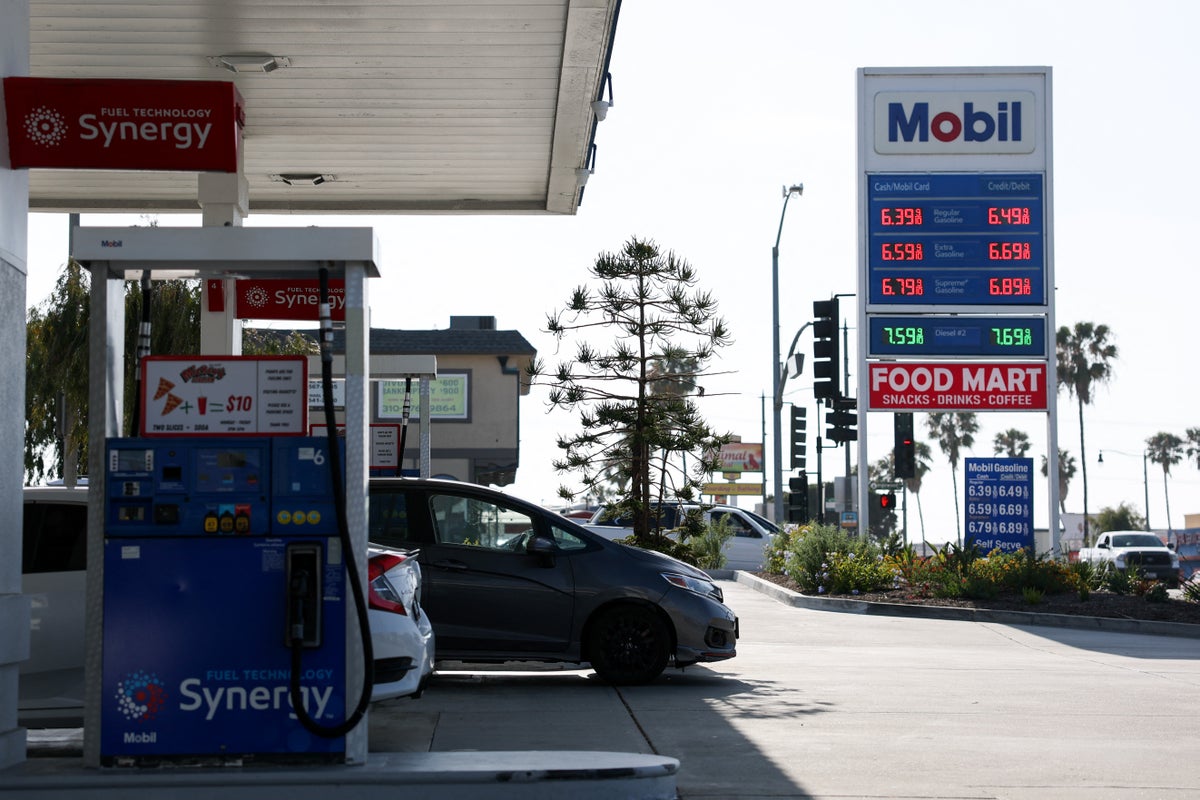
Oil prices held steady after US president Donald Trump said the US would help ships leave the Strait of Hormuz, starting on Monday.
Iran has rejected the plan, but Mr Trump also said talks with Iran could lead to positive outcomes.
A statement from the US Central Command said support would include guided-missile destroyers, over 100 land- and sea-based aircraft and 15,000 service members. A report from Axios later claimed the Navy would not necessarily escort ships through the strait.
Iran earlier said the US had responded to its 14-point proposal via Pakistan and it was reviewing the response, though Trump said it was unlikely to be acceptable.
Investors decided to reserve judgement and left Brent crude futures little changed at $108.35 per barrel, having recovered from an initial drop of more than two per cent, while US crude eased 0.1 per cent to $101.85.
Dealers noted a bulk carrier had reported being attacked by multiple small craft while transiting past Sirik in Iran on Sunday, though it was not clear how many ships would try to run through the Strait of Hormuz even with Navy protection.
A holiday in Japan made for thin trading conditions, leaving Nikkei futures up only modestly at 59,880 versus a cash close of 59,513.
MSCI’s broadest index of Asia-Pacific shares outside Japan gained 2.8 per cent, led by tech-heavy South Korean stocks which returned from holiday with a jump of 4.05 per cent. Chinese blue chips were off 0.06 per cent.
Eurotoxx 50 futures and Dax futures each added 0.3 per cent. S&P 500 futures gained 0.1 per cent and Nasdaq futures rose 0.3 per cent, as markets braced for more than 100 earnings reports this week.
Companies reporting include Advanced Micro Devices, Super Micro Computer, Palantir, Walt Disney and McDonald’s.
The S&P 500 EPS growth rate was running at 25 per cent and accounting for one-off gains at a still brisk 16 per cent, said analysts at Goldman Sachs in a note.
“Despite elevated energy prices and geopolitical uncertainty, corporate guidance and analyst estimate revisions have remained strong so far this quarter,” they said. “However, the reward for EPS beats has been unusually small.”
Concerns remained about the scale of artificial intelligence capex investment which was now at $751bn for 2026, $80bn above estimates at the start of the earnings season and 83 per cent above 2025 spending.

The threat of oil-driven inflation had also lifted bond yields in a challenge to equity valuations, while several major central banks had turned hawkish on policy.
Markets implied just 2 basis points of easing from the Federal Reserve by the end of the year compared with 11 basis points a week ago. Expectations for the European Central Bank had climbed to 76 basis points of hikes, with the Bank of England at 63 basis points.
Australia’s central bank meets on Tuesday and is considered likely to hike its cash rate for a third time running as it battles stubborn inflationary pressures.
The outlook for Fed policy could be budged by a raft of data this week which includes the payrolls report for April on Friday. Median forecasts are for a rise of 60,000 in jobs following March’s outsized 178,000 gain, though problems with seasonal adjustment make for much uncertainty.
Analysts at Citi, for instance, are predicting a 15,000 drop in payrolls and a rise in unemployment to 4.3 per cent.
In currency markets, the dollar was a shade softer as investors waited for more developments in the Middle East and, crucially, whether the Strait of Hormuz could be opened.
The dollar was steady at 157.21 yen, still smarting from last week’s Japanese intervention which analysts thought could have amounted to around $35bn.
The euro was flat at $1.1726, while the pound held at $1.3584 ahead of local elections in Britain which could see heavy losses for the ruling Labour Party.
In commodity markets, gold was 0.2 per cent lower at $4,603 an ounce, and well within recent trading ranges.


Princess Charlotte shows off ‘sporty' Princess Kate trait in latest video

Canada’s Gildan’s Q1 strong on HanesBrands integration, outlook steady

Celtics star accuses referees of having an ‘agenda’ against him after playoff exit

-

 Tech7 days ago
A Brain Implant for Depression Is About to Be Tested in Humans
-

 Tech1 week ago
Almost 90% of women leave tech industry within 10 years | Computer Weekly
-
 Business7 days ago
‘I had £20,000 stolen and had to fight a 13-month fraud reporting rule to get it back’
-
 Business1 week ago
Pakistan’s oil market is fuelling the crisis | The Express Tribune
-

 Sports6 days ago
Pro wrestling star Steph De Lander reveals how colleague’s advice helped lead her to title triumph at ACW
-
 Entertainment7 days ago
Norway joins Type 26 Frigate Programme to boost NATO naval power
-

 Entertainment7 days ago
Melania Trump says ABC should ‘take a stand’ on late-night host Kimmel
-
 Tech6 days ago
This Ambitious Laptop Doesn’t Leave Much Room for Your Hands