

Business
Biggest global oil supply disruptions in history | The Express Tribune

IEA says Hormuz closure triggers biggest oil disruption ever; nations release 400m barrels to stabilise markets
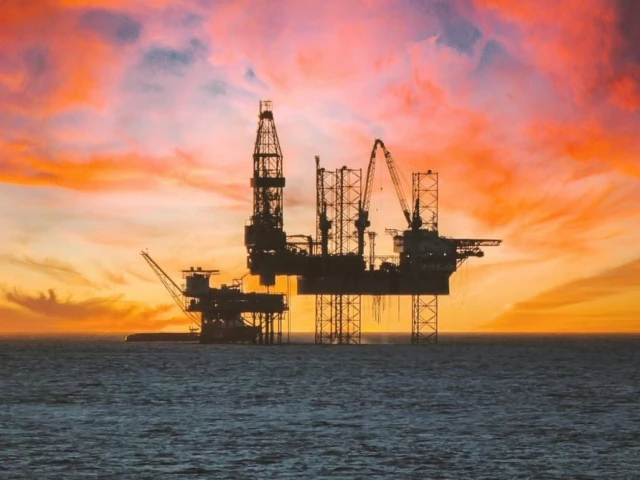
An oil platform located in sea. PHOTO: PEXELS
The International Energy Agency (IEA) said the closure of the Strait of Hormuz has triggered the largest disruption to global oil markets in history, with supply expected to fall by about eight million barrels per day in March, or around 8%.
The agency’s member countries responded by agreeing to release a record 400 million barrels from strategic stockpiles to stabilise oil prices and compensate for the loss of Middle East output. Here is a list of some of the previous disruptions to oil supplies:
The 1973-1974 Arab oil embargo
The Arab oil embargo was triggered by the Yom Kippur War, which began on October 6, 1973, when Egypt and Syria launched coordinated attacks on Israel.
Arab producers acting through the Organisation of Arab Petroleum Exporting Countries (OAPEC) ordered an immediate 5% production cut, followed by additional 5% monthly reductions.
The action was taken to pressure Western nations to force Israel to withdraw from Arab territories it had occupied since the 1967 Six-Day War.
Declassified US National Security Council documents prepared for President Richard Nixon estimated the embargo would leave the United States short by 2-3m barrels per day, with the total shortage across embargoed nations reaching around 4.5m bpd.
OAPEC announced the embargo on October 17, 1973, and it remained in place against the US until March 1974, according to US government records.
Crude prices nearly quadrupled as a result from about $2.90 per barrel before the embargo to $11.65 by January 1974. The US government prepared fuel rationing plans, ordered industries to switch from oil to coal, pushed for greater domestic production and advanced emergency energy legislation.
Also Read: War creating ‘largest’ oil shock in history
The crisis also led oil-consuming nations to establish the IEA in 1974 to coordinate responses to supply disruptions.
wing the Strait of Hormuz and Iran is seen behind a 3D printed oil pipeline in this illustration taken June 22, 2025. REUTERS
The 1978-1979 Iranian revolution
Political upheaval in Iran led to the collapse of Shah Mohammad Reza Pahlavi’s government and the rise of Ayatollah Khomeini.
Iranian oil production fell sharply by 4.8m bpd, equivalent to about 7% of global supply, by January 1979.
Oil prices began to rise rapidly in mid-1979 and more than doubled between April 1979 and April 1980, driven by fears of further disruptions, speculative hoarding and strong global demand.
The crisis contributed to rising inflation in the US. In August 1979, Paul Volcker was appointed chairman of the Federal Reserve and the central bank adopted aggressive monetary tightening to curb inflation.
The policies broke the cycle of stagflation but, combined with the oil shock, pushed the US economy into a severe recession.
The 1990-1991 Gulf crisis
Iraq’s invasion of Kuwait and the subsequent United Nations embargo on Iraqi and Kuwaiti oil removed about 4.3m bpd from global markets.
Before the war, Iraq produced about 3.1m bpd and exported 2.7m bpd, while Kuwait produced about 1.8m bpd and exported 1.7m bpd, together accounting for nearly a third of Gulf oil output and exports.
Oil prices surged, with Brent crude rising from about $17 per barrel in July 1990 to around $36 by October 1990, before easing again after the war ended in February 1991.
The IEA activated its Co-ordinated Energy Emergency Response Contingency Plan, preparing to make 2.5m bpd available to markets within 15 days, including 2m bpd from emergency stock releases, 400,000 bpd from demand restraint measures and 100,000 bpd from fuel switching and spare production capacity.
Hurricanes Katrina and Rita in 2005
Hurricane Katrina struck the US Gulf Coast in August 2005, shutting in large volumes of offshore production.
At the peak of the disruption on August 29, 2005, about 1.38m bpd of oil production was shut in, according to US government data.
Production losses gradually declined but were still around 840,000 bpd by September 16, 2005.
Hurricane Rita followed in September, with combined storm disruptions shutting in up to 1.53m bpd at the peak on September 26, 2005.
The US Department of Energy loaned 9.1m barrels of crude from the Strategic Petroleum Reserve to refineries.
The US also participated in a 30m barrel coordinated stock release with the IEA.
Read More: US issues 30-day sanctions waiver for purchase of Russian oil at sea
Regulators issued emergency waivers allowing the use of winter-blend gasoline, higher sulfur diesel fuel and temporarily waived the Jones Act to allow foreign vessels to transport fuel between US ports to ease supply bottlenecks.
2022 Russian invasion of Ukraine
Russia’s full-scale invasion of Ukraine in 2022 triggered a global energy crisis as European countries scrambled to reduce their dependence on Russian oil and gas.
Prices spiked over 50% within a few weeks, with crude reaching some of the highest levels since 2008 due to the search for alternative supplies.
In March 2022, then-president Joe Biden ordered the release of 180m barrels over six months to combat the spike.
The US and other Western nations also imposed price caps on Russian oil exports, seeking to reduce Russian funding for the war without taking its oil off the market.




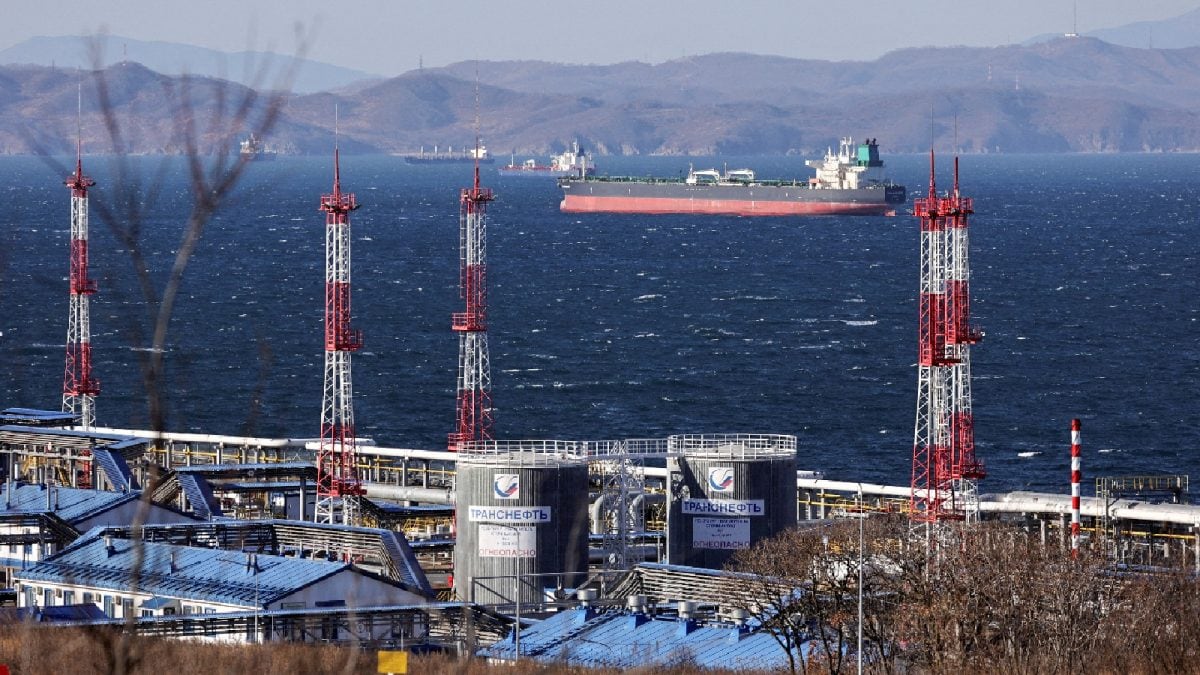

It comes as the US said on Monday it will begin to help “guide” vessels out of the Strait of Hormuz.
Source link
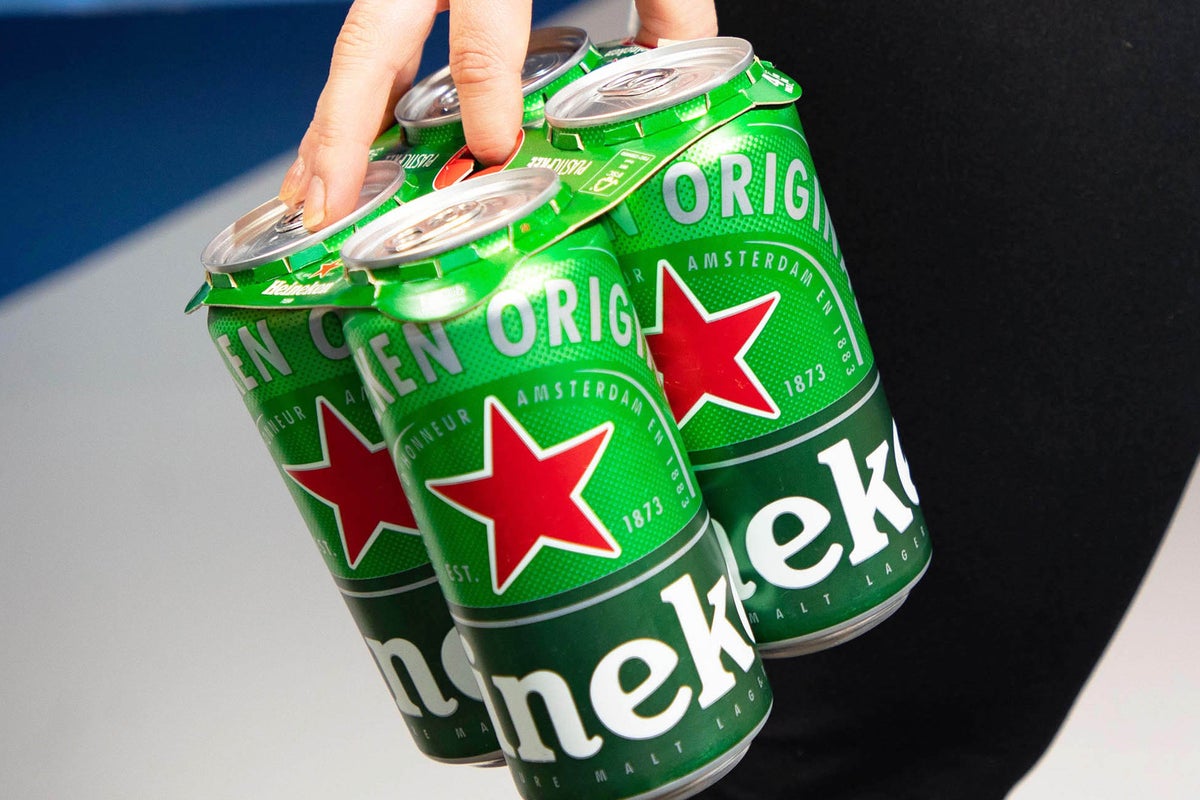
Heineken has revealed plans to invest more than £44 million into improvements for hundreds of its UK pubs.
The Dutch brewing giant said the cash injection into its Star Pubs operation, which runs 2,350 sites across the UK, will create around 850 jobs.
The major investment plan comes despite a challenging backdrop for the pub sector.
Pubs have come under pressure from rising labour costs and increases to national insurance contributions over the past year, while consumer spending has also come under pressure with concerns over inflation and rising unemployment.
However, pubs received additional business rates support from the Government from last month to help ease their cost pressures.
Lawson Mountstevens, Star Pubs’ managing director, said the company’s investment plan is partly aimed at boosting revenues to help the group cope with the recent “sustained increases in running costs”.
The plans will see the business invest £44.5 million this year into upgrades for 647 of its pubs.
It said 108 of its venues will see particularly significant cash injections, with these all set for transformations costing at least £145,000.
Heineken said the majority of pubs are owned by the group but independently operated by locals, with sports-focused venues an emphasis for investment in the run-up to the 2026 football World Cup.
The pub firm and brewer said it has pumped £328 million into British pubs since 2018.
It has already started work in 52 locations, including eight projects where it is reopening boarded-up pubs which have suffered from lengthy closures.
Mr Mountstevens urged the Government to reduce the tax burden on pubs to help ease the cost burden and support more job creation in the industry.
He said: “We can only do so much; the root-and-branch reform of business rates that the industry has been calling for over many years is urgently required, as well as a lowering of the burden of taxation on pubs, including VAT and beer duty.
“We are calling on the Government to support us in bringing out the best in the Great British pub.”

A company law appeals court on Monday rejected a challenge by mining billionaire Anil Agarwal’s Vedanta Ltd to the winning bid by Gautam Adani’s group for bankrupt real estate firm Jaiprakash Associates Ltd (JAL), whose assets include India’s only Formula One circuit. The National Company Law Appellate Tribunal (NCLAT) did not find merit in the issues raised by Vedanta and dismissed its two petitions. A Bench comprising Chairperson Justice (retired) Ashok Bhushan and Technical Member Barun Mitra held that the Committee of Creditors (CoC) were right in preferring Adani Group’s Rs 14,535 crore bid over Vedanta’s resolution plan for JAL. That decision was approved by the National Company Law Tribunal (NCLT), against which Vedanta went into an appeal in NCLAT. “No grounds have been made out by the appellant (Vedanta) to interfere with the decision of the adjudicating Authority (NCLT),” NCLAT order said. “There is no merit in the appeal. Both appeals are dismissed. There shall be no orders to pass.” NCLAT said the decision of the Committee of Creditors was based on “overall consideration of the respective resolution plan and was taken in its commercial wisdom,” said the appellate tribunal. JAL was admitted for insolvency proceedings in June 2024 after it failed to pay bank dues exceeding Rs 57,000 crore. The resolution process drew 28 expressions of interest, with six final bidders including Vedanta, Adani Enterprises and others. Adani and Vedanta emerged as frontrunners, with Adani’s proposal scoring higher on upfront recovery and overall value. The CoC approved Adani’s plan in November 2025 with a 93.81 per cent vote. Vedanta later submitted a revised offer, valued at Rs 16,070 crore, but creditors declined to consider it, citing rules barring post-deadline changes. Vedanta argued the process lacked transparency and that its revised bid offered superior value. Creditors countered that the revised proposal was submitted only after Vedanta became aware it was trailing the winning bid. The appellate tribunal had earlier declined to stay implementation of Adani’s plan, a decision subsequently upheld by the Supreme Court, which directed an expedited hearing while requiring key implementation decisions to receive tribunal approval. Monday’s ruling clears the way for Adani’s takeover of JAL unless Vedanta challenges it in the Supreme Court. In its order, NCLAT also said there has been “no material irregularity committed by Resolution Professional while conducting the plan resolution process.” NCLAT also dismissed Vedanta’s plea, where it had questioned the evaluation metrics adopted and had said its bid was Rs 3,400 crore higher in gross value terms and roughly Rs 500 crore more in net present value compared to the Adani Group’s bid. Rejecting this, NCLAT said “decision of CoC not approving the resolution plan of the appellant with a higher plan value of Rs 3,400 crores and NPV of Rs 500 crore as compared to plan of respondent No 3 (Adani) cannot be said to be arbitrary or perverse.” On March 17, the NCLT, Allahabad bench, approved Adani Enterprises Ltd’s Rs 14,535-crore bid to acquire JAL through the insolvency process. This was challenged by Vedanta before the appellate tribunal NCLAT. On April 23, the insolvency appellate tribunal had concluded its hearing after hearing the petitioner Vedanta and respondents, including the Resolution Professional, Committee of Creditors (CoC) and Adani Enterprises. Vedanta has questioned the evaluation metrics adopted by lenders of JAL, which had selected the lower bid of Rs 3,400 crore from Adani Enterprises for the debt-ridden company and questioned the commercial wisdom of CoC. Earlier, on March 24, NCLAT declined any interim stay over the Vedanta Group’s plea against the order passed by the NCLT approving Rs 14,535-crore bid by the Adani Group for acquiring JAL. However, it had also said the plan would be subject to the outcome of the appeals filed by the Anil Agarwal-led Vedanta Group. This interim order by NCLAT was challenged before the Supreme Court, which also declined to grant a stay. However, the apex court had directed that if the monitoring committee planned to take any major policy decision, it should first obtain the Tribunal’s sanction. Adani Enterprises had outbid Vedanta and Dalmia Bharat to win the bid for JAL. Adani got the maximum 89 per cent votes from creditors, followed by Dalmia Cement (Bharat), and Vedanta Group. The CoC defended its decision, saying the process complied with all Insolvency and Bankruptcy Code (IBC) rules. They maintained that no bidder has a guaranteed right to win, even if it offers the highest value. They said plans were evaluated on multiple factors, including upfront cash, feasibility, and execution, not just headline value. JAL, which has high-quality assets and business interests spanning real estate, cement manufacturing, hospitality, power and engineering & construction, was admitted to the CIRP in June 2024 after it defaulted on payments of loans aggregating Rs 57,185 crore. JAL has major real estate projects like Jaypee Greens in Greater Noida, a part of Jaypee Greens Wishtown in Noida (both on the outskirts of the national capital), and the Jaypee International Sports City, located near the upcoming Jewar International Airport. It also has three commercial/industrial office spaces in Delhi-NCR, while its hotel division has five properties in Delhi-NCR, Mussoorie, and Agra. JAL has four cement plants in Madhya Pradesh and Uttar Pradesh, and a few leased limestone mines in Madhya Pradesh. It also has investments in subsidiaries, including Jaiprakash Power Ventures Ltd, Yamuna Expressway Tolling Ltd, Jaypee Infrastructure Development Ltd, and several other companies.

US denies Iranian report warship was struck by missiles

Crew of US-seized Iranian vessel transferred to Pakistan for repatriation: Report

Yankees radio icon John Sterling dead at 87

-

 Tech7 days ago
A Brain Implant for Depression Is About to Be Tested in Humans
-

 Tech1 week ago
Almost 90% of women leave tech industry within 10 years | Computer Weekly
-
 Business7 days ago
‘I had £20,000 stolen and had to fight a 13-month fraud reporting rule to get it back’
-
 Business1 week ago
Pakistan’s oil market is fuelling the crisis | The Express Tribune
-

 Sports6 days ago
Pro wrestling star Steph De Lander reveals how colleague’s advice helped lead her to title triumph at ACW
-

 Entertainment7 days ago
Norway joins Type 26 Frigate Programme to boost NATO naval power
-

 Entertainment7 days ago
Melania Trump says ABC should ‘take a stand’ on late-night host Kimmel
-

 Tech6 days ago
This Ambitious Laptop Doesn’t Leave Much Room for Your Hands