

Business
AI Could Transform Global Economy Like Industrial Revolutions, Says Aletheia Capital’s Jonathan Wilmot


Last Updated:
Wilmot says rapid advances in artificial intelligence represent a turning point for global productivity and economic growth.




Jonathan Wilmot, Global Strategist at Aletheia Capital.
Artificial intelligence (AI) is set to transform the global economy in a way comparable to past industrial revolutions, even as geopolitical tensions and energy risks continue to shape the near-term outlook for markets and policymakers, according to Jonathan Wilmot, Global Strategist at Aletheia Capital.
Speaking at the Moneycontrol Global Wealth Summit, Wilmot said rapid advances in artificial intelligence represent a turning point for global productivity and economic growth.
“When I started my firm, I was convinced that AI and machine learning had reached a point of takeoff and would eventually become the leading factor transforming the whole of the world economy,” Wilmot said.
AI could accelerate innovation
Wilmot described artificial intelligence as a powerful force multiplier for human innovation and scientific discovery.
“In a very simplistic way, AI is to human brain power what the steam engine was to horsepower,” he said.
According to him, the technology could act as a “force accelerator for human intellect”, helping speed up innovation, research and product development across sectors.
AI may lower costs of essentials over time
Wilmot said AI-driven innovation could eventually reduce the cost of essential goods and services globally.
“I’m convinced that the effect will be profound in lowering the costs of food, energy, housing and healthcare,” he said.
He added that the impact would come not only from artificial intelligence itself but also from its interaction with other technologies such as solar energy, smarter farming systems and advanced manufacturing.
However, Wilmot cautioned that the transition may initially push prices higher as companies invest heavily in building AI infrastructure before long-term cost benefits begin to emerge.
Central banks facing a complex policy challenge
According to Wilmot, the combination of rapid technological change and geopolitical tensions has created one of the most challenging environments for central banks.
“This is one of the most difficult periods for central banks around the world,” he said.
He noted that policymakers may be divided between those focusing on long-term productivity gains and those concerned about short-term inflationary pressures.
“If you emphasise the longer-term productivity benefits… you would say there’s no need to raise interest rates in the face of a short-term shock,” he said.
AI boom not similar to dot-com bubble
Wilmot also addressed concerns about the sharp rise in valuations of artificial intelligence companies.
“What it clearly is not is the same as the dot-com situation in the 1990s,” he said, adding that many leading AI companies are supported by strong earnings growth.
At the same time, he warned that global economic shocks could still trigger sharp corrections in technology stocks.
“If we have a shock to the world economy… you’re going to see very large declines in the valuation of this stuff,” he said.
Oil price risks remain amid Middle East tensions
Wilmot also highlighted the risks posed by ongoing geopolitical tensions in the Middle East.
He said global oil markets remain highly sensitive to disruptions in the Strait of Hormuz, a key global energy shipping route.
“Unless we can reopen the Strait of Hormuz within three or four weeks, we’ll be in a situation where oil prices could head towards $150 or even higher,” he said.
India could benefit from AI-driven growth
On India’s long-term prospects, Wilmot said the country’s demographic strength and economic trajectory position it well in the evolving global economy.
“India is going to be the largest country in the world in terms of population,” he said.
He added that India could become increasingly important both as an alternative global manufacturing hub and as a participant in the AI-driven economy.
“I think India will become more and more important, both economically as an alternative manufacturing destination and because you will actually do well from the AI trade,” he said.
Advice for investors
Wilmot advised businesses and investors to adopt artificial intelligence tools while remaining mindful of broader macroeconomic risks.
“Go hire a lot of AI agents to help you with the business, but don’t fire anybody as a result,” he said.
He also emphasised the importance of monitoring macroeconomic trends. “Never forget macro… because if the world has a macro seizure, that will dominate everything else.”
March 14, 2026, 13:20 IST
Read More









Business
Gudhi Padwa, Eid-Ul-Fitr And Weekend Holidays Next Week: Banks Closed On These Days Between March 16-22

Last Updated:
Banks across India will observe several public and regional holidays next week in March 2026 under the RBI holiday calendar.
Bank Holiday This Week: Full RBI Holiday List
Bank Holiday In February 2026: Banks across India will observe several public and regional holidays next week in March 2026 under the RBI holiday calendar. These holidays are not uniform nationwide and vary from state to state. That means on some dates, banks in certain states will remain closed, while in others, they will function normally.
During bank holidays, customers can continue to access services through net banking, mobile banking, UPI, and ATMs. However, cheque clearing and other over-the-counter services under the Negotiable Instruments Act will not be available.
March 17: Shab-I-Qadr
Banks will be closed in Imphal, Jammu, and Srinagar.
March 19: Gudhi Padwa / Ugadi Festival / Telugu New Year’s Day / Sajibu Nongmapanba (Cheiraoba) / 1st Navratra
Banks will be closed in Belapur, Bengaluru, Chennai, Hyderabad, Imphal, Jammu, Mumbai, Nagpur, Panaji, Srinagar, and Vijayawada.
March 20: Eid-Ul-Fitr (Ramzan) / Jumat-ul-Vida
Banks will be closed in Agartala, Ahmedabad, Aizawl, Belapur, Bengaluru, Bhopal, Bhubaneswar, Chandigarh, Dehradun, Gangtok, Guwahati, Hyderabad, Imphal, Itanagar, Jaipur, Kanpur, Kochi, Kohima, Kolkata, Lucknow, Mumbai, Nagpur, New Delhi, Panaji, Patna, Raipur, Ranchi, Shillong, Shimla, Srinagar, Thiruvananthapuram, and Vijayawada.
March 21: Ramzan-Id (Id-Ul-Fitr) (Shawal-1) / Khutub-E-Ramzan / Sarhul
Banks will be closed in Ahmedabad, Aizawl, Belapur, Bhopal, Chandigarh, Dehradun, Jaipur, Kanpur, Kolkata, Lucknow, Mumbai, Nagpur, Patna, and Ranchi.
March 22: Sunday
Bank branches across India will be closed for the weekend.
Upcoming Bank Holidays In March 2026
March 26: Shree Ram Navami
Banks will be closed in Ahmedabad, Bhopal, Bhubaneswar, Belapur, Hyderabad, Jaipur, Kanpur, Kolkata, Lucknow, Mumbai, Nagpur, Patna, Ranchi, and Shimla.
March 27: Shree Ram Navami (Chaite Dasain)
Banks will be closed in Ahmedabad, Bhopal, Dehradun, Jaipur, Kanpur, Kolkata, Lucknow, Mumbai, Nagpur, Patna, Ranchi, and Gangtok.
March 31: Mahavir Janmakalyanak / Mahavir Jayanti
Banks will be closed in Ahmedabad, Belapur, Bengaluru, Chennai, Hyderabad, Jaipur, Kanpur, Kolkata, Lucknow, Mumbai, Nagpur, New Delhi, Patna, Raipur, Ranchi, and Vijayawada.
| Holiday Description | Day |
|---|---|
| Holika Dahan | 2 |
| Holi (Second Day)/Dol Jatra/Dhulandi/Holika Dahan | 3 |
| Holi/Holi 2nd Day – Dhuleti/Yaosang 2nd Day | 4 |
| Chapchar Kut | 13 |
| Shab-I-Qadr | 17 |
| Gudhi Padwa/Ugadi Festival/Telugu New Year’s Day/Sajibu Nongmapanba (Cheiraoba)/1st Navratra | 19 |
| Eid-Ul-Fitr (Ramzan)/Jumat-ul-Vida | 20 |
| Ramzan-Id (Id-Ul-Fitr) (Shawal-1)/Khutub-E-Ramzan/Sarhul | 21 |
| Shree Ram Navami | 26 |
| Shree Ram Navami (Chaite Dasain) | 27 |
| Mahavir Janmakalyanak/Mahavir Jayanti | 31 |
March 15, 2026, 09:13 IST
Read More

Politicians are furious Churchill will be replaced on banknotes. The RSPCA wants rats and pigeons to feature.
Source link
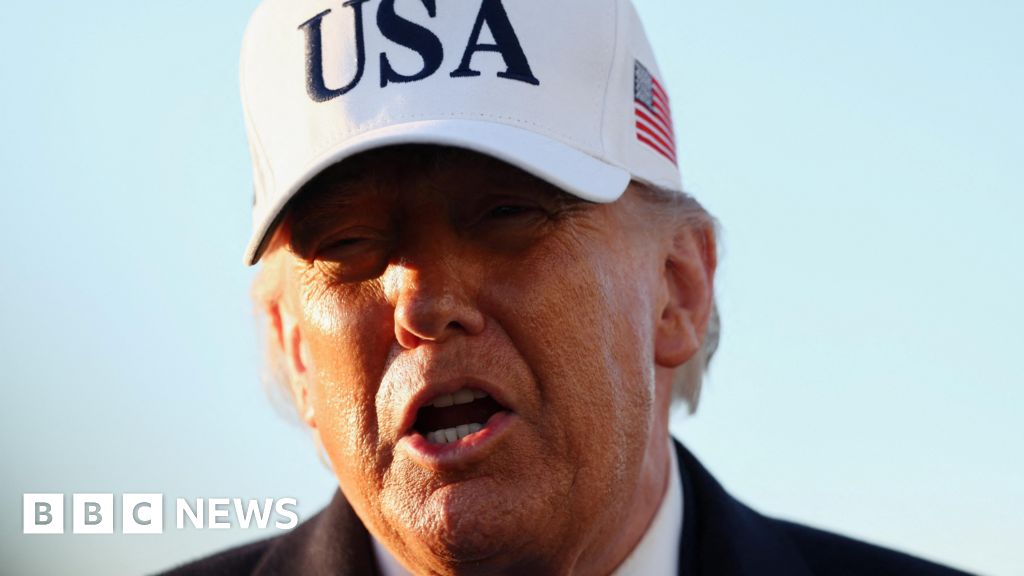
Trump says he hopes China, France, Japan and South Korea will also send ships to defend the key oil shipping route.
Source link


Wembanyama’s do-it-all showcase propels Spurs past Hornets

Japan’s Fast Retailing cuts operational emissions 90% by FY25
Gudhi Padwa, Eid-Ul-Fitr And Weekend Holidays Next Week: Banks Closed On These Days Between March 16-22

-

 Politics1 week ago
India let Iran warship dock the day US sank another off Sri Lanka, say officials
-

 Sports1 week ago
Pakistan set for FIH Pro League debut | The Express Tribune
-

 Entertainment1 week ago
Harry Styles kicks off new era with ‘One Night Only’ comeback show
-
 Business1 week ago
Restaurant group changes name after bid to buys pubs across the UK
-
 Business3 days ago
Stock market crash today (March 12, 2026): Nifty50 opens below 23,600; BSE Sensex down over 900 points on continuing US-Iran war – The Times of India
-
 Business1 week ago
Home heating oil: ‘Most of my pension has gone on home heating oil’
-

 Sports1 week ago
Winners and losers of the 2026 NHL trade deadline
-

 Entertainment1 week ago
Kanye ‘Ye’ West trips during trial: ‘Is he asleep?’