

Fashion
Japan’s Fast Retailing cuts operational emissions 90% by FY25


The target, established in 2021, forms part of the company’s broader strategy to accelerate the transition towards a business model that balances sustainability with long-term growth. The reduction applies to, which include emissions from the company’s own operations such as stores and main offices, Fast Retailing said in a press release.
The company said that GHG emissions from energy use at its stores and major offices fell 90.3 per cent in FY25 compared with the FY19 base year, surpassing the original target. The company attributed the achievement to a combination of energy efficiency measures and expanded use of renewable energy across its operations.
Japan’s Fast Retailing has achieved a 90 per cent reduction in greenhouse gas emissions from its own operations in FY25, four years ahead of its FY30 target.
Emissions fell 90.3 per cent from FY19 levels through energy efficiency and renewable energy use.
The company has also raised its supply chain emissions reduction target to 30 per cent by FY30 and aims to achieve net-zero emissions by 2050.
To lower emissions, Fast Retailing implemented several initiatives to improve energy efficiency at stores and offices. These measures include controlling electricity consumption outside business hours and installing air-conditioning systems that automatically adjust to preset temperatures. The company has also expanded the use of renewable energy and promoted the development of energy-efficient roadside stores as part of its store design strategy.
Alongside operational reductions, the company has also strengthened its climate targets across its supply chain. In November 2025, Fast Retailing raised its scope 3 emissions reduction target—which covers emissions from raw material production, fabric manufacturing and garment sewing for UNIQLO and GU products—from 20 per cent to 30 per cent by FY30, compared with FY19 levels.
As of FY25, emissions from raw materials, fabric and garment production had declined 19.9 per cent, reflecting steady progress towards the revised target.
Fast Retailing is also advancing its renewable energy transition. The share of renewable energy used across its stores and major offices worldwide reached 93.5 per cent in FY25, up from 84.7 per cent in the previous fiscal year, moving the company closer to its goal of 100 per cent renewable energy use by FY30.
The company noted that its climate targets have been approved by the Science Based Targets initiative (SBTi) and align with the level of decarbonisation required to achieve the goals of the Paris Agreement.
Fast Retailing said it will continue working with production partners across its global supply chain to further reduce emissions and advance its long-term objective of achieving net-zero greenhouse gas emissions by 2050.
Fibre2Fashion News Desk (SG)













A ‘supply shock’ is apparent in the economy, it noted.
Other high-frequency indicators point to a degree of supply-side moderation in March, while demand-side indicators remain reasonably resilient.
The Middle East crisis has weighed on India’s industrial performance in early FY27, with softening business sentiment and e-way bill growth declining, the department of economic affairs said.
A ‘supply shock’ is apparent in the economy, it noted.
Though the crisis has slightly dampened bankers’ optimism regarding loan demand and terms for the Q1 FY27, financial instability is not a threat, it said.
Rising wholesale prices indicate emerging cost-push pressures that could transmit to consumer inflation if supply disruptions persist, said the report.
Though the crisis has slightly dampened bankers’ optimism regarding loan demand and terms for the first quarter (Q1) of FY27, financial instability is not a threat, it noted.
An accompanying demand compression is a serious concern, given high prices, rising inflation, and a reduced pace of economic activity, it added.
Fibre2Fashion News Desk (DS)
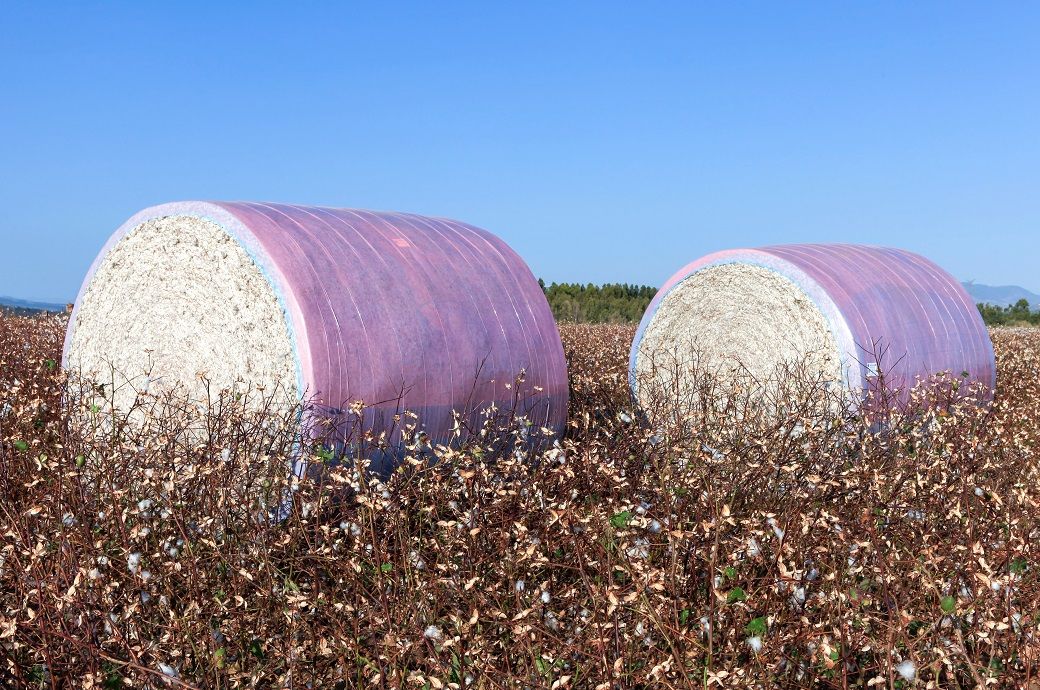
The demand was led by Vietnam (55,600 RB), Pakistan (33,300 RB), Honduras (29,700 RB), Bangladesh (20,900 RB), and India (9,800 RB), while cancellations from China, Japan, Ecuador, and Switzerland capped gains. Export sales for 2026–27 surged to 105,700 RB, driven mainly by Türkiye, China, and Guatemala.
US Upland cotton sales rebounded to 162,900 RB, led by strong demand from Vietnam, Pakistan and Honduras.
Shipments surged to 384,600 RB, signalling improved offtake from key Asian markets.
Pima sales declined week on week but remained above the four-week average, with steady exports.
Overall, demand recovery in Upland and stable Pima momentum reflect improving export fundamentals.
Export shipments of Upland cotton increased sharply to 384,600 RB, up 30 per cent week on week and 18 per cent above the four-week average. Key destinations included Vietnam (155,000 RB), Pakistan (38,500 RB), Türkiye (37,300 RB), India (34,500 RB), and Bangladesh (26,100 RB), reflecting improved offtake from major Asian buyers.
In contrast, Pima cotton sales declined from the previous week’s high. Net sales for 2025–26 fell to 21,900 RB, down 40 per cent week on week, but still 35 per cent above the four-week average. India (7,200 RB), Vietnam (4,800 RB), China (2,600 RB), and Egypt (2,200 RB) were the key buyers. New crop sales for 2026–27 reached 11,500 RB, primarily to India and Egypt.
Pima exports totalled 17,800 RB, rising significantly from both the previous week and the recent average, with shipments mainly to India, China, Pakistan, Peru, and Türkiye.
Overall, the latest data signal a rebound in Upland cotton demand and shipments after the previous week’s weakness, while Pima cotton eased from its recent peak but maintained healthy export momentum.
Fibre2Fashion News Desk (KUL)

The most traded contract July 2026 settled at 82.20 cents per pound, up 3.00 cent or 3.79 per cent. The contract marked the highest close since late May 2024, indicating strong technical breakout. Cotton futures delivered a robust monthly gain of 17.4 per cent in April 2026, the best monthly rally seen in recent years.
Cotton rally driven by two macro tailwinds, weak dollar and firm crude, boosting export competitiveness and fibre substitution.
Strong US export sales rebound confirms demand resilience after a brief dip.
Technical breakout signals bullish momentum, with multi-year high closing levels.
Stable ICE stocks suggest no near-term supply pressure, supporting upside bias.
Weakness in the US Dollar Index played a crucial role by making US cotton exports more competitive and affordable in international markets. Lower dollar value directly encouraged higher buying interest from importing countries, supporting futures prices.
Crude oil price movement remained a key external driver influencing cotton market dynamics. Despite earlier declines in polyester (synthetic fibre) prices, a rebound in crude oil strengthened cotton’s relative competitiveness against man-made fibres. Higher crude oil prices increase production cost of polyester, thereby shifting demand preference towards cotton.
Market analysts emphasised that both crude oil linkage and weaker dollar provided dual support to cotton prices. Macro-driven buying interest has significantly improved overall market tone.
Geopolitical tensions, particularly risks of escalation in the Middle East, created volatility in global commodity markets. Due to these tensions, crude oil prices briefly spiked to around $126 per barrel, reaching a four-month high before easing slightly.
USDA weekly export sales report released on Thursday reflected strong recovery in demand fundamentals. For the week ending April 23, US net upland cotton export sales were reported at 162,870 bales which represents a sharp increase of 36 per cent compared to the previous week, signalling renewed buying activity.
Analysts said that the previous week’s weak export performance was temporary and not indicative of underlying demand weakness. The latest strong export data provided fresh bullish momentum and reinforced confidence among market participants.
ICE certified cotton stocks data showed total inventories at 165,681 bales as of April 29. Stable certified stock levels indicated no immediate supply pressure on the market.
Overall market direction remained bullish, supported by a combination of macroeconomic factors, improved export demand, and positive technical momentum in futures prices.
This morning (Indian Standard Time), ICE cotton for July 2026 was traded at 83.20 cents per pound (up 1.00 cent), cash cotton at 79.20 cents (up 3.00 cent), the May 2026 contract at 79.86 cents (up 3.00 cent), the October 2026 contract at 84.16 cents (up 0.91 cent), the December 2026 at 83.47 cents (up 0.60 cent) and the March 2027 contract at 84.25 cents (up 0.56 cent)). A few contracts remained at their previous closing levels, with no trading recorded so far today.
Fibre2Fashion News Desk (KUL)


Israel approves deal to buy fighter jets from US

Karachi’s Shahrah-e-Bhutto to open before Eid ul Adha, announces CM Murad

Sting embarks on “The Last Ship”

-

 Tech6 days ago
A Brain Implant for Depression Is About to Be Tested in Humans
-
 Business6 days ago
‘I had £20,000 stolen and had to fight a 13-month fraud reporting rule to get it back’
-

 Tech6 days ago
Almost 90% of women leave tech industry within 10 years | Computer Weekly
-
 Business1 week ago
Pakistan’s oil market is fuelling the crisis | The Express Tribune
-

 Entertainment6 days ago
Melania Trump says ABC should ‘take a stand’ on late-night host Kimmel
-

 Tech5 days ago
This Ambitious Laptop Doesn’t Leave Much Room for Your Hands
-

 Sports5 days ago
Pro wrestling star Steph De Lander reveals how colleague’s advice helped lead her to title triumph at ACW
-
 Business6 days ago
Anta: The Chinese sports brand taking on Nike and Adidas