

Entertainment
Caught in the Gulf crosswinds

Pakistan’s economic managers had begun to celebrate signs of economic stability, including easing inflation, rising foreign exchange reserves, a stable currency and a recorded current account surplus after a decade.
The recent escalation between the US-Israel and Iran, however, casts doubt on this fragile progress. Rising tensions in the Persian Gulf carry significant implications for Pakistan.
Gulf countries are not only the primary source of energy imports but also the destination for millions of Pakistanis in the diaspora and a key source of financial support during economic distress. Any instability in the region, therefore, directly translates into external-sector fragility in Pakistan.
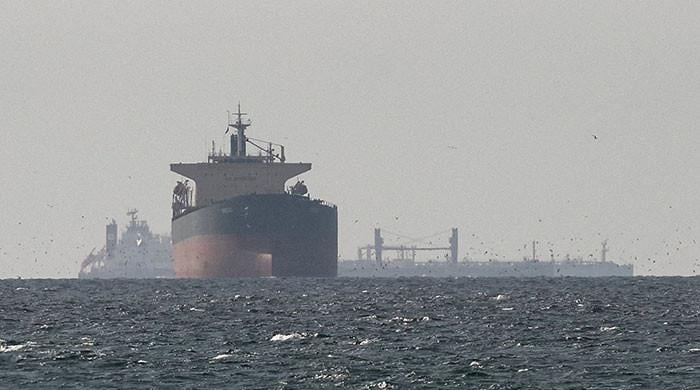
The choking of the Hormuz Strait and attacks on Gulf countries have adversely impacted the global oil supplies. Pakistan, which fulfils about 81% of its oil imports from the Persian Gulf through the Hormuz Strait, represents the most immediate channel of vulnerability. Trade data shows the extent of this dependence.
The ITC Trade Map reports that imports from Gulf countries were approximately $17.1 billion in 2024. Out of the total, about $13.96 billion accounted for crude oil and petroleum products. Energy alone, therefore, constitutes nearly 81.6% of Pakistan’s imports from the Persian Gulf and around 24.7% of Pakistan’s total import bill in 2024.
Brent crude traded close to $70 per barrel in late February before the war. Within days, prices increased by about 34% to $106 per barrel. Pakistan imports more than four-fifths of its oil requirements. Any fluctuations in international energy markets quickly translate into higher import costs. This concentration tells us how closely Pakistan’s balance of payments is linked to developments in Gulf energy markets.
Any disturbance to shipping routes through the Strait of Hormuz or sustained increases in oil prices immediately affect Pakistan’s foreign exchange position. The current $36-per-barrel rise, as predicted, will substantially increase Pakistan’s oil import bill.
Besides the direct increase in oil costs, the surge in shipping insurance premiums and a repricing of freight costs have further driven prices higher. These developments may complicate economic management for a country that is still rebuilding its foreign exchange reserves.
Besides oil imports, remittances are the second-largest channel and a lifeline for the country’s foreign-exchange reserves. The country heavily depends on these inflows to manage its chronic balance-of-payments difficulties. According to SBP’s recent statistics, Pakistan received approximately $38.3 billion in remittances in FY2025.
Of $38.3 billion, nearly 54.5%, or $20.89 billion, originated from the six Gulf Cooperation Council (GCC) countries. Saudi Arabia was the top remittances source in the corridor, accounting for about $9.35 billion (24.4% of the total), followed by the UAE at $7.83 billion (roughly 20.4%). Additional inflows came from Oman ($1.32 billion), Qatar ($1.06 billion), Kuwait ($0.85 billion) and Bahrain ($0.48 billion).
According to the United Nations Department of Economic and Social Affairs, Pakistan had roughly 6.9 million migrants living abroad in 2024. Out of which, GCC countries host about 3.85 million, constituting around 55.7% of Pakistan’s diaspora. The diaspora sent remittances, which have traditionally stabilised Pakistan’s economy during periods of domestic crises.
During periods of high inflation and economic hardship, overseas Pakistanis sent more remittances to support their families back home, a phenomenon referred to as countercyclical. These inflows help to sustain consumption and support the exchange rate. It also partially offset the country’s persistent trade deficit.
The current situation introduces a different challenge, however. Economic uncertainty is emerging within the very region that generates the majority of these remittances. Slowdowns in Gulf economies can affect sectors that employ large numbers of migrant workers. The construction, transport, and service industries account for a large share of migrant employment.
The composition of Pakistan’s migrant workforce reinforces this vulnerability. Data from the Bureau of Emigration and Overseas Employment shows that most Pakistani workers leaving for overseas employment belong to low or semi-skilled occupations. In 2025, labourers accounted for 465,138 registered workers, representing about 61%t of the total. Drivers were the second-largest category, with 163,718 workers, or around 21.47%.
Together, these two occupations represent more than four-fifths of Pakistan’s migrant labour force. Other categories include supervisors or foremen (14,305 workers), technicians (12,703 workers), managers (11,777 workers), cooks (10,503 workers), and salesmen (9,034 workers). Skilled trades, such as electricians (6,475 workers), engineers (5,946 workers), masons (5,700 workers), mechanics (4,961 workers) and carpenters (4,078 workers), account for smaller shares of overseas migration.
Workers in construction and manual services often depend on project-based employment. Economic uncertainty can slow infrastructure activity and reduce labour demand. Migrant workers in these sectors frequently experience layoffs or reduced income during downturns. Rising living costs across Gulf cities also reduce expatriates’ capacity to save and remit funds.
Previous crises show how quickly such pressures can affect Pakistan. During the early 1990s Gulf crisis, many Pakistani workers returned home as job opportunities declined, reducing remittances and raising unemployment. A similar scenario today can also trigger such hardships for the country.
Pakistan’s relations with GCC economies extend beyond energy and remittances. Saudi Arabia and the UAE have frequently provided financial support to the country during periods of economic stress. They have deposited in the State Bank of Pakistan and provided deferred oil payment facilities, which have stabilised the economy in earlier crises.
Regional instability may reduce the likelihood of such assistance.
The question is: has Pakistan achieved recent macroeconomic stabilisation through structural changes or by implementing austerity measures and demand compressions?
The country lacks structural changes, which is a deep concern for the economy. Fiscal space remains very limited and the country’s dependence on imported energy, remittance inflows and external financing continues to shape its economic performance. These structural features leave Pakistan vulnerable to external shocks. Higher oil prices will exacerbate inflation, which was recently tamed. Weak remittance inflows will put severe pressure on the foreign exchange reserves.
Pakistan’s economic outlook remains closely linked to developments in the Gulf. Pakistan will face a multitude of problems, including a high import bill due to rising oil prices and a likely reduction in remittances. These pressures reveal how heavily the country depends on external conditions that it cannot control. So, what is the way forward? The country should not put all the eggs in one basket, and that’s why diversification of both export and import markets is the need of the hour.
As far as energy is concerned, the country has to incentivise renewable energy sources, such as solar installations, since it relies on fossil fuels for 62% of its energy production. This step can substantially reduce its import bill. The country also has to expedite the CASA-1000 project and the TAPI pipeline to diversify its energy needs.
To cope with the remittances shock, upskilling of the expatriates will do the trick, as skilled workers are less prone to shocks. Long-term stability requires reducing these dependencies. Without improving the domestic capacity, the country will find itself in hot water every time. Every episode of regional instability will continue to threaten Pakistan’s fragile economic stability.
Dr Junaid Ahmed is chief of research at PIDE. He can be reached at: [email protected] Wajid Islam is a research economist at PIDE. He can be reached at: [email protected]
Disclaimer: The viewpoints expressed in this piece are the writer’s own and don’t necessarily reflect Geo.tv’s editorial policy.
Originally published in The News
- Miftah warns against making “hasty decisions without proper assessment”.
- Says sugar mills could enter sector quickly if ethanol proves viable.
- Expresses doubts about immediate rollout due to infrastructure issues.
ISLAMABAD: Former finance minister and Awaam Pakistan Party (APP) leader Miftah Ismail has urged a careful, thoroughly researched approach to Pakistan’s ethanol blending policy to reduce oil prices.
“It’s always good to take a look and evaluate things, but one should be careful in changing policy,” he said while speaking to The News.
Miftah cautioned against making “hasty” decisions without proper assessment, adding that exploring the feasibility of ethanol blending is reasonable, but any policy adjustments should be considered carefully.
He noted that if ethanol production proves commercially viable, sugar mills would naturally move into the sector. “They will get one more market and hope the price of ethanol will increase,” he added.
Discussing the possible impact on oil marketing companies, Miftah said outcomes would depend largely on government policy. If firms are mandated to blend a fixed percentage, such as 10% ethanol, and given a set price, many could procure ethanol at lower rates and retain the margin as profit.
The former finance minister suggested that the Ministry of Petroleum, in collaboration with Pakistan State Oil and representatives of the sugar industry, could quickly conduct a basic assessment. “This can be studied within a couple of days, after which options can be worked out,” he said.
However, he expressed reservations about immediate implementation, citing practical challenges such as blending mechanisms, required infrastructure, and timelines. “I don’t think it will be feasible and implementable right away,” he remarked.
Miftah linked the economic viability of ethanol blending to global oil prices, saying it becomes attractive when Brent crude oil trades above $100 per barrel.
“At normal oil prices of $60 to $80, ethanol is generally not economically viable,” he explained.
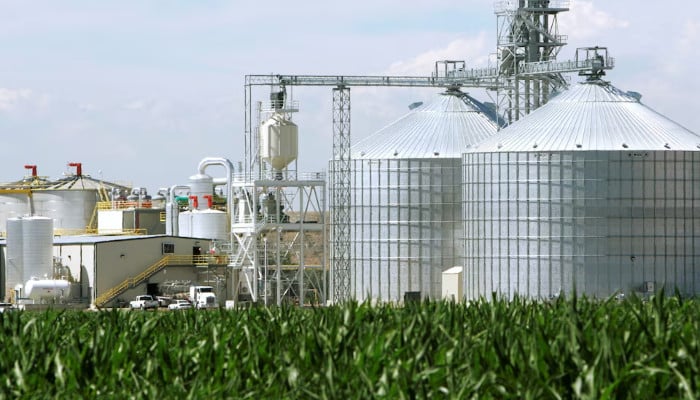
Drawing comparisons, he pointed out that Brazil has a vast sugarcane and ethanol industry where sugar is often a byproduct, while the United States supports ethanol production through large-scale corn farming and policy mandates.
While acknowledging that current petrol prices in Pakistan could make ethanol blending appear financially feasible, he cautioned that operational and logistical constraints may limit its practicality in the short term.

Prince Harry, along with six other claimants, received some upsetting update on the phone hacking cases against the Daily Mail publisher as a verdict is soon to be announced.
King Charles’s younger son had claimed that the British tabloid had used illicit and illegal methods of acquiring information for their articles. The Duke of Sussex had stressed that none of the people in his close circle would reveal intimate details.
Meanwhile, Sir Elton John, David Furnish, Elizabeth Hurley, Sadie Frost, Baroness Doreen Lawrence, and Sir Simon Hughes have also presented their evidence and witness statements in the course of the 10-week trial.
Senior current and former journalists and staff at Associated have also given evidence.
However, a key witness in the case, which could be considered as a decider of the verdict, backtracked his claims, suggesting that the claimants have been “conned” in statement on Monday.
Private investigator Gavin Burrows, appeared in court via video where he said that his signatures had been forged on that statement that said he “targeted hundreds, possibly thousands of people”.
Burrows told the court that the statement had “nothing to do with me”.
“You have got to explain to your claimants how you have been conned,” he said during an exchange with Harry’s lawyer David Sherborne.
“This thing is based on a pack of lies.”
Harry’s attorney argued that Burrows is only changing his statement because the private investigator had falling out with journalist Graham Johnson.
But Burrows remained adamant that the “whole thing is a thing of fiction”.
He told the court he had never worked for or been paid by Associated.
The verdict is expected to be announced later this month after the closing statements are delivered.

Meghan Markle had announced earlier this month that Netflix is no longer part of As Ever just 11 months into the launch.
There are many speculations about what is next for the Duchess of Sussex in Hollywood as the streaming giant deal was arguably the most lucrative offer that they after they had left the royal family in 2020.
Although, a Suits costar and a close friend of Meghan hinted that Prince Harry’s is ready to return to her acting roots in Hollywood.
Actor Eric Roberts, who played the shady billionaire Charles Forstman in the legal drama, told Daily Mail that Meghan “will come back”.
Meanwhile, Eric’s casting director wife, Eliza noted that “it is time” that Meghan “needs to come back to work”
She added, “I feel like her whole family will support it, and she is amazing.”
“I think she should come back. I think she will come back,” Eric insisted. “And I think she’s going to be fantastic and blow everybody’s mind.”
As for Meghan’s role in Suits, Eliza said that it was “tricky” because of the royal family as her role was “very sexy”.
However, she noted that the Netflix deal downgrade is not a setback for Meghan as she is a “star and that she is still a “young woman who needs to be acting”.
“From the second you see her, she just has star quality. It doesn’t matter. It was always going to happen,” the casting director said.
“She worked so hard to get there. That was just too much,” she continued. “Women don’t give up their jobs for a marriage anymore. I understand the intention, and she thought she’d be satisfied with doing good works in the world. But she needs to be acting.”


How Jaxon Smith-Njigba’s contract extension impacts Seahawks

China sees rise in new FDI firms despite lower inflows

Vets to be legally required to publish price lists and cap prescription fees

Strategic oil stocks to be released ‘immediately’ in Asia and Oceania: IEA
New Income Tax Act 2025 To Take Effect From April 1: 10 Key Changes That Will Affect Your Money

Transfer rumors, news: Real Madrid open to Camavinga exit, as Premier League clubs circle

-
 Entertainment1 week ago
Strategic oil stocks to be released ‘immediately’ in Asia and Oceania: IEA
-
 Sports1 week ago
Transfer rumors, news: Real Madrid open to Camavinga exit, as Premier League clubs circle
-
Business1 week ago
New Income Tax Act 2025 To Take Effect From April 1: 10 Key Changes That Will Affect Your Money
-

 Sports1 week ago
PCB files complaint over allowing Bangladesh to take review on penultimate ball – SUCH TV
-
 Business7 days ago
Stocks and pound rise as US rate call approaches
-
 Tech6 days ago
Justice Department Says Anthropic Can’t Be Trusted With Warfighting Systems
-

 Sports6 days ago
March Madness 2026 – How to watch in SA, start time, schedule, TV channel for NCAA championship basketball tournament
-
 Business1 week ago
UK looking at all options to secure Strait of Hormuz, says Ed Miliband