

Fashion
US trade probe seriously disrupts global economic, trade order: China


The recent US investigation related to alleged failures to prohibit the import of goods produced via ‘forced labour’ followed another Section 301 probe initiated just a day earlier over the ‘overcapacity’ issue.
A statement from the Chinese Ministry of Commerce noted China has already lodged representations with the US side amid ongoing bilateral economic and trade consultations in Paris.
Beijing has opposed the US decision to launch a Section 301 investigation related to ‘forced labour’ into 60 economies, including China, saying it seriously disrupts the international economic and trade order.
A statement from the Chinese Ministry of Commerce noted China has already lodged representations with the US side amid ongoing bilateral economic and trade consultations in Paris.
“We urge the US side to immediately correct its wrongdoings, meet China halfway, adhere to the principle of mutual respect and equal consultation, and find a solution to the problem through dialogue and consultation,” the statement said.
A ministry spokesperson refuted the US allegations, saying Washington has long manipulated the ‘forced labour’ issue and imposed a series of trade restrictions on China based on fabricated allegations, according to a state-controlled news agency.
While China has ratified 28 international labour conventions and established a comprehensive system of labour laws and regulations to prevent and combat forced labour, the US has not yet ratified the Forced Labour Convention, 1930, thus rejecting binding international rules, the spokesperson noted.
The latest US move to erect trade barriers is “unilateral, arbitrary and discriminatory” in nature, and is “a typical act of protectionism”, the spokesperson added.
Fibre2Fashion News Desk (DS)




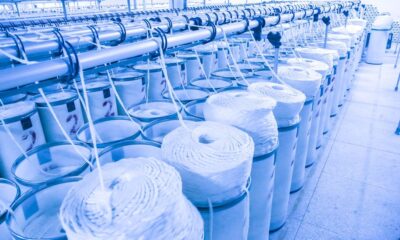






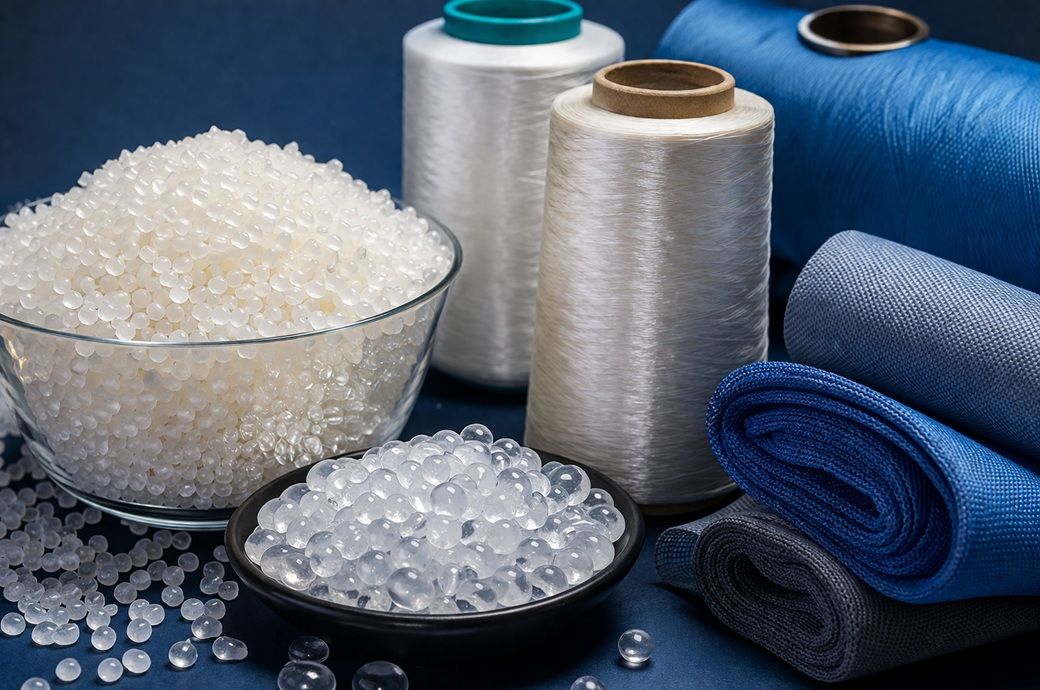
Caprolactam (CPL) prices initially held near $*.**–*.**/kg with minimal movement, while nylon chips saw uptick to ~$*.***/kg (+*.* per cent WoW) driven by short-term restocking. Nylon filament yarn (DTY **D/**F) prices remained stable at ~$*.**–*.**/kg, supported by existing inventory and steady downstream textile operations.
By the second week (April * to April **), benzene stabilised, but caprolactam began to weaken to ~$*.**–*.**/kg (−*.* per cent WoW), signalling the start of broader chain pressure. Nylon chips responded with a mild correction to ~$*.***/kg (−* per cent WoW), while filament yarn prices continued to hold steady due to inventory buffers and ongoing execution of prior textile orders. In the third week (Apr **–**), caprolactam stable to ~$*.*/kg, and chips followed to ~$*.***/kg (Stable WoW).

Total registered FDI, including newly registered and adjusted capital, along with foreign investors’ contributions and share purchases, reached $18.24 billion as of April 27, up 32 per cent year on year (YoY), according to the Ministry of Finance’s National Statistics Office (NSO).
Vietnam attracted $18.24 billion in FDI in January–April 2026, up 32 per cent, driven by manufacturing and processing.
Realised FDI hit a five-year high, signalling continued capacity expansion.
Trade surged to $344.17 billion, supported by strong US demand and rising imports from Asia, highlighting deeper global supply chain integration and export momentum.
A total of 1,249 new projects were licensed with combined registered capital of $12.15 billion, reflecting a 3.7 per cent annual increase in project numbers and a 2.2-fold rise in value. Manufacturing and processing dominated, attracting $8.12 billion, or 66.8 per cent of total newly registered capital.
Realised FDI in the January–April period was estimated at $7.40 billion, up 9.8 per cent YoY and marking the highest level for the period in the past five years. Of this, the manufacturing and processing sector disbursed $6.12 billion, accounting for 82.7 per cent. Meanwhile, 316 existing projects registered additional capital of $3.13 billion, representing a sharp 51 per cent decline compared to the same period last year. Combining newly registered and adjusted capital, total FDI into manufacturing and processing reached $10.49 billion, or 68.6 per cent of the total.
Foreign investors carried out 976 capital contribution and share purchase transactions worth $2.96 billion, up 61.9 per cent YoY. Among these, 325 deals increased enterprises’ charter capital by $445.13 million, while 651 share acquisitions without capital increases totalled $2.51 billion. Wholesale and retail trade led these investments, capturing $1.89 billion, or 63.9 per cent.
Among 53 countries and territories with newly licensed projects, Singapore was the largest investor with $6.05 billion, accounting for 49.8 per cent of the total. It was followed by the Republic of Korea with $4.08 billion (33.6 per cent), China with $524.1 million (4.3 per cent), Japan with $462 million (3.8 per cent), Hong Kong (China) with $329.2 million (2.7 per cent), and the Netherlands with $318.5 million (2.6 per cent).
On the trade front, Vietnam’s total trade with the rest of the world was estimated at $344.17 billion in the first four months of 2026, a significant increase from $277.21 billion in the same period last year, the NSO said. In April alone, trade volume reached an estimated $94.32 billion, rising 8 per cent from March and 26.7 per cent YoY.
The United States remained the largest importer of Vietnamese goods, with imports valued at $53.9 billion, while China continued as the top supplier with $69 billion. Imports from traditional markets also surged, with South Korea and ASEAN recording growth rates of 57.8 per cent and 44.3 per cent, respectively.
Fibre2Fashion News Desk (MS)
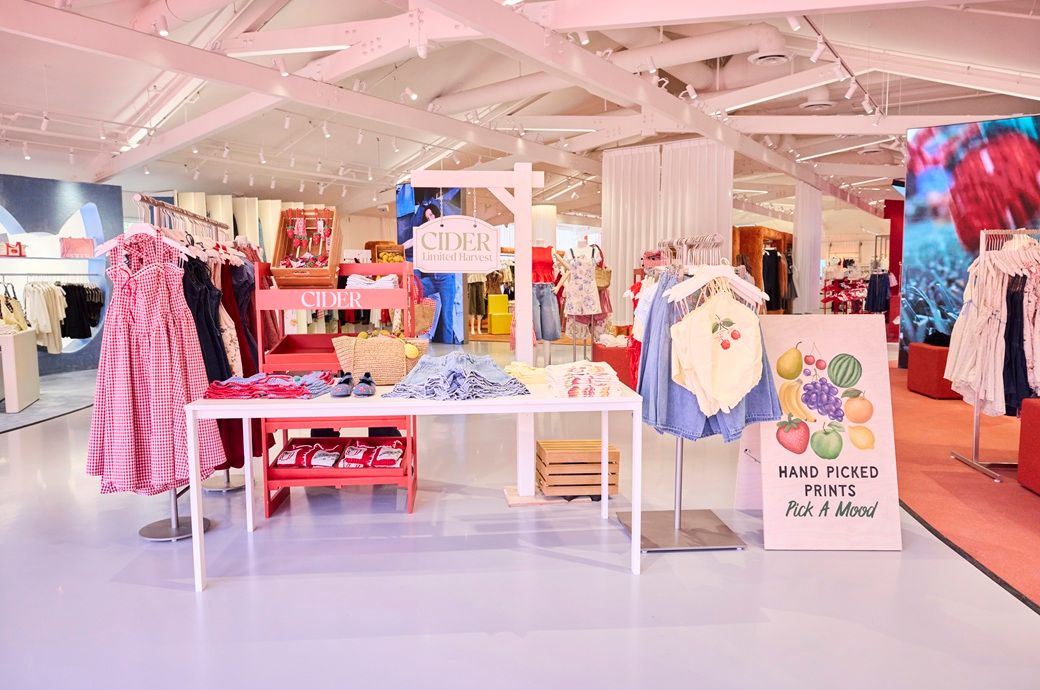
The store translates Cider’s digital identity into an exciting retail experience through its signature “Pick a Mood” concept. The space is organized across multiple distinct moods: Cute, Elegant and Free, alongside dedicated occasion-based categories including Vacation, Workwear, Essentials, Special Occasion, and Lingerie & Intimates.
Cider’s first permanent LA store marks its transition from a digital-first model to an omnichannel strategy, bringing its ‘Pick a Mood’ concept into a physical, immersive retail space.
The move strengthens community engagement through curated in-store experiences, local collaborations and events, while signalling broader expansion plans and deeper brand visibility.
Paying homage to its new home at The Original Farmers Market, the brand will debut a Farmers Market–inspired collection, available in-store and globally online on April 17. The Original Farmers Market Collection will feature a playful assortment of food-inspired graphics, checkered prints, and handcrafted details such as crochet, embroidery, and linen textures across apparel, swim, and accessories.
“We chose The Original Farmers Market because it’s one of the most vibrant and influential retail destinations in LA and even California,” said Fenco Lin, Co-Founder of Cider. “It brings together culture, energy, and everyday life in a way that truly reflects how our Cider community shops and lives. For our first store, we’re excited to create a space where people can not only discover Cider in person, but also feel inspired, relaxed, and connected to the brand.”
From April 17 to 19, 2026, Cider celebrated its grand opening with a curated lineup of in-store moments designed for discovery and connection, from shareable photo experiences to exclusive gifts with purchase and limited Los Angeles–inspired giveaways.
Extending beyond opening weekend, the brand will host “Cider Sundays,” a weekly series of community-led gatherings featuring collaborations with Los Angeles–based creators, neighborhood cafés and local businesses, alongside stylist-led Cider Club experiences that bring the #cidergang together IRL.
The 7,800-square-foot retail space marks Cider’s first permanent store, opening at Los Angeles’ Original Farmers Market. As a key market and home base for the brand, Los Angeles provides a natural setting for this milestone, while the Farmers Market’s longstanding reputation as a hub of culture and community makes it an ideal destination to bring the Cider audience together in person.
Following the brand’s Los Angeles debut, Cider plans to expand with a second retail location at Westfield Valley Fair in San Jose later this summer.
The store officially opened April 17, 2026, and is located at 6333 W 3rd St, Ste P-20. The store will be open Monday through Thursday from 10 a.m. to 9 p.m., Friday and Saturday from 10 a.m. to 10 p.m., and Sunday from 11 a.m. to 8 p.m. PST. The Original Farmers Market collection will be available online April 2nd, 2026.
Note: The headline, insights, and image of this press release may have been refined by the Fibre2Fashion staff; the rest of the content remains unchanged.
Fibre2Fashion News Desk (MS)


Dolly Parton shares health update after canceling Las Vegas residency

No 10 does not deny Chancellor rowed with US counterpart in Washington meetings

US-Iran talks progressing with Pakistan’s efforts, says Araghchi amid Hormuz tensions

-

 Tech1 week ago
A Brain Implant for Depression Is About to Be Tested in Humans
-
 Business1 week ago
‘I had £20,000 stolen and had to fight a 13-month fraud reporting rule to get it back’
-

 Tech1 week ago
Almost 90% of women leave tech industry within 10 years | Computer Weekly
-

 Sports1 week ago
Pro wrestling star Steph De Lander reveals how colleague’s advice helped lead her to title triumph at ACW
-
 Business1 week ago
Pakistan’s oil market is fuelling the crisis | The Express Tribune
-

 Entertainment1 week ago
Norway joins Type 26 Frigate Programme to boost NATO naval power
-

 Entertainment1 week ago
Melania Trump says ABC should ‘take a stand’ on late-night host Kimmel
-

 Tech1 week ago
This Ambitious Laptop Doesn’t Leave Much Room for Your Hands