

Tech
Essex Police halts live facial recognition over bias and accuracy risks | Computer Weekly

Essex Police has paused its use of live facial recognition (LFR) technology after identifying potential accuracy and bias risks.
The force’s suspension of its LFR system – provided by Israeli biometrics firm Corsight – was revealed in an audit document published by the Information Commissioner’s Office (ICO), which said Essex Police must work to “reduce the risks” identified before continuing with future deployments.
A list of LFR deployments from Essex Police shows the last time the force used the technology was on 26 August 2025, meaning its deployments had already been paused by the time the ICO carried out its audit that November.
While it is currently unclear what specifically prompted the force to suspend its LFR use, Computer Weekly exclusively reported in May 2025 that Essex Police had failed to properly consider its potentially discriminatory impacts, after a “clearly inadequate” equality impact assessment (EIA) was obtained via Freedom of Information rules by privacy campaign group Big Brother Watch.
Experts criticised the document at the time for being “incoherent”, failing to look at the systemic equalities impacts of the technology, and relying exclusively on testing of entirely different software algorithms used by other police forces trained on different populations.
The force was also criticised for “parroting misleading claims” from the supplier about the LFR system’s lack of bias, with the National Institute of Standards and Technology – a body widely recognised as the gold standard for LFR testing, where all of the testing data is publicly shared – holding no information to support the accuracy figures cited by Corsight, or its claim to essentially have the least-biased algorithm available.
Big Brother Watch alleged at the time that these issues taken together meant the force had likely failed to fulfil its public sector equality duty to consider how its policies and practices could be discriminatory.
Independent testing
Responding to the criticisms, the force said at the time that it was continuing to carry out evaluations, noting that both the National Physical Laboratory (NPL) and Cambridge University had been commissioned to conduct further independent testing of its system.
According to the results of that Cambridge study – published on 12 March 2026 – the system was more likely to correctly identify men than women, and was “statistically significantly more likely to correctly identify black participants than participants from other ethnic groups”.
Matt Bland, a criminologist involved in the study, said: “If you’re an offender passing facial recognition cameras which are set up as they have been in Essex, the chances of being identified as being on a police watchlist are greater if you’re black. To me, that warrants further investigation.”
By contrast, the further NPL testing – also published in March 2026 – found black men were most likely to be correctly matched by the system and white men least likely, but noted that the disparity was not statistically significant.
Computer Weekly contacted the force to ask what specifically prompted the LFR suspension decision, including whether it was the study results or previous criticisms of the EIA.
“In line with our commitment to our Public Sector Equality Duty, Essex Police commissioned two independent studies which were completed by academia,” a spokesperson said. “The first of these indicated there was a potential bias in the positive identification rate, while the second suggested there was no statistical relevant bias in the results.
“Based on the fact there was potential bias, the force decided to pause deployments while we worked with the algorithm software provider to review the results and seek to update the software,” they added. “We then sought further academic assessment.
“As a result of this work, we have revised our policies and procedures and are now confident that we can start deploying this important technology as part of policing operations to trace and arrest wanted criminals. We will continue to monitor all results to ensure there is no risk of bias against any one section of the community.”
Responding to news of the suspension, Jake Hurfurt, the head of research and investigations at Big Brother Watch, said: “Police across the country must take note of this fiasco. AI [artificial intelligence] surveillance that is experimental, untested, inaccurate or potentially biased has no place on our streets.”
Ramping up deployments without debate
While the use of LFR by police – beginning with the Met’s deployment at Notting Hill Carnival in August 2016 – has already ramped up in recent years, there has so far been minimal public debate or consultation, with the Home Office claiming for years that there is already “comprehensive” legal framework in place.
However, in December 2025, the Home Office launched a 10-week consultation on the use of LFR by UK police, allowing interested parties and members of the public to share their views on how the controversial technology should be regulated.
The department has said that although a “patchwork” legal framework for police facial recognition exists (including for the increasing use of the retrospective and “operator-initiated” versions of the technology), it does not give police themselves the confidence to “use it at significantly greater scale … nor does it consistently give the public the confidence that it will be used responsibly”.
It added that the current rules governing police LFR use are “complicated and difficult to understand”, and that an ordinary member of the public would be required to read four pieces of legislation, police national guidance documents and a range of detailed legal or data protection documents from individual forces to fully understand the basis for LFR use on their high streets.
Before the consultation had even closed, however, the Home Office announced plans for the massive roll-out of AI and facial-recognition technologies as part of sweeping reforms to the UK’s “broken” policing system.
Under the proposals – announced in late January 2026, nearly three weeks before the consultation closed – the Home Office will increase the number of LFR vans available to police from 10 to 50; set up a new National Centre for AI in Policing – to be known as Police.AI – to build, test and assure AI models for policing contexts; and invest £115m over three years to help identify, test and scale new AI technologies in policing.
‘Panopticon’ vision
In a recent interview with former prime minister Tony Blair, UK home secretary Shabana Mahmood described her ambition to use technologies such as AI and LFR to achieve Jeremy Bentham’s vision of a “panopticon”, referring to his proposed prison design that would allow a single, unseen guard to silently observe every prisoner at once.
Typically used today as a metaphor for authoritarian control, the underpinning idea of the panopticon is that by instilling a perpetual sense of being watched among the inmates, they would behave as the authorities wanted.
“When I was in justice, my ultimate vision for that part of the criminal justice system was to achieve, by means of AI and technology, what Jeremy Bentham tried to do with his panopticon,” Mahmood told Blair. “That is that the eyes of the state can be on you at all times.”
I’m looking at Volume 1,536 of the Epstein files, page 311. It’s an early 2016 email thread between Jeffrey Epstein and a woman whose name is redacted by the Department of Justice.
In the thread, Epstein asks the unidentified woman for a “naughty selfie” and later sends her a camera. In late February, he replies with a different ask: “Do you have any friends that might want to work for me?…I will give you money if you find someone willing to travel, 22-25, educated. Personable.”
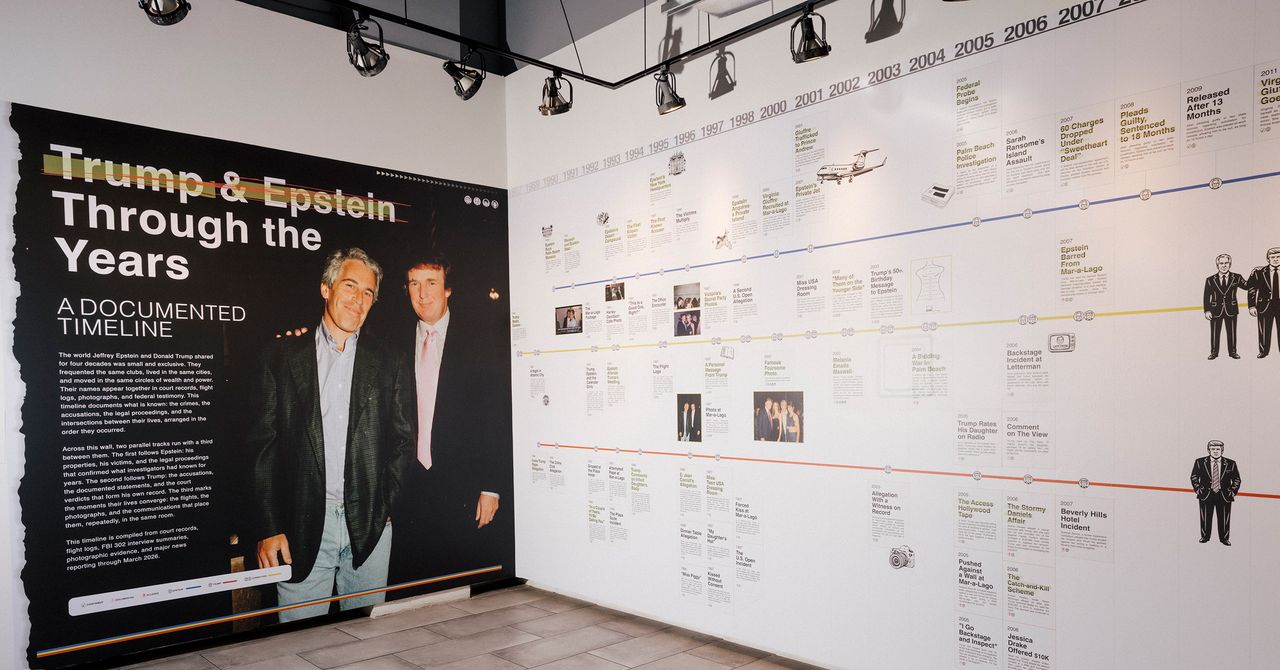
The exchange carries extra resonance when you consider that Epstein is accused of sex trafficking minors, with the Department of Justice estimating that he had more than 1,200 potential victims. But I just happen to flip to it randomly during my recent visit to the newly opened Donald J. Trump and Jeffrey Epstein Memorial Reading Room.
Photograph: Anna Maria Lopez/Courtesy of BPI Group
Tucked away in a nondescript gallery in New York City’s Tribeca neighborhood, the reading room is a massive library of all 3.5 million pages of Epstein-related records released by the Department of Justice earlier this year, compiled into more than 3,700 individual volumes. From May 8 to 21, the reading room will be open to the public by appointment only.
The library—essentially, the Epstein files in analog—is intended to represent the staggering scale of Epstein’s crimes, as well as the impunity with which he carried them out. More than 17,000 pounds of evidence is on display at the library, says David Garrett, the main organizer of the exhibit at the Institute for Primary Facts, a nonprofit intended to promote transparency and accountability in the US government.
“The evidence in this room is evidence of one of the most horrific crimes in American history,” Garrett says. “When people come through this room, I hope they realize that in America, we have the rule of law, and if they stand up they can take action and demand accountability for the crimes that were committed.”
Epstein, who died in prison in 2019, is now synonymous with systemic corruption and abuse, particularly in light of his ties to President Donald Trump. The installation features a detailed timeline of Epstein’s relationship with Trump, from their purported initial meeting in Palm Beach in 1987 to Epstein’s 1993 attendance at Trump’s wedding to Marla Maples to the end of Epstein’s membership at Mar-a-Lago in 2007, when Trump allegedly witnessed him behaving inappropriately toward the teenage daughter of another member. The shelves are organized around an exhibit in support of Epstein’s survivors, with candles laid out on the ground to represent the more than 1,200 victims. In response to a request for comment, White House spokesperson Abigail Jackson said Trump has “been totally exonerated on anything relating to Epstein,” claiming that he “has done more for Epstein’s victims than anyone.”
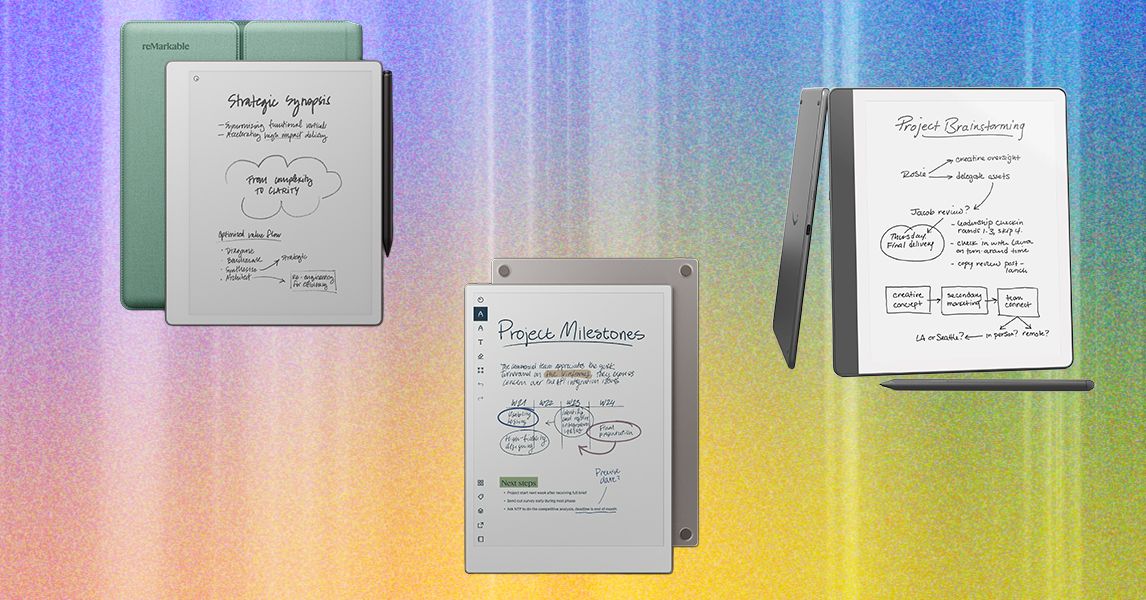
Comparing Our Favorite Digital Notebooks
Our Favorite Smart Pens
Neo Smartpen M1+ for $129: Skip the tablet and write directly on paper with a smart pen instead. The Neo Smartpen M1+ is the thinnest and lightest of all the pens I tried, which makes it feel a bit more like your standard pen. Importantly, it’s comfortable to hold and use. You should be able to find whatever size and style of notebook you need as well as planners. The Neo Studio app (iOS, Android) is nice, with an easy-to-navigate notebook system and the ability to search for pages by page number or date. You can change the color of the ink and thickness of the lines right on the page as you go, or you can switch them up later and edit the colors of what you’ve written. —Medea Giodiano
Moleskine Smart Writing Set for $251: Moleskine has garnered a devoted following for its classic notebooks and journals, but it has also moved into smart territory. The Smart Writing Set gets you a notebook and pen bundle, so this is the best option for most people starting out. Write in the notebook, and it’ll appear in the companion app! But you can buy the pen on its own, as well as the smart notebooks and planners in various sizes. The Moleskine Notes 2.0 app (iOS, Android) was easy to use once I settled into it. An older version of the app is available for download, but the 2.0 version is more streamlined. A pop-up let me know that 2.0 is still a work in progress and I might need to switch back to the older version if my device is having trouble, but my iPhone 11 didn’t have any issues. I tested the $149 2018 version of the Smart Writing Set, which is no longer available, but we plan to test the latest version soon. —Medea Giordano
Honorable Mentions
Kindle Scribe Colorsoft ($630) and Kindle Scribe (3rd Gen) ($500): The new versions of the Kindle Scribe are still solid all-around devices that have a good mix of e-reader and digital notebook features, but I still prefer the older model. While the new Scribe Colorsoft is a nice option if you want color, I think both are too expensive for what they are. The price comes from all the AI features packed into the device, but I don’t think any reader or digital notetaker was asking for more of those. Our picks above are a better price for similar features, though the Scribe does have the most impressive battery life of any digital notebook device I’ve tried (and that’s still true for the older model that I recommend above, too, so you don’t need the newest model for the best battery life).
Montblanc Digital Paper for $935: Yes, that Montblanc, the one with the famous pens, now has a digital notebook of its own. It’s no surprise that I’d call its digital pen one of the best. It’s got a super-lightweight feel while sporting three different buttons, two of which you can customize. (There’s no eraser, but I’ll give it up for that end of the pen to instead be a home button). I really like this device overall, but it’s pricey for what you get—aside from the customizable pen buttons, there’s not much to differentiate it from my top picks.
Neo Smartpen Dimo for $59: This is the cheapest smart pen option and uses replaceable batteries. It isn’t compatible with Google Calendar, iCal, or Outlook like our other picks.
ReMarkable 2 for $569 (with Marker Plus and Book Folio): This is the older ReMarkable digital notebook from 2020, and it’s still a great device with a great range of accessories (while they’re still available, that is). It feels similar to real paper with its matte screen, and works on the same platform as ReMarkable’s newer tablets. But the performance isn’t as snappy as newer models, and ReMarkable is no longer making it after launching the ReMarkable Paper Pure. I do really like using it with a Keyboard Folio as an e-paper tablet, though.
Rocketbook Fusion Plus for $30: If you really prefer the paper experience and don’t want something you need to charge, then Rocketbook is for you. Rocketbook makes several reusable notebooks, planners, and accessories like index cards and sticky notes. I like the Rocketbook Fusion Plus since it comes with a ton of different template styles, from your classic monthly and weekly pages to project management layouts and meeting notes, making it feel closer to the variety a digital notebook can offer you. Take notes with an erasable Pilot Frixion Pen (one comes with whichever item you buy), scan photos of the pages into the Rocketbook app, and erase the whole thing with the damp microfiber cloth (also included). The app is designed to keep everything organized and easily send things off to Google Drive, Slack, Trello, OneNote, and a handful of other options.
Supernote A6 X2 Nomad for $394 (with Standard Pen): This is a smaller version of the Supernote A5 X2 Manta, measuring almost 6 inches on one side and 7.5 inches on the other. Supernote designed it with travel in mind, but I find it to be a great size for a daily digital to-do list or writing down quick notes from a meeting. It’s too small for anything major, but if you’re looking for something compact, this is a good option with Supernote’s software (and with the same fantastic pens!). Like the Manta above, this model rose in price due to the tariffs, though it only went up $30.
FAQs
Do You Need a Digital Note-Taking Device?
The short answer is no. These devices are expensive, usually costing several hundred dollars when a simple notebook and pen costs a few bucks. But if you like the physical act of writing but need to have digital copies, they’re worth considering.
Pros:
- Digital notebooks are thin and light but hold hundreds of notes.
- You can transcribe your notes into text files, making them easier to read and manipulate.
- Depending on the device, you can export files as PDFs, Google Docs, Evernote files, and more.
- Instantly digitizes your art too.
Cons:
- Expensive.
- Need to be charged.
- Have a learning curve.
- Most smart pens need to be paired with an accompanying notebook. The upcoming Nuwa Pen promises smart notes on any paper.
E Ink notebooks are easier on the eyes and feel closer to paper than a glass-screened tablet. But in some cases, you might spend less getting an iPad and an Apple Pencil (and a keyboard if you also want to type sometimes). You can also do more on them thanks to the thousands of apps in the App Store. An iPad is pretty intuitive if you’re familiar with the Apple ecosystem (though both ReMarkable and Supernote’s ecosystems are also very intuitive). Former WIRED reviewer Jaina Grey recommended using her 11-inch iPad Pro with the GoodNotes and Notability apps for her writing, but there are other models that should work fine, including our top pick, the 2025 iPad. Check out our guide to the Best iPads for more advice on which to buy.
I also have an iPad, and I’ll say the upside of a digital notebook is that the battery tends to last longer, especially if you’re the type to use it for a day or two and then forget about it for a few days. My trusty Kindle Scribe usually manages to have plenty of battery available for whenever I feel the note-taking itch, even if it’s been a week or two since I last touched it.
Why Are Digital Notebooks So Expensive?
Just because these devices look like paper doesn’t mean they’re as cheap to make as a sheet of paper. Like any tablet or smartphone, these devices are packed with features, a special ecosystem, and the E Ink technology is no small feat to perfect, along with a sensation similar to writing on paper. It’s an impressive piece of technology.
Prices haven’t gotten cheaper for this category in the wake of tariffs’ causing technology prices to rise. ReMarkable recently raised the price of our top pick, the ReMarkable Paper Pro. Another favorite of ours from Supernote has gone up a little less than $50, and Kobo also slightly raised its prices, though the $10 increase is pretty minor compared to other increases we’ve seen. We’ll continue to monitor prices and flag if more price changes are to come.
Power up with unlimited access to WIRED. Get best-in-class reporting and exclusive subscriber content that’s too important to ignore. Subscribe Today.
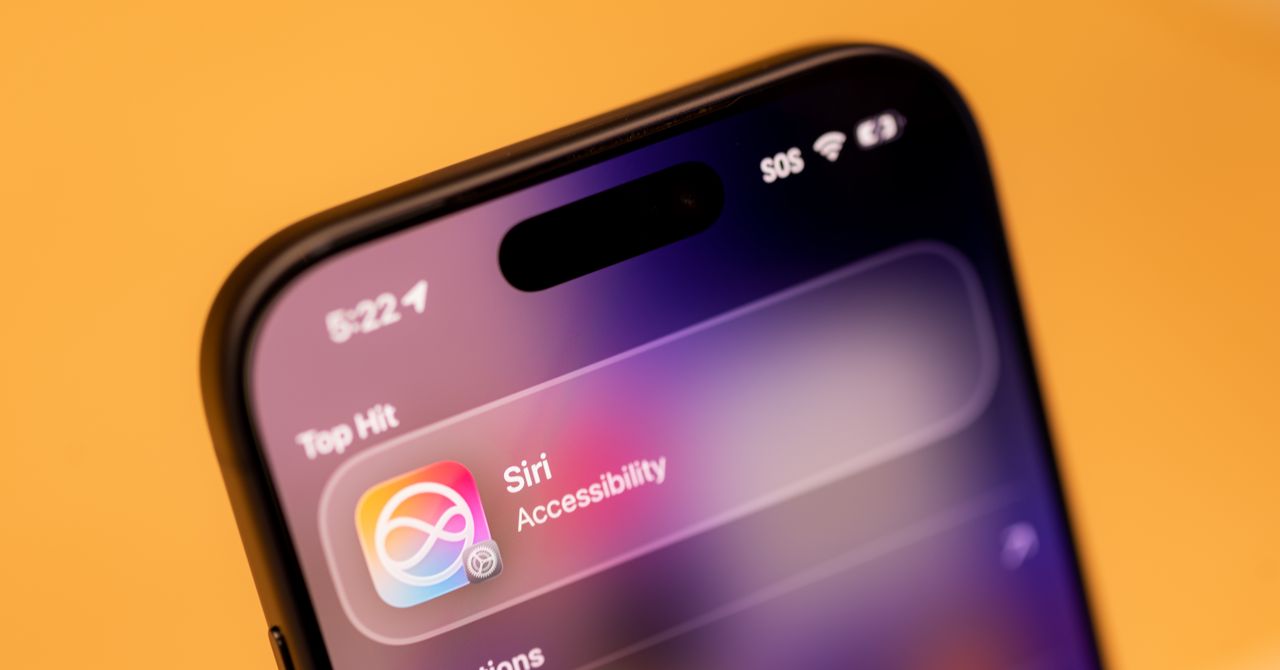
Apple has agreed to pay $250 million to settle a false advertising class-action lawsuit accusing the company of overhyping its Apple Intelligence features—specifically a promised AI overhaul of Siri that plaintiffs say never materialized and, according to their lawyers, may not arrive for years.
The announcement comes just before Apple is supposedly set to finally unveil some form of AI-enhanced Siri at its developer conference in June, which would mark another swing at detailing a radically improved digital assistant for the iPhone.
The legal complaint says that Apple allegedly saturated the market with deceptive ads, inducing consumers to purchase iPhones based on “the promise of certain Enhanced Siri features” that Apple had first announced at its Worldwide Developers Conference in 2024, a few months ahead of the release of the iPhone 16.
The proposed settlement, filed Tuesday in California federal court, is one of the largest Apple has ever reached. It covers only US customers who bought any model of an iPhone 15 or iPhone 16 between June 10, 2024 and March 29, 2025. Depending on the claim, those who qualify could possibly receive up to $95 per device.
Court documents state that a $250 million common fund will provide successful claimants with “a presumptive per-device payment of $25 for each eligible device, which may decrease or increase up to $95 per device depending on claim … The Settlement also reflects that Apple anticipates delivering additional Siri Apple Intelligence features in future software updates at no additional cost.”
The documentation goes on to cite that Apple’s advertising also drew the attention of the Better Business Bureau’s National Advertising Division, which found that “Apple’s claim that Apple Intelligence is ‘available now’ conveyed that the updated Siri was available at launch, when it was not.” In March 2025, Apple told consumers that Enhanced Siri features would not be delivered until a future date.
The settlement, which is still awaiting a judge’s approval, includes no admission of fault by the company. Marni Goldberg, an Apple spokesperson, gave a statement to The New York Times, claiming that with “the launch of Apple Intelligence,” Apple has “introduced dozens of features across many languages that are integrated across Apple’s platforms,” but the company has “resolved this matter to stay focused on doing what we do best, delivering the most innovative products and services to our users.”
Apple acknowledged last year that its AI upgrades to Siri were falling behind schedule. In a statement to Daring Fireball in March 2025, Apple spokesperson Jacqueline Roy said the company had “been working on a more personalized Siri, giving it more awareness of your personal context, as well as the ability to take action for you within and across your apps,” but confirmed that it was going to take the company “longer than we thought to deliver on these features and we anticipate rolling them out in the coming year.”
The next day, Apple reportedly pulled an advertisement starring Bella Ramsey showing the actor using a version of Siri that is capable of answering the query “What’s the name of the guy I had a meeting with a couple of months ago at Cafe Grenel?”
The is the second time in as many years Apple’s voice assistant has cost the company dearly. In May last year, Apple agreed to pay out $95 million to settle a class-action lawsuit over claims Siri listened in on private conversations.


‘Project Freedom’: Trump pauses Hormuz escort mission at Pakistan, others’ request

India approves $595 mn cotton mission as supply tightens
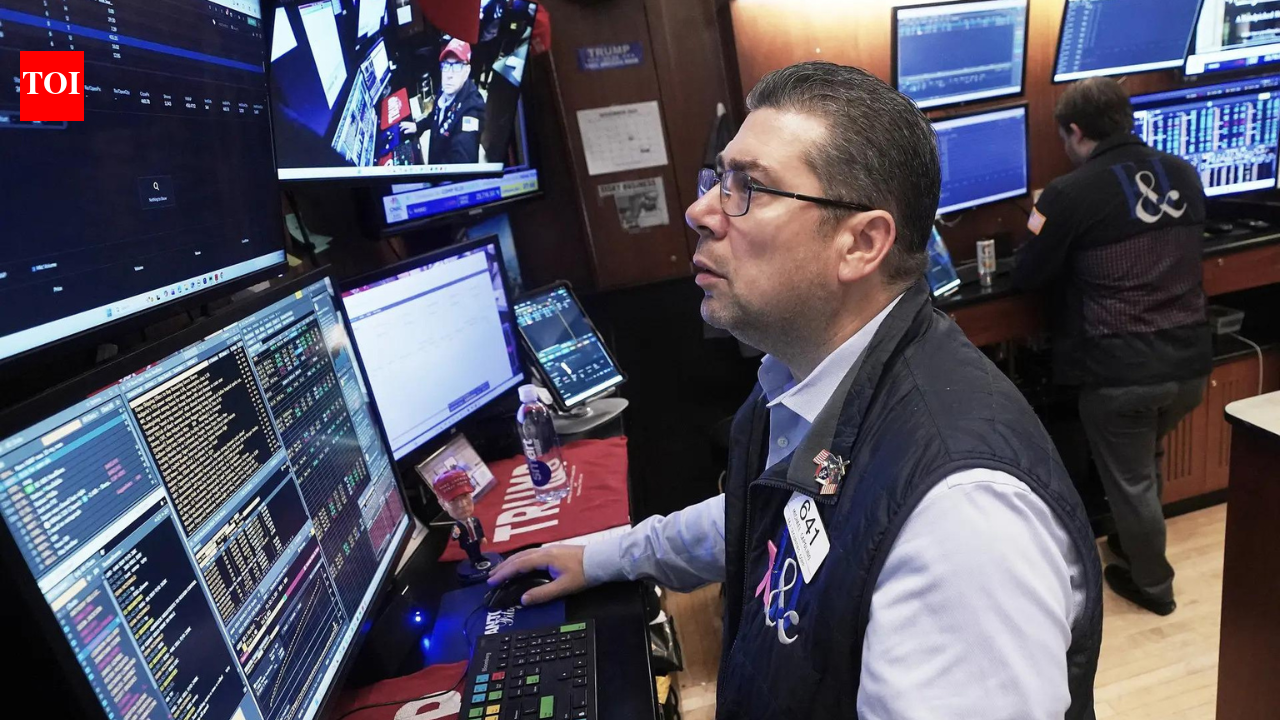
US stock markets today (May 6, 2026): Wall Street rallies to record highs, crude oil tumbles on Strait of Hormuz reopening hopes – The Times of India

A Brain Implant for Depression Is About to Be Tested in Humans

Pro wrestling star Steph De Lander reveals how colleague’s advice helped lead her to title triumph at ACW

‘I had £20,000 stolen and had to fight a 13-month fraud reporting rule to get it back’

-
 Tech1 week ago
A Brain Implant for Depression Is About to Be Tested in Humans
-
 Sports1 week ago
Pro wrestling star Steph De Lander reveals how colleague’s advice helped lead her to title triumph at ACW
-
Business1 week ago
‘I had £20,000 stolen and had to fight a 13-month fraud reporting rule to get it back’
-

 Entertainment1 week ago
Norway joins Type 26 Frigate Programme to boost NATO naval power
-

 Entertainment1 week ago
Melania Trump says ABC should ‘take a stand’ on late-night host Kimmel
-
 Business6 days ago
PSX plunges over 4,800 points | The Express Tribune
-
 Tech1 week ago
This Ambitious Laptop Doesn’t Leave Much Room for Your Hands
-

 Tech6 days ago
Almost half of UK businesses hit by cyber attacks | Computer Weekly