

Tech
Gamers Hate Nvidia’s DLSS 5. Developers Aren’t Crazy About It, Either

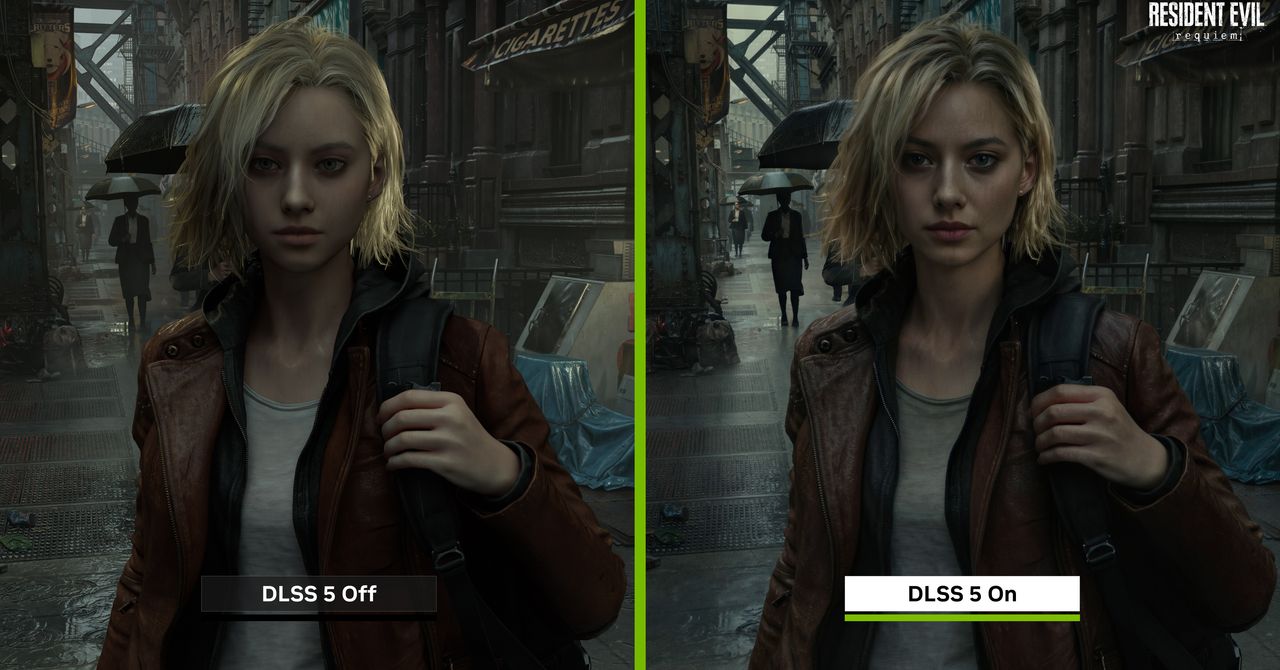
After a day of widespread, overwhelming pushback, Nvidia CEO Jensen Huang doubled down and said gamers are “completely wrong” about DLSS. (You know how much gamers love being told that they’re wrong.) But developers at Capcom and Ubisoft say they didn’t even know what the tech demo would look like and, according to Insider Gaming, found out about it the same time everyone else did and were just as surprised. (Nvidia, Ubisoft, and Capcom did not immediately get back to our request for comment.)
“I think the reaction from gamers is understandable,” Marwan Mahmoud, a game developer at Incrypt, wrote in an email to WIRED. “Some games started relying too heavily on these technologies instead of focusing on proper optimization. From a developer perspective, it feels a bit different because you see DLSS as a tool that helps rather than a core solution.”
The problem for many people, developers included, is the one-size-fits-all approach of a technology that can adjust visuals across various game types.
“The artist has a style, the artist has an art direction that you’re going to give him, and that’s something that AI kind of doesn’t respect all the time,” says Raúl Izquierdo, an indie game developer in Mexico, “Maybe I don’t want my characters to be yassified.”
Bates agrees, saying he doesn’t think every game needs to be photo real. And that sentiment is also echoed by game developer Sterling Reames, who has worked at Striking Distance Studios and Zynga. “People just want better games,” Reames wrote in a message to WIRED. “That’s as plainly as I can put it.
At GTC, Nvidia ran its demo on its most powerful consumer graphics cards, two GeForce RTX 5090s. Had Nvidia made its selling point for the tech that it saves resources, thus enabling older hardware to deliver more impressive graphics, there may have been something to that.
“What’s the point if you’re not going to do it on weaker hardware?” Izquierdo says. “If this were done on an [RTX 2080 graphics card], for instance, I think I would be thinking differently about it. OK, this is for the betterment of gamers’ experiences and everything, not just for selling graphic cards.”
Ultimately, Nvidia’s demo, and GTC writ large, was a flex of the company’s power in the AI space. The reaction, Bates posits, is more about humans dealing with not just crossing the uncanny valley, but what happens when we reach the other side.
“Right now it’s pretty clearly a thing they are forced to do to demonstrate their prowess as an AI company,” Bates says. “But the truth is, this is going to be the default in a few years, and nobody is even going to think twice about it. It’s Jensen’s world, we’re just living in it.”








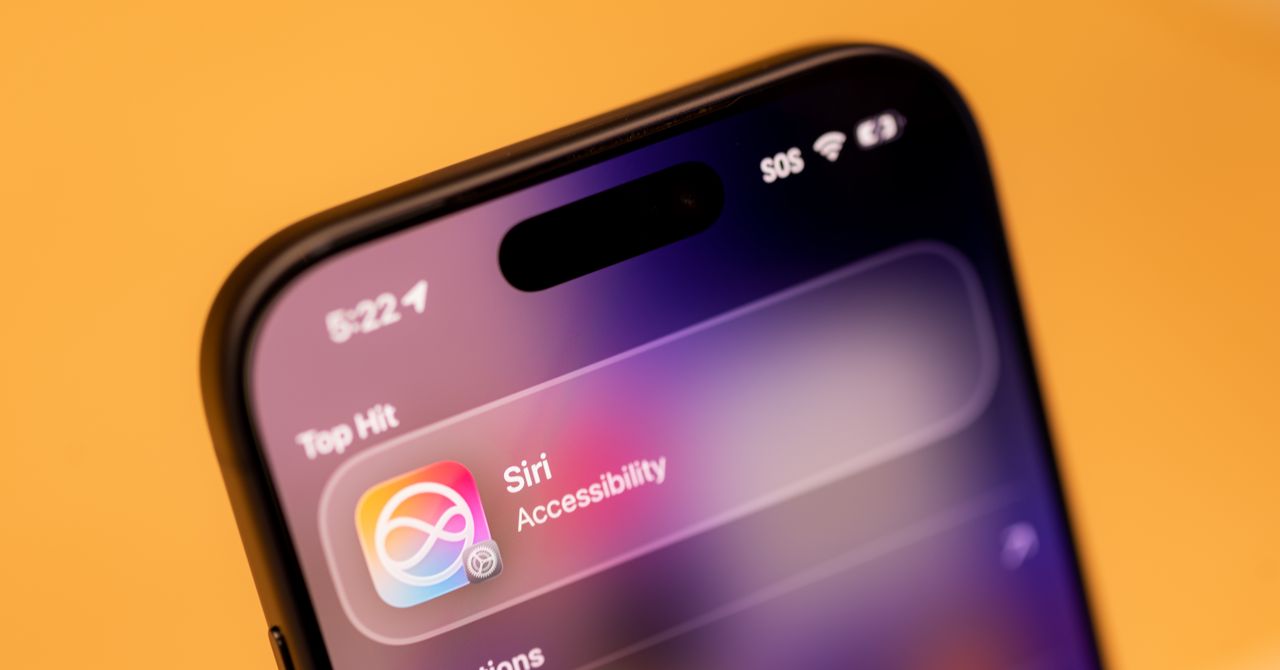
Apple has agreed to pay $250 million to settle a false advertising class-action lawsuit accusing the company of overhyping its Apple Intelligence features—specifically a promised AI overhaul of Siri that plaintiffs say never materialized and, according to their lawyers, may not arrive for years.
The announcement comes just before Apple is supposedly set to finally unveil some form of AI-enhanced Siri at its developer conference in June, which would mark another swing at detailing a radically improved digital assistant for the iPhone.
The legal complaint says that Apple allegedly saturated the market with deceptive ads, inducing consumers to purchase iPhones based on “the promise of certain Enhanced Siri features” that Apple had first announced at its Worldwide Developers Conference in 2024, a few months ahead of the release of the iPhone 16.
The proposed settlement, filed Tuesday in California federal court, is one of the largest Apple has ever reached. It covers only US customers who bought any model of an iPhone 15 or iPhone 16 between June 10, 2024 and March 29, 2025. Depending on the claim, those who qualify could possibly receive up to $95 per device.
Court documents state that a $250 million common fund will provide successful claimants with “a presumptive per-device payment of $25 for each eligible device, which may decrease or increase up to $95 per device depending on claim … The Settlement also reflects that Apple anticipates delivering additional Siri Apple Intelligence features in future software updates at no additional cost.”
The documentation goes on to cite that Apple’s advertising also drew the attention of the Better Business Bureau’s National Advertising Division, which found that “Apple’s claim that Apple Intelligence is ‘available now’ conveyed that the updated Siri was available at launch, when it was not.” In March 2025, Apple told consumers that Enhanced Siri features would not be delivered until a future date.
The settlement, which is still awaiting a judge’s approval, includes no admission of fault by the company. Marni Goldberg, an Apple spokesperson, gave a statement to The New York Times, claiming that with “the launch of Apple Intelligence,” Apple has “introduced dozens of features across many languages that are integrated across Apple’s platforms,” but the company has “resolved this matter to stay focused on doing what we do best, delivering the most innovative products and services to our users.”
Apple acknowledged last year that its AI upgrades to Siri were falling behind schedule. In a statement to Daring Fireball in March 2025, Apple spokesperson Jacqueline Roy said the company had “been working on a more personalized Siri, giving it more awareness of your personal context, as well as the ability to take action for you within and across your apps,” but confirmed that it was going to take the company “longer than we thought to deliver on these features and we anticipate rolling them out in the coming year.”
The next day, Apple reportedly pulled an advertisement starring Bella Ramsey showing the actor using a version of Siri that is capable of answering the query “What’s the name of the guy I had a meeting with a couple of months ago at Cafe Grenel?”
The is the second time in as many years Apple’s voice assistant has cost the company dearly. In May last year, Apple agreed to pay out $95 million to settle a class-action lawsuit over claims Siri listened in on private conversations.
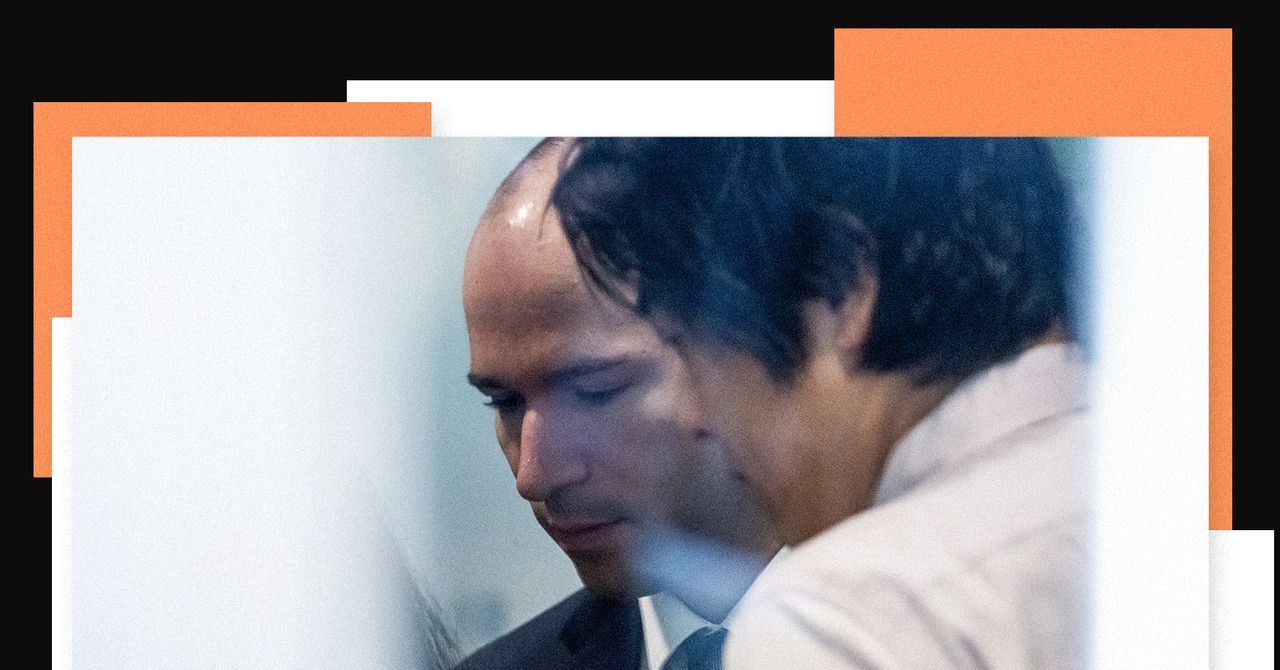
In August 2017, Greg Brockman and Ilya Sutskever gathered at Elon Musk’s self-described “haunted mansion,” a 47-acre, $23 million estate in Hillsborough, south of San Francisco, to discuss the future of OpenAI. Actor Amber Heard, Musk’s then-girlfriend, had served the group whiskey and then dashed off with a friend, Brockman, OpenAI’s cofounder and president, testified in federal court during the trial for Musk v. Altman on Tuesday.
Ahead of the meeting, Musk gifted Brockman and Sutskever, OpenAI’s cofounder and former chief scientist, new Tesla Model 3 cars. “It felt like he was buttering us up,” Brockman said on the stand. “He wanted us to feel indebted to him in some way.” Sutskever tried to reciprocate for the occasion. The amateur artist presented Musk with a painting of a Tesla. Musk and the other cofounders wanted to establish a for-profit arm to entice investors to give them billions of dollars to pay for compute. But Musk also wanted control of the company, and Sutskever and Brockman objected to granting the Tesla CEO what they believed would be a “dictatorship” over the future of AI development. They proposed having shared control.
After several minutes of deliberation, Musk rejected their offer. “He stood up and stormed around the table,” Brockman recalled. “I actually thought he was going to hit me, physically attack me.” Musk grabbed the painting, said he would cut off his funding of the nonprofit until Brockman and Sutskever quit, and left the room, according to Brockman’s testimony. But that night, Musk’s so-called chief of staff Shivon Zilis called Brockman and Sutskever “to say it’s not over,” Brockman testified. “There were discussions of futures that included us.”
The story of the heated negotiations emerged as Brockman wrapped up his testimony on Tuesday. To OpenAI, the events at the mansion are representative of repeated instances of erratic behavior by Musk that they believe undermine his arguments about the company. Musk contends his roughly $38 million in donations to OpenAI were abused by Brockman and others on the path to creating the $852 billion for-profit venture now known for services such as ChatGPT and Codex. Brockman, OpenAI CEO Sam Altman, and OpenAI deny any wrongdoing, and the jury in Musk v. Altman could begin deliberating on an advisory ruling as soon as next week.
After Tuesday’s testimony, William Savitt, an attorney for OpenAI, told reporters that what Brockman had learned in 2017 was how tough it can be to meet one’s heroes. Brockman admired and respected Musk’s business acumen, but his desire for control was absolute and concerning, Savitt said. Marc Toberoff, an attorney for Musk, told reporters that the true concern was Brockman’s motivations for sharing control, with his desire for wealth having faced scrutiny in court a day earlier.
For his part, Brockman offered another story on Tuesday to underscore why he thought Musk was not up to the task of controlling an AI company. Brockman recalled then-OpenAI researcher Alec Radford showing Musk an early version of an AI chatbot that didn’t generate responses that he liked. Musk “kept saying this system is so stupid, that a kid on the internet could do better,” Brockman said. Radford “was absolutely crushed” and “demoralized” to the point that he almost quit the AI research field altogether, Brockman said. Brockman and Sutskever “spent a lot of time” rebuilding his confidence. Musk’s inability to see the potential in the early technology—which eventually became the basis for ChatGPT—made him unfit to control OpenAI, in Brockman’s view. “You needed to dream a little bit,” Brockman said. And Musk hadn’t shown that he could.
Boardroom Fights
Brockman said Tuesday that he, Sutskever, and Altman considered voting Musk off the OpenAI nonprofit board as negotiations with him about a for-profit sibling company dragged on for months. They would meet again over whiskey at Musk’s mansion to discuss alternative funding options. There was agreement over what not to do, but little on what to do instead. But Brockman and Sutskever decided removing Musk felt “wrong,” Brockman testified. Eventually, Musk left on his own after deeming OpenAI was on a path of “certain failure,” according to an email he wrote in early 2018.
Zilis, then an adviser to both OpenAI and Musk, kept him informed about developments at the AI venture in the years to come. “She was proxy Elon in some ways,” Brockman said, referring to her as “a friend” who he had first met in 2012 or 2013.
Abortion provider Carafem’s phones were ringing nonstop over the weekend after a US federal appeals court reinstated a nationwide requirement that the drug mifepristone, one of two pills used for a medication abortion, must be obtained in person. The decision, handed down on Friday, left patients unsure if they could gain access to their treatment through telehealth. “People are afraid, and they’re angry,” says Carafem’s chief operations officer, Melissa Grant. “I had people contact us saying, This can’t be true. Do you still have the medication available? Can’t you just give it to me? They were bargaining.”
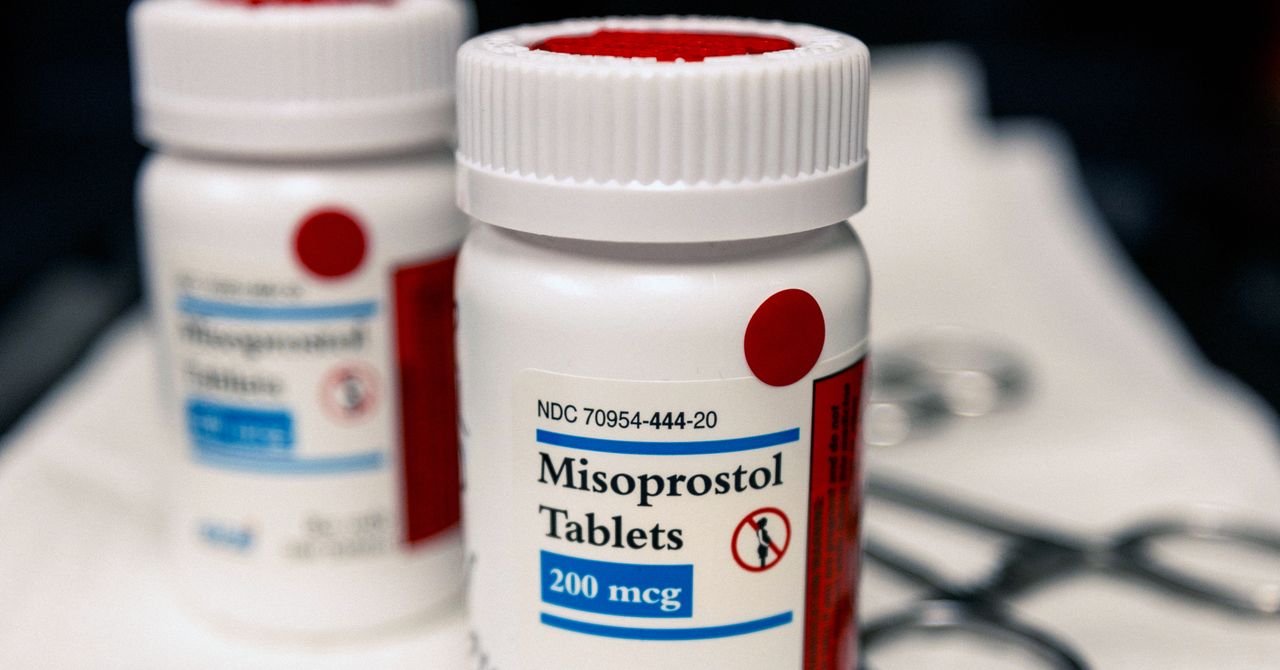
With the restriction in place, Carafem quickly pivoted to a backup approach. Instead of prescribing the two-drug protocol typical for a medication abortion—mifepristone, which blocks progesterone and prevents the pregnancy from progressing, and then misoprostol, which causes the uterus to contract—the organization began prescribing misoprostol on its own. While slightly less effective than the dual-pill option, it’s been widely used in the past. “We feel comfortable prescribing it,” says Grant.
Some Planned Parenthood clinics also pivoted to the misoprostol-only regimen this weekend. “Planned Parenthood providers are doing everything they can to make sure patients know that medication abortion is still safe, legal, and available,” says Danika Severino, vice president of care and access at Planned Parenthood Federation of America.
On Monday, the Supreme Court offered a temporary reprieve, pausing the appeals court ruling for a week. The measure allows patients to once again get mifepristone through virtual clinics at least until May 11, when SCOTUS will take another look at the case. Carafem and Planned Parenthood say they are prepared to shift back to misoprostol-only if necessary. Other providers, including the digital abortion clinic HeyJane, have confirmed that they will also take that approach if necessary.
Mifepristone was developed in the 1980s in France and has been extensively studied for safety and efficacy. It was approved by the Food and Drug Administration in 2000. Under President Joseph Biden, the FDA first allowed the drug to be obtained by mail instead of in person in April 2021, during the Covid-19 pandemic. The agency permanently lifted the in-person dispensing requirement in 2023.
After the Supreme Court overturned Roe v. Wade in 2022, ending the constitutional right to an abortion, medication abortion via telehealth became a more sought-after option, especially for patients in states that adopted abortion restrictions. Approximately one in three abortions that took place in the first half of 2025 used abortion pills obtained through telehealth, according to public health nonprofit Plan C.
Access to mifepristone has become the next major battleground in reproductive health, with anti-abortion politicians and lobbyists seeking to reinstate in-person dispensing requirements on the drug and, by doing so, make medication abortion harder to obtain.
After conflicting legal rulings in 2023 sparked confusion over whether mifepristone would be available from virtual clinics, some of them planned to temporarily shift to offering misoprostol-only medication abortions. Some virtual clinics have offered single-pill options even before that. Carafem offered misoprostol-only medication abortions beginning in 2020, in an effort to provide patients with options for virtual care during the early days of Covid.
Originally developed to treat gastric ulcers, misoprostol has been used for medication abortion since the late 1980s. It remains the primary method of medication abortion in many parts of the world where access to mifepristone is limited.
“Mifepristone and misoprostol are both very safe medications, and in general, having mifepristone increases the efficacy and decreases complication rates of medication abortion,” says Rachel Jensen, a fellow with the American College of Obstetricians and Gynecologists, which endorses the misoprostol-only protocol when mifepristone isn’t available. The single-drug regimen is also endorsed by the World Health Organization, the Society of Family Planning, and the National Abortion Federation.


ASEAN manufacturing momentum eases in April amid rising cost pressures

Oil prices drop below 100 dollars a barrel on renewed hopes over peace deal

Hantavirus outbreak ignites Island leader’s outrage ahead of cruise docking

A Brain Implant for Depression Is About to Be Tested in Humans

Pro wrestling star Steph De Lander reveals how colleague’s advice helped lead her to title triumph at ACW

‘I had £20,000 stolen and had to fight a 13-month fraud reporting rule to get it back’

-
 Tech1 week ago
A Brain Implant for Depression Is About to Be Tested in Humans
-
 Sports1 week ago
Pro wrestling star Steph De Lander reveals how colleague’s advice helped lead her to title triumph at ACW
-
Business1 week ago
‘I had £20,000 stolen and had to fight a 13-month fraud reporting rule to get it back’
-

 Entertainment1 week ago
Norway joins Type 26 Frigate Programme to boost NATO naval power
-

 Entertainment1 week ago
Melania Trump says ABC should ‘take a stand’ on late-night host Kimmel
-
 Tech1 week ago
Are tech leaders risking a cyber resourcing crisis? | Computer Weekly
-
 Business6 days ago
PSX plunges over 4,800 points | The Express Tribune
-

 Tech1 week ago
This Ambitious Laptop Doesn’t Leave Much Room for Your Hands