

Business
From ‘cheap food and curry houses’ to upscale dining: The rise of Indian restaurants in the U.S.


Semma restaurant in New York, NY.
Courtesy: Steven Hall
Executive Chef Vikas Khanna has plated hundreds of thousands of dinners over the past 20 years — and he’s seen firsthand just how much Indian cuisine has evolved in the U.S.
Khanna, a world-renowned Indian restaurateur, created Junoon, his high-end Indian restaurant in New York City, more than a decade ago to wade deeper into sophisticated Indian dining, ultimately earning a Michelin star for the restaurant — one of the first Indian restaurants to earn the distinction.
As an immigrant in a post-9/11 America, Khanna said his bosses early in his career had been hesitant to branch out and experiment deeper with the broad canvas of Indian cuisine. Instead, he stuck to what he knew worked for the American palette: stereotypical menus and flavors like butter chicken and tikka masala.
But when American chef Anthony Bourdain visited Junoon for the first time, Khanna said he got the wakeup call of his career.
“He said, ‘I don’t understand why you guys want to camouflage your food to please the Western world,'” Khanna told CNBC. “He was saying, ‘You need to patronize the cuisine.’ And that became the foundation of Bungalow in many ways.”
Bungalow, Khanna’s next and highly popular venture in New York, is one of a growing number of Indian upscale and fine-dining restaurants popping up in the U.S. What was once takeout menus and buffets, Khanna said, has transformed into a business segment aiming to rival that of Italian and French cuisine and is garnering growing interest by the day.
According to Jimmy Rizvi, Khanna’s business partner at Bungalow, reservations for the restaurant sell out within 30 to 90 seconds of going live, with nightly waitlists averaging more than 1,000 people. The restaurant opened less than two years ago but consistently serves 300 to 400 dinners each night, becoming a top 10 restaurant in New York City on reservations platform Resy, Rizvi said.
“I definitely think that there’s a knowledge base that’s increasing; there’s more awareness with Indian food,” Rizvi, who also owns the restaurant Gupshup, told CNBC. “And there’s different cuisines within the Indian cuisine … that people are getting aware about.”
Bungalow’s Chef, Vikas Khanna.
Courtesy: Jimmy Rizvi
Tracking the rise
Khanna, who has been in the American restaurant scene for more than two decades, said he’s seen the entire landscape shift from “cheap food and curry houses” to sophisticated sit-down establishments.
Fine dining overall has seen a significant upswing over the past few years, Circana foodservice analyst David Portalatin told CNBC, as a post-pandemic appetite for a dining experience beyond just food has seen a boom.
Despite macroeconomic pressure with inflation and a pullback in consumer spending, Portalatin said customer visits to fine dining restaurants in July were up 5% year-over-year.
“One of the bright spots across the restaurant landscape right now is fine dining,” he said. “It’s evidence that the American consumer is once again desiring these unique and differentiated experiences outside the home.”
Along with that, Portalatin said younger consumers, like Generation Z and millennials, have a growing interest in global dishes with their “quest for flavors.” That opens the door for exploring cuisines like Indian food.
According to data from market research firm Datassential, new Indian restaurant openings in December 2024 hit 115, up from just 54 in September 2018. Currently, the firm counts 154 upscale Indian dining restaurants in the U.S. compared with 101 in January 2018.
Bungalow restaurant in New York, NY.
Courtesy: Jimmy Rizvi
Resy CEO Pablo Rivero told CNBC that he’s also seen demand for high-end Indian restaurants widen over the past few years.
“Modern Indian restaurants are redefining the category with ambitious menus and inventive formats — and diner demand for these elevated experiences shows no signs of slowing down,” Rivero said. “It’s a clear sign that diners are eager to explore experience-driven, innovative expressions of Indian cuisine at the highest level.”
And while growing American interest in global cuisines has taken off, the Indian American population has also mirrored that growth. According to the Pew Research Center, the Indian population in the U.S. has increased by roughly 3.1 million, growing about 174% since 2000.
That population has also seen a rise in affluence, making a high median household income of more than $151,000 in 2023, compared with just a median of over $105,000 for Asian American households overall, according to Pew.
Growing investor interest
As reservations at Indian restaurants begin to sell out even faster, investors are also looking to secure a seat at the table.
Just this month, popular U.K. Indian restaurant chain Dishoom gained private equity backing as it prepares to scale to the U.S. next year.
L Catterton, backed by LVMH, announced it was acquiring a minority stake for an undisclosed amount in Dishoom, marking the restaurant group’s first outside investment. The firm adds Dishoom to its growing slate of restaurant investments, including Japanese Kobe beef chain Kisshokichi and Spanish casual dining brand Goiko.
The new deal reportedly values the restaurant at roughly $400 million. L Catterton and Dishoom did not respond to CNBC’s requests for comment.
Bungalow’s Indian cuisine in New York City.
Courtesy: Jimmy Rizvi
Roni Mazumdar, with the James Beard Award-winning Indian restaurant Semma, said he’s seen a direct increase in investor interest as upscale Indian restaurants have boomed over the past few years.
Unapologetic Foods — the company behind many popular New York restaurants including Semma, Dhamaka, Adda and more — is having “continuous conversations” with outside investors, Mazumdar told CNBC, but even having those talks marks a significant change from when the group first entered the restaurant scene.
“I don’t think anyone saw Indian cuisine as a viable option until now,” Mazumdar said. “There are folks who we have consistent dialogues with who I don’t think five years ago would have even thought about the idea of, ‘Oh, it could be an interesting business model to look at.'”
Mazumdar said the landscape is “shifting rapidly” as more investors take notice.
“I wouldn’t call this a trend,” he added. “To take one of the oldest cuisines in the world – I think it’s an inevitability. It’s a matter of time.”
Emphasizing regional specificity
The Indian Restaurant Association of America identified hyper-regional flavors as one of its top 2025 Indian restaurant trends as chefs dig into the hundreds of local cuisines that dot the subcontinent.
Each of the restaurants from Mazumdar and Unapologetic Foods Chef Chintan Pandya, including Semma, emphasizes regional cuisines, rather than the typical northwestern Indian menus of decades past.
“I think we see a very interesting pattern where there’s a sense of curiosity towards finding out what a community is about through the lens of food,” Mazumdar said. “And I don’t think 20 years ago that was the case.”
Semma, for example, which was ranked No. 1 on The New York Times’ 2025 best restaurants list, explores the cuisine of South India, specifically the state of Tamil Nadu.
“I think one of the glorifying reasons that Semma is doing insanely great or something path-breaking is because it touches that nerve of Indian food which is cooked in India,” Pandya said. “That’s the entire belief, or the standard, or the vision of our company, where we will touch and cook the actual Indian food which we ourselves love to eat.”
Semma restaurant in New York, NY.
Courtesy: Steven Hall
Avtar Walia, the owner of Tamarind in Tribeca, has been in the American restaurant scene for decades. When he first immigrated to America in the ’70s, he couldn’t figure out why Indian restaurants weren’t at the same level as Italian and French restaurants.
By adding in more regional dishes and classic Indian street food, Walia said he began to see Indian restaurants — including his own eateries — change from typical buffets to sleek, elegant dining.
“From the last 47 years, I still follow the same pattern. Every month, month and a half, I change my lunch menu,” Walia said. “We take one of the regions … so that people can try different dishes, authentic dishes, and they don’t have to go anywhere else. And this worked very well for me.”
Walia estimated that nearly 95% of his clientele are regulars, with his restaurant becoming a staple for Wall Street business meetings.
And for Khanna over at Bungalow, the lines outside the restaurant just keep getting longer.
His rattan chairs have seated famed Indian celebrities like members of India’s billionaire Ambani family and Bollywood stars, as well as American bigwigs like Amazon founder Jeff Bezos, who visited the restaurant last year.
“When he came, he kept saying, ‘I know why every Indian in Seattle is on the phones at 8 a.m. PT to snag a reservation, because for them, this is not just visiting a restaurant — it’s a pilgrimage back home,'” Khanna said. “And that really stayed with me.”




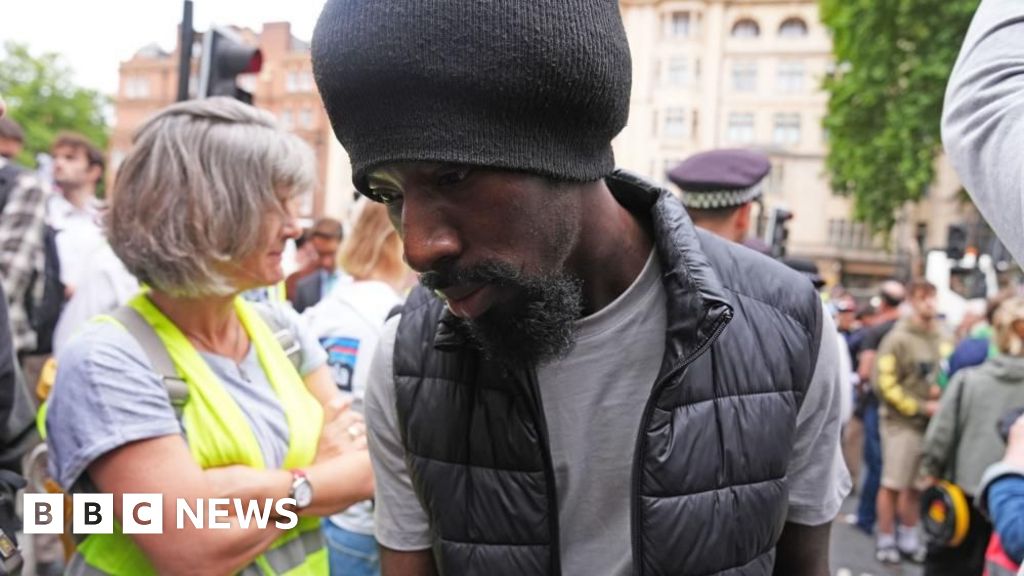
One of Britain’s most prolific rail fare dodgers could face jail after admitting dozens of travel offences.
Charles Brohiri, 29, pleaded guilty to travelling without buying a ticket a total of 112 times over a two-year period, Westminster Magistrates’ Court heard.
He could be ordered to pay more than £18,000 in unpaid fares and legal costs, the court was told.
He will be sentenced next month.
District Judge Nina Tempia warned Brohiri “could face a custodial sentence because of the number of offences he has committed”.
He pleaded guilty to 76 offences on Thursday.
It came after he was convicted in his absence of 36 charges at a previous hearing.
During Thursday’s hearing, Judge Tempia dismissed a bid by Brohiri’s lawyers to have the 36 convictions overturned.
They had argued the prosecutions were unlawful because they had not been brought by a qualified legal professional.
But Judge Tempia rejected the argument, saying there had been “no abuse of this court’s process”.
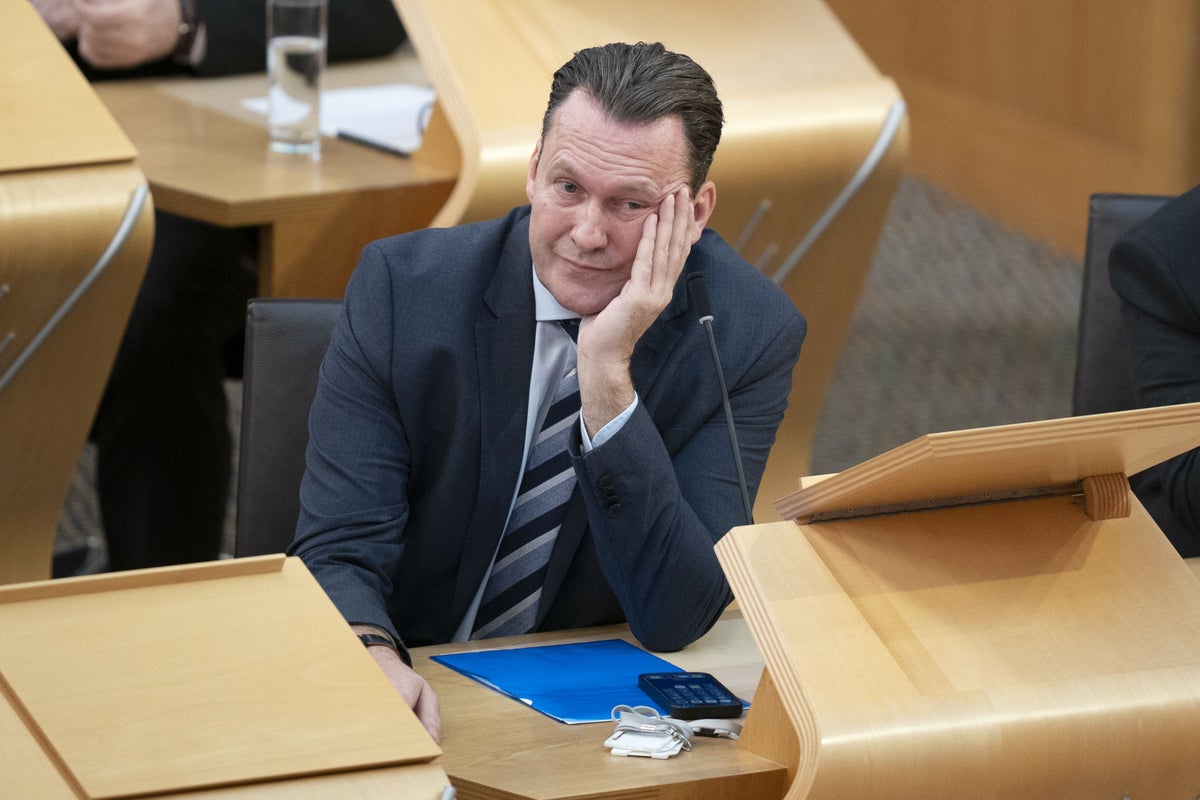
John Swinney has been pressed over whether this week’s Scottish Budget gives some workers the “smallest tax cut in history” – with Tory leader Russell Findlay branding the reduction “miserly” and “insulting”.
The Scottish Conservative leader challenged the First Minister after Tuesday’s Holyrood Budget effectively cut taxes for lower earners, by increasing the threshold for the basic and intermediate bands of income tax.
But Mr Findlay said that would leave workers at most £31.75 a year better off – saying this amounts to a saving of just £61p a week
“That wouldn’t even buy you a bag of peanuts,” the Scottish Tory leader said.
“John Swinney’s Budget might even have broken a world record, because a Scottish Government tax adviser says it ‘maybe the smallest tax cut in history’.”
Raising the “miserly cut” at First Minister’s Questions in the Scottish Parliament, Mr Findlay demanded to know if the SNP leader believed his “insulting tax cut will actually help Scotland’s struggling households”.
The attack came as the Tory accused the SNP government of increasing taxes on higher earners, with its freeze on higher income tax thresholds, which will pull more Scots into these brackets.
This is needed to pay for the “SNP’s out of control, unaffordable benefits bill”, the Conservative added.
Mr Findlay said: “The Scottish Conservatives will not back and cannot back a Budget that does nothing to help Scotland’s workers and businesses.
“It hammers people with higher taxes to fund a bloated benefits system.”
Hitting out at Labour – whose leader Anas Sarwar has already declared they will not block the government’s Budget – Mr Findlay said: “It is absolutely mind-blowing that Labour and other so-called opposition parties will let this SNP boorach of a budget pass.
“Don’t the people of Scotland deserve lower taxes, fairer benefits and a government focused on economic growth?”
Mr Swinney said the Budget “delivers on the priorities of the people of Scotland” by “strengthening our National Health Service and supporting people and businesses with the challenges of the cost of living”.
He insisted income tax decisions in the Budget would mean that in 2026-27 “55% of Scottish taxpayers are now expected to pay less income tax than if they lived in England”.
The First Minister went on to say that showed “the people of Scotland have a Government that is on their side”.
Referring to polls putting his party on course to win the Holyrood elections in May, the SNP leader added that “all the current indications show the people of Scotland want to have this Government here for the long term”.
Benefits funding is “keeping children out of poverty”, he told MSPs, adding the Budget contained a “range of measures” that would build on existing support.
The First Minister said: “What that is a demonstration of is a Government that is on the side of the people of Scotland and I am proud of the measures we set out in the Budget on Tuesday.”
Meanwhile he said the Tories wanted to make tax cuts that would cost £1 billion, with “not a scrap of detail about how that would be delivered”.
With the weekly leaders’ question time clash coming less than 48 hours after the draft 2026-27 Budget was unveiled, the First Minister also faced questions from Scottish Labour’s Anas Sarwar, who insisted that the proposals “lacks ambition for Scotland”.
Pressing his SNP rival, the Scottish Labour leader said: “While he brags about his £6 a year tax cut for the lowest paid, one million Scots including nurses, teachers and police officers face being forced to pay more.
“Even his own tax adviser says this is a political stunt. So why does John Swinney believe that someone earning £33,500 has the broadest shoulders and therefore should pay more tax in Scotland?”
Mr Swinney, however, said that many public sector workers would be better off in Scotland.
He told the Scottish Labour leader: “A band six nurse at the bottom of the scale will take home an additional £1,994 after tax compared to the same band in England.
“A qualified teacher at the bottom of the band will take home £6,365 more after tax in Scotland than the equivalent in England. There are the facts for Mr Sarwar.”

BP has warned it expects to book up to five billion dollars (£3.7 billion) in write-downs across its gas and low-carbon energy division as it also said oil trading had been weak in its final quarter.
The oil giant joined FTSE 100 rival Shell, after it also last week cautioned over a weaker performance from trading, which comes amid a drop in the cost of crude.
BP said Brent crude prices averaged 63.73 dollars per barrel in the fourth quarter of last year compared with 69.13 dollars a barrel in the previous three months.
Oil prices have slumped in recent weeks, partly driven lower due to US President Donald Trump’s move to oust and detain Venezuela’s leader and lay claim to crude in the region, leading to fears of a supply glut.
In its update ahead of full-year results, BP also said it expects to book a four billion dollar (£3 billion) to five billion dollar (£3.7 billion) impairment in its so-called transition businesses, largely relating to its gas and low-carbon energy division.
But it said further progress had been made in slashing debts, with its net debt falling to between 22 billion and 23 billion dollars (£16.4 billion to £17.1 billion) at the end of 2025, down from 26.1 billion dollars (£19.4 billion) at the end of September.
It comes after the firm’s surprise move last month to appoint Woodside Energy boss Meg O’Neill as its new chief executive as Murray Auchincloss stepped down after less than two years in the role.
Ms O’Neill will start in the role on April 1, with Carol Howle, current executive vice president of supply, trading and shipping at BP, acting as chief executive on an interim basis until the new boss joins.
Ms O’Neill’s appointment has made history as she will become the first woman to run BP – and also the first to head up a top five global oil company – as well as being the first ever outsider to take on the post at BP.
Shares in BP fell 1% in morning trading on Wednesday after the latest update.


Trident accelerates European home textiles expansion
Serial rail fare evader faces jail over 112 unpaid tickets

Ron King talks about his mission to protect donkeys, misconceptions and how they bring joy

-

 Politics1 week ago
UK says provided assistance in US-led tanker seizure
-
 Entertainment1 week ago
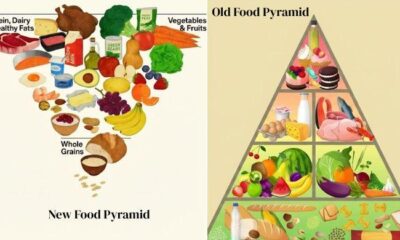
Does new US food pyramid put too much steak on your plate?
-

 Entertainment1 week ago
Why did Nick Reiner’s lawyer Alan Jackson withdraw from case?
-
 Business1 week ago
Trump moves to ban home purchases by institutional investors
-

 Sports5 days ago
Clock is ticking for Frank at Spurs, with dwindling evidence he deserves extra time
-

 Sports1 week ago
PGA of America CEO steps down after one year to take care of mother and mother-in-law
-
 Business1 week ago
Bulls dominate as KSE-100 breaks past 186,000 mark – SUCH TV
-
Sports6 days ago
Commanders go young, promote David Blough to be offensive coordinator