

Politics
Russia expels UK diplomat on spying allegations

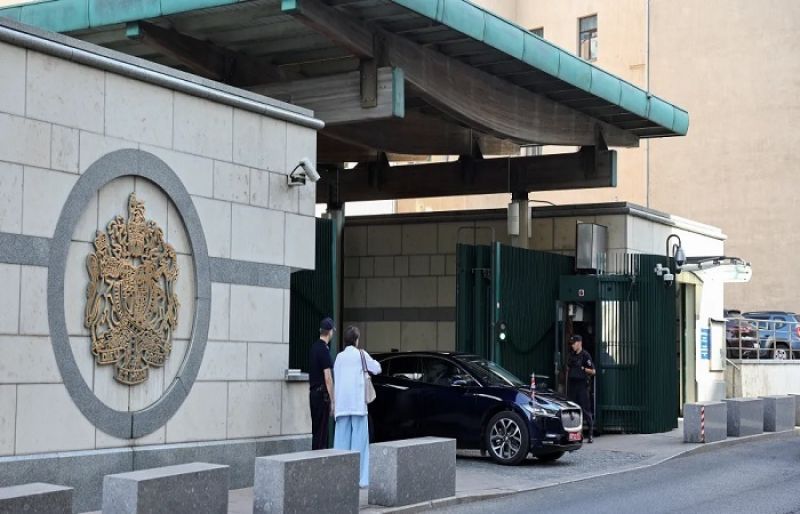

Russia on Monday kicked out a British diplomat over allegations he was working as a spy — charges rejected by London as “complete nonsense”.
Moscow and London have each expelled multiple embassy staff over the last decade, trading accusations of espionage.
Expulsions from one side have typically been followed by a tit-for-tat response from the other.
The diplomat, named as 29-year-old embassy secretary Albertus Gerhardus Janse Van Rensburg, was expelled for engaging in “subversive intelligence activities that threaten Russia’s security”, Russia’s FSB security service said.
“A decision was made to strip Janse Van Rensburg of his accreditation, and he was ordered to leave Russia within two weeks,” it added.
The Russian foreign ministry said it had summoned Britain’s charge d’affaires over the incident and warned the United Kingdom not to retaliate.
Britain accused Russia of waging an “aggressive and coordinated campaign of harassment”.
“The accusations made today by Russia against our diplomats are complete nonsense,” a foreign ministry spokesperson said, adding Russia was “pumping out malicious and completely baseless accusations about their work”.
Relations between London and Moscow, currently at a low point over the Ukraine war, have been strained by spying allegations for decades.
In 2006, former FSB officer and Russian defector Alexander Litvinenko was killed in London, poisoned by polonium in what British investigators said was a hit by the Russian secret service.
In 2018, the UK said Russian double agent Sergei Skripal was poisoned with a Novichok nerve agent in the British cathedral city of Salisbury.
One member of the public was killed after handling the delivery device, a discarded perfume bottle, triggering the largest Western expulsion in decades of Russian diplomats alleged to be spies.
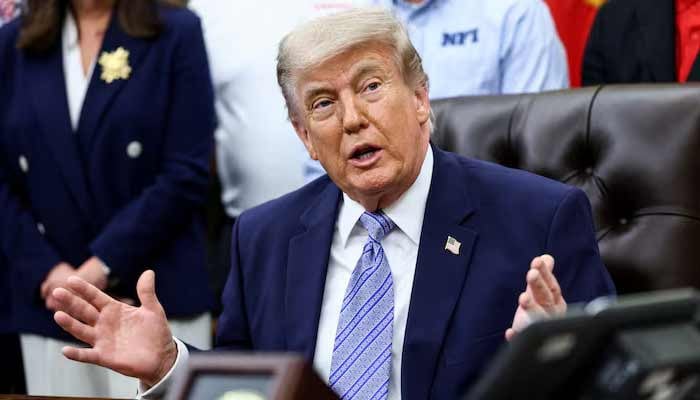
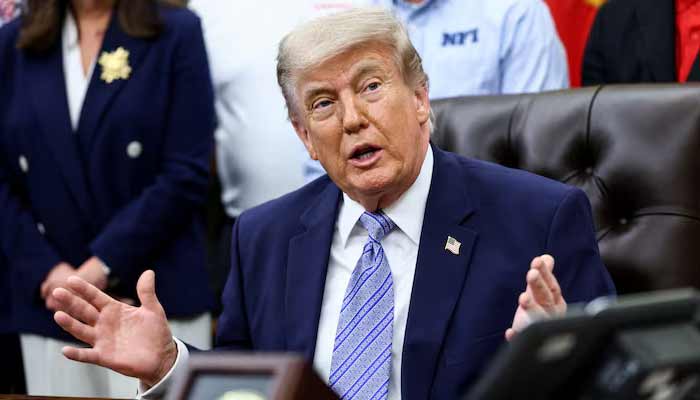
US President Donald Trump may have won just about every battle against Iran, but three months after attacking the Islamic Republic he now faces a bigger question: Is he losing the war?
With Iran’s grip on the Strait of Hormuz, its resistance to nuclear concessions and its theocratic government largely intact, doubts are growing that Trump can translate the US military’s tactical successes into an outcome he can frame convincingly as a geopolitical win.
His repeated claims of complete victory ring hollow, some analysts say, as the two sides teeter between uncertain diplomacy and his on-again-off-again threats to resume strikes, which would be sure to draw Iranian retaliation across the region.
Trump is now at risk of seeing the US and its Gulf Arab allies emerge from the conflict worse off while Iran, though battered militarily and economically, could end up with greater leverage, having shown it can throttle one-fifth of the world’s oil and gas supplies.
The crisis is not yet over, and some experts leave open the possibility Trump might still find a face-saving way out if negotiations break in his favor.
But others predict a grim post-war outlook for Trump.
“We’re three months in, and it’s looking like a war that was designed to be a short-term romp for Trump is turning into a long-term strategic failure,” said Aaron David Miller, a former Middle East negotiator for Republican and Democratic administrations.
For Trump, that matters, especially given his famous sensitivity to being perceived as a loser, an insult he has often lobbed at opponents. In the Iran crisis, he finds himself commander-in-chief of the world’s mightiest military pitted against a second-tier power seemingly convinced it has the upper hand.
And this predicament could make Trump, who has yet to define a clear endgame, more likely to resist any compromise that looks like a retreat from his maximalist positions or a repetition of the 2015 Obama-era nuclear deal with Iran that he scrapped in his first term, analysts say.
Another possibility, analysts say, is that Trump could attempt to shift focus to Cuba, as he has suggested, in hopes of changing the subject and trying to score a potentially easier win.
If so, he might end up misjudging the challenges posed by Havana, much as some Trump aides privately acknowledge that he mistakenly thought the Iran operation would resemble the January 3 raid that captured Venezuela’s president and led to his replacement.
Even so, Trump is not without his defenders.
Alexander Gray, a former senior adviser in Trump’s first term and now chief executive officer of the American Global Strategies consultancy, rejected the notion that the president’s Iran campaign was on the ropes.
He said that the heavy blow to Iranian military capabilities was in itself a “strategic success,” that the war had drawn Gulf states closer to the US and away from China, and that the fate of Iran’s nuclear programme was still to be determined.
There are signs, however, of Trump’s frustration with his inability to control the narrative. He has torn into his critics and accused the news media of “treason.”
The conflict has lasted twice the maximum six-week timeframe that Trump laid out when he joined with Israel in starting the war on February 28. Since then, though his Maga political base has stood by him on the war, cracks have appeared in his once almost unanimous backing from Republican lawmakers.
At the outset, waves of airstrikes quickly degraded Iran’s ballistic missile stockpile, sank much of its navy and killed many top leaders.
But Tehran responded by blocking the strait, which sent energy prices soaring, and attacking Israel and Gulf neighbors. Trump then ordered a blockade of Iran’s ports but that has also failed to bend Tehran to his will.
Iran’s leaders have matched Trump’s triumphalist claims with their own propaganda depicting his campaign as a “crushing defeat,” though it is clear that Iranian officials have overstated their own military prowess.
Shifting Goals still unachieved
Trump had said his objectives in going to war were to close off Iran’s path to a nuclear weapon, end its ability to threaten the region and US interests and make it easier for Iranians to overthrow their rulers.
There is no sign that his often-shifting goals have been achieved, and many analysts say it is unlikely that they will be.
Jonathan Panikoff, a former deputy national intelligence officer for the Middle East, said that while Iran has taken devastating hits, its rulers consider it a success simply to have survived the US assault and learned how much control they can exert over Gulf shipping.
“What they discovered is they can exercise that leverage and with few consequences for them,” said Panikoff, now at the Atlantic Council think tank, adding that Iran appeared confident it could tolerate more economic pain than Trump and outlast him.
Trump’s main stated war aim — Iran’s denuclearisation — also remains unfulfilled, and Tehran has shown little willingness to significantly rein in its programme.
A stockpile of highly enriched uranium is believed to remain buried following US and Israeli airstrikes last June and could be recovered and further processed to bomb grade. Iran says it wants the US to recognise its right to enrich uranium for what it says are peaceful purposes.
Further complicating matters, Iran’s supreme leader has issued a directive that the country’s near-weapons-grade uranium cannot be sent abroad, two senior Iranian officials told Reuters.
Some analysts have suggested that the war could make Iran more, not less, likely to ramp up efforts to develop a nuclear weapon to shield itself like nuclear-armed North Korea.
Another of Trump’s declared goals — forcing Iran to halt support for armed proxy groups — also remains unmet.
Adding to Trump’s challenges, he is now dealing with new Iranian leaders considered even more hardline than their slain predecessors. Post-war, they are widely expected still to have enough remaining missiles and drones to pose a continued danger to their neighbours.
He is also facing fallout with further erosion of relations with traditional European allies, which have mostly refused his calls for assistance in a war they were not consulted about.
China and Russia, meanwhile, have drawn lessons about the US military’s shortcomings against asymmetric Iranian tactics and how some of its weapons supplies have become depleted, analysts said.
Robert Kagan, a senior fellow at the Brookings Institution think tank, has argued that the outcome will be even more of a decisive setback to US standing than its humiliating withdrawals from much longer, bloodier conflicts in Vietnam and Afghanistan because those countries “were far from the main theaters of global competition.”
“There will be no return to the status quo ante, no ultimate American triumph that will undo or overcome the harm done,” he wrote in a recent commentary entitled “Checkmate in Iran” on the Atlantic magazine’s website.
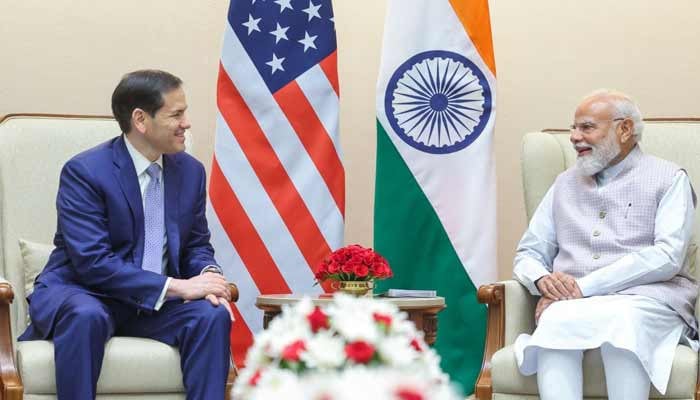
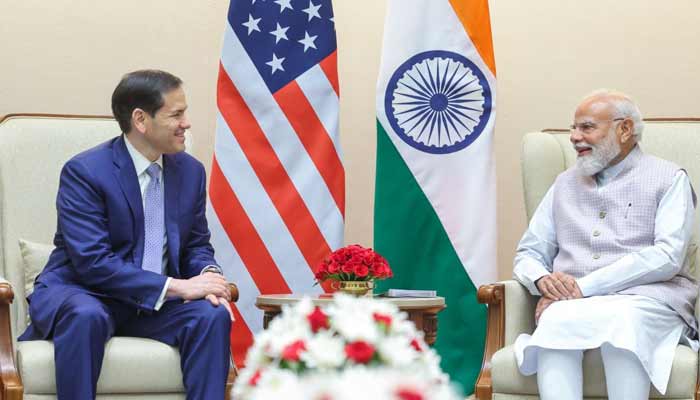
- Rubio meets PM Narendra Modi behind closed doors.
- US secretary calls India a “great ally, great partner”.
- US looking to find ways to sell India more oil: Rubio.
US Secretary of State Marco Rubio on Saturday met Prime Minister Narendra Modi on a visit to India, looking to renew ties with a usually like-minded partner a week after Washington’s warm summit with China.
One week after joining President Donald Trump in Beijing, Rubio — visiting both Asian powers for the first time — flew to New Delhi and saw Modi for more than one hour behind closed doors, a US official said.
Rubio, a devout Catholic, began his four-day, four-city tour by touring the headquarters of Mother Teresa’s charity in the eastern city of Kolkata and praying over her tomb.
Wearing a yellow garland over his suit, Rubio, joined by his wife Jeanette, smiled before an assembly of nuns, all clad in the late humanitarian’s signature white and blue saris.
“Rubio spoke about aiding the homeless, terminally ill and those afflicted by leprosy,” Sister Marie Juan of Missionaries of Charity told reporters after his hour-and-a-half-long visit.
“He was happy to pray and we were also happy to have him,” she said.
Sergio Gor, the US ambassador to India and also a Catholic, later posted that the visit showed that the countries’ relationship was based “not only on strong policies, but also on shared values”.
Before leaving on Tuesday, Rubio will also take part in a meeting of foreign ministers of the so-called Quad — Australia, India, Japan and the United States — four democracies seen as a counterweight to China’s presence in the Indian Ocean.
China has long been suspicious of the Quad, calling it an attempt to encircle it, and has chastised India in the past for taking part in it.
But Rubio’s trip comes as Trump is shaking up traditional assumptions about US priorities.
Visiting China, Trump hailed the reception he received from President Xi Jinping despite limited concrete announcements.
Trump also spoke of the United States and China being a “G2” — a formulation that had fallen out of favour in recent years as US allies fear being shut out of Washington’s dealings with a rising China.
Symbolic first step
While Trump rarely raises human rights, some elements of his base have expressed concerns over the treatment of Christians under the Hindu nationalist Modi, making Rubio’s choice of first stop highly symbolic.
Rights groups say there has been a rise in attacks on minority Christians across India, including vandalism of churches, since Modi came to power in 2014.
The government rejects the claims as exaggerated and politically motivated.
Ahead of the trip, Rubio called India a “great ally, great partner” and said the United States would be looking to find ways to sell it more oil.
India’s fast-growing economy is reliant on energy imports and like many countries has been rattled by the US-Israeli attack on Iran, which retaliated by choking off the strategic Strait of Hormuz, sending global oil prices soaring.
India has historic ties with Iran but also a growing relationship with Israel, which Modi visited just days before the war.
But the conflict has also seen the re-emergence as a key US partner of India’s traditional adversary Pakistan, which has positioned itself as a mediator, with its powerful army chief flying Friday to Tehran.
The United States was a Cold War partner of Pakistan but increasingly took a distance as it prioritised relations with India, seeing the world’s largest democracy as a natural partner in a global order marked by China’s rise.
Trump has turned away from long-held assumptions and warmed to Pakistan, which has lavished him with praise over his diplomacy in its short war with India last year, and has welcomed a cryptocurrency firm owned by the US president’s family.
Modi irritated Trump by not crediting him with ending the war. Trump imposed punitive tariffs on India shortly afterwards, at rates higher than he had put on China, but they were eased under a trade deal.
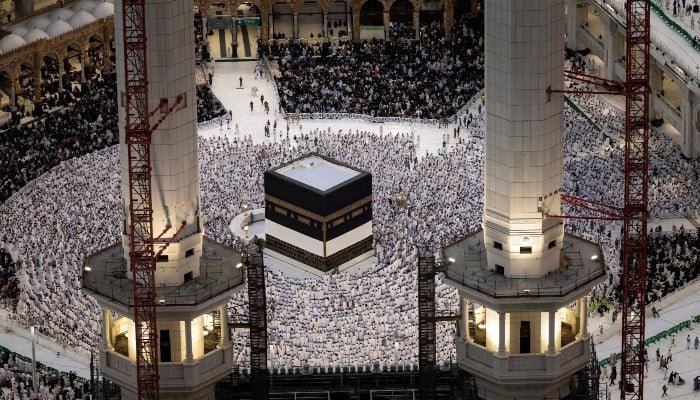
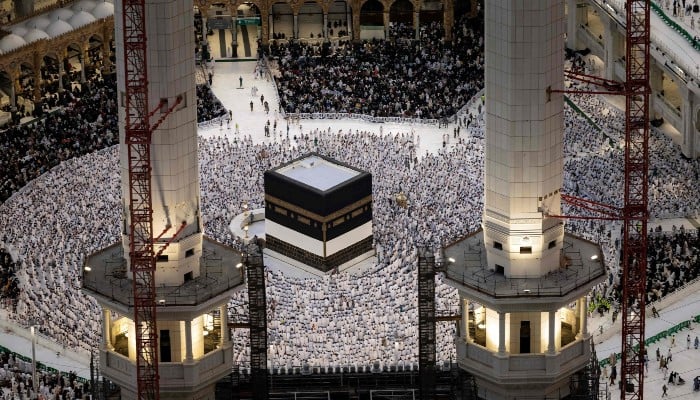
MAKKAH: Over 1.5 million pilgrims have arrived in Saudi Arabia from outside the kingdom for the upcoming hajj, according to a Saudi official, exceeding the number of international visitors last year despite the war in the Middle East.
The conflict triggered by the US and Israeli strikes on Iran in late February saw Tehran order waves of strikes on targets in Saudi Arabia and across the Gulf, prompting widespread air traffic disruptions and causing travel costs to surge.
Major Gulf airlines in the UAE, Qatar, and Bahrain have worked to quickly restore much of their operational capacity after weeks of airspace closures and flight cancellations.
Despite the complications, pilgrims have continued to flock to Saudi Arabia to participate in this year’s hajj.
“The total number of pilgrims arriving from abroad has reached 1,518,153,” Saleh Al-Murabba, the commander of Saudi Arabia’s Hajj Passport Forces, told a press conference late Friday.
These figures are expected to rise further over the next two days as pilgrims continue to arrive from abroad ahead of the formal rituals that mark the beginning of the hajj on Monday.
Last year, the total number of pilgrims at the hajj reached 1,673,320, including 1,506,576 from outside Saudi Arabia.
The hajj, one of the five pillars of Islam, must be performed at least once by all Muslims with the means.


What’s open, what’s closed on Monday, May 25

Ryan Bingham reflects on his award-winning career

NASCAR champion Kyle Busch’s cause of death revealed by family

-

 Entertainment1 week ago
Where Pete Davidson, Elsie Hewitt stand after breakup: Details revealed
-

 Entertainment1 week ago
Emilia Clarke recalls near-death incident while filming ‘Game of Thrones’
-

 Politics1 week ago
Rising diesel costs from Iran war strain US school budgets
-
 Entertainment1 week ago
Drake drops highly anticipated "Iceman" album, plus two surprise albums
-

 Politics1 week ago
UK’s Starmer faces survival battle as potential rivals circle
-

 Politics1 week ago
Trump says China will order 200 Boeing jets
-

 Tech1 week ago
Greg Brockman Officially Takes Control of OpenAI’s Products in Latest Shakeup
-

 Tech6 days ago
Why Is Your Grill So Dumb? The Best Grills Set Temp Like an Oven