

Business
Nike to lay off about 1% of corporate staff in its latest effort to refocus the business


Nike is planning another round of layoffs as part of CEO Elliott Hill’s efforts to realign the business and get it back to growth, CNBC has learned.
The cuts will impact less than 1% of Nike’s corporate staff. It’s unclear how many jobs will be impacted. Nike’s EMEA and Converse businesses will not be impacted.
“As we shared in Q4 earnings, NIKE, Inc. is in the midst of a realignment. The moves we’re making are about setting ourselves up to win and create the next great chapter for NIKE,” the company told CNBC in a statement. “This new formation is built to put sport and sport culture back at the center, to connect more deeply with the athlete and the consumer, and to give us the space to create what only NIKE can.”
Last February, Nike announced plans to lay off 2% of its staff, or more than 1,500 jobs, as part of a broader restructuring. The latest round of layoffs is part of Hill’s efforts to change how teams are structured within the corporation.
Under former CEO John Donahoe, Nike changed the way its business was segmented. Instead of being divided by sport, it was divided into women’s, men’s and kid’s as part of a broader effort to grow its lifestyle business.
Some critics say that adjustment was among the reasons that Nike’s innovation pipeline fell apart as the company focused on lifestyle products geared to a wide range of consumers, instead of being directed at athletes.
A Nike store in Hanoi, Vietnam, on July 3, 2025.
Nhac Nguyen | Afp | Getty Images
Hill, a longtime Nike veteran, is now undoing that work so the business is squarely focused on sports and culture. After Hill shared his vision in June, leaders were identified in July to head the new teams, the company said, adding a “small number” of staff will depart as a result of the shifts.
In a memo to staff, Nike said as part of the changes, some staff will take on a new position or level, report to a new manager or join a new team.
Staff will learn if they’re impacted during conversations by Sept. 8. The majority of the new roles will take effect on Sept. 21.
“To make space for these conversations, corporate employees based in an office location in the U.S. and Canada will work remotely next week, unless otherwise informed by your leader,” the memo said.
Since taking the helm of the world’s largest sportswear brand, Hill has been on a mission to reverse an ongoing decline in sales, reignite innovation and win back wholesale partners.
When announcing fiscal fourth-quarter earnings in June, Nike said it expects its sales and profit declines to moderate in the quarters ahead, indicating the worst is now behind it and the fruits of its turnaround could come sooner than expected. In a call with analysts at the time, Hill hinted at the realignment that’s now starting to materialize.
“Instead of a men’s, women’s and kids construct, Nike, Jordan, and Converse teams will now come to work every day with a mission to create the most innovative and coveted product, footwear, apparel and accessories for the specific athletes they serve,” said Hill.
Hill said the company would organize into “sport-obsessed teams” which would “drive a relentless flow of innovative product across all three of the brands.”



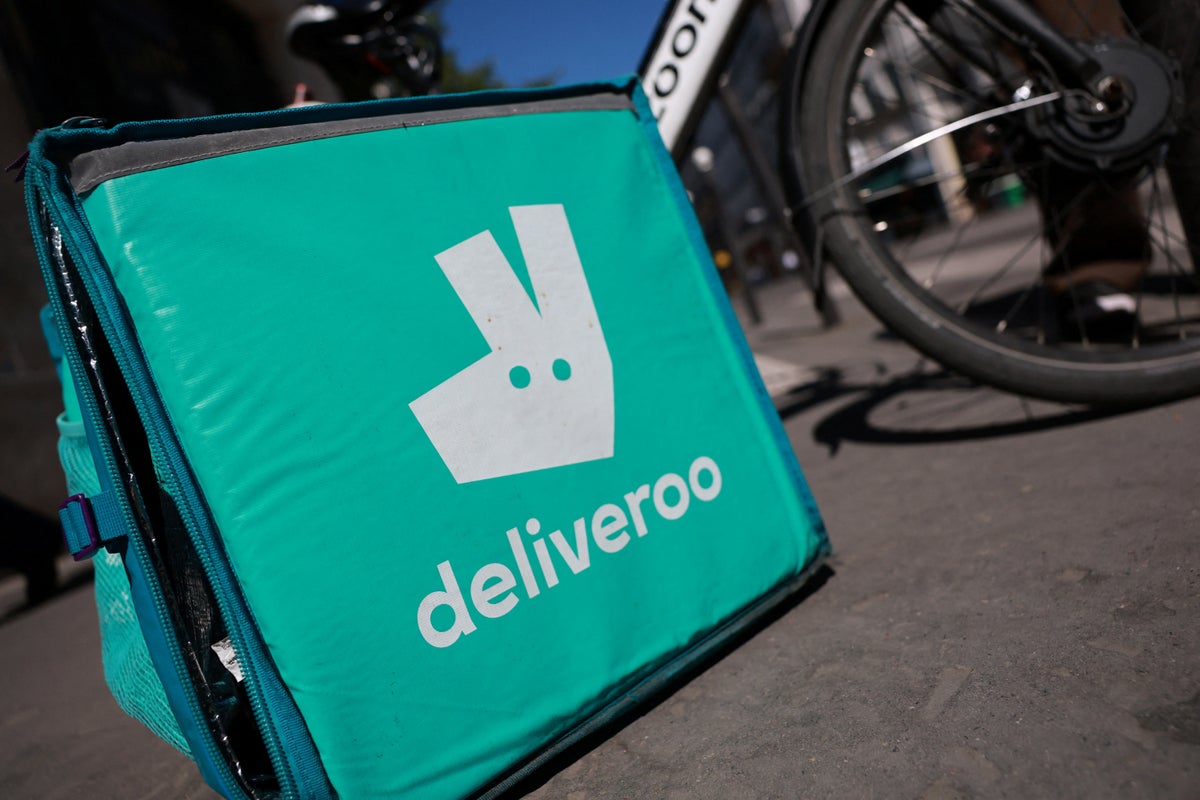
Deliveroo is set to significantly broaden its offerings beyond its core takeaway service, introducing a new feature that will allow customers to book restaurant reservations directly through its platform.
The initiative, named Deliveroo Reservations, is scheduled to launch initially in London this Thursday.
Customers will gain the ability to secure tables at a range of prominent London eateries, including Dishoom, Dove, Hide, Kricket, Barrafina, and Kolae. This expansion marks a strategic move for the company, which was acquired by US-based DoorDash for £2.9 billion last year.
The new reservation system integrates technology from SevenRooms, a restaurant booking platform business that DoorDash also purchased for approximately £900 million.
This integration follows DoorDash’s own expansion into restaurant bookings on its platform in the United States late last year, setting a precedent for Deliveroo’s latest venture.
This move is central to Deliveroo’s ambitions to grow beyond its established takeaway delivery model in the UK. While the feature will first be rolled out to restaurants in London, Deliveroo has indicated plans to extend the service across the wider UK later in the year.
Suzy McClintock, vice president for consumer and new verticals at Deliveroo, commented on the development: “This launch is about supporting restaurants to grow in new ways. Whether it’s a Deliveroo order or a reservation in store, we want to drive discovery, demand and revenue across every channel.”
She added: “By fully integrating SevenRooms into the Deliveroo app, we’re giving restaurants access to new customers and giving diners an easier way to discover and book some of London’s best tables – all in one place.”
Joel Montaniel, vice president and co-founder of SevenRooms, echoed this sentiment, stating: “Bringing reservations into the Deliveroo app gives London restaurants a new way to connect with diners and grow, while making it easy for consumers to discover and book great restaurants.”
Business
Warner Bros. Discovery books $2.9 billion net loss tied to Paramount deal, restructuring costs

An American flag flies at Warner Bros. Studio in Burbank, California, on Sept. 12, 2025.
Mario Tama | Getty Images
Warner Bros. Discovery on Wednesday reported a staggering net loss for the first quarter, but it has an explanation.
The company booked a net loss of $2.9 billion, far larger than the net loss of $453 million it reported in the year-earlier quarter.
The figure included $1.3 billion of “pre-tax acquisition-related amortization of intangibles, content fair value step-up and restructuring expenses” as well as the $2.8 billion termination fee that Warner Bros. Discovery owed Netflix after their pending transaction fell through in February.
Netflix walked away from its proposed deal to buy WBD’s assets after Paramount Skydance came in with a higher offer. Paramount agreed to pay the termination fee as part of its agreement to buy the entirety of WBD, but the cost lives on WBD’s books until the close of that deal.
Since the amount is refundable to Paramount under certain circumstances, such as if it were to terminate the deal with Paramount for a higher offer, the obligation would be shifted to WBD.
Paramount’s proposed acquisition received approval from WBD shareholders in April and is currently in the midst of a regulatory review process. On Monday, Paramount said in its earnings release that it has “made significant progress” toward closing the deal, which it expects to be completed in the third quarter.
WBD on Wednesday also reported first-quarter revenue that was down 1% year over year to $8.89 billion. The company’s adjusted earnings before interest taxes, depreciation and amortization was up 5% to $2.2 billion. WBD had $33.4 billion in gross debt at the end of the quarter.
Streaming continued to be a highlight for the company.
Total streaming revenue was up 9% to about $2.89 billion as subscriber revenue increased due to the expansion of HBO Max — WBD’s flagship streaming platform — in international markets. Advertising revenue for the unit was up 20% due to an increase in customers subscribing to the ad-supported tier.
The company said in a shareholder letter it exceeded its guidance of more than 140 million global streaming customers at the end of the first quarter, and it remains on track to surpass 150 million global subscribers by the end of the year.
WBD’s portfolio of pay TV networks, which includes CNN, TBS and the Discovery Channel, continued to weigh on the company. The linear TV networks reported $4.38 billion in revenue, down 8% from the prior year. The company said linear advertising revenue was down 11%, which was primarily driven by the absence of NBA media rights from its portfolio.
Revenue for the film studio division, meanwhile, increased 35% to $3.13 billion year over year.

Virgin Media O2 recorded its highest-ever broadband traffic spike as millions across the UK tuned in to watch Arsenal‘s Uefa Champions League semi-final victory over Atletico Madrid.
Peak downstream traffic on the network surged by 17 per cent compared to an average Tuesday evening, marking an unprecedented event in Virgin Media’s broadband history.
This figure was 4.2 per cent higher than the previous record, established during Liverpool’s Champions League match against Real Madrid last November.
Jeanie York, chief technology officer at Virgin Media O2, commented on the phenomenon: “Live sport is one of the biggest drivers of broadband traffic in the UK and last night’s Champions League semi-final set a record on our network.
“As more people stream the biggest sporting moments from home, reliable, high-capacity connectivity has never been more important.”
Bukayo Saka delivered the decisive goal at the Emirates Stadium on Tuesday night as Arsenal secured a 2-1 aggregate triumph over Atletico Madrid to reach the Champions League final in Budapest on May 30 – their first on Europe’s grandest stage for 20 years.
And although Arsenal have received an official allocation of just 16,824 tickets from UEFA for the final at the 67,000-capacity Puskas Arena, Declan Rice wants the Hungarian capital to be a sea of red for the fixture against either Bayern Munich or Paris St Germain.
He said: “Bring it on, bring it on, I’ll be ready. I want every Arsenal fan out there, 200,000 of you, come out. Let’s try and do it because we’re going to need all the support, all the energy and let’s make it special.”
Mikel Arteta, meanwhile, hailed his “incredible” players for “making history” after securing the win.
Arteta said: “It was an incredible night. We made history again together and I cannot be happier and prouder for everybody that’s involved in this football club.
“The supporters were with us for every ball. They made it special and unique, and I have never felt it like that in this stadium.
“We knew how much it meant to everybody, we put everything on the line, the boys did an incredible job and after 20 years, and the second time in our history, we are back in the Champions League final.”


Looking back on nearly a century of World Cup balls.

Kim Kardashian, Lewis Hamilton spotted together on Broadway date

Elon Musk’s Last-Ditch Effort to Control OpenAI: Recruit Sam Altman to Tesla

-

 Sports1 week ago
Pro wrestling star Steph De Lander reveals how colleague’s advice helped lead her to title triumph at ACW
-
 Business7 days ago
PSX plunges over 4,800 points | The Express Tribune
-

 Tech1 week ago
This Ambitious Laptop Doesn’t Leave Much Room for Your Hands
-
Uncategorized1 week ago
[CinePlex360] Some plugins have failed to updat
-
 Fashion6 days ago
Canada’s Lululemon appoints Esi Eggleston Bracey to board of directors
-

 Tech7 days ago
Almost half of UK businesses hit by cyber attacks | Computer Weekly
-

 Fashion1 week ago
Egypt’s SCZONE signs $8-mn Turkish textile project in Qantara West
-
 Business1 week ago
BP profits more than double as oil trading booms amid Iran war