

Sports
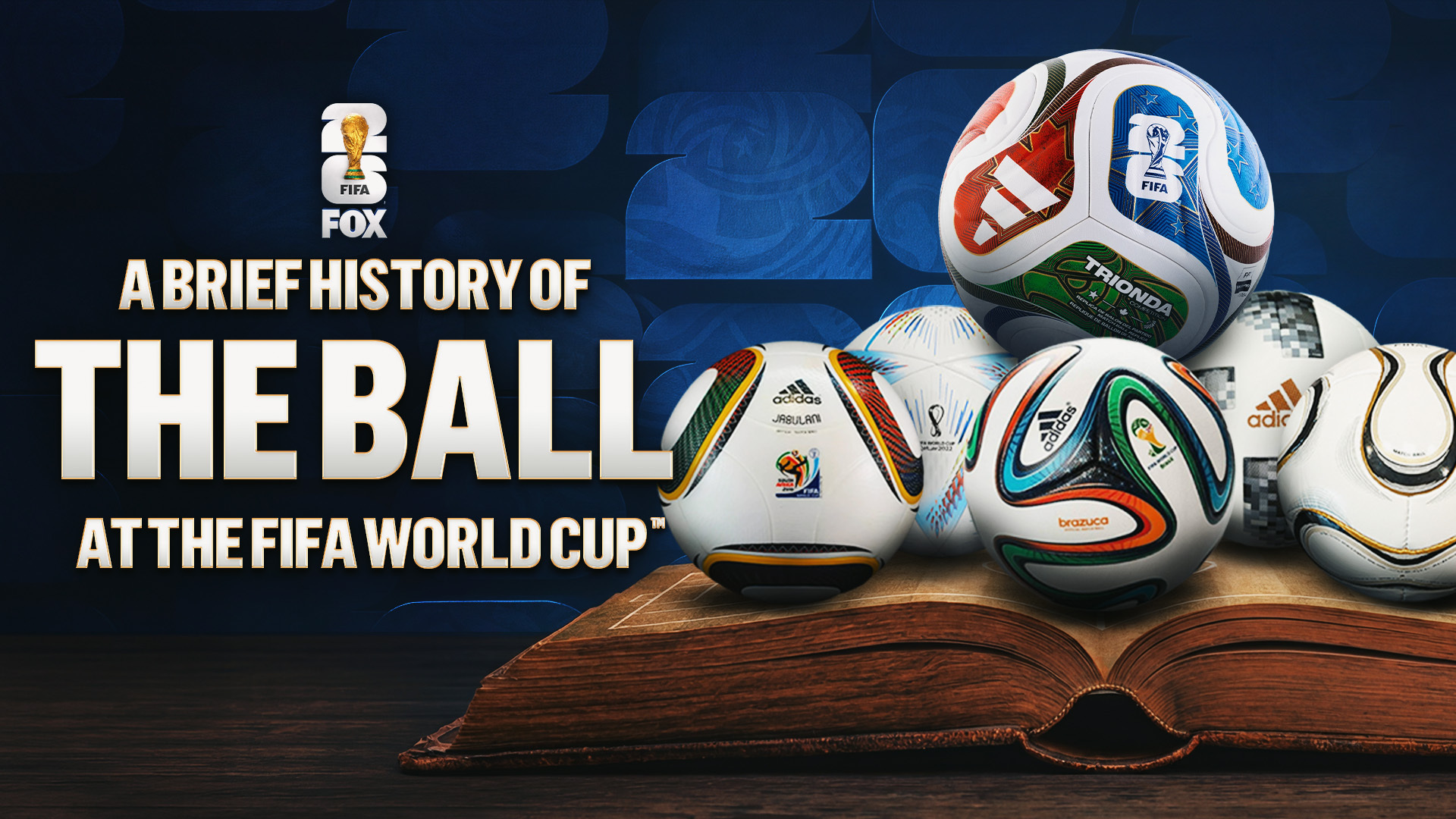
Looking back on nearly a century of World Cup balls.

NEWYou can now listen to Fox News articles!
The beauty of each World Cup is the attention to detail and how each edition weaves in the traditions and characteristics of the host nations.
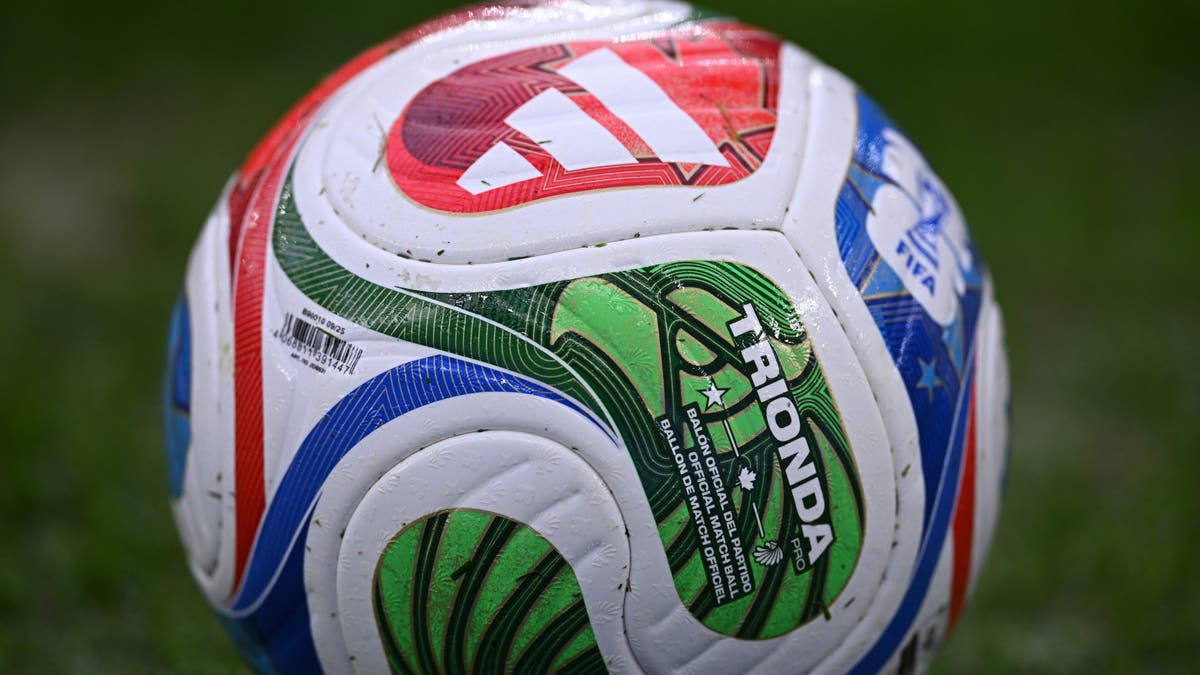
And that’s especially true with the official match ball. Take for instance the recently released TRIONDA ball, which all eyes will be on next year at the 2026 FIFA World Cup, which will be hosted in three nations – Canada, Mexico, and the United States.
Since 1970, adidas has supplied the official match ball for the World Cup. Before then, the match balls were provided by manufacturers from the host countries. Get a low down on each ball from 1930.
Let’s take a deeper dive into each World Cup ball, including how they got their names and what made them stand out, starting with the earliest version at the inaugural tournament:
1930 – Tiento/T-Model (Uruguay)
(Photo by KARIM JAAFAR/AFP via Getty Images)
The tournament had no official ball as multiple ones were used throughout the games. And the final itself between the neighboring rivals of Uruguay and Argentina included an argument over which ball to use. The compromise? Argentina’s “Tiento” for the first half and Uruguay’s heavier “T-Model” for the second half. Argentina were 2-1 up before Uruguay scored three goals with their larger ball to win 4-2.
1934 – Federale 102 (Italy)

The Italian ECAS (Ente Centrale Approvvigionamento Sportivi, the government’s bureau for sport supplies) produced the ball that had 12 hand-stitched leather panels with visible laces. It also marked FIFA’s first standardized World Cup ball. The laces were made of softer material to make them lighter and more manageable, especially for headers.
1938 – Allen (France)

Produced by a French manufacturer, the Allen ball used 13 leather panels hand-stitched with cotton laces and a visible seam. It also had to be hand-stitched and hand-inflated to get the spherical finish.
1950 – Superball Duplo T (Brazil)

The return of the World Cup tournament after a 12-year absence due to World War II featured a ball that had 12 hand-stitched panels – but introduced hidden laces with a rubber valve that could be inflated with a single hand pump. It was the first World Cup ball that did not require reinflation through an external seam during play.
1954 – Swiss World Champion (Switzerland)

This 18-panel ball made by Kost Sport removed laces entirely, featuring interlocking panels for a truer, more consistent shape. FIFA approved it as an official match standard, setting the stage for the modern, seamless football era to come.
1958 – Top Star (Sweden)

Selected from over 100 submissions, the Top Star (made by machine manufacturer Sydlader AB) was made of high-grade leather with 18 panels and no laces. Its consistent bounce and lighter feel allowed for faster, more precise play – fitting the tournament that introduced Pelé to the world. But France forward Just Fontaine is more synonymous with this ball, having scored 13 goals in six matches, a record for a single tournament that still stands.
1962 – Crack (Chile)

The Crack featured 18 panels with a deeper seam pattern to help aerodynamics. It was golden-brown in color and locally manufactured by Señor Custodio Zamora of San Miguel, but the inconsistent quality of each ball led to complaints.
1966 – Slazenger Challenge 4-Star (England)

Made by Slazenger, this 25-panel hand-stitched leather ball had no laces with a bright orange version used for visibility on television and for the final. It utilized a latex valve and was selected by tournament officials in a blind test before the tournament.
1970 – Telstar (Mexico)

Named after a U.S. satellite, this ball was the first that featured the now-iconic black-and-white “truncated icosahedron” panel design, which helped it stand out on televisions. The 32-panel Telstar combined leather with revolutionary visibility and became the most recognizable ball design globally.
1974 – Telstar Durlast (West Germany)

The Durlast featured a new coating to protect against water absorption. The design remained black-and-white for visibility on TV and marked a leap forward in ball technology from the tournament four years prior.
1978 – Tango (Argentina)

One of the most iconic balls in all sport, the Tango (named after the traditional dance in the host nation) introduced a bold, elegant design with interconnected triads, giving the illusion of 12 identical circles across 20 panels. It became adidas’ flagship look for decades and also helped improve the visibility of the ball for players.
1982 – Tango España (Spain)

Building on 1978’s Tango, the España featured stronger waterproofing and polyurethane coating, enhancing performance in variable Spanish conditions. It was also the last ball to be fully leather before synthetic materials became the norm.
1986 – Azteca (Mexico)

The first fully synthetic World Cup ball, Azteca incorporated polyurethane for consistent touch, durability, and reduced water absorption. Its 32-panel design drew inspiration from Aztec murals and architecture, paying tribute to Mexico’s heritage.
1990 – Etrusco Unico (Italy)

The first ball with an internal layer of black polyurethane foam for greater responsiveness and durability. Its design paid homage to Italy’s Etruscan history, featuring lions’ heads in classical motifs across its 20 triangular panels.
1994 – Questra (United States)

The Questra utilized a space-themed design that celebrated the quest for stardom by being inspired by NASA’s Apollo missions and America’s space legacy. It also followed the “Tango” design that had been used in previous editions and utilized pentagonal designs.
1998 – Tricolore (France)

The first multicolored World Cup ball, Tricolore integrated France’s national blue, white, and red. It also symbolized modernity, national pride, and a willingness to depart from traditional monochrome styles. It was also the last of the “Tango” designs that had been in use for the World Cup since 1978.
2002 – Fevernova (Japan/South Korea)

Breaking away from previous patterns, Fevernova introduced a radical triangular flame design in gold and red that ws inspired by a Japanese “tomoe” symbol. It also included red streaks meant to resemble the ancient art of calligraphy.
2006 – Teamgeist (Germany)

The ball (German for “team spirit”) revolutionized ball construction with just 14 curved panels, creating a rounder, more seamless surface for consistency. Its white design with black-and-gold accents fit the host nation’s aesthetic. It was the first ball to have a different version used for the knockout stages.
2010 – Jabulani (South Africa)

The Jabulani ball had only eight thermally bonded panels but was noted for some of its aerodynamic quirks when in flight. Decorated with African-inspired designs with the name from a Zulu phrase of “be happy,” it symbolized South Africa’s culture and remains among the most iconic. A special gold-accented version was introduced for the final in Johannesburg.
2014 – Brazuca (Brazil)

The Brazuca (the name was decided by a public vote) was made from six bonded panels and was inspired by Bahia lembrança bands, the traditional Brazilian good luck bracelets composed as colorful pieces of cloth and given as gifts. A special version was used in the final with the green, red and blue accents replaced by green, gold and black.
2018 – Telstar 18 (Russia)

A modern homage to the 1970 Telstar, it featured pixelated black graphics referencing Russia’s digital era. Equipped with a chip inside, it was the first smart World Cup ball. It was composed of six panels that provided for a smoother surface, with a differently designed “Mechta” version of the ball utilized during the knockout rounds.
2022 – Al Rihla (Qatar)

Meaning “The Journey” in Arabic, Al Rihla included 20 panels and featured a suspended chip inside the ball that tracked in-game data. Its design drew inspiration from Qatari culture and maritime traditions, with the bonded bails hearkening to the Dhow boats found in the Persian Gulf waters. It also was the first official ball produced entirely with water-based inks.
2026 – Trionda (Canada/Mexico/USA)
(Photo by Ben Roberts – Danehouse/Getty images)
The official match ball highlights and features the three nations – Canada, Mexico, and the U.S. – that will host the tournament. The colors on the ball’s panels (red, green, and blue) coincide with the three host nations, while being accented with gold to represent the FIFA World Cup trophy. The ball’s graphics also represent the three nations (a star for the U.S., an eagle for Mexico, and a maple leaf for Canada), which are used in embossed symbols across the surface. The name is an amalgamation of the term “tri-” (for the co-hosts) and the Spanish word onda, meaning wave or vibe.






NEWYou can now listen to Fox News articles!
LIV Golf star Bryson DeChambeau would probably beat most 90-year-olds handily in a push-up contest, but not Gary Player.
Player, 90, took on DeChambeau in a push-up contest on the White House lawn as President Trump watched Tuesday.
The nine-time major champion got down and went push-up for push-up with the 32-year-old.
CLICK HERE FOR MORE SPORTS COVERAGE ON FOXNEWS.COM
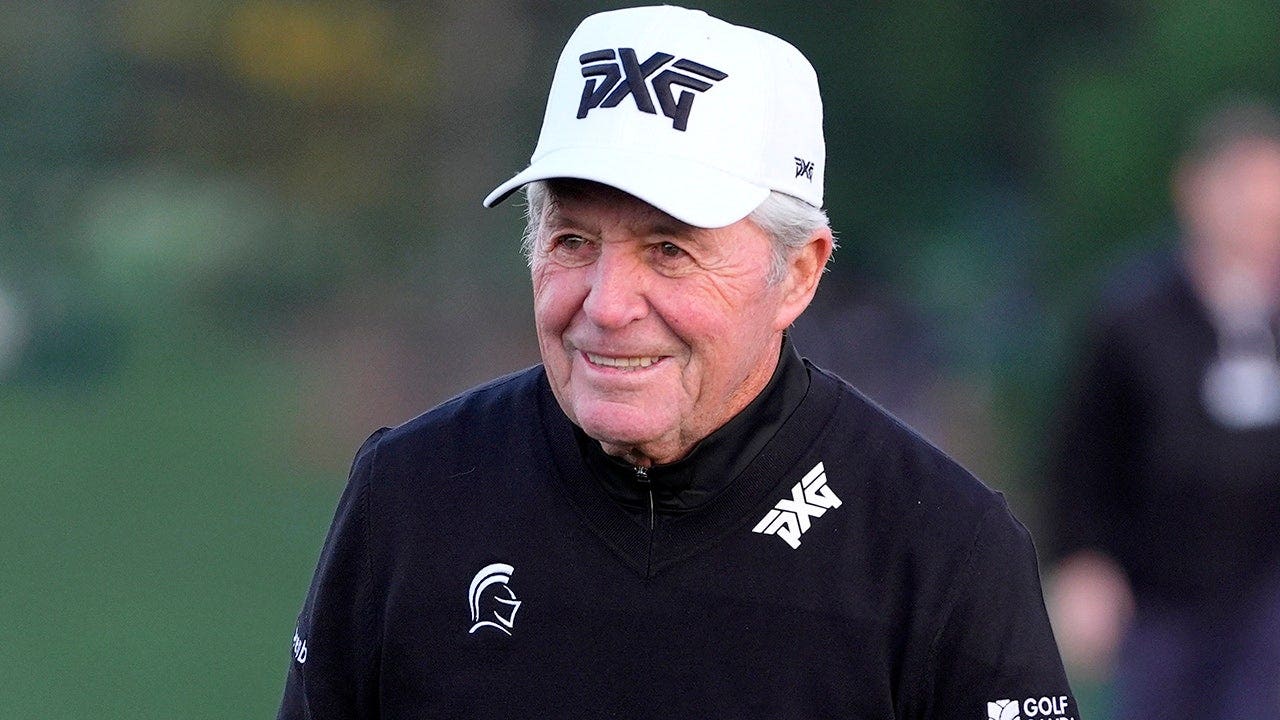
Honorary starter Gary Player reacts after teeing off on the first hole during the first round of the Masters Tournament at Augusta National Golf Club in Augusta, Georgia, on April 9, 2026. (Katie Goodale/Imagn Images)
Player and DeChambeau were at the White House on Tuesday as Trump signed a presidential memorandum that restored the Presidential Fitness Test Award, which revives a competitive school-based fitness program that was phased out in the Obama administration.
The move echoed the Trump administration’s broader “Make America Healthy Again” push.
Player certainly looked healthy during The Masters, when he piped his ceremonial tee shot right down the middle of the fairway last month. Player had a message for the youth while speaking at the Oval Office on Tuesday.
“I say to the young people, just love this country because you don’t realize what’s going on around the world,” Player said.
ZERO BS. JUST DAKICH. TAKE THE DON’T @ ME PODCAST ON THE ROAD. DOWNLOAD NOW!
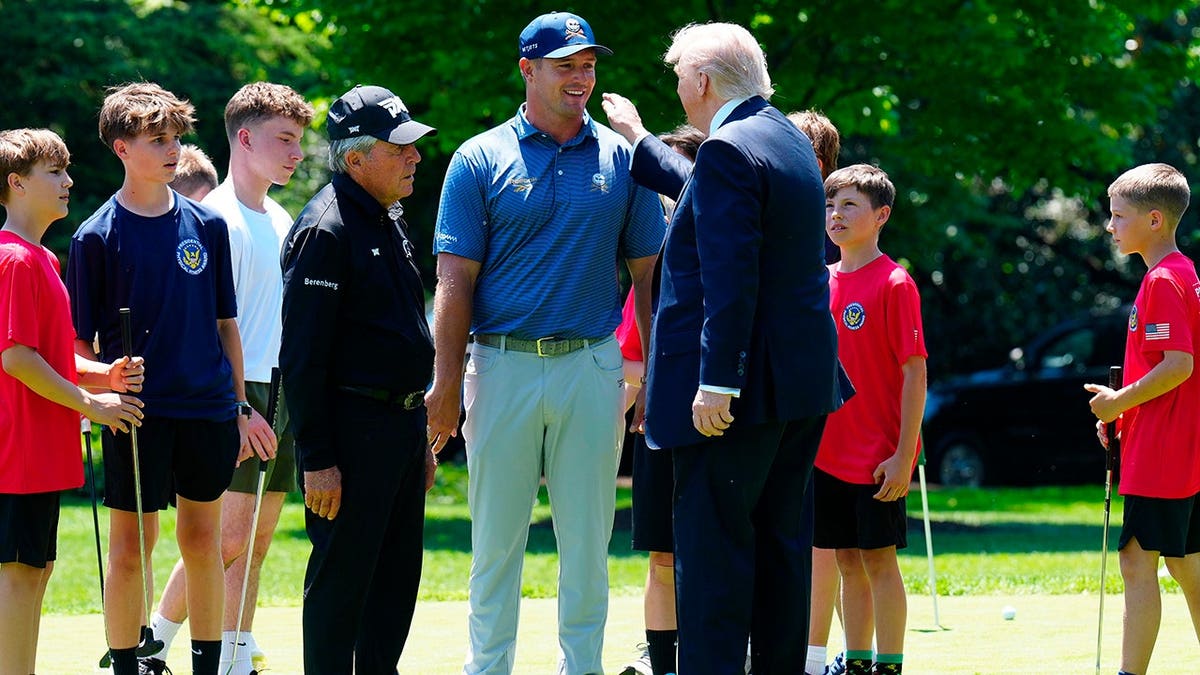
Golfers Bryson DeChambeau and Gary Player speak with President Donald Trump as children observe on the South Lawn of the White House in Washington, District of Columbia, on May 5, 2026. (Jacquelyn Martin/AP Photo)
“There is a silent war taking place against America today, and what we’ve got to do is make these kids realize that freedom, exercise and education start with reading some books.
“What you put in your body is so important. What a wonderful job [Trump] has done. And to all your Cabinet members, I say thank you for maintaining this great word — this cherished word: freedom.”
Player, who is in tremendous shape, said his body is that of a 60-year-old.
CLICK HERE TO DOWNLOAD THE FOX NEWS APP
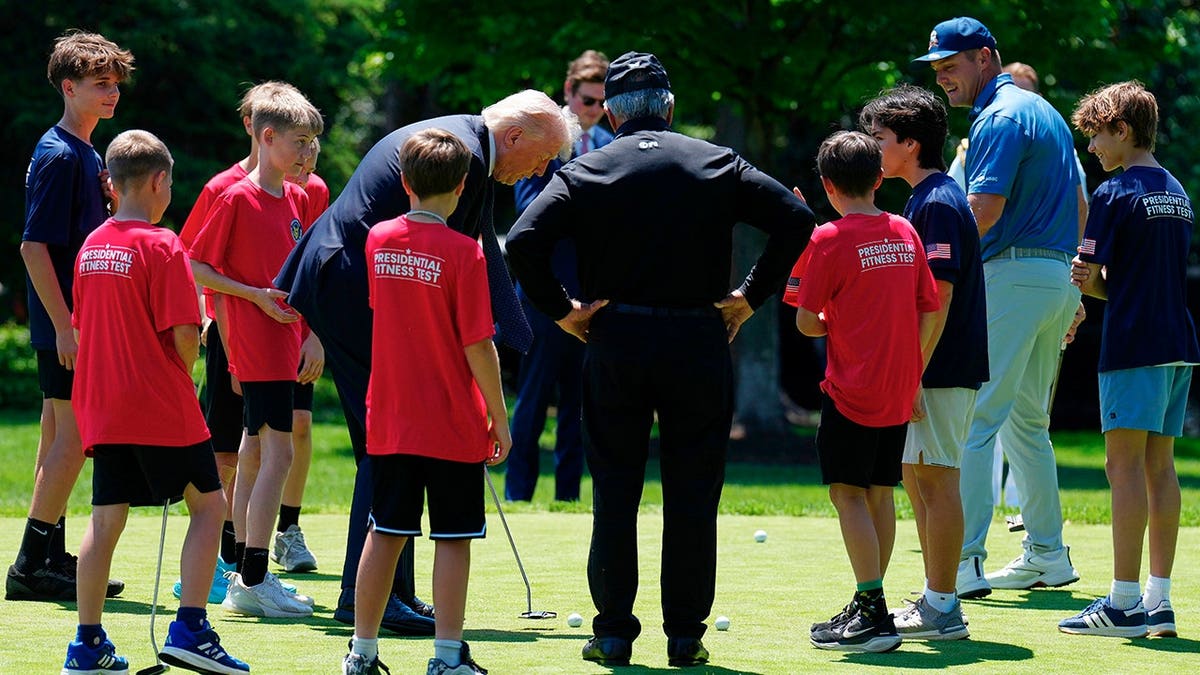
President Donald Trump gives children putting lessons on the South Lawn of the White House in Washington, District of Columbia, on May 5, 2026, as golfers Bryson DeChambeau and Gary Player watch. (Jacquelyn Martin/AP Photo)
“I don’t think of 90,” Player told The Palm Beach Post last year. “I am 90! But really, my body is a man of, I’d say 60.”
Player said he hopes to live until he is 100-years-old and stays active by playing or working out as many days as possible.
With his impressive showing against DeChambeau in a push-up contest, Player looked like someone who has spent a lot of his days working out.
Fox News’ Ashley J. DiMella contributed to this report.
Follow Fox News Digital’s sports coverage on X, and subscribe to the Fox News Sports Huddle newsletter.
NEWYou can now listen to Fox News articles!
Iranian FA chief Mehdi Taj demanded that the U.S. respect Iran’s military institutions if the team is to participate in World Cup games scheduled in California and Seattle in the coming months.
Taj’s comments come after Secretary of State Marco Rubio said that while the Iranian team would be allowed to compete on U.S. soil, no person affiliated with the Iranian Revolutionary Guard Corps would be allowed across the U.S. border. Taj himself was a high-ranking member of the IRGC before joining Iran’s soccer program.
“We are going to the World Cup, for which we qualified, and our host is FIFA – not Mr. Trump or America,” Taj said Tuesday.
“If they accept hosting us, then they must also accept that they must not insult our military institutions in any way. Because if they do, then naturally it could create the same kind of situation that happened in Canada, where there was a possibility we might have to return.”
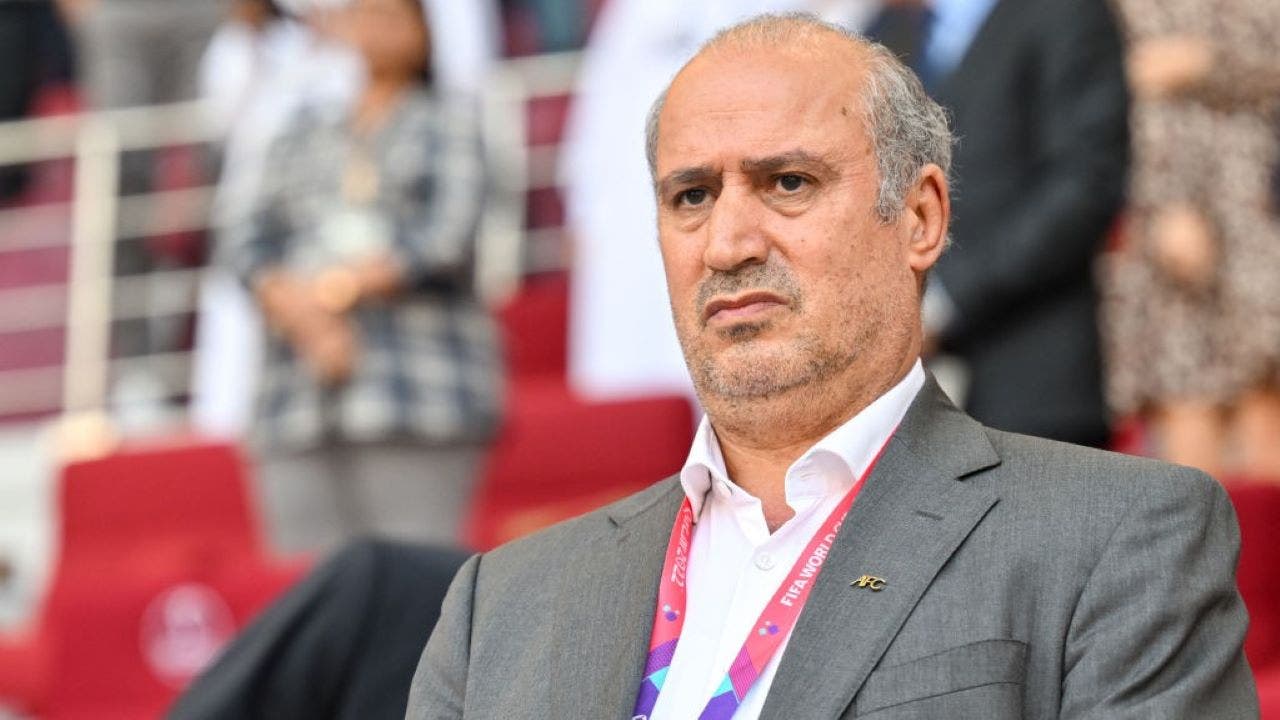
Football Federation Islamic Republic of Iran President Mehdi Taj during the FIFA World Cup Qatar 2022 Group B match between England and IR Iran at Khalifa International Stadium. (Photo by Harold Cunningham – FIFA/FIFA via Getty Images)
Taj’s comments referenced a trip he took to the FIFA Congress in Vancouver last week. Canada, like the U.S., designates the IRGC as a terrorist organization, and Taj’s visa was canceled mid-flight, and he was forced to depart the country.
“We need a guarantee there, for our trip, that they have no right to insult the symbols of our system — especially the Islamic Revolutionary Guard Corps,” he said in Tehran on Tuesday.
“This is something they must pay serious attention to. If there is such a guarantee and the responsibility is clearly assumed, then an incident like what happened in Canada will not happen again.”
TRUMP ENVOY ASKS FIFA TO REPLACE IRAN WITH ITALY IN 2026 WORLD CUP: REPORT
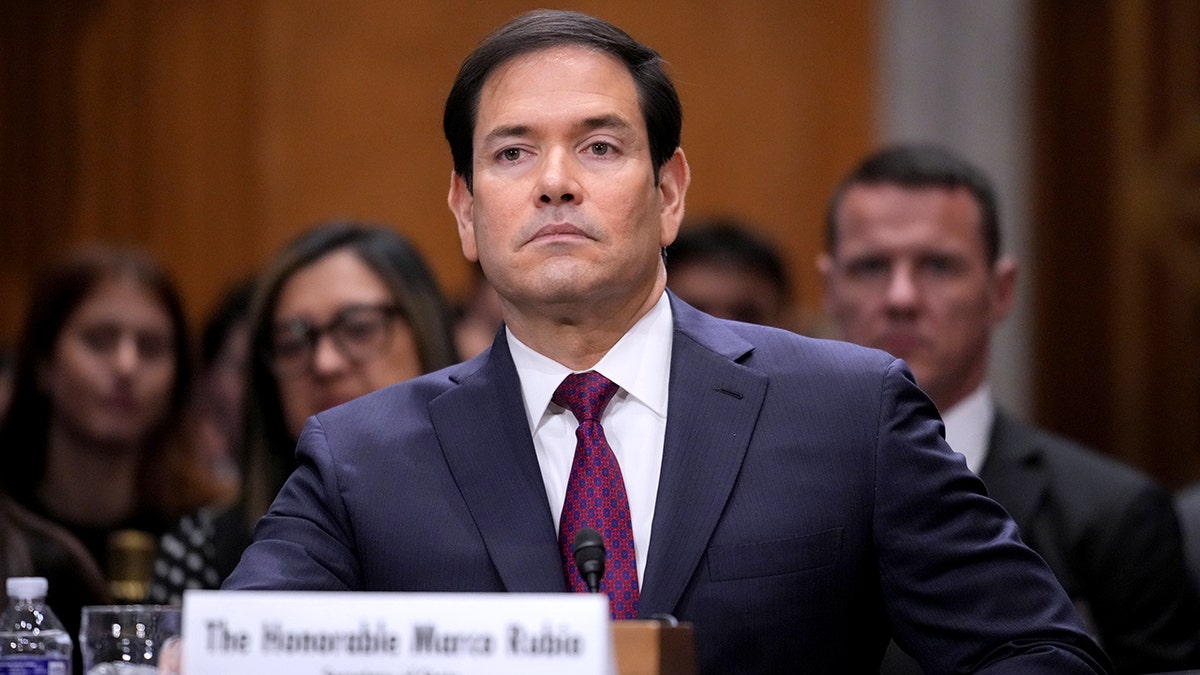
Secretary of State Marco Rubio says no person affiliated with the IRGC will be allowed on American soil. (J. Scott Applewhite/AP)
An envoy for President Donald Trump reportedly asked FIFA in April to replace Iran with Italy in the 2026 World Cup.
United States special envoy Paolo Zampolli suggested the idea to FIFA President Gianni Infantino.
“I confirm I have suggested to Trump and Infantino that Italy replace Iran at the World Cup. I’m an Italian native, and it would be a dream to see the Azzurri at a U.S.-hosted tournament,” Zampolli told the Financial Times. “With four titles, they have the pedigree to justify inclusion.”
CLICK HERE TO DOWNLOAD THE FOX NEWS APP
The Financial Times reported that the U.S. made the suggestion in part to help mend relations between Trump and Italian Prime Minister Giorgia Meloni.
Reuters contributed to this report.
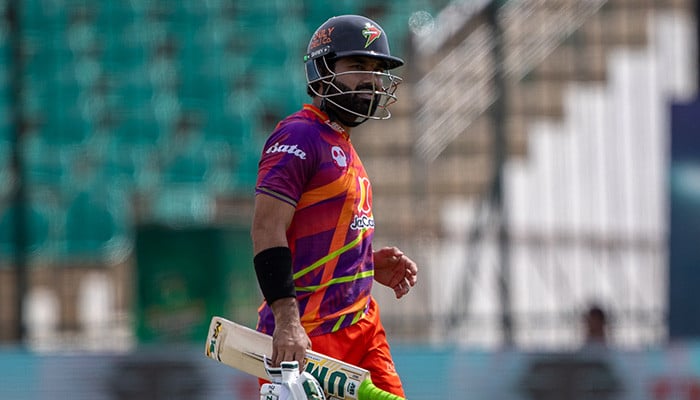
Pakistan leg-spinner Usama Mir, who has played for Lahore Qalandars, has condemned remarks by Rawalpindiz skipper Mohammad Rizwan, who said Hyderabad Kingsmen “didn’t deserve” qualification for the Pakistan Super League (PSL) 11 playoffs.
Rizwan’s remarks came in the aftermath of a difficult campaign for his side, who managed just one win in 10 matches, including a heavy defeat to the Kingsmen in their final league-stage fixture.
Speaking during the post-match media conference, Rizwan reflected on his team’s inconsistent performances and the overall competitiveness of the tournament.
He emphasised the importance of consistency and momentum in high-pressure matches, while also noting that opposition teams had performed strongly in certain conditions, particularly in Lahore.
“The last match played in Hyderabad, they didn’t deserve it. This can be my own wrong thinking, I’m sorry for this. This is my own opinion. If they go from here properly, if they oust us from here, then they deserve it. The matches that are going on in Lahore, they are doing very well. The rhythm that they are playing, I think it was their luck,” Rizwan said.
Hyderabad Kingsmen sealed their playoff qualification in dominant fashion, defeating Rizwan’s side by 108 runs in a must-win encounter. Batting first, the Kingsmen posted an imposing 244-6 before bowling out Rawalpindiz for just 136.
The result left Hyderabad level on points with Lahore Qalandars, but they advanced to the playoffs on superior net run-rate, securing the final qualification spot.
Reacting to Rizwan’s comments in a recent interview with a local sports platform, Usama Mir expressed strong disappointment over the tone of the remarks, questioning the authority of such judgments given inconsistent performances on the field.
“I was extremely disappointed by his press conference. They themselves haven’t played good cricket, yet they are saying others do not deserve it. I was shocked. Did you deserve it? Who are you to decide that?” Mir questioned.
He further highlighted what he described as a contradiction between performances and public statements.
“You go into a press conference and say that the team did not deserve it because they got all out for 80. Your own team has been getting bowled out for around 100 throughout the tournament. What kind of remarks are these? First, you played terrible cricket, and then you conduct a press conference as if you have achieved something extraordinary,” he stated.
Meanwhile, Hyderabad Kingsmen’s PSL campaign ended in disappointment as they failed to secure the title in their debut season. They lost the final against Peshawar Zalmi in a low-scoring contest at Gaddafi Stadium on Sunday.
After being put into bat, Kingsmen were restricted to 129 all out in 18 overs. Despite a fighting half-century from Saim Ayub, who scored 54 off 50 balls, the rest of the batting line-up failed to build partnerships.
In reply, Zalmi found themselves under early pressure at 40-4 before Aaron Hardie and Abdul Samad revived the chase with an 85-run partnership.
Samad made 48 off 34 balls, while Hardie remained unbeaten on 56 off 39 deliveries to guide Zalmi to victory with 28 balls remaining and five wickets in hand.


Looking back on nearly a century of World Cup balls.

Kim Kardashian, Lewis Hamilton spotted together on Broadway date

Elon Musk’s Last-Ditch Effort to Control OpenAI: Recruit Sam Altman to Tesla

-

 Sports1 week ago
Pro wrestling star Steph De Lander reveals how colleague’s advice helped lead her to title triumph at ACW
-
 Business7 days ago
PSX plunges over 4,800 points | The Express Tribune
-

 Tech1 week ago
This Ambitious Laptop Doesn’t Leave Much Room for Your Hands
-
Uncategorized1 week ago
[CinePlex360] Some plugins have failed to updat
-
 Fashion6 days ago
Canada’s Lululemon appoints Esi Eggleston Bracey to board of directors
-

 Tech7 days ago
Almost half of UK businesses hit by cyber attacks | Computer Weekly
-
 Business1 week ago
BP profits more than double as oil trading booms amid Iran war
-
 Sports1 week ago
Match officials announced for HBL PSL 11 qualifier – SUCH TV