

Politics
Deadly Indonesia protests force U-turn on lawmakers’ pay

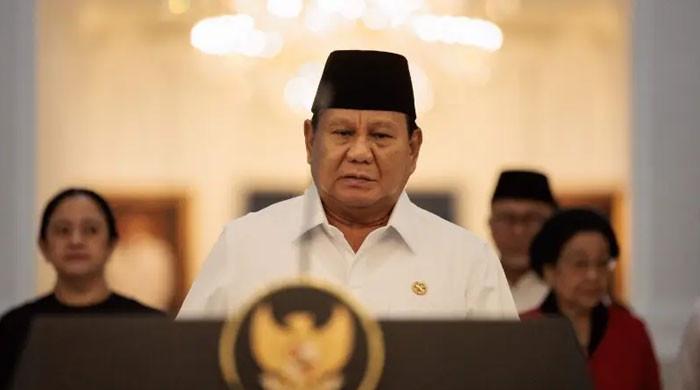
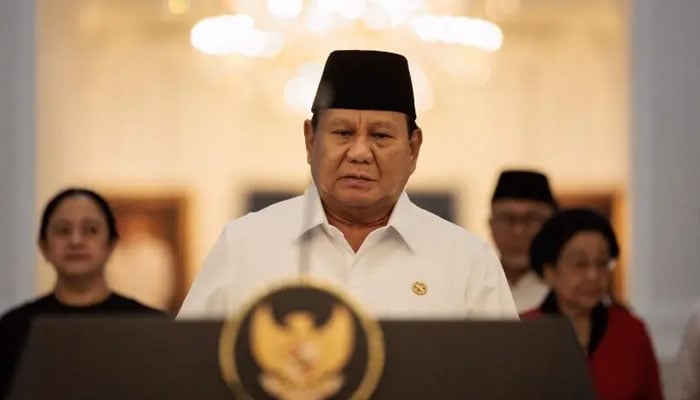
- Prabowo orders military and police to act against rioters.
- Student groups demand deeper reforms beyond perks cut.
- Protests led to five deaths, worst violence in years.
Indonesian political parties have agreed to revoke a number of perks and privileges for parliamentarians, President Prabowo Subianto said on Sunday, in a bid to calm anti-government protests that have left five people dead and caused the worst violence in decades in Southeast Asia’s largest economy.
Protests began on Monday over what demonstrators called excessive pay and housing allowances for parliamentarians. The unrest escalated into riots on Friday after a motorcycle rideshare driver was killed during police action at a protest site.
Homes of political party members and state buildings were ransacked or set ablaze, sparking widespread concern.
Investor sentiment took a hit as the protests led to a steep selloff in Indonesia’s stocks and currency on Friday.
Prabowo, speaking at a news conference at the Presidential Palace and flanked by the leaders of various political parties, said he had ordered the military and police to take stern action against rioters and looters, warning that some of the actions were indicative of “terrorism” and “treason”.
“Leaders in parliament have conveyed that they will revoke a number of parliament policies, including the size of allowances for members of parliament and a moratorium on overseas work trips,” Prabowo said.
“To the police and the military, I have ordered them to take action as firm as possible against the destruction of public facilities, looting at homes of individuals and economic centres, according to the laws,” he added.
The protests represent the most significant challenge to Prabowo’s government, which has faced little political opposition since taking office nearly a year ago.
Prabowo, who cancelled a high profile trip to China due to the unrest, on Sunday met with political parties leaders and key members of his cabinet at the Presidential Palace to discuss the situation.
Many ministers and political leaders arriving at the Palace used civilian number plates instead of special ones given to officials, a witness said, in an apparent precaution against public anger.
The military was deployed to guard the Palace on top of the usual secret service detail. Many key ministers’ homes and government installations were also seen guarded by the military on Sunday.
‘Not enough’
It remains unclear who is behind the rioting and looting that followed the protests, initially organised by student associations. Muzammil Ihsan, head of the All Indonesian Students’ Executives Body, the country’s largest student umbrella group, told Reuters that cutting lawmakers’ perks was “not enough” and said further demonstrations were being “considered”.
“The government must resolve deep-rooted problems. The anger on the streets is not without cause,” Ihsan said.
Tegar Afriansyah, the chairman of a smaller student group, Indonesian Student League for Democracy, which has been protesting since Monday, told Reuters the announcement does not address the root of the problem, which is “political oligarchy and an unequal economic structure.”
He termed Prabowo’s instructions to police and military as “clearly repressive and intimidating.”
Global rights watchdog Amnesty International’s Indonesia chapter in a statement termed Prabowo’s use of terms such as treason and terrorism as “excessive.”
TikTok, owned by China’s ByteDance, said it had suspended its live feature in Indonesia for a few days.
The death toll rose to five on Sunday, according to the local disaster management agency in Makassar, South Sulawesi province. The agency confirmed that an online motorcycle taxi driver was beaten to death by a mob accusing him of being an intelligence agent. Three others were killed in an arson attack on the local parliament building on Friday.
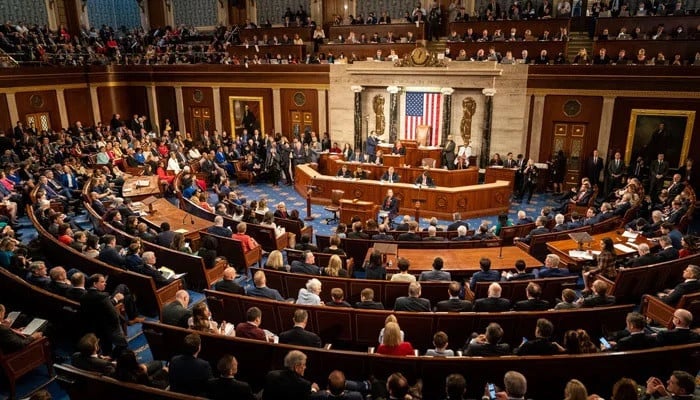
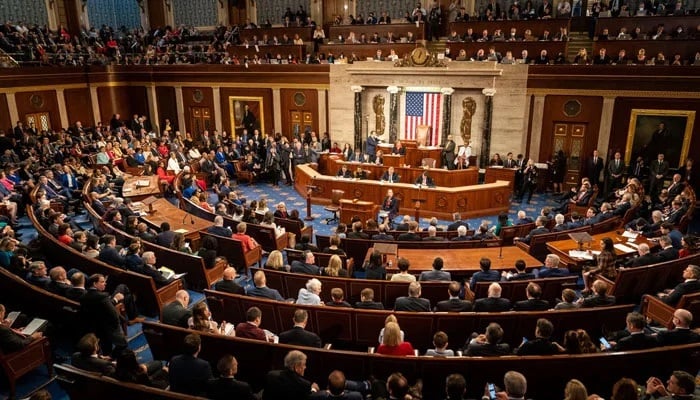
- Senate Republicans have blocked war powers measures four times.
- Almost all Republicans remain firmly behind Trump.
- Democrats warn conflict could escalate.
A majority of the US Senate backed President Donald Trump’s military campaign against Iran on Wednesday, voting to block a Democratic-led resolution aiming to stop the war until hostilities are authorised by Congress.
The Senate voted 52-47 not to advance the war powers resolution, underscoring his party’s continuing support for the Republican president’s war policy more than six weeks after the US and Israel launched airstrikes on Iran.
Trump said in an interview with Fox Business Network conducted on Tuesday and aired on Wednesday that the war was close to over. Also on Wednesday, the army chief of mediator Pakistan arrived in Tehran to try to prevent a renewal of the conflict, after weekend peace negotiations ended without an agreement.
It was the fourth time Democrats have forced Senate votes on war powers measures since the war began. All of them have failed in the face of opposition from every Senate Republican except Rand Paul of Kentucky.
The libertarian-leaning Paul, who often advocates against excessive military spending and for a strict interpretation of the Constitution, was the only Republican vote in favour of the resolution in the latest vote. The only Democratic “no” came from Pennsylvania Senator John Fetterman. Republican Senator Jim Justice of West Virginia did not vote.
Although the US Constitution says that Congress, not the president, can declare war, presidents from both parties have long held that the restriction does not apply to short-term operations or if the country is under immediate threat.
‘Nobody is coming to help you, Iran’
The White House, and almost all of Trump’s fellow Republicans in Congress, say Trump’s actions are legal and within his rights as commander-in-chief to protect the US by ordering limited military operations.
Opinion polls show the war is broadly unpopular, although views differ along partisan lines. A Reuters/Ipsos poll published on March 31 found that 60% of Americans opposed US military strikes on Iran, with 74% of Republicans supporting the action, compared with 7% of Democrats.
Senator Jim Risch of Idaho, the Republican chairman of the Foreign Relations Committee, accused backers of the war powers resolution of supporting Iran in a speech before the vote.
“Nobody is coming to help you, Iran, except for the 47 people over here,” he said, referring to senators who back the resolution.
Democrats said they wanted Congress to retake its constitutionally mandated power to declare war, and pull the country back from what they warned could become a long conflict.
“I urge my colleagues … to choose the path of peace before President Trump’s war becomes irreversible,” Senator Jack Reed of Rhode Island, the top Democrat on the Armed Services Committee, said in a speech urging support for the vote.
Democratic Party leaders have vowed to keep bringing war powers resolutions until the conflict ends or Congress authorises continued fighting.
The House of Representatives is expected to consider a similar measure later this week.
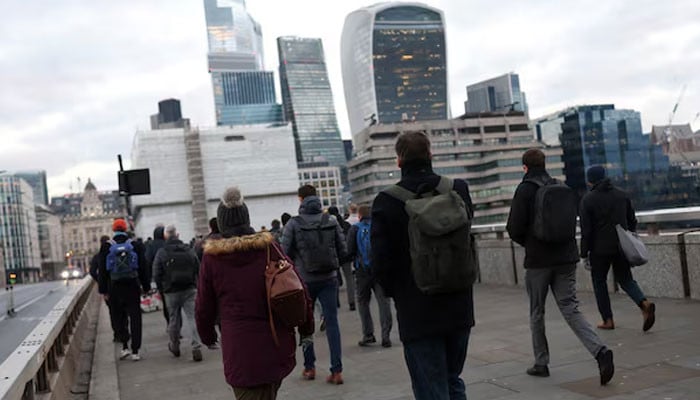
LONDON: A BBC undercover investigation has alleged that a network of immigration advisers, paralegals and associated intermediaries has been helping migrants fabricate asylum claims in the UK by falsely presenting themselves as gay, charging thousands of pounds for false narratives, staged evidence and interview coaching.
At least three law firms – one of these owned by Pakistanis – have been accused by the BBC of fabricating the asylum claims through illegal means.
The law firms include Law and Justice Solicitors and Connaught Law. Law and Justice is owned by Michael Oluyemi Makinde and Connaught Law is owned by Nauman Javid, Sheryar Khan, Zehra Tamkan and Awais Javed.
According to the BBC investigation, the abuse centres on migrants, particularly from Pakistan and Bangladesh, whose student, work or tourist visas are close to expiring and who are then allegedly advised to seek asylum on the basis of sexual orientation, as being gay or lesbian.
Using undercover reporters posing as international students from Pakistan and Bangladesh, the BBC said it tested whether immigration advisers would encourage false sexuality-based asylum claims.
It reported finding multiple individuals willing to discuss fake claims, suggest supporting evidence and quote fees for handling such cases. Among the findings were allegations that Connaught Law firm quoted up to £7,000 for a fabricated claim and described the chances of refusal as “very low”, while another adviser allegedly offered to arrange fake supporting letters, photographs and even a supposed sexual partner to back up an asylum application.
The BBC undercover reporter made an appointment with Aqeel Abbasi, a senior legal adviser at Connaught Law, which has its offices in Central London on Gray’s Inn Road.
Abbasi told the BBC reporter that he could help him stay in the country and appeared to be willing to direct him on how to fabricate evidence for a fake claim. He promised that the chance of refusal by the Home Office was “very low”.
He said his fee would be £7,000 and, once that had been paid, his office would contact the undercover reporter to guide them through the process and the kind of evidence required.
This would include advising him on “where to go or what specific actions to take”.
The legal adviser also suggested the undercover reporter would need to find someone willing to pretend to be his male/gay partner. When the reporter said he had a wife in Pakistan, Abbasi was quick to suggest a cover story to explain this, by saying that things were “more open” in the UK than in Pakistan and that he now had a male partner.
“We will prepare a statement for you, and once you read it, you will understand exactly how it is,” said Abbasi.
A significant part of the investigation focused on Worcester LGBT, a support organisation for gay and lesbian asylum seekers, which holds monthly meetings attended by large numbers of migrants from across the country.
The BBC traced the undercover reporter’s route to the group through Mazedul Hasan Shakil, a paralegal at Law and Justice Solicitors, an immigration firm based in Birmingham and London, who is also described as founder and chairman of Worcester LGBT.
The reporter received a call from a woman identified as Tanisa (Shakil’s associate), who, in Urdu, allegedly became much more direct about using a “gay case” as the only realistic route to stay in Britain.
When told the reporter was not gay, Tanisa replied: “There is nobody who is real. There is only one way out in order to live here now and that is the very method everyone is adopting.” The BBC identified her as Tanisa Khan, an adviser linked to Worcester LGBT.
The broadcaster then described an initial meeting in Forest Gate, east London, which took place in Tanisa’s home.
According to the report, she laid out a plan to fabricate an asylum claim on the grounds of same-sex orientation, warning that the applicant would have to memorise a false story convincingly for Home Office interviews. The report said she offered to obtain a letter from someone claiming to have had sexual relations with the applicant and said she would fully prepare him for the Home Office process.
She charged £2,500, with additional costs if the claim failed and went to appeal. The BBC also said she suggested that if the reporter later brought his wife from Pakistan to Britain, she too could make a false asylum claim by pretending to be lesbian.
The BBC showed its footage to immigration lawyer Ana Gonzalez, who has 30 years of experience. She said Tanisa appeared to be “committing fraud by manufacturing a claim” and warned that such conduct makes life harder for genuine asylum seekers, especially LGBT claimants whose cases are often difficult to prove objectively.
The report said precise figures for fabricated claims are impossible to establish, but Home Office data suggests a disproportionate number of sexuality-based asylum claims come from Pakistani nationals.
In 2023, there were 3,430 initial decisions on LGBT asylum claims and nearly 1,400 new claims based on sexual orientation. Of these, 42% were lodged by Pakistani nationals, who also accounted for the highest number in each of the previous five years. The article noted that Pakistanis were only the fourth most common nationality across all asylum applications and made up just 6% of total claims overall.
Nearly two-thirds of asylum seekers claiming persecution on grounds of sexual orientation had their claims granted at initial decision stage in 2023.
The Home Office told the BBC that making an asylum claim through deception is a criminal offence and that anyone convicted can face prison and deportation.
It said misuse of protections designed for people fleeing genuine persecution because of their sexuality was deplorable, but insisted that the asylum system includes safeguards and that claims are rigorously assessed.
The department added that abuse is actively investigated and procedures are continually reviewed.
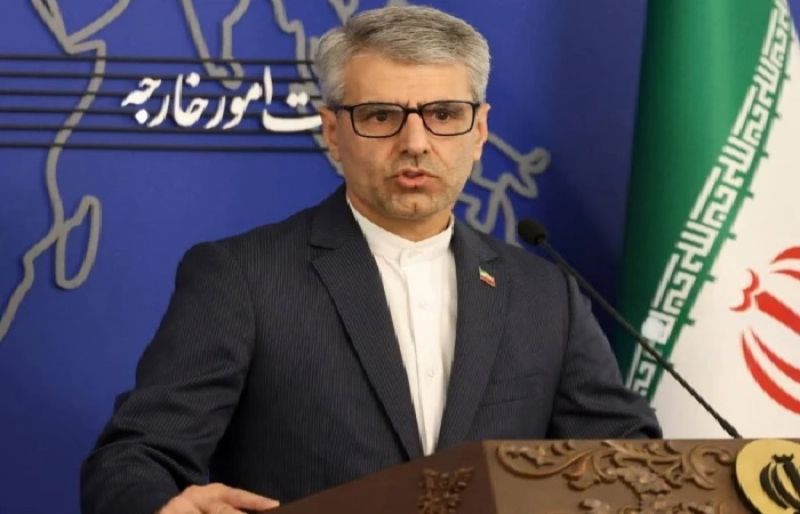
Iran will be hosting a high-ranking political and security delegation from Pakistan on Wednesday, as indirect exchanges of messages between Tehran and Washington continue, the Iranian Foreign Ministry spokesman announced.
Esmail Baghaei, speaking in response to a question from IRNA, confirmed that Tehran is expected to receive the Pakistani delegation today.
“Today, we are most likely hosting a delegation from Pakistan,” Baghaei said.
“Following the talks that took place in Islamabad, and also the discussions that the Pakistani side has had with the United States, our views have been conveyed and heard,” he said.
He added, “Naturally, during this visit, the two sides are expected to discuss their viewpoints in detail.”
Meanwhile, informed sources in Pakistan confirmed that a high-level security-political delegation, comprising prominent Pakistani figures, left Islamabad for Tehran a short while ago, IRIB news reported.
According to the sources, the delegation is carrying a new message from Washington for Tehran.
The delegation is scheduled to meet with Iranian officials to discuss future negotiations, the sources said.
The development comes as a two-week ceasefire between Iran and the United States will expire on April 22.
The United States and Israel launched their unprovoked war of aggression against Iran on February 28, assassinating the Leader of the Islamic Revolution and striking nuclear facilities, schools, hospitals and civilian infrastructure.


No vote after NCAA urges further study of age eligibility changes to college sports

Taylor Swift on bond with Dakota Johnson: ‘Curious’

Pine Labs, Groww & more: Top stocks to watch on April 16 – The Times of India

-

 Fashion1 week ago
India’s exports face reset as EU links trade to carbon metrics: EY
-

 Entertainment1 week ago
Lamar Odom shocking response to Khloé Kardashian account of his overdose
-

 Entertainment1 week ago
Queen Elizabeth II emotional message for Archie, Lilibet sparks speculation
-

 Tech1 week ago
Azure customers up in arms over ‘full’ UK South region | Computer Weekly
-

 Tech1 week ago
As the Strait of Hormuz Reopens, Global Shipping Will Take Months to Recover
-

 Fashion1 week ago
CII submits 20-pt agenda to Indian govt to back firms hit by Iran war
-

 Tech7 days ago
This AI Button Wearable From Ex-Apple Engineers Looks Like an iPod Shuffle
-

 Politics6 days ago
Indian airlines hit hardest after Dubai limits foreign flights until May 31