

Entertainment
Anna Faris talks about being insecure about ‘Scary Movie’ role

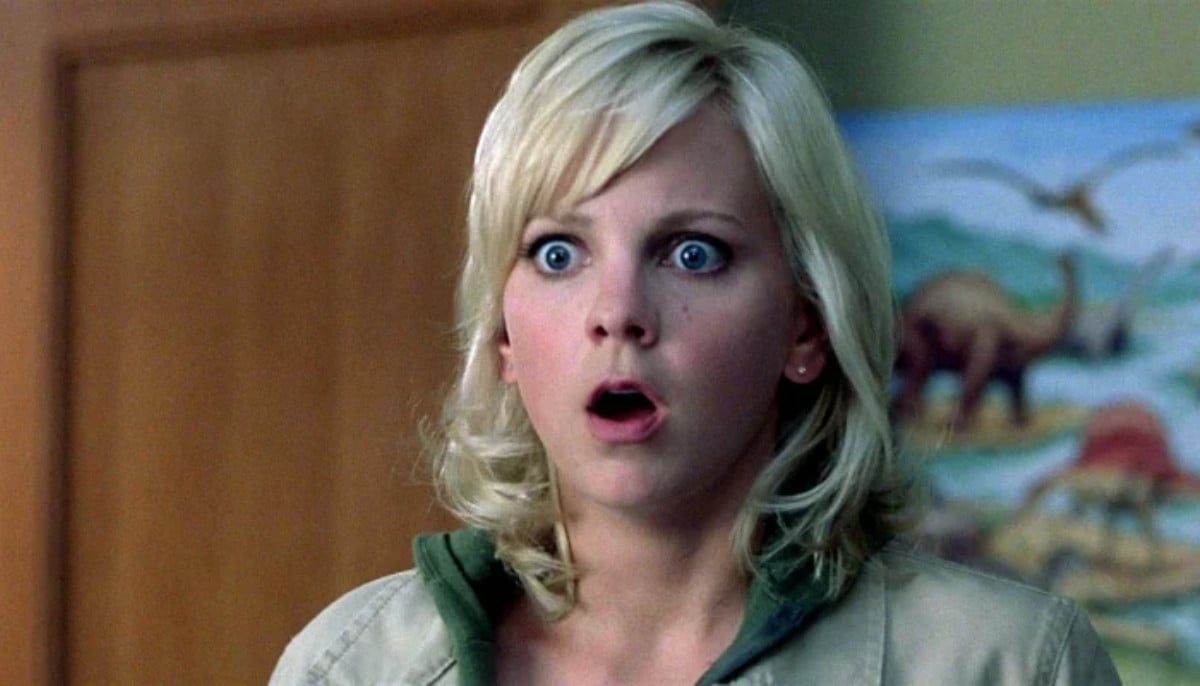
Anna Faris has opened up about the anxiety that plagued her during the making of the original Scary Movie films, admitting she spent much of the time hiding and hoping nobody would notice her, convinced she was about to lose the job.
“I remember being just so scared that I was gonna get fired because I had no body of work behind me. I didn’t even have an agent,” the actress and comedian, 49, tells PEOPLE.
Scary Movie, released in 2000, was her first major film role, and she says she was “so quiet and so intimidated in those first two movies”, spending her time on set hanging back rather than engaging with her castmates.
Things started to shift by the third instalment in 2003.
“For me, it felt like I got to pay more attention. I did get to involve myself more. I did feel comfortable making small talk and having banter and doing what normal people do as opposed to just hiding in the corner, hoping that no one will notice me,” she says.
More than two decades later, Faris is back as Cindy Campbell in Scary Movie 6, and the experience of returning could not feel more different.
When she got the call, she was “shocked and immediately thrilled.”
“I couldn’t believe that there was a world where I would be feeling so good about doing Scary Movie, not just good, but great,” she says.
The reunion has also given her the chance to do something she had never properly done before, thank the Wayans brothers for taking a chance on her all those years ago.
Marlon, Shawn and Keenen Ivory Wayans wrote, created and produced the original films.
“It’s a little healing in the sense that we got to be back together again. That is, for me, a personal celebration because I got to thank them. I’d never thanked them properly,” she says.
“It felt like the Wayans brothers were casting me. This time, I got to thank them and feel like I wasn’t gonna get fired.”
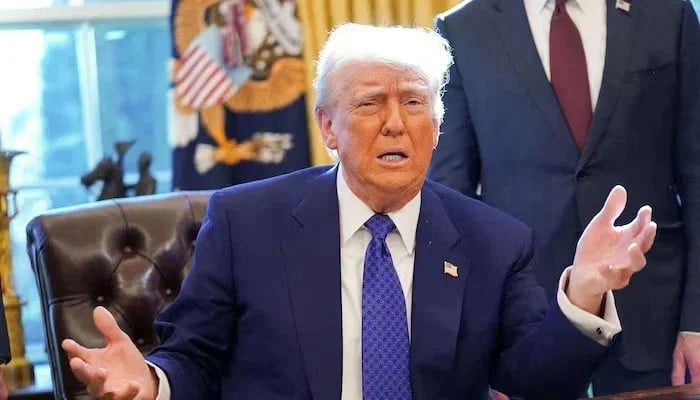
From its inception, the American presidency has bound immense destructive capacity to the temperament of a single individual. It is an office that fuses authority with impulse by placing a military juggernaut in the hands of an individual.
Alice Roosevelt distilled this dynamic with biting precision. She quipped that her father (President Roosevelt) wished “to be the corpse at every funeral, the bride at every wedding and the baby at every christening”. Beneath the wit lay the indictment of an untethered ego.
Today, that strain of vanity has been eclipsed by Donald Trump. Ego is no longer a trait; it is doctrine. It has converted statecraft into spectacle, where personal whims masquerade as reality and contradiction is insubordination. What emerges is not just volatility but a corrosive force that destabilises the very architecture of international order.
This pathology is not confined to one geography. In South Asia, Narendra Modi’s initiation of the failed Operation Sindhoor reflected the same instinct that conjured crises to manifest power. Between nuclear rivals, such theatrics are reckless. They place millions within the blast radius of a narcissist’s need to appear unassailable.
Traversing further, clinical insight offers clarity. Mary Trump is a psychologist and Donald Trump’s niece. She describes a “monstrous ego” having reduced the Oval Office to an arena of impulse and domination. She describes the cabinet not as an ensemble of peers but as a congregation of “weaker, more craven and just as desperate” enablers. Loyalty is measured by the willingness to echo.
Governance, inevitably, mutates into spectacle. Its logic is laid bare in self-inscribed tokens of power like Trump’s commemorative gold coins and his signatures emblazoning future currency notes. Contagious, it results in loyalists curating the same iconography. Kash Patel’s personalised sneakers with his and the FBI initials to Pete Hegseth’s conspicuous tattoos; governance morphs into an orbit of narcissism.
The most dangerous manifestation of this dogma is what psychologists term narcissistic injury. It is when reality refuses to submit. In ordinary individuals, the damage is contained. In a president, it detonates outward. Slights are magnified and setbacks personalised. Decision-making degrades into reflex. Actions are calibrated to preserve ego and become increasingly indifferent to consequences.
The purge within the Pentagon is the clearest expression of this pathology – a punitive action to cauterise wounded pride. In such moments, governance ceases to be an instrument of statecraft and becomes an apparatus of psychological self-preservation. Senior commanders are not removed for failure but for resisting one.
Downed aircraft, missing crew members and an adversary unwilling to conform vindicate professional reluctance. The prospect of captured personnel threatens to transform a setback into a spectacle. In such a moment, restraint becomes impossible.
Escalation is no longer a choice but a compulsion, a violent necessity to overwrite failure with force. What follows is not a strategy but an ever more dangerous raising of the stakes to salvage pride. This is the true logic of an egocracy.
In such conditions, truth inevitably becomes malleable. It is distorted, diluted or outrightly discarded. The pattern is not new. The claims of WMDs that initiated the 2003 Iraq invasion were totally fabricated. The tragic reality that saw over a million perish was a stark testament to what happens when deception is weaponised in the service of self-justification.
This paradigm is starkly visible again in the narratives enabling the Gaza genocide and the strikes on Iran. Curated intelligence reports and ever-shifting justifications make a mockery of established facts. Reality is no longer a constraint; it is an inconvenience to be managed.
In ‘The Second Coming’, Yeats captured the birth of disorder: “What rough beast, its hour come round at last, slouches towards Bethlehem to be born?” In his vision, the disintegration of order did not herald a new one but the emergence of something unrestrained and primal. The destruction wrought by narcissism is far more insidious. It does not emerge from chaos; it engineers it. Conflict and disorder become an assertion of the self.
History offers a harsher mirror. Roman Emperor Caligula governed through spectacle and fear. He was known for his cruelty in prolonging his victims’ sufferings. Through their entire ordeal, he had these words of Roman tragedian Lucius Accius on his lips – oderint dum metuant – let them hate, so long as they fear me. It captures the essence of power stripped of legitimacy and sustained only through dread.
In the modern era, such a mindset carries unprecedented stakes. The fusion of personal volatility with nuclear capability renders miscalculation existential. John Kennedy warned about such a world enforced by America’s war machine. He called it “peace of the grave or security of the slave” – subjugation or annihilation.
This is the calamitous binary that we see invoked from Gaza to Iran. The world remains riveted with Iran. Gaza, with its ongoing sufferings, has become a sidelined tragedy. In one case, resistance commands attention; in the other, endurance slips from view.
The chilling distillation is that prudence has been subsumed by an unbounded ego. It simply cannot retreat, concede and most dangerously, it cannot stop. This is the ultimate manifestation of the Imperium of Ego.
The writer explores the forces which shape power, belief and society. He can be reached at: [email protected]
Disclaimer: The viewpoints expressed in this piece are the writer’s own and don’t necessarily reflect Geo.tv’s editorial policy.
Originally published in The News
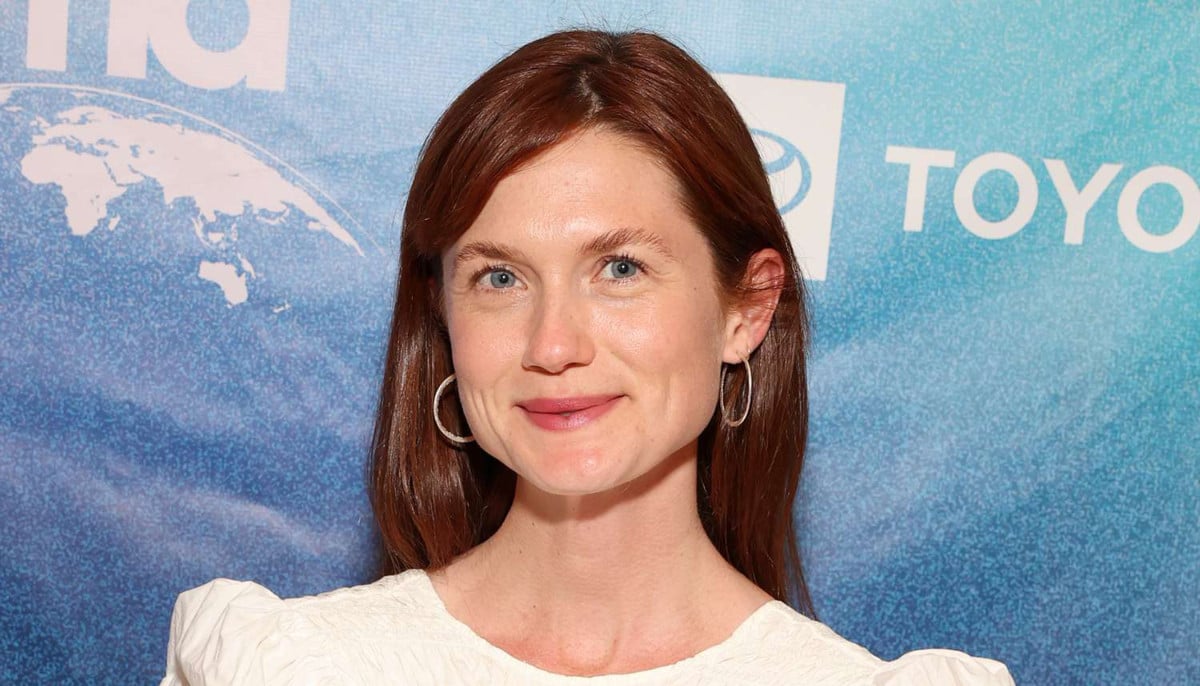
Bonnie Wright, the actress famously known for playing Ginny Weasley in the Harry Potter film franchise, has revealed she is expecting her second baby.
The 35-year-old star shared the happy news with her followers on Sunday, 5 April, through a heartwarming post on Instagram.
Wright, who appeared in all eight movies of the wizarding series, confirmed that her “second little earthling” will be joining the family this autumn.
The announcement was with two sweet photos of the mother sitting on a couch with her two-year-old son, Elio Ocean Wright Lococo.
In the snaps, Wright is seen displaying her baby bump, with one particularly touching shot showing her looking down at her son while he faces her stomach.
She captioned the post, “Two babies on my lap, our second little earthling joining us this autumn,” shortly after teasing a “very special” update on her Instagram Stories with a waterside selfie.
Support from the Harry Potter family came quickly, with co-star Evanna Lynch, who played Luna Lovegood, among the first to offer her congratulations in the comments.
Wright and her husband, Andrew Lococo, originally met in 2020 and tied the knot in March 2022.
Their first child, Elio, was born in September 2023.
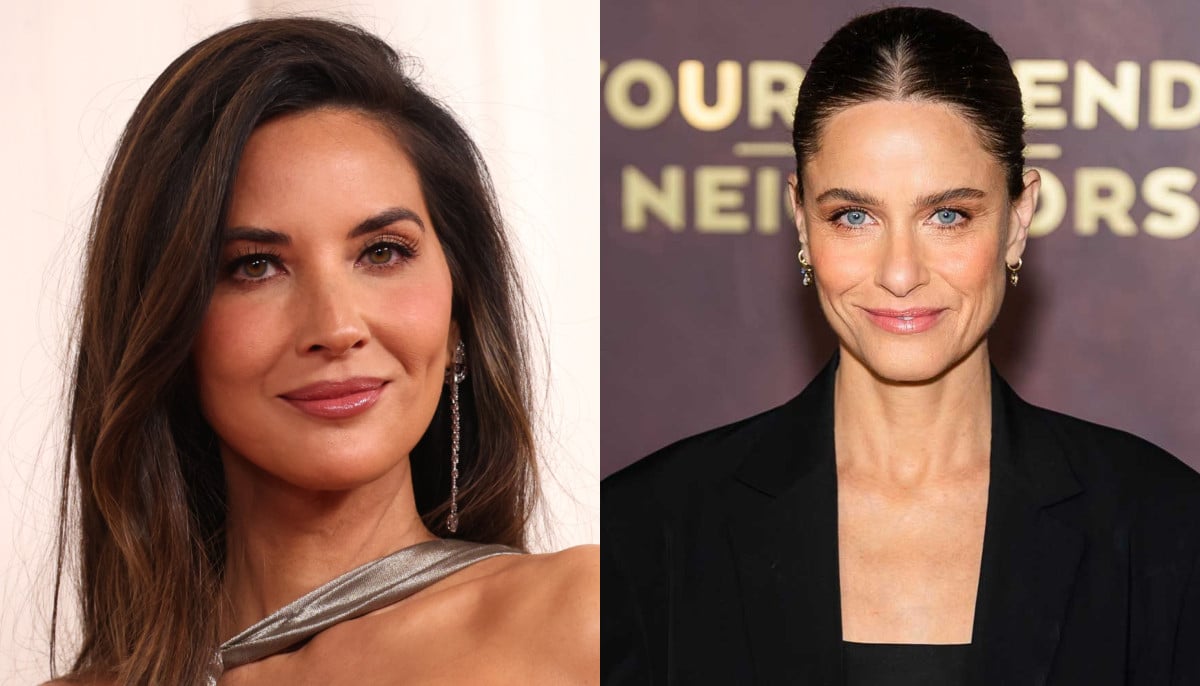
Olivia Munn has spoken movingly about her Your Friends & Neighbors costar Amanda Peet’s breast cancer diagnosis, urging fans to get checked early after Peet’s own experience showed just how much timing can matter.
Speaking to PEOPLE while promoting season two of their Apple TV+ series, Munn, 45, herself a breast cancer survivor, having been diagnosed in 2023, said she was relieved when Peet confided in her last year.
“She told me last year that she was diagnosed, and I was so relieved she found it at such an early, early stage,” she said.
“She found it at almost the earliest you can find it. She really was given a gift of finding it so early that she doesn’t have to do all the treatment and all the stuff you have to do for years and years to come.”
She was clear about what Peet’s experience represents for others.
“She’s incredibly lucky, and it’s another reminder that early detection saves lives.”
Peet, 54, revealed her diagnosis publicly for the first time in a deeply personal essay for The New Yorker on 21 March, having kept it private since 2025.
The piece described an almost unimaginably difficult period in her life, receiving her cancer diagnosis while both of her parents were simultaneously in hospice care on opposite coasts.
When her sister called to say their father was about to die, Peet flew to New York but didn’t make it in time.
“I didn’t make it before my father took his last breath, but I got to see his body before it was taken from his apartment,” she wrote.
“As soon as my dad’s corpse was out of sight, I was free to panic about my cancer again.”
Peet received her first clear scan in January. Days later, her mother, who had Parkinson’s disease, died in the hospice with her daughter by her side.
In Your Friends & Neighbors, Peet plays therapist Mel Cooper and Munn plays her friend and neighbour Sam Levitt.
New episodes are streaming now on Apple TV+.


How Vietnam T&A sector is recalibrating for the next growth journey

US’ Nike’s Q3 earnings dip as DTC weakness offsets wholesale strength

Pakistan, other mediators ‘make last-ditch’ efforts for Iran-US ceasefire: report

-

 Sports1 week ago
USMNT handed reality check by Doku, Belgium ahead of World Cup
-

 Sports1 week ago
2026 NCAA men’s hockey tournament: Schedule, results
-
Uncategorized4 days ago
[CinePlex360] Please moderate: “Trump signals p
-
Uncategorized7 days ago
[CinePlex360] Please moderate: “Further tariff
-

 Tech2 days ago
Our Favorite iPad Is $50 Off
-
 Entertainment3 days ago
Joe Jonas shares candid glimpse into parenthood with Sophie Turner
-
 Entertainment1 week ago
The Avett Brothers’ bassist explains why he wrote a book about John Quincy Adams
-

 Sports1 week ago
Man City show why they are worthy WSL title winners as tired United wilt