

Sports
Inside the origin story of ‘One Shining Moment’ — the highlight of March Madness

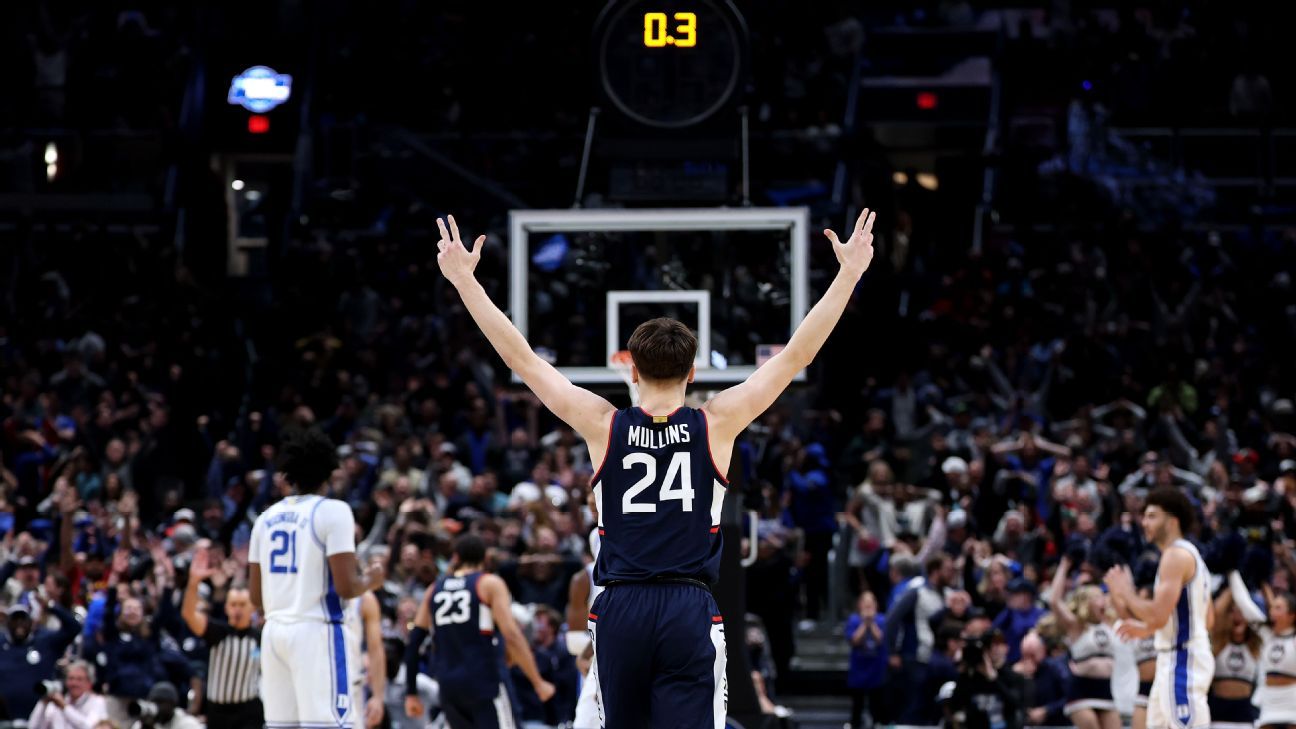
The ball is tipped
And there you are
You’re running for your life
You’re a shooting star
David Barrett was sitting in a bar when the idea came to him. The 31-year-old musician had spent his entire young adult life grinding as a performer in the watering holes of Michigan. College bars. Dive bars. Even the occasional honky tonk. On this particular spring night in 1986, it was an East Lansing establishment known as the Varsity Inn and his set — a performance heard by perhaps two dozen patrons — was done.
And all the years
No one knows
Just how hard you worked
But now it shows
Barrett was unwinding over a drink. With one eye he watched the TV over the bar, watching Larry Bird’s Boston Celtics running over another unfortunate NBA opponent. His other eye was affixed on the woman who had served him that drink.
“The waitress was so beautiful, I thought, well, I’m a songwriter, so perhaps my only chance to catch her attention was through poetry,” Barrett says today. “If I could express to her the poetry of Larry Bird’s abilities at the height of his career, this special moment in his life creating so many special moments on the court, perhaps she would be impressed.”
Well, was she?
“No, she was rather busy.”
No offense to Barrett, but we should all be thankful that she had more critical tasks than posting up at the bar to admire the singer’s basketball spoken word. Because it was within that space of lonely time that, inspired by his own lesson about moments, he scribbled three words onto a cocktail napkin. The following morning, he expanded those words into a chorus, this time onto a stack of napkins at a brunch spot, The Knight Cap Too.
In one shining moment,
it’s all on the line
One shining moment,
there frozen in time
For nearly 40 years, those lyrics and the tune Barrett wrote to accompany them have been the soundtrack of our college basketball lives. On Monday night, shortly after the men’s college basketball national champion is crowned, the winning team will lock arms on the floor of Lucas Oil Stadium, gaze up at the jumbotron and soak up a three-minute montage of clips from this year’s tournament, set to Barrett’s song, building to the inevitable 30-second climax of images of them winning the very title that they are very much still celebrating.
“There are so many moments that make up a championship celebration,” explains Mike Krzyzewski, who won five national titles as Duke’s head coach. “There’s the moment the game ends. There’s hugging your family. There’s cutting down the nets. The moment of being handed the trophy. But the moment it feels real is when they play ‘One Shining Moment.'”
“It’s this literal life-flashing-before-your-eyes thing, watching that video set to that song,” adds John Calipari, who won it all with Kentucky in 2012. “It’s like watching a movie of your life, that you wrote, with the people who wrote it with you.”
“You also don’t just watch it if you win it,” says Tom Izzo, who celebrated with Michigan State in 2000. “If you are there at the game, you wait to see it. If you are home on the sofa, you wait to see it. The season isn’t done until you hear that song.”
And to think, the NFL almost intercepted it right out from under college basketball’s nose.
For that moment, let’s go back to ’86. That’s when Barrett met sports reporter Armen Keteyian. Keteyian, like Barrett, was a native of the Detroit area and had moved to New York to write for Sports Illustrated. Whenever Barrett went East, he’d stay at Keteyian’s apartment. During one of those visits, the two were watching the NBA Finals on TV — Larry Bird again, doing work against the Houston Rockets — and Barrett mentioned his basketball song from the napkins.
Keteyian told Barrett that if he got the song recorded, he’d love to hear it.
A few weeks later, a cassette was waiting in Keteyian’s mailbox, tracks laid down in a make-do studio used for local advertising jingles. The reporter loved it, so he walked the tape over to a colleague in TV production.
“One day my phone rang and the gentleman on the other end said he was Doug Towey and he was the creative director at CBS Sports,” Barrett recalls now, his throat catching to hold back tears. “Of course, I didn’t believe him at first. He sounded like a buddy of mine pulling a prank. But over the next 15 minutes, I made a friend for life over a phone call that changed my life.”
Towey, a sports television legend — the theme music for The Masters, the iconic CBS Sports college sports themes, you name it and Towey was probably behind it — had fallen in love with the song and told Barrett that he really, really wanted to use it for … Super Bowl XXI?
“Yes, it was a basketball song, but you know what you do not do in that situation?” Barrett says. “You do not say no to CBS. Why yes, Doug Towey, please use my song for the Super Bowl!”
CBS even flew Barrett out to Pasadena to watch the matchup between John Elway’s Denver Broncos and Lawrence Taylor’s New York Giants. During his postgame report, sportscaster Brent Musburger even quoted the song. “The New York Giants, their first Super Bowl triumph, a shining moment they will never forget…” The time had arrived. Barrett’s big break was happening!
But it never ran. The Super Bowl-winning Giants were a little too chatty in their postgame locker room interviews, so the broadcast ran long, and time ran out. Barrett was crushed — until a second call from Towey.
“He said they wanted to use it for March Madness,” Barrett’s voice nearly explodes as he tells the story. “So, my little song about basketball, you know what? It figured out a way to make sure it was still a basketball song.”
On March 30, 1987, “One Shining Moment” made its debut in the most perfectly shiny momentous manner.
Indiana’s Keith Smart had stroked a drifting corner jump shot with four seconds remaining to defeat Syracuse for the championship. CBS Sports editors scrambled to add nine shots from that game to the end of the montage they had already pieced together throughout the month. The seventh of those images was Smart’s dagger.
From a clunky makeshift video edit room next to the CBS production truck in the bowels of the Superdome, the instant those shots were added, the videotape was popped and sprinted by hand via a panicked young producer to the end of that truck, where tape machines had just spent hours turning around instant replays and interview clips for the telecast. It got crammed into one of those machines, cued, and ready to play.
Once again, it was Musburger who did the lead-in honors. And this time it aired.
“The idea of the song, that one moment can change everything. Well, that’s what happened to me in that moment,” says Barrett, who has since composed themes for CBS, ABC and PBS, melodic backdrops for the Olympics, U.S. Open tennis, the PGA Championship, and a documentary about C.S. Lewis. He’s won two Emmys.
His go-to joke now is to say: “After all those years, suddenly I had talent!”
Since that night, CBS Sports and now TNT have aired 38 editions of “One Shining Moment” performed by four different singers. Barrett himself did the honors over the first seven editions before Towey recruited Philadelphia soul legend Teddy Pendergrass for a new version. Bennett’s vocals returned in 2000, along with a bluesier overhaul of the tune. Two years after that, Barrett received another call from Towey, asking how he’d feel if Luther Vandross were to give the song a spin. Barrett said of course and asked when it would happen. Towey, clearly having already made up his mind before the call, told Barrett that Vandross was slated to be in the studio that very night.
Vandross laid down his vocals in the winter of 2002, captured by CBS cameras to be intercut with the hoops highlights in true music video fashion. The following spring Vandross suffered a massive stroke that forever altered his voice, meaning that “One Shining Moment” was the final song recorded by the legendary artist.
It has been Luther’s song ever since, with the exception of 2010, when Oscar winner Jennifer Hudson’s rendition was beloved for its sound but criticized because the internet claimed it was imbalanced, with too much of her and not enough college basketball. (At 3:12, it’s only a few seconds longer than average, and Hudson is featured for a total of about eight seconds.)
Screening all 38 editions of “One Shining Moment” (thanks, Internet!) is a history lesson not just on college basketball, but television production. Grainy standard definition video transitions into 4K HD as majestically as the images of 1980s feathered hairstyles morph into low burst fades. The production process has evolved not unlike the game being played on the floor of the arena. Digitized and fast-paced, with the ability to be nimble on the fly like UConn and Michigan on the break. But the spirit of how it is pieced together hasn’t changed at all.
“We have a dedicated team that travels to the Final Four. They are on site,” explains Drew Watkins, SVP and Creative Director of TNT Sports, from the sprawling TV production compound that sits outside the south gate of Lucas Oil Stadium.
Watkins has been with TNT since 2000; before that he was an entry-level producer at ESPN. On Monday night, he will be keeping an eye on his on-site producer and editor, George Adams and Chris Vining.
“They’re in one of our edit trucks and are linked in with the studio and the game production truck,” Watkins says of how it will all go down as the clock ticks down on the title game. “So, when we’re editing those plays, and we’re filling in those last few moments and winners are being decided and ‘One Shining Moment’ is minutes away from airing, there is a team on site in the TV compound that is putting those shots together, talking to the broadcast trucks to make sure everything is on track.”
There will actually be two edit suites running simultaneously, just in case. Because all it takes is one power outage, one video glitch or one computer deciding that it’s a great time for a restart, to turn the dream of Barrett’s song into one nightmare moment. Redundancy is a producer’s best friend. No one wants to be the person who ended a four-decade streak of making air.
“The good news is that we have backups in place,” Watkins said. “The better news is that nobody’s having to pop a tape and run it across a parking lot anymore.”
Once that final shot is added and the final click of the mouse sends the finished product to the truck, Adams, Vining, Watkins and their colleagues make sure to pause and watch their work go out into the world, collapsed back into the chairs of their respective production trucks, just like the 20-plus million viewers at home.
Meanwhile, the viewing of “One Shining Moment” as it airs on the arena’s big screen always feels downright intimate, even on a tiny basketball floor situated in the center of a 70,000-seat NFL stadium-turned-basketball gym.
That’s the part that chokes up Krzyzewski, Calipari and Izzo when they talk about it. The part that former players always remember as the pinnacle of their first minutes as champions.
On Monday night, the man who brought us the song will be right there with them. Because it’s his favorite part, too: David Barrett’s literal “One Shining Moment.”
“People ask me all the time which ‘One Shining Moment’ is my favorite one to watch, but I can’t answer that. That’s impossible,” he said on Saturday morning as he prepared to attend the semifinal games with his wife, Tracy. (No, she’s not the waitress from East Lansing, though that server, Jan Shoemaker, and Barrett were eventually reunited through a mutual friend.)
Tracy is a Michigan alum, and she and David still live in the Detroit area, where they raised two girls. As soon as they arrived in Indianapolis, they purchased some Block M Final Four gear before they witnessed the Wolverines’ devastation of the Arizona Wildcats to officially become the favorites to win the national title.
“No, I do not have a favorite ‘One Shining Moment,'” Barrett repeated. Then he laughed. “But Monday night, if we get to watch the home team watch themselves celebrate a championship, set to my little basketball song, well…”
That would be a moment.
“Yes, it would.”
NEWYou can now listen to Fox News articles!
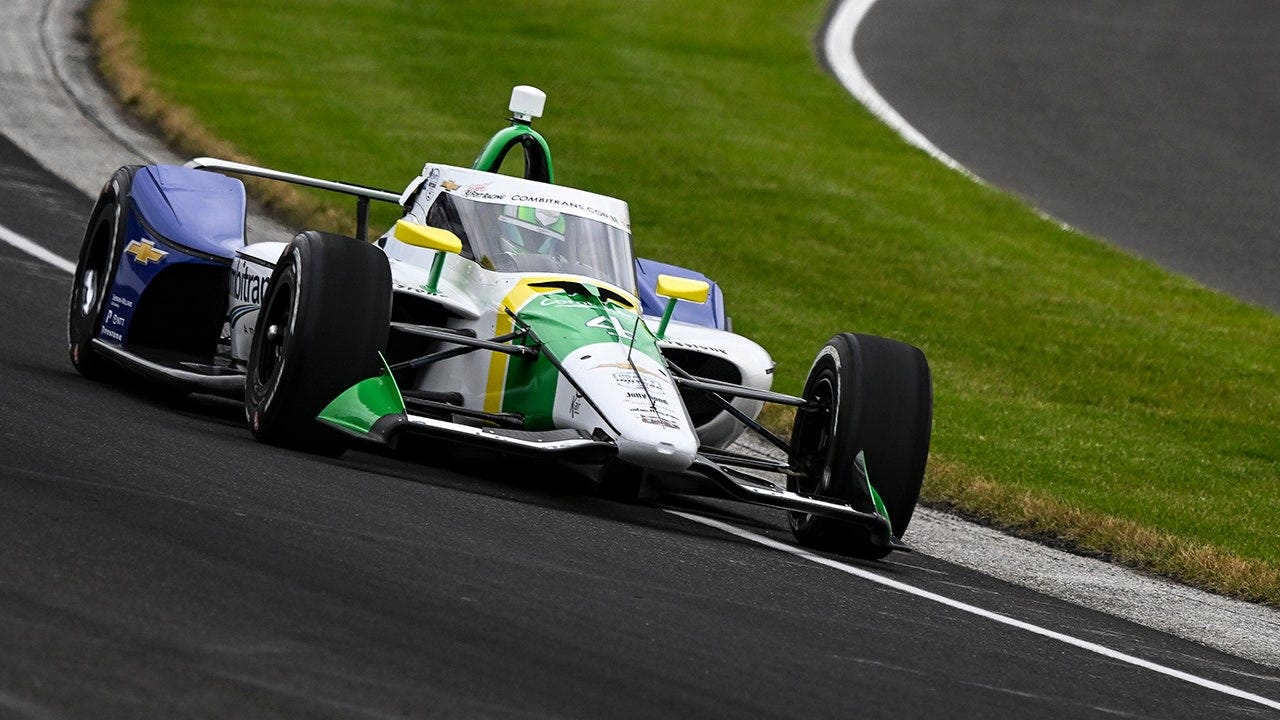
IndyCar rookie Caio Collet was involved in a terrifying crash toward the end of the Indianapolis 500 on Sunday afternoon with Felix Rosenqvist and Pato O’Ward fighting for first place.
Collet got loose in Turn 2 at Indianapolis Motor Speedway and overcorrected just enough to send his vehicle into the wall. His right rear caught fire as he skidded down the track and onto the grass.
ZERO BS. JUST DAKICH. TAKE THE DON’T @ ME PODCAST ON THE ROAD. DOWNLOAD NOW!
Caio Collet drives a Combitrans AJ Foyt Enterprises Chevrolet through turn three during practice on Miller Lite Carb Day at Indianapolis Motor Speedway in Indianapolis, Ind., on May 22, 2026. (Michael Allio/Icon Sportswire)
Emergency personnel came over to put the fire out and help Collet out of his car.
He was able to walk away from the scary wreck, but track officials called for a red flag. The red flag stopped the race and gave drivers a breather for what would be a total shootout for the final few laps.
CLICK HERE FOR MORE SPORTS COVERAGE ON FOXNEWS.COM
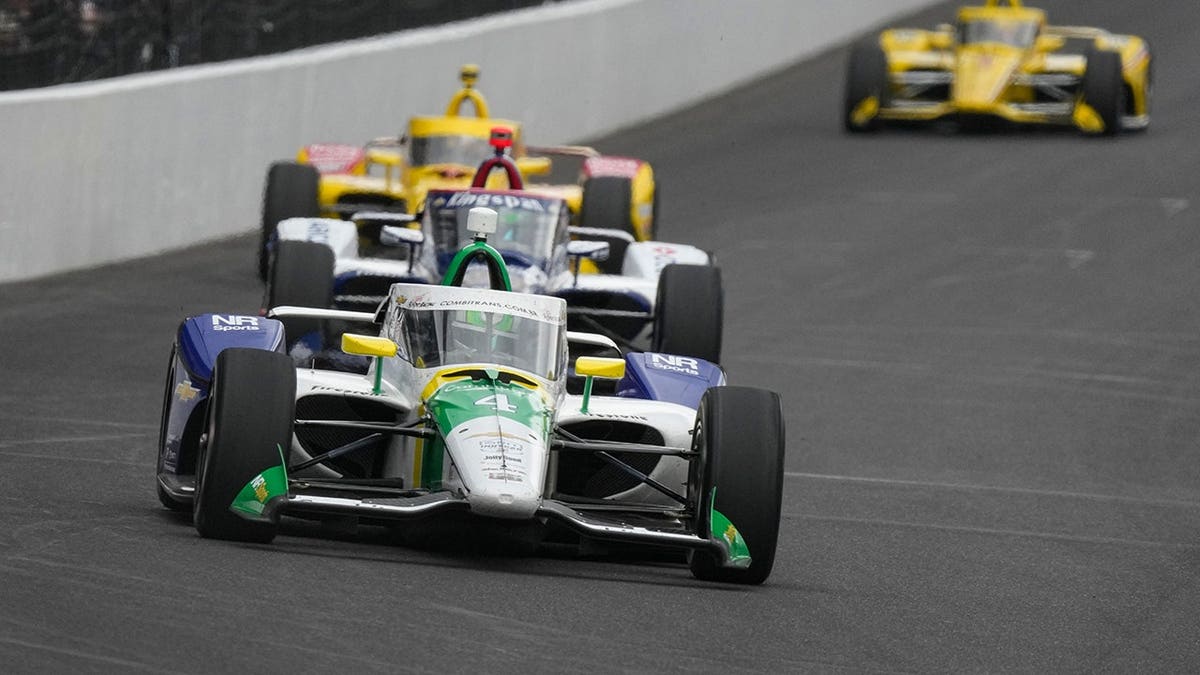
Caio Collet leads the field during the Indianapolis 500 auto race at Indianapolis Motor Speedway in Indianapolis on May 24, 2026. (Michael Conroy/AP)
Collet will fall down the leaderboard as he didn’t finish the race.
The A.J. Foyt Racing driver was making his first appearance in the Indy 500. He graduated into the NTT IndyCar Series after finishing second in the Indy NXT Series last year. He won three races on the Indy NXT Series in 2025.
The Brazilian came into the race in 21st place in the IndyCar standings with 70 points through six starts. He has yet to finish in the top 10 in his first season.
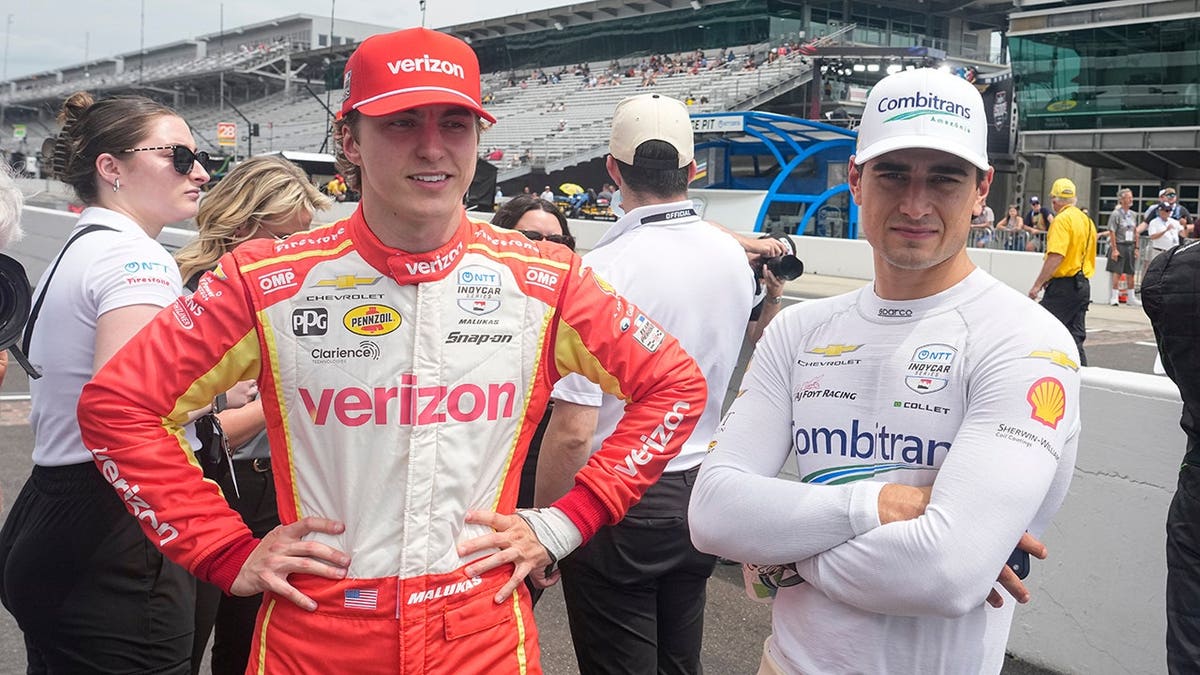
David Maluka talks with Caio Collet before practice for the Indianapolis 500 at Indianapolis Motor Speedway in Indianapolis on May 18, 2026. (Michael Conroy/AP)
CLICK HERE TO DOWNLOAD THE FOX NEWS APP
The 2026 Indy 500 already featured more than 50 lead changes and was one of the more competitive events in recent memory.
Felix Rosenqvist won the race on the final lap.
NEWYou can now listen to Fox News articles!
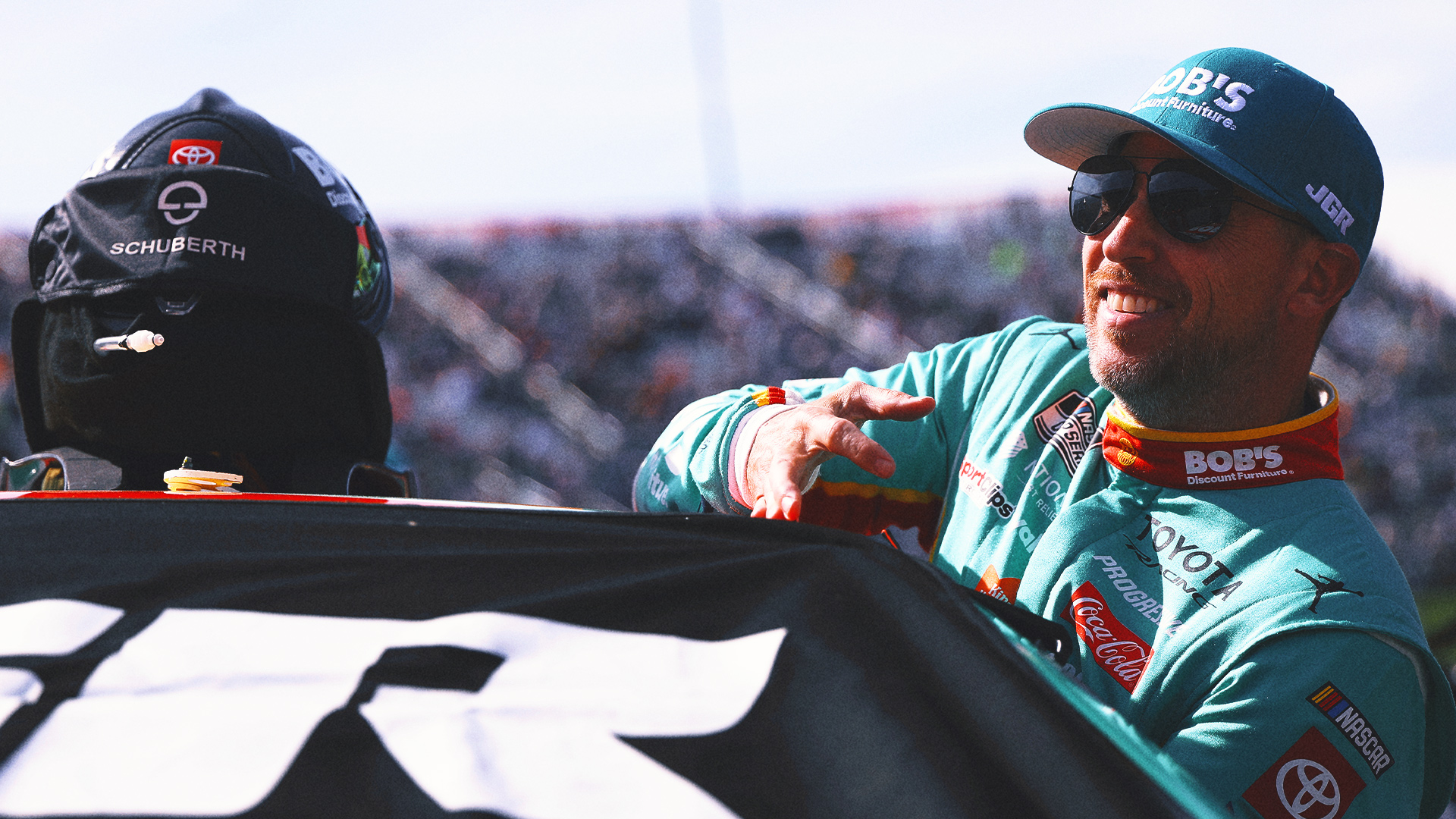
When the NASCAR Cup Series went to Charlotte for the Coca-Cola 600 in 2025, Ross Chastain got into Victory Lane after closing at +1800 to be the outright winner.
Chastain’s impressive win came after leading only eight laps on the day.
Which driver will take the checkered flag when the series goes back to Charlotte Motor Speedway on Memorial Day Weekend for one of NASCAR’s Crown Jewels?
Here are the odds at DraftKings Sportsbook as of May 24.
This page may contain affiliate links to legal sports betting partners. If you sign up or place a wager, FOX Sports may be compensated. Read more about Sports Betting on FOX Sports.
NASCAR Cup Series Coca-Cola 600
Denny Hamlin: +380 (bet $10 to win $48 total)
Tyler Reddick: +500 (bet $10 to win $60 total)
Kyle Larson: +800 (bet $10 to win $90 total)
Christopher Bell: +800 (bet $10 to win $90 total)
Chase Briscoe: +1000 (bet $10 to win $110 total)
William Byron: +1100 (bet $10 to win $120 total)
Carson Hocevar: +1100 (bet $10 to win $120 total)
Ryan Blaney: +1400 (bet $10 to win $150 total)
Chase Elliott: +1400 (bet $10 to win $150 total)
Brad Keselowski: +1800 (bet $10 to win $190 total)
Ty Gibbs: +2000 (bet $10 to win $210 total)
Ross Chastain: +2200 (bet $10 to win $230 total)
Chris Buescher: +2500 (bet $10 to win $260 total)
Bubba Wallace: +2800 (bet $10 to win $290 total)
Alex Bowman: +2800 (bet $10 to win $290 total)
Austin Dillon: +4000 (bet $10 to win $410 total)
Joey Logano: +4500 (bet $10 to win $460 total)
Connor Zilisch: +4500 (bet $10 to win $460 total)
Austin Hill: +4500 (bet $10 to win $460 total)
Austin Cindric: +5500 (bet $10 to win $560 total)
Ryan Preece: +9000 (bet $10 to win $910 total)
Ricky Stenhouse Jr.: +9000 (bet $10 to win $910 total)
Michael McDowell: +9000 (bet $10 to win $910 total)
Corey Heim: +9000 (bet $10 to win $910 total)
Erik Jones: +10000 (bet $10 to win $1,010 total)
Shane van Gisbergen: +13000 (bet $10 to win $1,310 total)
AJ Allmendinger: +15000 (bet $10 to win $1,510 total)
Daniel Suarez: +17000 (bet $10 to win $1,710 total)
Josh Berry: +18000 (bet $10 to win $1,810 total)
John Hunter Nemechek: +25000 (bet $10 to win $2,510 total)
Zane Smith: +35000 (bet $10 to win $3,510 total)
Ty Dillon: +50000 (bet $10 to win $5,010 total)
Noah Gragson: +50000 (bet $10 to win $5,010 total)
Todd Gilliland: +60000 (bet $10 to win $6,010 total)
Riley Herbst: +60000 (bet $10 to win $6,010 total)
Cole Custer: +80000 (bet $10 to win $8,010 total)
Katherine Legge: +90000 (bet $10 to win $9,010 total)
Timmy Hill: +100000 (bet $10 to win $10,010 total)
Cody Ware: +100000 (bet $10 to win $10,010 total)
Here’s what to know about the oddsboard:
The Favorite
Denny Hamlin is coming in hot off an All-Star Race win at Dover. And while it wasn’t a points race, coming into Charlotte after starting from the pole and leading 103 laps in last week’s exhibition could give him the momentum he needs to grab the checkered flag at the Coke 600. His first and only win at this race came in 2022. In 2025, he started 20th but finished 16th after posting the best lap of the day at 29.37 and leading 53 laps.
One to Watch
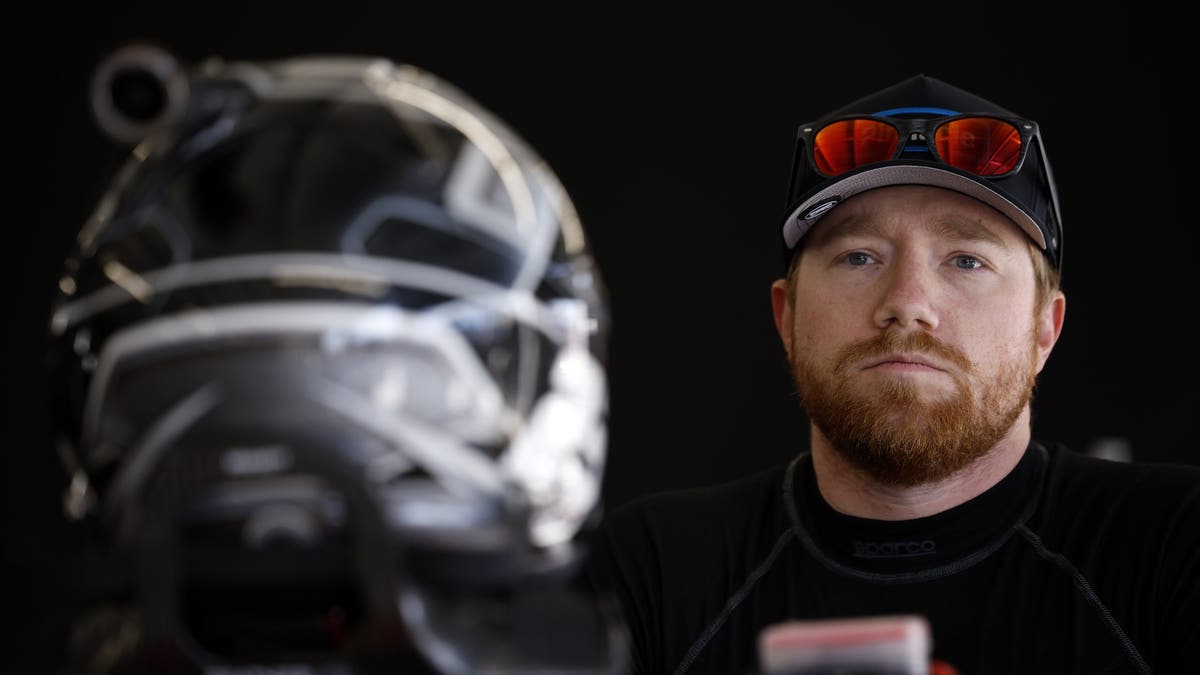
Tyler Reddick is having an incredible season. He’s gotten into Victory Lane five times, including the first three races of the year. Cup qualifying got rained out, so Reddick will start from the pole today at Charlotte in accordance with league rules. On the season, Reddick has led 201 laps and has eight finishes in the top five. In 2025, he finished the Coca-Cola 600 26th after leading only one lap.
Sports
Pakistan’s Faisal Shafi becomes first local runner to achieve provisional eighth marathon star
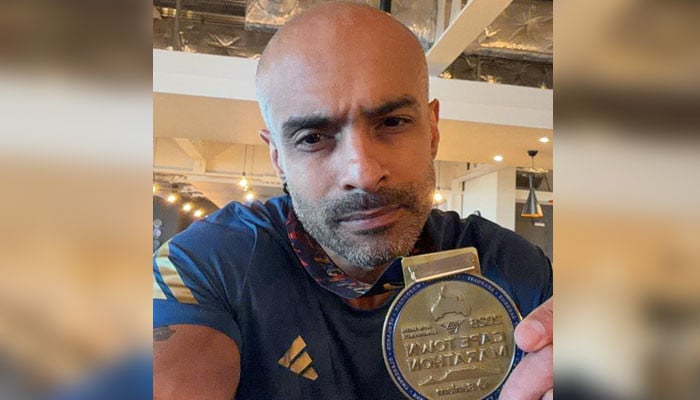
KARACHI: Pakistani runners turned the streets of Cape Town into a landmark chapter of the country’s growing marathon movement as Karachi’s Faisal Shafi and British-Pakistani runner Huma Rehman achieved the eighth star, although currently a provisional star, at the 2026 Cape Town Marathon, a race expected to become the next Abbott World Marathon Major.
Competing against a backdrop of Table Mountain, the Pakistani contingent produced a significant collective performance on the global marathon stage.
More than 27,000 runners participated in the event, but for Pakistan’s marathon running community, the spotlight belonged to a small group of runners representing the country’s running community in the world’s most scenic marathon courses.
Karachi-based Shafi emerged as the central figure of the story. Completing the 42.195-kilometre race in 3 hours, 35 minutes and 37 seconds, Shafi became the first Pakistan-based runner to complete eight World Marathon stars, a milestone considered among the rarest achievements in recreational endurance running.
“This is my eighth star,” Shafi told Geo News after crossing the finish line.
“The eighth Major was actually supposed to happen in Cape Town last year, but due to bad weather, the marathon was cancelled.”
The Cape Town Marathon currently remains in the candidacy phase for Abbott World Marathon Major status.
Organisers announced before the race that every finisher would receive a provisional Major star, similar to the pathway Sydney followed before officially becoming a Major.
Once Cape Town passes its final assessment and is officially inducted into the World Marathon Majors, the provisional star will automatically convert to a fully recognised star, retroactively counting toward your Major
The development effectively made this year’s Cape Town Marathon one of the most historically significant races outside the existing Major circuit. If officially approved, Cape Town would become the first African race to join the elite series alongside Tokyo, Boston, London, Berlin, Chicago, New York and Sydney.
For Shafi, it was beyond personal achievement.
“I am the first eight-star finisher from Pakistan and the first person to complete eight stars while living in Pakistan,” he said.
“This is a huge leap for Pakistan in marathon running because eight stars is a very elusive achievement. Even globally, only a few hundred people may have completed eight stars.”
Shafi’s run itself reflected the composure of an experienced marathoner. He crossed the halfway mark in 1:39:56 and maintained a disciplined pace through the opening 30 kilometres, consistently running between 4:44 and 4:46 per kilometre before the challenging latter stages tested the field.
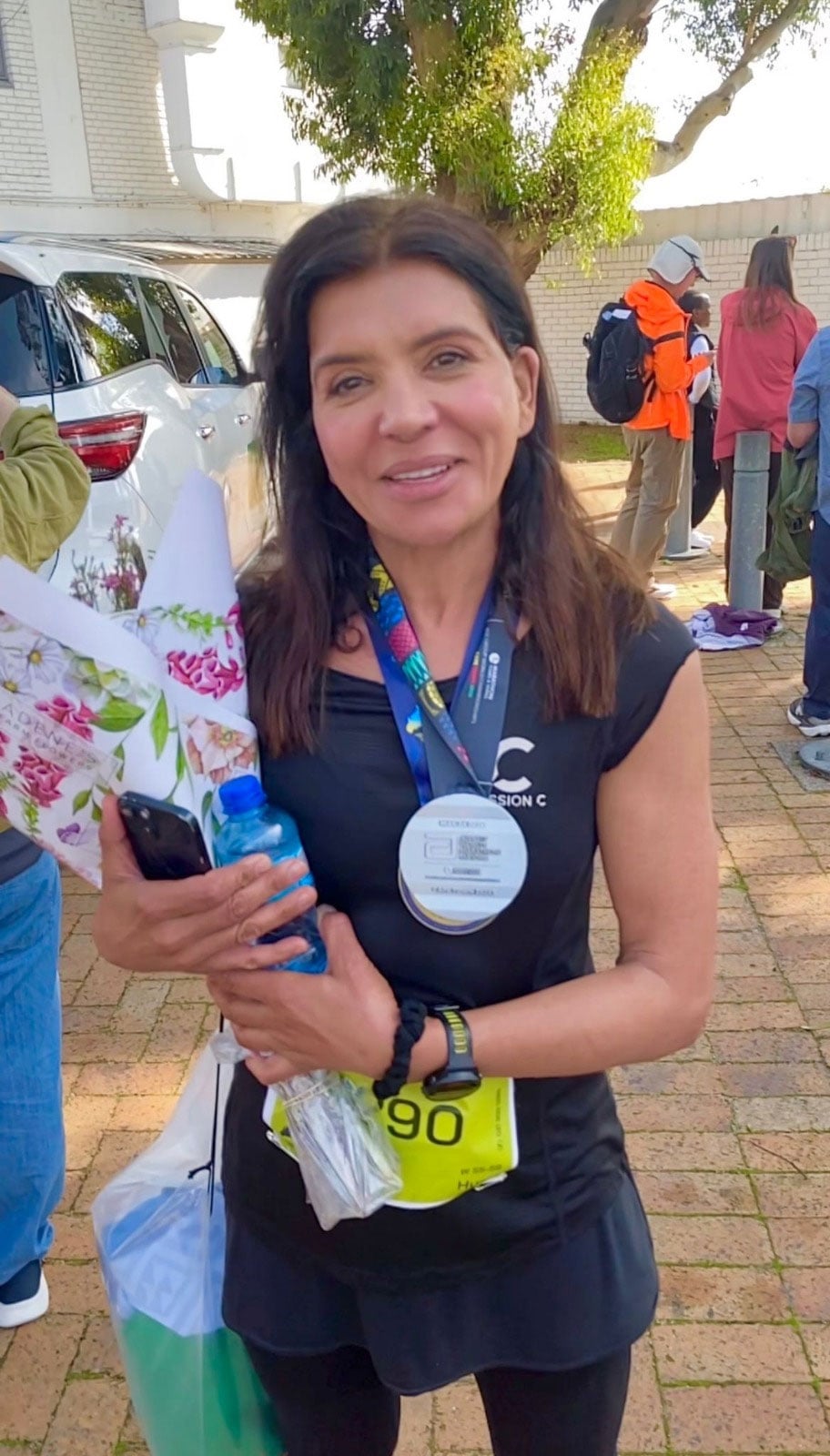
While Shafi carried Pakistan’s headline moment, British Pakistani runner Huma Rehman produced one of the strongest performances among the Pakistani-origin participants. She completed the race in an impressive 3:31:34, finishing ahead of Shafi overall and becoming the first British Pakistani runner to secure the eighth world star milestone.
Her race was a masterclass in rhythm and consistency. After reaching 5km in 25:52, Huma gradually accelerated through the course, clocking 51:36 at 10km and 1:16:45 at 15km before crossing halfway in 1:46:43. Remarkably, she maintained almost identical pacing deep into the latter stages of the race, covering 30km in 2:30:52, reaching 35km in 2:56:08 and crossing 40km in 3:20:53, averaging almost exactly five minutes per kilometer across much of the second half of the marathon, a sign of elite endurance management on a demanding course.
Pakistan and the overseas Pakistani community had six representatives in the marathon. Karachi’s Hina Shaukat produced a personal-best performance of 4:31:23, while Lahore runner Amina Sibtain completed her first-ever marathon in 4:44:51. Kashif Zulfiqar crossed the line moments later in 4:44:54.
Canadian Pakistani runner Ziyad Rahim completed the race in 6:54:33.
Hina Shaukat said that the Cape Town marathon was the proudest finish of her running career.
“It was my third marathon, and I was able to shave 40 minutes off my PR,” she said.
“My family was there at the finish line, and they made this one extra special. The photos may not look fast, but the clock definitely was. This was, undoubtedly, my proudest finish yet,” she told Geo News.
Beyond the results, however, the race symbolised something larger for Pakistan’s slowly expanding marathon running culture. Community running events in Karachi, Islamabad and Lahore have witnessed rapid growth in recent years, and Faisal Shafi believes milestones like Cape Town can inspire even more people to embrace marathon running.
“God willing, more people will now be inspired towards marathon running,” he said. “Just like the recent One Run event in Karachi, where so many people participated, I believe this sport will continue growing in Pakistan.”

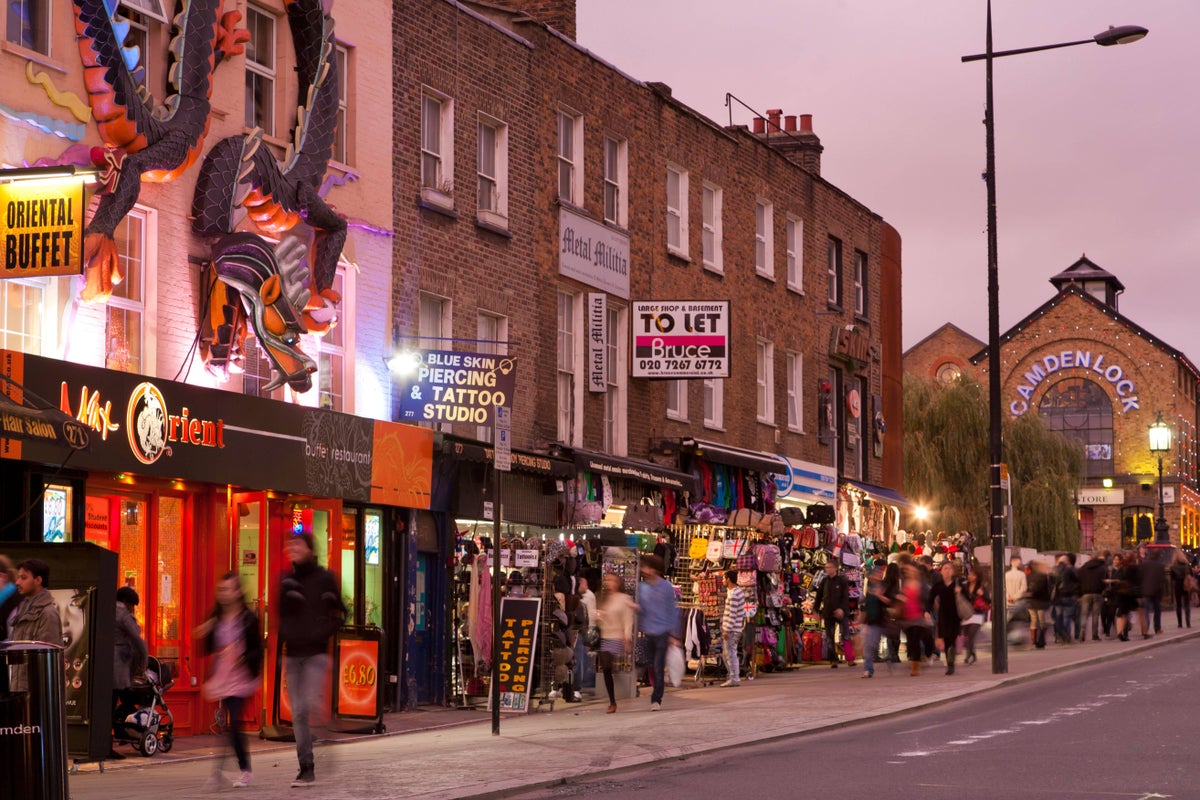
Shop numbers return to growth after years of decline, say experts

Drake sets new record at ‘Iceman,’ ‘Habibti’ and ‘Maid of Honour’

Patti LaBelle on being called a legend: “I have earned it”

-

 Entertainment1 week ago
Where Pete Davidson, Elsie Hewitt stand after breakup: Details revealed
-
 Politics1 week ago
Rising diesel costs from Iran war strain US school budgets
-

 Tech1 week ago
Why Is Your Grill So Dumb? The Best Grills Set Temp Like an Oven
-

 Tech1 week ago
This Solar-Powered Smart Sprinkler Keeps My Lawn Watered Without Any Power Cables
-

 Fashion1 week ago
RMG trade bodies seek policy support from Bangladesh PM
-
 Fashion1 week ago
India calls for aligning standards, customs procedures with Africa
-

 Fashion6 days ago
Nigeria Kwara Garment Factory, KWS Garment Production Village ink pact
-

 Fashion7 days ago
India’s Pearl Global’s FY26 revenue crosses $521 mn milestone