

Business
UAE loan recall strains Pakistan’s fragile external position: report – SUCH TV

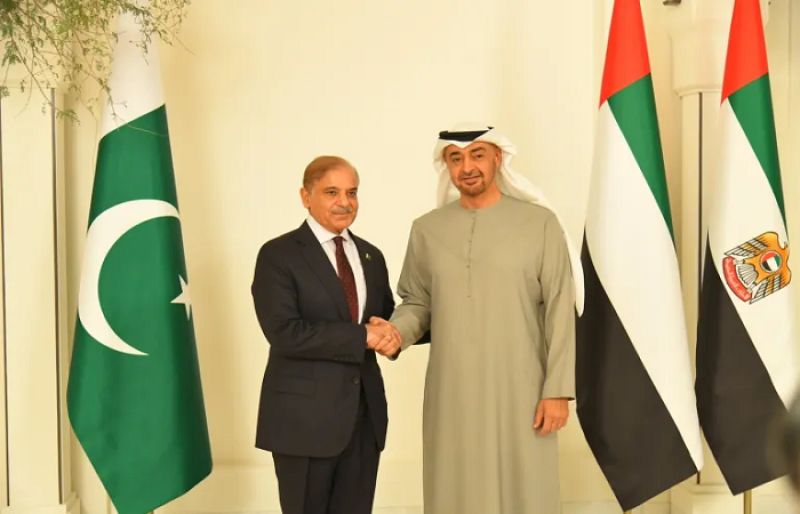
Pakistan’s external financing outlook has come under renewed pressure after it failed to reach an agreement with the United Arab Emirates to roll over $3 billion in debt for the first time in seven years.
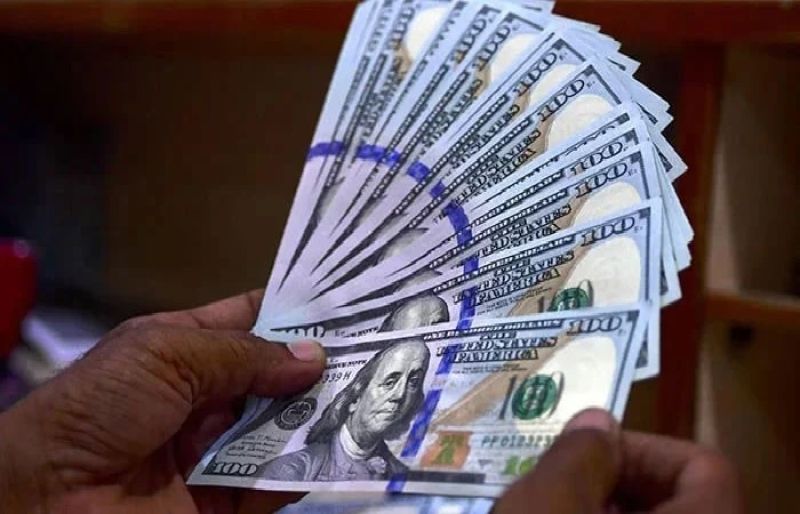
The loan amounts to about 18% of Pakistan’s foreign exchange reserves, putting significant pressure on the country’s external buffers and threatening the currency at a time when high crude prices are draining its coffers.
The State Bank of Pakistan’s reserves stood at $16.4 billion as of March 27, enough to cover three months of imports.
It’s unclear what prompted the UAE to call in the loan now. The Foreign Office said on April 4 that the move was a “routine financial transaction”, seeking to downplay speculation of a possible political fallout between the two countries.
Local media reports pointed to a breakdown in negotiations over the terms of a rollover.
Pakistan managed to stabilise its economy in recent years with the help of loans from the International Monetary Fund and friendly donors like the UAE, China and Saudi Arabia.
That helped Pakistan rebuild its reserves and steady the currency, which has traded in a range of 278-282 against the dollar before the Iran conflict began.
The rupee has been little changed since the beginning of March while the nation’s benchmark KSE-100 Index is down 15% after years of global outperformance.
To offset the outflow of funds, the central bank may be forced to take unpopular steps, analysts said, such as restricting imports, raising interest rates or borrowing more from commercial banks.
“The UAE repayment was unexpected and lacked prior arrangement,” said Mohammed Sohail, chief executive officer at Topline Securities Ltd. “We think the central bank will opt for the old method of borrowing through commercial banks dollar swaps.
The IMF doesn’t like this and there are quarterly limits but this is a window that is available.”
IMF instalment
Draining reserves further, the government is due to make a $1.3 billion bond repayment this month to international investors. Pakistan is also still awaiting the latest loan instalment of $1.2 billion from the IMF. The Washington-based lender didn’t immediately respond to a request for comment.
Failure to roll over the UAE debt, a standard practice with Pakistan’s allies over the past decade, signals a shift in stance from Abu Dhabi and comes at a time when Pakistan is forging closer ties with Saudi Arabia. The UAE’s Ministry of Foreign Affairs didn’t immediately respond to a request for a comment.
“We must acknowledge that UAE’s help came at very crucial level when Pakistan was struggling to meet minimum financing arrangements to get the IMF program,” Sajid Amin, deputy executive director at Sustainable Development Policy Institute in Islamabad, said by phone. “I think the government decided to pay it back when it could not secure long-term rollover, despite paying a higher cost of 6.5%. However, one cannot completely rule out changing geopolitical situation.”
Pakistan previously tried to convert some of the UAE debt into equity. Deputy Prime Minister Ishaq Dar, who is also the country’s foreign minister, said in November that the UAE was looking to convert investments into equity stakes in subsidiaries of the military-managed Fauji Foundation.
UAE companies have made investments into Pakistan recently. The Abu Dhabi-based firm International Holding Co acquired a small Pakistani lender First Women Bank Ltd while AD Ports Group signed a 25-year concession pact for bulk and general cargo operations with Karachi Port Trust in 2024.
Pakistan has also offered its airports in government deals to Middle East countries.
While some analysts see enough liquidity in the foreign exchange market to prevent a freefall in the rupee, the drain on reserves could jeopardise the central bank’s ambitious target of reaching $20 billion by the end of 2026.
“Unless we see compensatory inflows from Saudi Arabia to offset the UAE repayment, reserves will go down substantially,” said Mohammad Shoaib, chief executive officer of Lucky Investments. “That doesn’t bode well for market sentiment.”





ChatGPT developer OpenAI has halted plans for a significant UK data centre project, citing high energy costs and regulatory challenges as barriers to investment.
The US technology giant had intended to establish its “Stargate” data centre initiative within a new artificial intelligence growth zone in the north-east of England.
The venture was slated for multiple sites, including Cobalt Park near Newcastle and Blyth.
However, OpenAI said the plans are now on hold, awaiting “the right conditions” to facilitate long-term infrastructure investment across the UK.
A spokesman for OpenAI said: “We see huge potential for the UK’s AI future. London is home to our largest international research hub, and we support the Government’s ambition to be an AI leader.
“AI compute is foundational to that goal – we continue to explore Stargate UK and will move forward when the right conditions such as regulation and the cost of energy enable long-term infrastructure investment.”
The reference to energy costs come at a time when prices are being pushed higher by the US and Israel’s war with Iran.
The International Monetary Fund (IMF) said in March that the UK was one of the nations particularly exposed to soaring wholesale costs because of its reliance on gas-fired power, as opposed to sources such as nuclear and renewable energy.
Data centres are powered by very large amounts of energy so are more likely to be exposed to volatile prices.
OpenAI added: “In the meantime, we are investing in talent and expanding our local presence, while also delivering on the commitments under our MOU (memorandum of understanding) with the Government to adopt frontier AI in UK public services.”
Its Stargate project aims to invest billions of dollars into AI infrastructure in the US, with funding from OpenAI, SoftBank, Oracle and MGX and partnering with tech giants including Nvidia and Microsoft.
Building it into the UK came as part of a landmark tech deal between Britain and the US, announced last September amid President Donald Trump’s second state visit.
The deal also included a 30 billion US dollar (£22.3 billion) pledge from Microsoft, the largest ever made by the company in the UK, to fund the expansion of Britain’s AI infrastructure.
Conservative MP and shadow science minister Ben Spencer said: “When global firms cite high energy costs and regulatory uncertainty as reasons to walk away, it tells you everything about the direction of travel.
“For too long, Labour have prioritised courting big tech headlines while neglecting our domestic start-ups, but also the fundamentals that actually attract investment at home.”

Importers are in line for tariff refunds. But whether everyone who paid the for the tariffs will get money back is a trickier question.
Source link

Somerset councillor Heather Shearer said: “One thing the Crisis Resilience Fund wants us to do is not just support people in crisis, it also wants us to work in our community, give more strength and support for the organisations who already support our families.”


Transfer rumors, news: Arsenal look to raise £100m from double exit
OpenAI halts UK data centre project over energy costs and red tape

Spring/Summer stockpile: Discounts loom amid war delays

-
 Business1 week ago
Jaguar Land Rover sees sales recover after cyber attack
-
Uncategorized1 week ago
[CinePlex360] Please moderate: “Trump signals p
-

 Entertainment7 days ago
Joe Jonas shares candid glimpse into parenthood with Sophie Turner
-

 Tech7 days ago
Our Favorite iPad Is $50 Off
-

 Sports6 days ago
UConn Final Four run could trigger a $50M furniture giveaway for Massachusetts-based Jordan’s Furniture
-

 Entertainment6 days ago
Blake Lively reacts to harassment claims dismissal against Justin Baldoni
-
 Business7 days ago
Video: Why Is the Labor Market Stuck?
-

 Politics7 days ago
Iran can sustain Strait of Hormuz closure for years, will cut US military logistics: Official