

Politics
Magyar ends Trump-backed Orban’s 16-year rule in major Hungary election upset



- Vote puts end to conservative Orban’s 16-year rule.
- Election outcome significant for EU, US, Russia, Ukraine.
- Election officials estimate turnout at 79% or more, a record.
Hungary’s veteran nationalist leader Viktor Orban lost power to the upstart centre-right Tisza party in Sunday’s national election after 16 years in office, marking a setback for his allies in Russia and US President Donald Trump’s White House.
Orban, 62, was celebrated by conservatives across Europe and the United States as the mastermind of the “illiberal” model of democracy, but lost favour at home with voters who grew weary of economic stagnation, international isolation and oligarchs amassing wealth.
His landslide defeat handed Tisza’s Peter Magyar, 45, a comfortable majority in Hungary’s 199-seat legislature, opening the door for meaningful reforms of a system critics in the European Union said subverted democratic norms.
With nearly all ballots counted, Tisza was set to win 138 seats, more than the two-thirds majority Magyar would need to undo Orban’s constitutional overhaul and combat corruption.
Record turnout on Sunday underscored how many Hungarians saw the election as a watershed moment for their country.
“We have done it. Tisza and Hungary have won this election,” Magyar told tens of thousands of supporters who danced and cheered alongside the elegant Danube River embankment in central Budapest.
Many held candles while loudspeakers blasted Frank Sinatra’s “My Way” as Magyar walked towards the stage. “Together, we have replaced Orban’s system, and together we liberated Hungary, we have reclaimed our country,” he said.
Magyar had cast the election as a choice between “East and West”, warning voters that Orban and his confrontational stance towards Brussels would take the country further away from the European mainstream. Orban countered that Tisza would drag Hungary into an unwanted war with Russia, a charge Magyar denied.
“The election result is painful for us, but clear,” Orban said at the Fidesz campaign offices. Some of his supporters who had gathered outside cried while watching his speech on TV screens.
Shockwaves for EU and beyond
The end of Orban’s 16-year rule will have significant implications not only for Hungary, but for the European Union, Ukraine and beyond.
Many European leaders are hoping for an end to Hungary’s adversarial role inside the EU, possibly opening the way for a 90 billion euro ($105 billion) loan to war-battered Ukraine that was blocked by Orban.
Mujtaba Rahman, a managing director at Eurasia Group, said Magyar will be able to deliver on his promises to clean out corruption and remove Fidesz loyalists from key positions.
“Regarding Ukraine, Magyar will agree to pave the way for 90 billion euros to flow to Ukraine. He was extremely cautious pre-election, but without the need now to try to appease Fidesz voters, we think Hungary will cautiously move more into the European mainstream on most subjects.”
Some diplomats in Brussels cautioned that issues such as migration may remain thorny. “Hungary will continue to be a challenging partner, but a partner with whom the other member states can work,” one said.
Ukrainian President Volodymyr Zelenskiy congratulated Magyar on Sunday and pledged to work with him to strengthen Europe and uphold peace and security. “It is important when a constructive approach is victorious,” Zelenskiy wrote on Telegram.
Defeat for Orban could also mean the eventual release of EU funds to Hungary, suspended over reforms that Brussels said undermined democratic standards, something closely watched by financial markets.
“Hungary has chosen Europe. Europe has always chosen Hungary,” European Commission President Ursula von der Leyen, the top EU executive, said after partial results were released.
Orban’s exit would also deprive Russian President Vladimir Putin of his main ally in the EU and send shockwaves through the West’s right-wing circles, including the White House.
Orban had won public endorsements from the Trump administration, culminating in a visit to Budapest by Vice President JD Vance last week, as well as from the Kremlin and far-right leaders in Europe.
But his campaign was shaken by media reports alleging his government colluded with Moscow on diplomatic and political matters.
Orban, who denied any wrongdoing, said his goal was to protect Hungary’s national identity and traditional Christian values within the EU and its security in a dangerous world.
“It’s incredibly exciting,” said 24-year-old Dorina Nyul, who attended the Tisza election night event. “It feels like this is our first and last chance in a really long time to actually change the system. And it’s, I can’t even describe the feeling.”
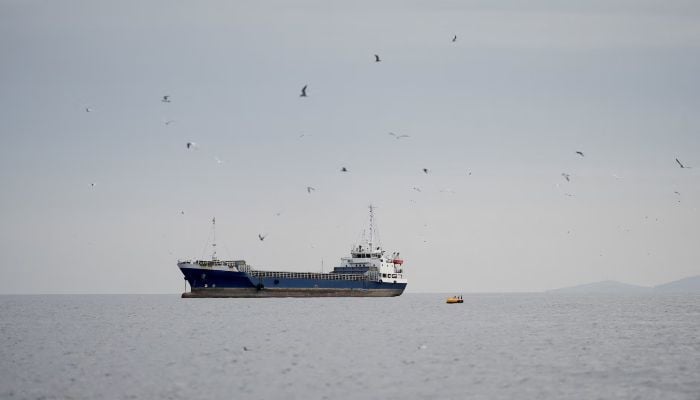
ATHENS: Fraudulent messages promising safe passage through the Strait of Hormuz in exchange for cryptocurrency have been sent to some shipping companies whose vessels are stranded west of the waterway, Greek maritime risk management firm MARISKS has warned.
The US has maintained its blockade of Iranian ports, while Iran has lifted and then re-imposed its blockade of the Strait of Hormuz, through which roughly a fifth of the world’s oil and liquefied natural gas passed before war broke out in the Middle East.
Amid ceasefire talks, Tehran, which controls the chokepoint, has proposed tolls on vessels to safely transit.
MARISKS on Monday issued an alert warning shipowners that unknown actors, claiming to represent Iranian authorities, had sent some shipping companies a message demanding transit fees in cryptocurrencies, Bitcoin or Tether, for “clearance”.
“These specific messages are a scam,” the firm said, adding the message was not sent by Iranian authorities.
There was no immediate comment from Tehran.
Hundreds of ships and about 20,000 seafarers remain stranded in the Gulf.
On April 18, when Iran briefly opened the strait subject to checks, ships tried to pass but at least two of them, including a tanker, reported that Iranian boats had fired shots at them, forcing the vessels to turn around.
MARISKS said that it believed that at least one of the vessels, which tried to exit the strait on Saturday and was hit by gunfire, was a victim of the fraud.
Reuters was not able to verify the information or track companies that had received the message.
“After providing the documents and assessing your eligibility by the Iranian Security Services, we will be able to determine the fee to be paid in cryptocurrency (BTC or USDT). Only then will your vessel be able to transit the strait unimpeded at the pre-agreed time,” said the message cited by MARISKS.
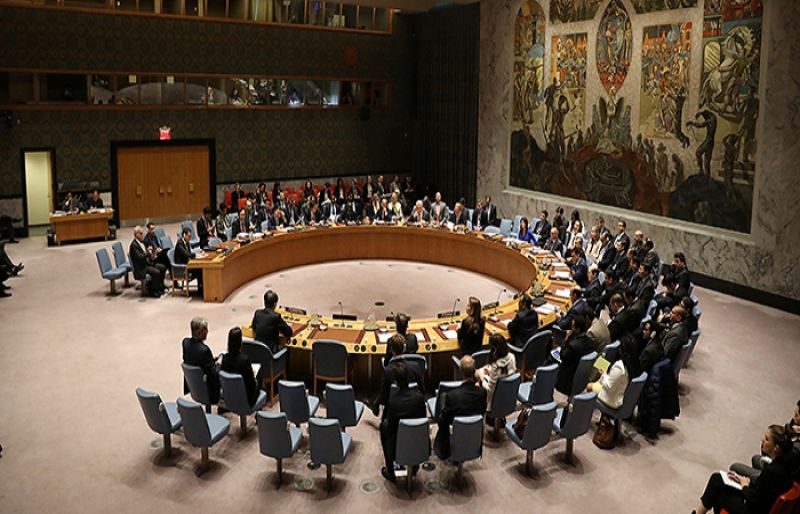
The UN Security Council on Monday condemned the recent killing of a French peacekeeper in Lebanon, whose death France has blamed on Hezbollah.
The Frenchman was killed and three others wounded when their unit was ambushed on Saturday as it headed to a UN Interim Force in Lebanon (UNIFIL) outpost cut off from the fighting between Hezbollah and Israel.
“The members of the Security Council condemned in the strongest terms the attack…(and) reaffirmed their full support for UNIFIL” a statement from the UN body said.
TOKYO: At least six people were reported injured on Tuesday, a day after a powerful quake rattled northern Japan, but there appeared to be no major damage from the tremor that also triggered tsunami waves up to 80 centimetres (31 inches).
However, the Japan Meteorological Agency (JMA) also warned of an increased risk of a megaquake — a tremor with a magnitude of 8.0 or stronger — hours after Monday’s 7.7 magnitude quake in Pacific waters off northern Iwate prefecture.
The jolt was so intense that it shook large buildings in the capital Tokyo, hundreds of kilometres from the epicentre.
Six people were reported injured by 8am (2300 GMT Monday), two seriously, the Fire and Disaster Management Agency (FDMA) said in a statement.
There were no reported fire outbreaks or damage to important facilities, it said.
Japan issued a warning for tsunami waves of up to three metres (10 feet) but it was lifted hours after an 80-centimetre (31-inch) wave hit a port in Kuji in Iwate, one among a series of small waves that hit elsewhere in northern Japan.
The JMA said that “the likelihood of a new, huge earthquake occurring is relatively higher than during normal times”.
Municipalities in the affected region issued non-compulsory evacuation directives to more than 182,000 residents, the FDMA said.
Japan is one of the world’s most seismically active countries, sitting on top of four major tectonic plates along the western edge of the Pacific “Ring of Fire”.
The archipelago, home to around 125 million people, typically experiences around 1,500 jolts every year and accounts for about 18 percent of the world´s earthquakes.
The vast majority are mild, although the damage they cause varies according to their location and the depth below the Earth´s surface at which they strike.
Japan is haunted by the memory of a massive 9.0 magnitude undersea quake in 2011, which triggered a tsunami that killed or left missing around 18,500 people and caused a devastating meltdown at the Fukushima nuclear plant.


Global energy growth slows to 1.3% in 2025: Report

How to Watch the Lyrids Meteor Shower at Its Peak
Spike in petrol thefts after Iran war pushed up fuel prices

-

 Fashion5 days ago
France’s LVMH Q1 revenue falls 6%, shows resilience amid Iran war
-

 Sports1 week ago
The case for Man United’s Fernandes as Premier League’s best
-

 Entertainment1 week ago
Palace left in shock as Prince William cancels grand ceremony
-
 Business1 week ago
UK could adopt EU single market rules under new legislation
-

 Entertainment6 days ago
Is Claude down? Here’s why users are seeing errors
-

 Fashion1 week ago
Energy emerges as biggest cost driver in textile margins
-
 Business1 week ago
Delta Air Lines unveils first new Delta One suite in premium cabin arms race
-

 Tech1 week ago
A Lot of Shops Won’t Fix Electric Bikes. Here’s Why