

Business
Fitch retains Pakistan’s rating at B- | The Express Tribune

Fitch on Monday kept Pakistan’s highly speculative credit rating of B negative unchanged against hopes for an upgrade and said that Islamabad’s role as a “ceasefire broker” will partly offset external account pressures despite $3.5 billion bilateral debt repayments this month.
The rating agency first said that Pakistan has “repaid” $3.5 billion to the United Arab Emirates, but then rectified its statement and said that a “$3.5 billion deposit will be repaid to the UAE in April”. Fitch made the statement the day Pakistan returned $450 million to the UAE after 30 years.
The Express Tribune had first reported that Pakistan was going to repay $3.5 billion debt and was seeking help from Saudi Arabia to sustain these payments.
Read: Pakistan to repay $3.5 billion UAE debt: cabinet minister
Fitch’s decision to retain Pakistan’s rating at B negative with a stable outlook was against the expectation of the Ministry of Finance, which was hoping for an upgrade ahead of its plans to enter global capital markets to take more loans.
The B negative is two positions below investment grade and is considered as “non-payment” to “highly speculative” rating.
However, Pakistan has been timely in making its debt repayments, including $1.3 billion Eurobonds last week, which pulled down the gross official foreign exchange reserves to $15 billion on Thursday.
A central bank source said on Monday that the country also returned $450 million to the UAE, on Monday while another $2 billion loan would be repaid on coming Friday. The remaining $1 billion would be returned on April 23rd.
The Express Tribune reported on Saturday that Saudi Arabia had promised full financial support to Pakistan to offset the impact of the $3.5 billion UAE repayments.
The $3.5 billion premature repayments had created a hole ahead of the IMF Executive Board meeting in early May, but Pakistan has handled the situation quite well without causing panic and without compromising on its core foreign policy position.
Fitch said that foreign exchange buffers rebuilt over the past year provide a cushion against the economic impact of the war in the Middle East.
“Pakistan’s role as a ceasefire broker may provide tangible benefits and partly offset external pressures”, said Fitch, in remarks that reflect Pakistan’s growing role as a net security provider in the region.
Also Read: PM Shehbaz hails kingdom’s ‘longstanding economic support’ in meeting with Saudi finance minister
Iran’s Foreign Minister said on Monday that his country was close to signing the Islamabad MoU, but the opportunity was lost due to the US maximalist position.
Fitch said that Pakistan’s high exposure to the global energy price shock nonetheless remains a key risk, particularly if it leads to a sharp drop in FX reserves
It said that Pakistan’s rating affirmation reflects progress on fiscal consolidation and macro stability measures, broadly in line with its IMF programme and supporting its funding capacity. The IMF programme will continue to provide a key policy anchor, particularly for the fiscal framework, and will help mobilise additional multilateral and bilateral support, it added.
Fitch said that Pakistan has to repay a total $22 billion in debt this year, but $9.2 billion of it would still be rolled over even after returning the UAE deposits.
“We expect the $12.8 billion debt to be financed mainly by IMF and other multilateral and bilateral inflows, followed by commercial financing”. Pakistan plans to issue a panda bond this fiscal year, it added.
However, the credit rating agency underlined that Pakistan’s net FX reserves remain negative, reflecting reserve deposits of domestic commercial banks, a Chinese central bank swap line and bilateral deposits at the SBP.
Middle East war a key concern
The rating agency said that Pakistan sources up to 90% of oil from the Gulf and has limited storage capacity, creating high exposure to the Middle East conflict and constricted energy supply via the Strait of Hormuz.
It added that fuel subsidies since early March have been funded by reallocating expenditure from other areas of the budget, while costs have been reduced by large pump-price hikes and the switch to a more targeted support scheme from April. We expect the overall impact on the fiscal deficit to be contained, as the government is likely to cut other spending, said Fitch.
However, higher world energy prices will raise inflation in the coming months, especially with the switch to more targeted subsidy support and base effects.
The agency said that inflation may average at 7.9% in this fiscal year, which is above the central bank target range and could lead to policy rate hike.
The State Bank of Pakistan has cut the policy rate to 10.5% by the end of 2025; however, the term interbank rate had risen to about 1% above the policy rate by early April, on inflation concerns tied to the tight energy supply, said the agency.
Read More: SBP holds policy rate at 10.5% amid Gulf war
The agency said that Pakistan’s economy may grow at a rate of only 3.1% in this fiscal year, which is in line with the projections of the World Bank.
It said that Pakistan will also miss the primary surplus target that will narrow to 2.1% of GDP in FY26, but 0.3% below the official target. This will follow a rise in non-interest current expenditures and limits to sustained gains in tax revenues, due to capacity constraints and difficulties executing federal tax reforms at the provincial level.
A primary surplus and lower domestic borrowing costs should lower the general government debt to GDP ratio to 68.9% in FY26 from 70.7% in FY25, still well above the ‘B’ median of 51.3% of GDP in 2026, it added.
The rating agency said that the current account will return to a small deficit of 1.1% of the GDI in this fiscal year, from a rare surplus of 0.5% in FY25. This will be equal to $4.5 billion in dollar terms and is in line with the World Bank projection.
Fitch said the rupee has appreciated by 30% in real effective terms from its early 2023 trough, likely contributing to large merchandise trade deficits. Hydrocarbons typically comprise between a quarter and a third of goods imports, it added.
The rating agency does not see any major impact of Pakistan’s war against Iran and said that tensions between Pakistan and Afghanistan have a limited impact on trade and the wider economy.
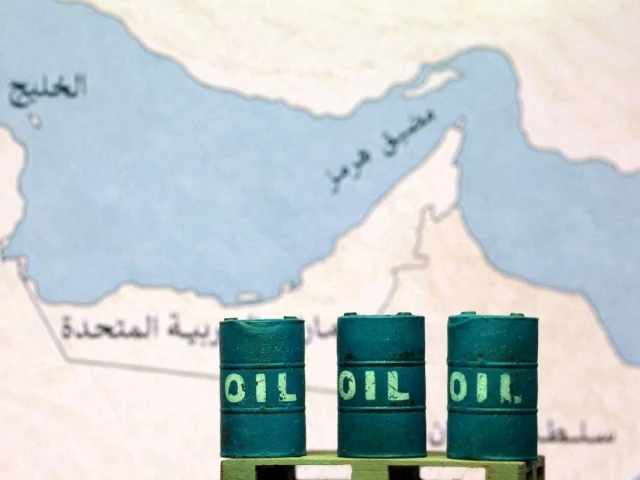



The war in the Middle East has brought renewed attention to Britain’s vulnerability to energy price shocks.
Source link
Business
Gadkari urges shift to 100% ethanol blending, flags energy security and import risks – The Times of India
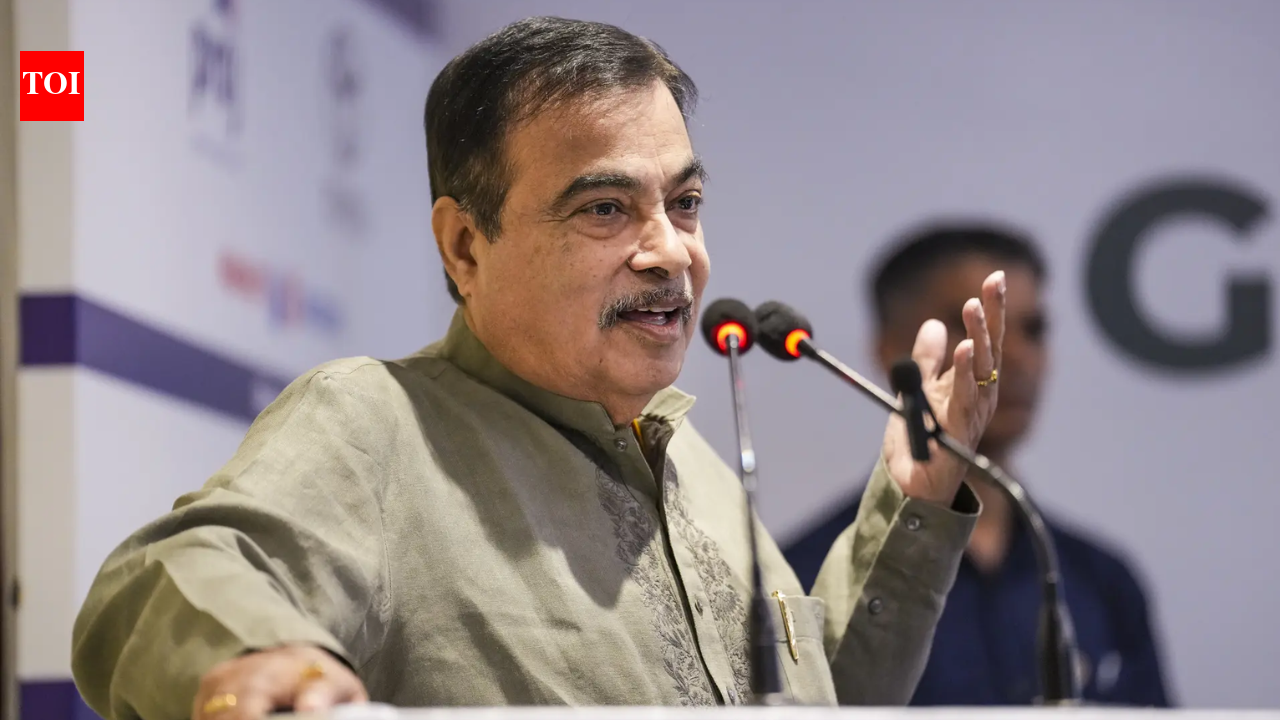
India should aim for 100 per cent ethanol blending in the near future to strengthen energy self-reliance, road transport and highways minister Nitin Gadkari said on Tuesday. He said that vulnerabilities in oil supplies due to the ongoing crisis in West Asia have made it essential for the country to reduce dependence on imports.Speaking at the Indian Federation of Green Energy’s Green Transport Conclave, Gadkari said, “In the near future, India should aspire to achieve 100 per cent ethanol blending… Today, we are facing an energy crisis due to the war in West Asia, so it is necessary for us to become self-reliant in the energy sector,” as quoted by PTI.India currently allows vehicles to run on E20 petrol, which contains 20 per cent ethanol, with minor engine modifications to avoid corrosion and related issues. In 2023, PM Modi launched petrol blended with 20 per cent ethanol. Countries such as Brazil have already achieved 100 per cent ethanol blending.Gadkari noted that India imports 87 per cent of its oil requirements, adding, “We import fossil fuels worth Rs 22 lakh crore, which is also causing pollution… so we need to work on increasing production of alternative fuel and bio-fuel.”On future energy solutions, he stressed the importance of green hydrogen but pointed out challenges in cost and transport. “Transport of hydrogen fuel is a problem. Also, we need to produce 1 kg of hydrogen at $1 dollar, to make India an exporter of energy,” he said, adding that hydrogen production from waste should be explored.The minister also emphasised the role of a circular economy in generating employment opportunities. While calling for reduced reliance on petrol and diesel vehicles, he clarified, “But we can not force people to stop buying petrol and diesel vehicles.”Addressing concerns about E20 fuel, Gadkari said the petroleum sector is lobbying against the move. He also urged automobile manufacturers to prioritise quality over cost to expand into new markets.Last year, Gadkari dismissed criticism against E20 (ethanol-blended petrol), saying a “paid” social media campaign is being run to “target me politically.” He said Society of Indian Automobile Manufacturers and Automotive Research Association of India have shared their findings on ethanol blending in petrol. He added that India’s ethanol programme has benefited farmers, noting that ethanol made from maize has helped them get better prices and led to gains of Rs 45,000 crore.

One petrol retailer says he is experiencing about five drive-offs a week at each forecourt, costing him thousands.
Source link


Matarazzo celebrates Real Sociedad Copa title: ‘Just the beginning’

Germany firms raise investment plans, uncertainty persists: ifo

Jennifer Lopez and Will Smith viral dating claims raise big questions

-

 Fashion5 days ago
France’s LVMH Q1 revenue falls 6%, shows resilience amid Iran war
-

 Sports1 week ago
The case for Man United’s Fernandes as Premier League’s best
-

 Entertainment1 week ago
Palace left in shock as Prince William cancels grand ceremony
-
 Business1 week ago
UK could adopt EU single market rules under new legislation
-

 Entertainment6 days ago
Is Claude down? Here’s why users are seeing errors
-

 Fashion1 week ago
Energy emerges as biggest cost driver in textile margins
-
 Business1 week ago
Delta Air Lines unveils first new Delta One suite in premium cabin arms race
-

 Fashion1 week ago
Asia claims largest share of markets on Kearney FDI Confidence Index