

Fashion
Chanel owners lean on 38-year-old heir to safeguard $90 billion empire

By
Bloomberg
Published
September 1, 2025
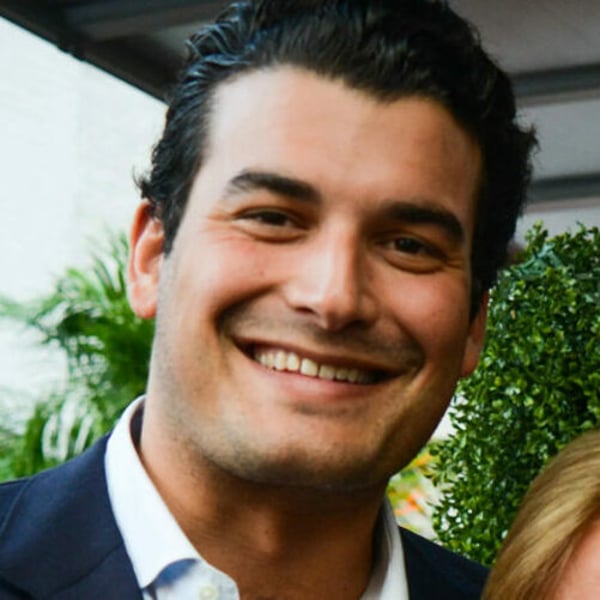
Arthur Heilbronn checks every box of someone groomed to oversee one of the world’s most powerful multi-generational fortunes.
Deep family ties? Check. Ivy League pedigree? Check. Wall Street credentials? Check.
Now, there are growing signs the 38-year-old scion of the family behind Chanel is moving closer to the top of the firm managing its $90 billion fortune.
Since joining Mousse Partners — one of the world’s largest and most discreet family offices — six years ago, Heilbronn has assumed management roles overseeing his family’s investments in real estate, banking, and media. In the latest sign of his rise, the Harvard Business School graduate and former Goldman Sachs banker became a director earlier this year for one of Mousse’s key holding companies, filling the role vacated by longtime Chanel executive Michael Rena, who passed away, according to registry filings.
Heilbronn is the son of Charles Heilbronn, founder and chairman of Mousse since 1991. Charles is the half-brother of Alain and Gerard Wertheimer, third-generation heirs to the Chanel fortune.
The Wertheimers are grandsons of Pierre Wertheimer, one of Gabrielle “Coco” Chanel’s original business partners when she founded the house in 1910. They share the same mother as Charles, Eliane Heilbronn, who was regarded as the family’s matriarch until her passing last year. All three sons are now in their 70s.
A representative for Mousse declined to comment.
Alain and Gerard Wertheimer — who reportedly own equal shares in privately held Chanel — each have an estimated net worth of $45 billion, according to the Bloomberg Billionaires Index. Their wealth has remained resilient post-pandemic, even as rivals like LVMH, led by Bernard Arnault, and Kering SA, owned by the Pinault family, have been impacted by a slowdown in luxury spending.
Arthur Heilbronn’s ascent offers a rare insight into the succession strategy of a famously private family that has long kept its empire out of public scrutiny. Gerard Wertheimer’s son, David, has launched a private equity venture, though there’s no indication that other Wertheimer children are involved in Mousse.
“They feel less like a family office and more like a private endowment for a luxury empire,” said Marc Debois, founder of FO-Next, an advisory firm for family offices. “Among its peers, what puts them in the true top 1% isn’t size — it’s time; dividend-fed, multi-cycle patience.”
According to Bloomberg, at least 20% of the world’s 500 richest individuals now operate family offices, managing over $4 trillion in wealth.
A recent UBS Group AG survey of 317 family office clients found that just over half have a succession plan in place, with those in the U.S. and Southeast Asia most likely to have arranged one.
Heilbronn joined Mousse as a director in 2019 and later advanced to managing director, according to his LinkedIn profile. He currently co-heads private equity and venture direct investing alongside Paul Yun. He was also appointed to the supervisory board of Rothschild & Co. after Mousse Partners joined two other French dynasties in 2023 to help take the bank private — one of its most high-profile deals to date.
Chanel’s ultimate holding company is Mousse Investments Ltd., based in the Cayman Islands, which does not disclose its financial information. Mousse Partners is its investment arm, with offices in New York, Beijing, and Hong Kong.
Described as managing “a broad range of asset classes in public and private markets,” Mousse doesn’t reveal its total assets under management. However, public filings and media reports indicate holdings in stocks, real estate, credit, and private equity.
Mousse Partners employs more than three dozen professionals globally, including former analysts from JPMorgan Chase & Co. and Wells Fargo & Co. Its chief investment officer, Suzi Kwon Cohen, joined nearly a decade ago after heading private equity for Singapore’s sovereign wealth fund in North America — placing her among the top female executives in the male-dominated family office sphere.
Over the years, Mousse has backed a wide variety of startups, including Brightside Health (mental health), Brandtech Group (digital advertising), Evolved by Nature (biotech), Harmless Harvest (food), and Thirty Madison (health care). In 2023, the firm joined the L’Oréal SA heiress in investing in luxury fashion brand The Row.
Not every investment has paid off. Beautycounter collapsed last year, and two of Mousse’s public holdings — an 8% stake in French digital firm NetGem SA and a 5.7% stake in Olaplex Holdings Inc. — have seen their shares plummet since their IPOs.
Mousse has also held a longstanding position in France’s publishing and audiovisual sectors through Media-Participations, which owns publishing houses, specialised media outlets, and produces comics and animated content.
The Chanel family — whose fashion house sells $970 sunglasses, $6,500 handbags, and $23,400 J12 watches — has also followed other French luxury dynasties into media. Bernard Arnault owns Les Echos, Le Parisien, and Paris Match. The Pinault family controls Le Point and Point de Vue. Chanel’s backers, through Mousse, hold stakes in Media-Participations.
Though Mousse is not involved in Chanel’s operations, both companies have offices in a luxury glass tower just south of Central Park in Manhattan — on the famed “Billionaires’ Row.” It’s one of the most expensive office buildings in the city and houses major financial tenants. Both Arthur and Charles Heilbronn list that location as their business address — the same building where Alain Wertheimer has maintained an office for many years.
Behind closed doors on that street, the next chapter in the Chanel dynasty’s succession plan may already be unfolding — but the family is unlikely to offer any public insight.
“We’re a very discreet family,” Gerard Wertheimer said in 2001. “We never talk.”












China will step up building a higher-level China-Vietnam community with a shared future that carries strategic significance, Chinese President Xi Jinping said while holding talks with visiting Vietnamese President To Lam.
China and Vietnam are accelerating efforts to navigate bilateral trade towards a more balanced and sustainable course.
President Xi Jinping recently held talks with visiting Vietnamese President To Lam.
During the visit, Vietnamese Minister of Industry and Trade Le Manh Hung called for a restructuring of production, trade and supply chains alongside stronger investment cooperation.
Xi said both countries should work together in their modernisation drive, accelerate the alignment of development strategies and prioritise infrastructure connectivity.
While meeting Chinese Minister of Commerce Wang Wentao during the state visit, Vietnamese Minister of Industry and Trade Le Manh Hung called for a restructuring of production, trade and supply chains alongside stronger investment cooperation.
Wang said both sides should focus on implementing the high-level common perceptions, including raising bilateral trade turnover to $500 billion in future.
Hung urged China to expand imports of Vietnamese goods, broaden the list of products eligible for tariff preferences and further open its market. He also called for the mutual recognition of quarantine results for agro-forestry-fishery products, facilitation of Vietnamese exports via cross-border e-commerce, and expansion of Vietnam’s trade promotion offices across Chinese localities, according to a Vietnamese news agency.
China will continue to support Vietnam in setting up additional trade promotion offices, following those already established in Chongqing, Hangzhou and Haikou, Wang responded.
China also expressed readiness to support Vietnam’s stronger exports through cross-border e-commerce, encouraging greater visibility of the Vietnam National Pavilion on Chinese e-commerce platforms beyond JD.com to better promote Vietnamese products to Chinese consumers.
China has consistently been Vietnam’s largest trading partner and second-largest export market, while Vietnam continues to be China’s biggest trading partner in the Association of Southeast Asian Nations (ASEAN).
Fibre2Fashion News Desk (DS)
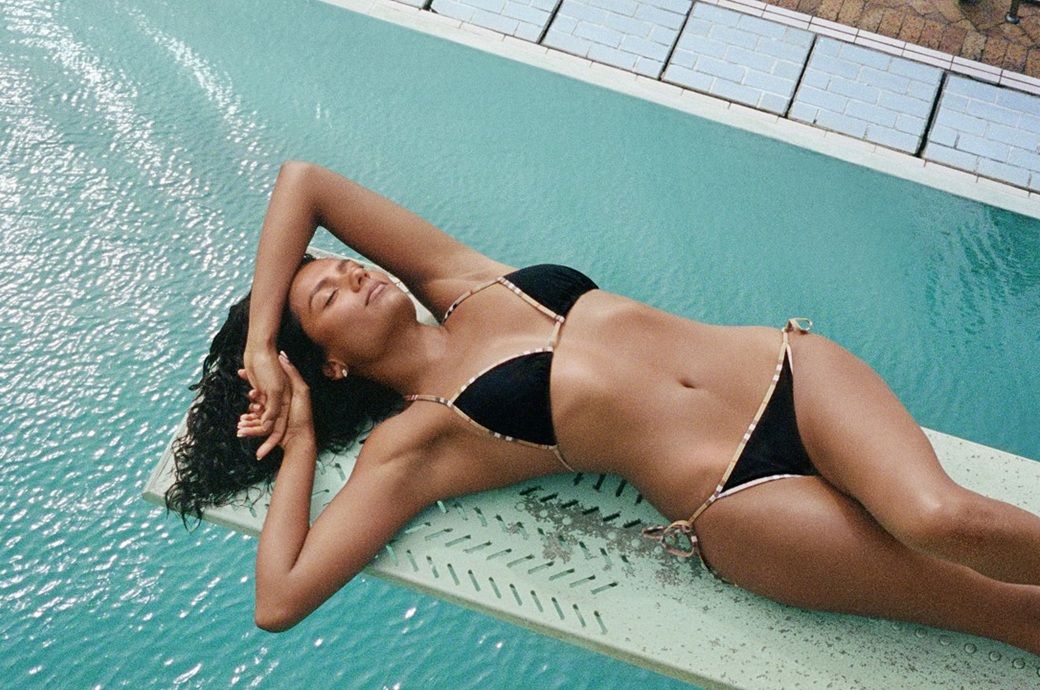
British actors Simone Ashley and Tom Blyth star alongside models Alva Claire, Babacar N’Doye and Sacha Quenby and a cast of synchronised swimmers and divers.
Burberry’s High Summer 2026 campaign captures Britain’s nostalgic lido culture through a sunlit film featuring Simone Ashley and Tom Blyth.
Blending heritage check with pastel tones, the collection spans swimwear, relaxed tailoring, raffia bags and lightweight layers, evoking effortless, poolside summer style.
Directed by Francis Plummer, the campaign reflects a warm, communal British summer mood.
The campaign film is directed by Francis Plummer and shot by photographer Ryan McGinley. The cameras move from loungers to diving boards, catching mid-air dives and friends stretched out in the hazy afternoon light. Before long, the best spots by the pool are claimed with a Burberry towel. Summer has begun. The film is underscored by the TONE remix of ‘Beating’ by Tirzah.
‘A lido holds a particular kind of nostalgia for the British. The moment the sun comes out, we make the most of the weather. We wanted to bring to life a warm summer’s day spent in and around the water’s edge with friends.’ said Daniel Lee Chief Creative Officer, Burberry.
Key styles
The High Summer 2026 collection features the Burberry Check in heritage-inspired sand beige and pastel shades of aubergine purple and cornflower blue.
The iconic Burberry Check bikini is the beach essential, alongside matching swimsuits and men’s swim shorts trimmed with check.
Poolside separates include tops, skirts and shirts cut from cotton voile, plus cover-up dresses woven with a tonal Burberry Check and deckchair-inspired stripes. Ruffled trims and ties at the neckline capture the floaty, effortless feel of the collection. Festival
tank tops in ribbed cotton jersey are trimmed with check straps, while looks are wrapped in lightweight wool silk scarves.
For men, collared shirts and shorts are tailored to relaxed lines and finished with fresh interpretations of the Burberry Check, from textural weaves to intricate embroidered designs. The co-ord set is crafted from lightweight cotton poplin printed with a playful seahorse pattern in honeysuckle pink.
The classic cotton piqué polo shirt comes in a spectrum of vivid and neutral colours. Burberry Check is subtly placed at the placket and trims the collar of T-shirts in soft cotton jersey.
Lightweight hooded jackets are ideal for cooler evenings and unexpected showers, the new-season designs woven in aubergine purple and cornflower blue check.
In shoes, the new Knight Runner sneakers offer a streamlined, low-profile shape for summer. Sandals are elevated in the form of the whipstitched leather Baez and check-trimmed suede Urchin styles, while Burberry Check slides and Pavilion sandals are made for the beach.
Lightweight Margate bags are handcrafted in Madagascar from locally sourced raffia palm leaves, dyed in signature sand beige Burberry Check. Accessories include crocheted bucket hats and wraparound sunglasses, designed to shield from the sun.
Note: The headline, insights, and image of this press release may have been refined by the Fibre2Fashion staff; the rest of the content remains unchanged.
Fibre2Fashion News Desk (JP)


Oklahoma wins 4th NCAA women’s gymnastics title in 5 years
Scams have grown more sophisticated, but people are fighting back

Netflix star targeted by imposters after suspicious social media activity

-

 Politics1 week ago
Indian airlines hit hardest after Dubai limits foreign flights until May 31
-

 Entertainment6 days ago
Palace left in shock as Prince William cancels grand ceremony
-

 Politics1 week ago
Chinese, Taiwanese will unite, Xi tells Taiwan opposition leader
-

 Sports6 days ago
The case for Man United’s Fernandes as Premier League’s best
-
 Business6 days ago
UK could adopt EU single market rules under new legislation
-
 Entertainment1 week ago
Dua Lipa hits major career high ahead of wedding with Callum Turner
-
 Business1 week ago
The FAA wants gamers to apply for air traffic control jobs
-

 Sports1 week ago
Lamar Jackson hits back at critics with faithful message on social media