

Business
Netflix co-founder Reed Hastings to step down as chairman

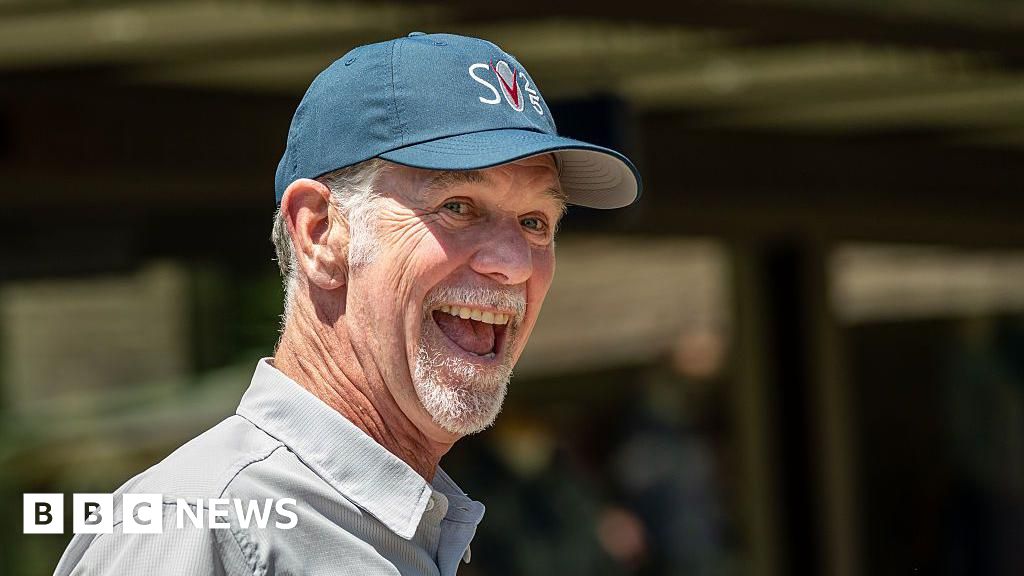
Hastings set up the company in 1997, when it rented DVDs to customers and delivered by post.
Source link
Business
Anthropic’s new AI model exposes fresh risks, flaws for cybersecurity, IT services – The Times of India
New Delhi: A powerful new AI model is forcing govts, banks, and technology firms to rethink the rules of cybersecurity – and in India, the stakes may be even higher.Claude Mythos, developed by Anthropic, has demonstrated the ability to autonomously detect and exploit software vulnerabilities, including flaws that have persisted for decades. Early tests revealed that the model could identify long-standing weaknesses and simulate complex, multi-step cyberattacks, prompting the company to restrict its wider release. Anthropic CEO Dario Amodei highlighted the shift, noting that AI systems are now capable of finding vulnerabilities “that humans have missed”, a signal of how quickly the cybersecurity landscape is changing.US Treasury Secretary Scott Bessent reportedly convened a meeting with top bank executives – including leaders from JPMorgan Chase, Goldman Sachs, Citigroup, BoA, and Morgan Stanley – to assess the risks posed by such advanced AI systems.That concern is not theoretical. According to Jaydeep Singh, GM for India at Kaspersky, the emergence of such systems represents a turning point not just for security professionals, but for everyday users. “We have been closely monitoring how AI is reshaping the threat landscape, and Claude Mythos represents a moment that every user, not just the cybersecurity industry, needs to understand,” Singh said.The dual-use nature of AI is at the heart of the concern. The same capability that strengthens defences can just as easily be weaponised. “The same capability that finds a 27-year-old vulnerability in hardened infrastructure is the capability that, in the wrong hands, turns every unpatched system into an open door,” Singh added.Cybersecurity firm Check Point Software Technologies echoed the warning. Sundar Balasubramanian, MD, India and South Asia, for Check Point, says, AI is “dramatically lowering the barrier to entry for cyber attackers,” enabling even less-skilled actors to identify and exploit vulnerabilities. He added that defensive tools can be repurposed offensively, compressing the traditional gap between attackers and defenders. Jayant Saran, partner, Deloitte India, described this as a “changed reality,” where organisations must prepare for risks that were previously invisible. He called AI a “double-edged sword…that cannot be reversed,” highlighting an accelerating race between those securing systems and those attempting to break them.In India, the risks are amplified by scale. From UPI to banking and govt platforms, millions depend on digital infrastructure – much of it built on legacy systems. These systems are often slower to patch, harder to monitor, and lack continuous threat intelligence, creating what Saran called an “asymmetric risk exposure.” Singh pointed out that this gap is especially critical in India, where legacy infrastructure serves hundreds of millions.Beyond cybersecurity, ripple effects could reach financial markets. Analysts say models like Mythos could automate parts of software development, testing, and security – core functions of IT services industry. While disruption may be gradual, labour-intensive outsourcing models could face pressure, while firms embracing AI may benefit.
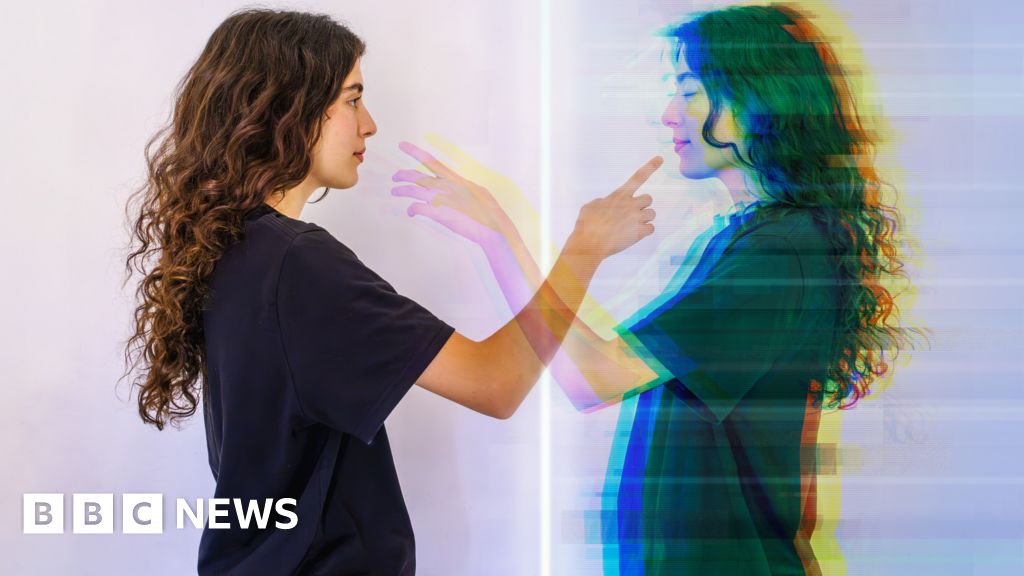
Firms say digital twins make staff more productive, but are they a potential legal minefield?
Source link
Business
Trump nominates Erica Schwartz as CDC director amid turmoil around leadership, vaccine policy

Rear Admiral Erica G. Schwartz.
U.S. Department of Health and Human Services
President Donald Trump on Thursday nominated Erica Schwartz to serve as director of the Centers for Disease Control and Prevention, concluding a monthslong effort to choose a permanent leader of the embattled health agency.
Schwartz, who will have to be confirmed by the Senate, would take over the role as Health and Human Services Secretary Robert F. Kennedy Jr. oversees a string of controversial health policy changes at the agency, including an overhaul of childhood vaccine recommendations.
Schwartz served as deputy surgeon general during the first Trump administration, where she played a major role in the U.S. response to the Covid-19 pandemic. She spent more than 20 year in uniform, including as rear admiral and chief medical officer of the Coast Guard.
Dr. Jay Bhattacharya had been acting director of the CDC — a title that expired last month under federal law. That law, called the Vacancies Act, limits the amount of time an acting officer can serve in place of a Senate-confirmed official to 210 days.
Late last month marked 210 days since the most recent CDC director, Dr. Susan Monarez, was fired.
A sign sits outside of the Centers for Disease Control and Prevention (CDC) Roybal campus in Atlanta, Georgia, U.S. March 18, 2026.
Megan Varner | Reuters
She has so far been the only person to serve as a confirmed CDC director during Trump’s second term, holding the role for under a month last summer. In congressional testimony in September, Monarez said she was fired after refusing Kennedy’s demands to approve vaccine recommendations she believed lacked scientific support.
It is unclear how Schwartz’s views on vaccines or other key public health policies compare with Kennedy’s.
Also on Thursday, Trump said he chose Sean Slovenski as deputy CDC director and chief operating officer, and Jennifer Shuford as deputy CDC director and chief medical officer. Shuford, as head of the Texas Department of State Health Services, led the state’s response to a massive measles outbreak last year, and credited vaccination and testing in declaring it over.
Schwartz’s nomination comes after a tumultuous several months for the agency, which is reeling from the leadership upheaval, plummeting morale, significant staff turnover and controversial changes to U.S. vaccine policy. Ahead of leadership departures last year, staff members were shaken by a gunman’s attack on the CDC’s Atlanta headquarters on Aug. 8.
Last month, a judge blocked a critical vaccine panel’s efforts to overhaul U.S. immunization policy. That includes an effort to reduce the number of recommended childhood shots from 17 to 11.
Trust in federal health agencies has plummeted during Kennedy’s tenure as Health and Human Services secretary, according to a February poll from health policy research group KFF, with declines across the political spectrum.

Anthropic’s new AI model exposes fresh risks, flaws for cybersecurity, IT services – The Times of India

Mike Trout crushes fifth Yankee Stadium HR in four games

AI version of Val Kilmer to star in new movie after his death

-

 Entertainment1 week ago
Queen Elizabeth II emotional message for Archie, Lilibet sparks speculation
-

 Tech1 week ago
Azure customers up in arms over ‘full’ UK South region | Computer Weekly
-

 Tech1 week ago
As the Strait of Hormuz Reopens, Global Shipping Will Take Months to Recover
-

 Fashion1 week ago
CII submits 20-pt agenda to Indian govt to back firms hit by Iran war
-

 Tech1 week ago
This AI Button Wearable From Ex-Apple Engineers Looks Like an iPod Shuffle
-

 Politics7 days ago
Indian airlines hit hardest after Dubai limits foreign flights until May 31
-

 Politics7 days ago
Chinese, Taiwanese will unite, Xi tells Taiwan opposition leader
-

 Entertainment4 days ago
Palace left in shock as Prince William cancels grand ceremony