

Business
FTSE 100 edges higher but US tech stocks wobble

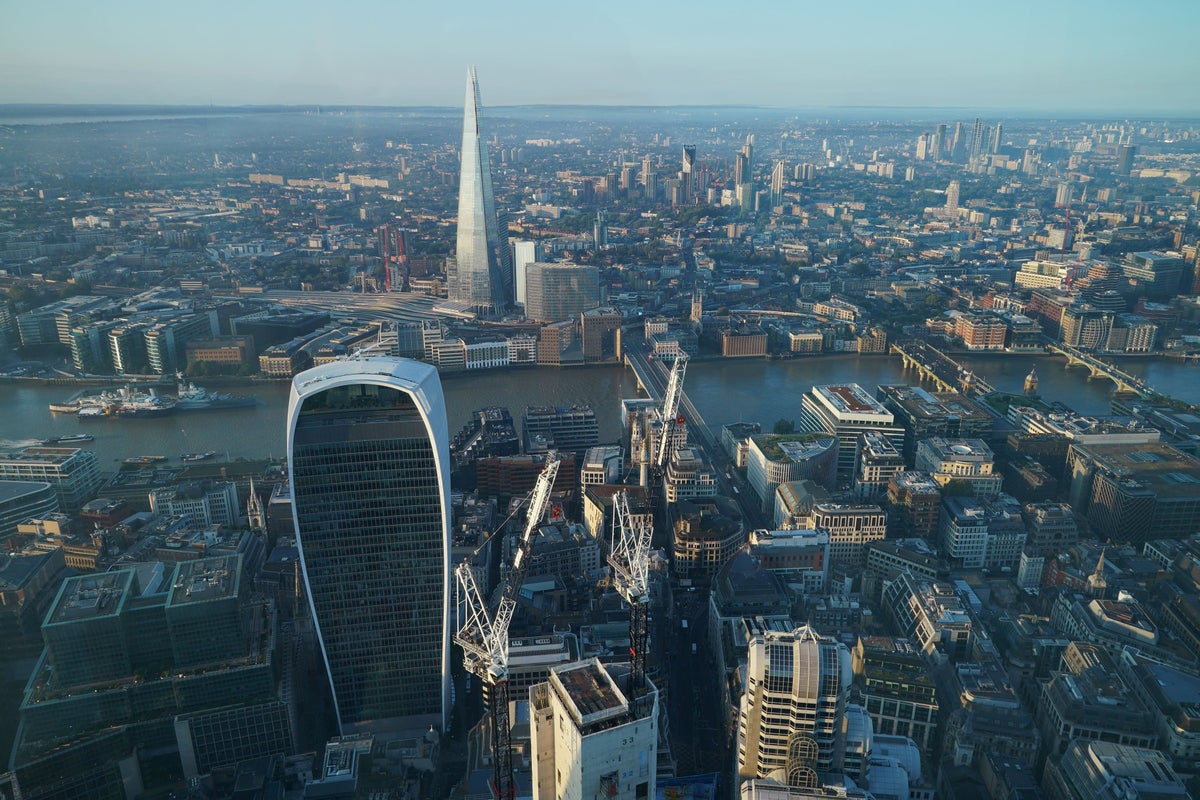
The FTSE 100 nudged higher on Tuesday as investors weighed the Middle East crisis and reports that OpenAI has missed internal targets for users and revenue.
The FTSE 100 closed up 11.70 points, 0.1%, at 10,332.79. The FTSE 250 ended down 180.01 points, 0.8%, at 22,399.42, and the AIM All-Share fell 8.28 points, 1.0%, at 786.90.
Oil prices climbed once more with Qatar warning of the possibility of a “frozen conflict” in the Gulf, as talks between the US and Iran for a peace deal appeared to be at a stalemate.
Brent oil traded at 111.77 US dollars a barrel on Tuesday afternoon, higher compared to 108.92 dollars at the time of the equities close in London on Monday.
Aside from the Iran war, analysts reacted to news that the United Arab Emirates is quitting the Opec and Opec+ groups of major oil-producing nations next month after nearly 60 years of membership.
The UAE said its decision would help it meet growing global energy demand in the long-term after recent investments to boost its production capacity.
Michael Brown at Pepperstone said the main surprise is in “its timing, as opposed to its substance”.
While this is undoubtedly a “pivotal” event for the global energy market, Mr Brown said, the near-term implications of the move are likely to be “relatively limited”.
“Though the UAE have pledged to ‘gradually’ increase production after their departure, it goes without saying that actually doing so at present is somewhere between difficult, and impossible.
“As the US-Iran conflict continues, and the Strait of Hormuz remains impassable, the most significant issue for the crude market is not production, but actually shipping product to where it is needed. Today’s announcement does not change anything on that front,” he said.
Mr Brown noted the UAE’s dissatisfaction with Opec has been “clear for some time, with the country of the belief that Opec quotas are an unfair limit, constraining the nation’s major infrastructure investment projects”.
Saul Kavonic, head of energy research at MST Financial, told the BBC it was “the beginning of the end of Opec”.
“With the UAE leaving, Opec loses about 15% of its capacity and one of its most compliant members,” Mr Kavonic said.
In European equities on Tuesday, the CAC 40 in Paris ended down 0.5%, and DAX 40 in Frankfurt fell 0.3%.
In New York, the Dow Jones Industrial Average was up 0.2%, the S&P 500 was 0.8% lower, and the Nasdaq Composite declined 1.4%.
Tech stocks bore the brunt of Tuesday’s falls in the US, after a Wall Street Journal (WSJ) report said OpenAI had missed internal targets for users and revenue, stoking fresh fears about whether massive spending on AI infrastructure can be sustained.
The WSJ said that OpenAI had missed its own goal of reaching one billion weekly active users for ChatGPT by the end of 2025 and fell short of multiple monthly revenue targets this year.
According to the report, OpenAI chief financial officer Sarah Friar has privately warned company leaders that the firm might be unable to meet future computing contract obligations if revenue growth does not accelerate.
Oracle fell 3.6%, Advanced Micro Devices by 3.5%, and Nvidia by 2.1% as the report caused a ripple effect across technology stocks.
But Wedbush Securities pushed back against the report.
“Overall, we believe OpenAI has been tracking very high demand on both the consumer and enterprise front and we strongly disagree with the notion that growth is weakening. We would be buyers of AI-driven tech stocks this morning and in particular Oracle on this way overreaction to this WSJ report in our view,” the broker said.
The yield on the US 10-year Treasury was 4.36% on Tuesday, widening from 4.32% on Monday. The yield on the US 30-year Treasury stretched to 4.96% from 4.93%.
The pound eased to 1.3505 US dollars on Tuesday afternoon from 1.3549 dollars on Monday. Against the euro, sterling ebbed to 1.1534 euros from 1.1543 euros.
The euro traded lower against the US dollar, falling to 1.1709 dollars on Tuesday from 1.1733 dollars on Monday. Against the yen, the dollar was trading at 159.61 yen, higher from 159.27 yen.
On the FTSE 100, BP rose 1.1% after better-than-expected first-quarter results, which benefited from the surge in oil prices.
The London-based oil major said underlying replacement cost profit ballooned to 3.20 billion dollars in the first quarter of 2026 from 1.38 billion dollars the year prior, well ahead of 2.67 billion dollars expected by the company-compiled market consensus.
Barclays eased 0.2% as in-line results failed to energise its share price.
The London-based lender said pre-tax profit rose 3.3% to £2.81 billion in the first quarter of 2026 from £2.72 billion a year before, just shy of the company-compiled consensus of £2.83 billion.
Jefferies analyst Jonathan Pierce said the results were “solid enough” with “no fireworks”.
A weaker gold price hit Fresnillo, down 2.0%, and Endeavour Mining, down 4.5%. The yellow metal traded down at 4,579.32 dollars an ounce on Tuesday, from 4,677.74 dollars at the same time on Monday.
On the FTSE 250, Telecom Plus tumbled 17% as it guided to low-end full-year profit, while SSP fell 5.5% as UBS downgraded to “neutral” from “buy”, noting risks to volumes in the travel retail industry linked to the Middle East conflict are increasing.
Elsewhere, building materials firm Travis Perkins and house builder Taylor Wimpey slid 4.0% and 5.3%, respectively, as investors weighed trading updates.
The biggest risers on the FTSE 100 were DCC, up 145.00p at 5,380.00p, Airtel Africa, up 8.20p at 355.40p, Centrica, up 4.10p at 211.20p, Coca-Cola Europacific Partners, up 135.00p at 7,260.00p, and British American Tobacco, up 76.00p at 4,312.00p.
The biggest fallers on the FTSE 100 were Endeavour Mining, down 195.00p at 4,191.00p, Antofagasta, down 122.00p at 3,488.00p, Anglo American, down 111.50p at 3,520.00p, Compass Group, down 0.80p at 28.52p and Experian, down 74.00p at 2,824.00p.
Wednesday’s global economic calendar has interest rate decisions in the US and Canada, German inflation data and US durable goods figures.
Wednesday’s local corporate calendar has first-quarter results from pharmaceutical firms AstraZeneca and GSK, lender Lloyds Banking Group and consumer products firm Haleon.
Contributed by Alliance News
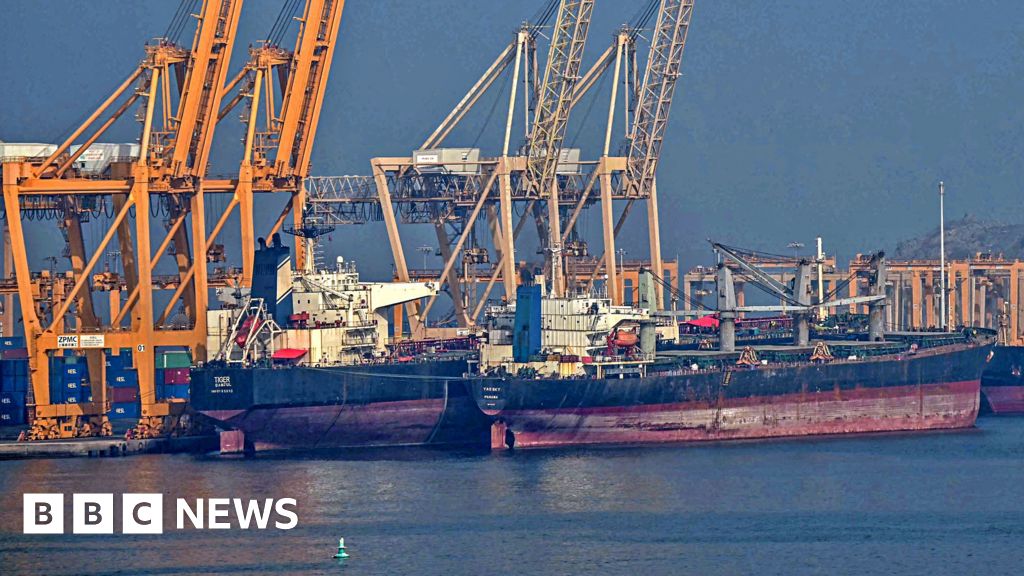
The UAE’s decision, after nearly 60 years of membership, is seen as a potential death knell for the oil cartel.
Source link
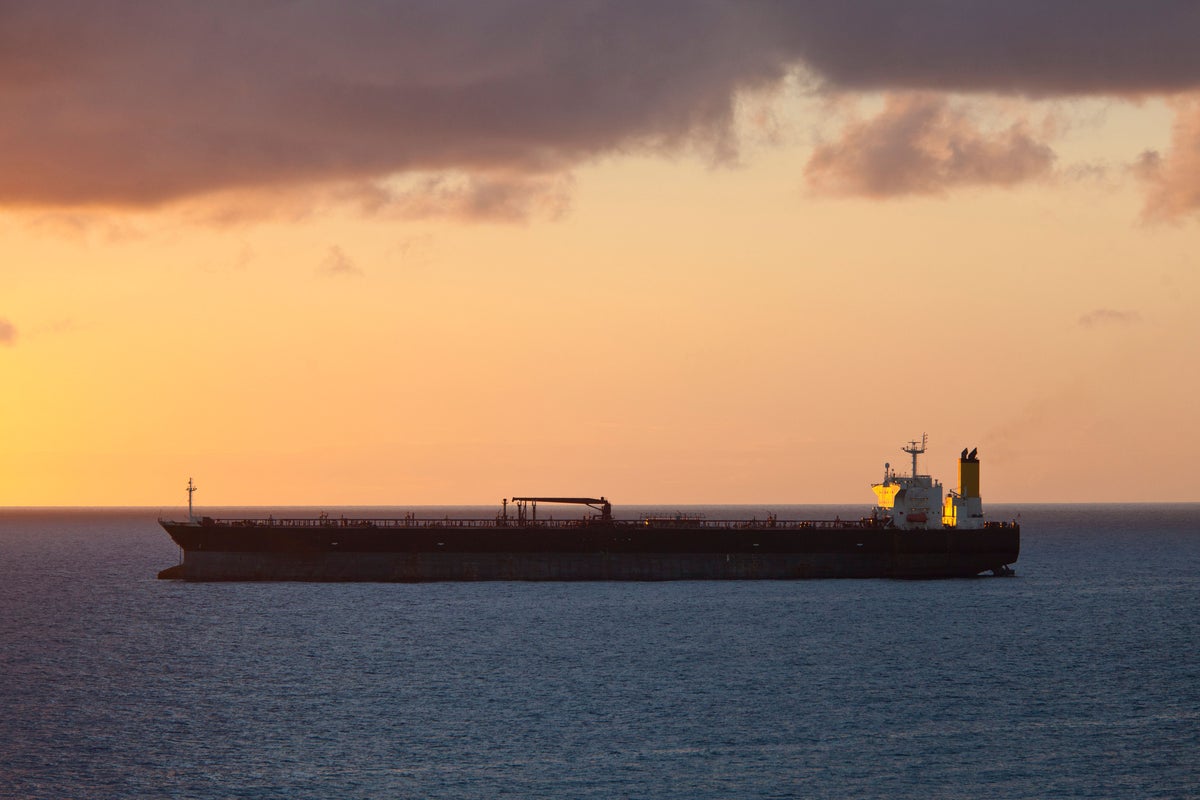
The United Arab Emirates has decided to leave the Opec group of oil producers after six decades of membership amid an energy supply shock in the Middle East spurred by the US-Israeli war with Iran.
The UAE announced the decision, through the state-run WAM news agency, which will be effective from May 1.
Opec (Organisation of Petroleum Exporting Countries) was founded in Iran in 1960 and aims to co-ordinate production among member countries, stabilise oil markets and keep supply and income steady.
The UAE joined Opec in 1967, and its departure will leave the oil cartel with 11 member countries including Saudi Arabia, Iran and Iraq.
A statement on the WAM news agency read: “This decision follows a comprehensive review of the UAE’s production policy and its current and future capacity and is based on our national interest and our commitment to contributing effectively to meeting the market’s pressing needs.
“While near-term volatility, including disruptions in the Arabian Gulf and the Strait of Hormuz, continues to affect supply dynamics, underlying trends point to sustained growth in global energy demand over the medium to long-term.”
The statement went on to say that following its exit, the UAE would “continue to act responsibly, bringing additional production to market in a gradual and measured manner”.
It has been reported that the UAE has expressed frustrations with production quotas agreed by Opec members in a bid to control oil prices, with the decision also referring to a desire for greater flexibility.
But the announcement comes at a fraught time in the Middle East with the closure of the Strait of Hormuz disrupting oil and gas supplies around the world and sending prices soaring.
David Oxley, chief climate and commodities economist for Capital Economics, said the UAE had been “itching to pump more oil”.
“The UAE’s desire to pump more oil has been placated up to now by a combination of the rest of Opec turning a blind eye to its overproduction and also raising its quota levels,” he said.
The economist suggested that, if energy flows get back to normal once the Strait of Hormuz reopens, then the UAE’s departure from Opec could “feasibly” result in it pumping an additional one million barrels per day – the equivalent of about 1% of global oil demand.
Mr Oxley also warned that the move could trigger other members leaving Opec which would have bigger implications for the global oil market and prices.

There was a fresh blow for Rachel Reeves as government borrowing costs hit the highest level since the financial crash of 2008.
The yield on 10-year bonds – the most widely used benchmark of government debt costs went over 5 per cent on City trading screens.
Sometimes such moves are a blip followed by a fall, but instead they stayed at 5.1 per cent on Tuesday.
The interest rate paid on UK government debt is a sign of confidence in the wider economy; the higher the yield, the more investors are demanding to lend to the government.
Lucy Smith, senior investment manager at investment management firm Killik & Co, said: “Today the 10-year UK gilt yield has risen above 5 per cent for the first time since 2008. This is bad news for Reeves as she attempts to contain government borrowing costs whilst encouraging growth.”
The chancellor was already dealing with rising inflation, up from 3 per cent to 3.3 per cent in the most recent official figures, and has faced speculation that the prime minister may look to remove her in a shake-up of his team.
Retailers are warning of rises in the cost of food and fuel, a further blow to those on the lowest incomes who were already stretched. Local council elections on May 4 are expected to see a Labour battering at the polls.
The International Monetary Fund (IMF) recently revised UK growth forecasts for the year down from 1.3 per cent to 0.8 per cent. Some economists fear she may have to find new tax rises.
Ms Smith added: “The Iran war has caused oil prices to spike, with the price of oil remaining above $100 a barrel, up from around $60 in December. The UK is a net importer of oil, so this increase is likely to create a supply-side inflationary shock, worsening the UK’s inflationary outlook. The combination of higher inflation and lower growth presents a significant challenge for the chancellor and may result in further tax rises or reduced spending in the next budget later this year.”
City insiders say that political instability within the UK government, particularly surrounding the Peter Mandelson vetting inquiry, may have also contributed to rising yields, as instability makes investors less willing to hold government debt.
Some spy opportunities for retail investors, since government debt is guaranteed. Bonds can be bought via all major investment platforms and held in tax-free ISAs.
Alan Miller at investment firm SCM Direct said: “Long gilts at 5 per cent plus are the best deal retail savers have had in years. Wrap it in an ISA, and you keep the lot.”
Ms Reeves has been trying to create so-called “headroom”, which means the UK’s finances remain within the guidance she has given to Parliament. Some experts argue she has handled this well.
Andrew Goodwin at Oxford Economics says: “We calculate that if gilt yields and market expectations for bank rate stay where they are now, it would knock about £7.5bn off the chancellor’s £23.6bn headroom at this autumn’s Budget. But this won’t force the chancellor to take corrective action. Indeed, it demonstrates that her decision to increase headroom at the 2025 Budget was a wise one because it has given her the room to absorb this unexpected shock without having to respond with higher taxes.”
The Bank of England’s Monetary Policy Committee (MPC) meets on Thursday and is expected to hold interest rates at 3.75 per cent.
Before the Iran war, it was widely expected that the Bank would cut rates two or three times this year, leading to lower mortgage costs.
Critics say government policy is as much to blame as global events.
Kallum Pickering, chief economist at Peel Hunt, wrote in a note: “Over the past decade, the UK economy has suffered a succession of policy mistakes and resulting rates of inflation which have consistently exceeded the prevailing trends across other major economies. Unsurprisingly, it no longer takes much to spook UK government debt markets.”


‘It’s Undignified’: Hundreds of Workers Training Meta’s AI Could Be Laid Off

EU considers sanctioning Israel: Here’s why

Mideast conflict enters Cold War-like phase amid US-Iran deadlock: report

-

 Sports1 week ago
NCAA men’s gymnastics championship: All-time winners list
-

 Sports1 week ago
WWE WrestleMania 42 Night 2: Live match results and analysis
-

 Politics1 week ago
UK’s Starmer seeks to deflect blame over Mandelson appointment
-

 Fashion1 week ago
UK’s Sosandar returns to profitability amid robust FY26 performance
-
 Business1 week ago
How Trump’s psychedelics executive order could unlock stalled cannabis reform
-

 Entertainment1 week ago
Lee Anderson, Zarah Sultana kicked out of UK Parliament for calling PM ‘liar’
-

 Fashion1 week ago
India, US to resume BTA talks today
-
 Business1 week ago
Us-India Trade Talks: US–India trade deal: Where do talks stand & what to expect – explained – The Times of India