

Entertainment
Madagascar receives skull of beheaded king returned by France


Madagascar held a ceremony Tuesday marking the return of three skulls kept by France for 128 years, including one believed to be that of a Malagasy king decapitated by French troops in the 19th century.
France handed over the skulls in Paris on August 27 in the first such restitution since it passed a law in 2023 facilitating the return of human remains taken during its colonial conquests.
The skulls are believed to belong to King Toera, leader of the Sakalava people, who was beheaded by French troops in 1897, and two of his warriors.
They arrived in Madagascar late Monday and were received at the airport by members of the Sakalava group dressed in traditional robes.
Held in three boxes draped with the flag of the Indian Ocean nation, the skulls were driven through the capital Antananarivo to the city’s mausoleum Tuesday, where they were received by President Andry Rajoelina and a gathering of government and Sakalava dignitaries.
They will continue their journey by road to the west coast area of Belo Tsiribihina, about 320 kilometres (200 miles) from the capital, where they are expected to be buried later this week.
The skulls were taken to France as trophies and kept in Paris’s national history museum alongside hundreds of other remains from Madagascar, which declared independence in 1960 after more than 60 years of French colonial rule.
French Culture Minister Rachida Dati said at the Paris event that a joint scientific committee confirmed they were from the Sakalava people but said it could only “presume” that one belonged to King Toera.
France has in recent years sent back various artefacts taken during its imperial conquests, but each time required special legislation until parliament adopted the law simplifying the repatriation of human remains.
Thumbnail image by Reuters — File image of a skull of Namibian genocide victim
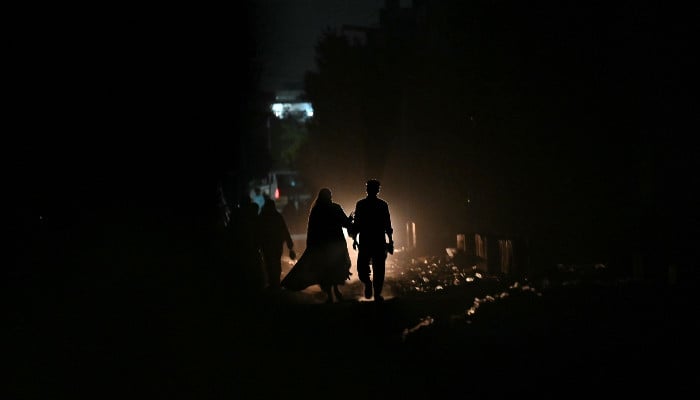
There is a version of Pakistan’s power sector story that reads as a financing tragedy. Billions of dollars borrowed, capacity built, tariffs indexed, guarantees issued – and the lights still went out.
That version is accurate, but incomplete. The deeper story is one of institutional political economy: a systematic misapplication of development finance theory to a sector whose problems were never about megawatts, but about institutions, incentives and the allocation of risk.
Pakistan did not stumble into a power crisis; it borrowed its way into one by design. The political economy of large infrastructure debt rewards the act of financing over the discipline of planning, while the coalition that benefits from capacity expansion – governments seeking ribbon-cutting opportunities, lenders deploying capital and developers earning guaranteed returns – has always been more cohesive and influential than the diffuse public ultimately left to pay the cost.
The economics of debt-financed power capacity rest on a coherent theoretical foundation: long-lived assets, predictable revenue streams and financing matched to productive asset life. Textbook infrastructure finance. The problem is that Pakistan’s IPP model violated nearly every condition that makes that theory work. Take-or-pay contracts transferred demand risk from investors to consumers. Sovereign guarantees transferred default risk from lenders to the state. Indexed tariffs transferred currency and inflation risk from developers to electricity buyers.
At each step, the private sector retained the upside while the public sector absorbed the downside. This is not infrastructure financing. It is a structured transfer of fiscal liability dressed in the language of private investment, and it persisted across two decades because the parties who designed the contracts were not the parties who paid for them.
Pakistan is paying for the right to use plants at rates that assume near-full utilisation, while overall thermal plant utilisation was below 45%. The economic logic would be indefensible in any other sector. A government contracting to pay a hotel 80% of room revenue regardless of occupancy would face immediate public audit.
Pakistan’s power sector did precisely this across dozens of contracts over two decades, and the audit arrived only when the fiscal consequences became impossible to absorb. That delay is itself a political-economy finding: costs were dispersed across millions of consumers and a national circular-debt stock, while benefits were concentrated in project companies with direct access to the policymaking process.
Karot Hydropower entered operation carrying $1.358 billion in debt against a $1.698 billion project cost. Suki Kinari carried $1.280 billion against $1.707 billion. Punjab Thermal Power assumed a 75:25 debt-to-equity ratio in its tariff structure. Coal plants followed the same financial philosophy. High leverage works when revenue is predictable.
In Pakistan’s power sector, revenue was guaranteed contractually but collected through a circular debt mechanism that by 2025 had metastasised into one of the largest contingent fiscal liabilities in the country’s history. The debt did not finance capacity. It financed the illusion of capacity while actual liability accumulated inside the public balance sheet at compound interest.
And do not get me started on Neelam-Jhelum. A 969MW hydropower project financed at roughly $2.7 billion through sovereign borrowing that cracked, flooded and ceased generation by 2022 due to geological failures that adequate pre-feasibility work would have surfaced. It sits today as perhaps the most expensive idle asset in Pakistan’s public infrastructure portfolio, still carrying debt service obligations that Wapda and ultimately the electricity consumer must absorb. Neelam-Jhelum is not an anomaly in Pakistan’s power sector. It is the model taken to its logical conclusion.
The RLNG fleet crystallises the broader argument. Pakistan borrowed to build Bhikki, Haveli Bahadur Shah, Balloki and Punjab Thermal Power, totalling nearly 4,900MW of combined RLNG capacity, to address a gas shortage caused by domestic reserve depletion. The solution replaced one import dependency with another, priced in dollars, routed through the Strait of Hormuz, and exposed to precisely the kind of geopolitical disruption that materialised when the US-Iran conflict closed LNG shipping lanes in 2026.
Approximately 6,000MW of RLNG capacity was producing around 500MW at the peak of the disruption. The debt service continued. The capacity payments continued. The plants sat. This is not a scenario requiring exotic modelling; it appears in the first chapter of any energy security curriculum. Pakistan borrowed billions to build a fuel-import machine and called it energy security. The political economy explanation is straightforward: the decision-makers who approved the contracts bore none of the fuel-supply risk, while the consumers who bore all of it had no seat at the negotiating table.
The case for abolishing debt-based capacity addition is not ideological. It is empirical. The model has been tested across two investment cycles, the thermal buildout of the 1990s under the 1994 Power Policy and the RLNG and hydel expansion after 2014, and it has produced the same outcome twice: stranded obligations, circular debt accumulation, tariff escalation and renewed loadshedding. Repeating it a third time would not be a policy failure. It would be a policy choice made with full knowledge of the consequences, which is considerably worse.
What should replace it is a framework built on three organising principles: grid modernisation, decentralisation and capacity rationalisation.
Grid modernisation means investing in the transmission and distribution infrastructure that determines whether existing generation, all 40,000+ MWs of it, can actually reach consumers at acceptable quality and cost. Pakistan’s transmission system incurs significant technical losses, operates with limited real-time visibility and cannot withstand high penetrations of variable renewable energy without stability risks.
A dollar invested in smart metering, advanced distribution management and real-time system monitoring yields returns across all generation sources simultaneously, without creating a new capacity payment obligation. That is categorically different economics from adding another imported-fuel plant behind another sovereign guarantee. It also produces a different political economy: beneficiaries are dispersed consumers rather than concentrated developers, which is precisely why it receives less institutional enthusiasm than it deserves.
Decentralisation recognises what the 2026 crisis demonstrated empirically. Pakistan’s 19,000-plus MWs of people-financed solar, built without state financing or sovereign guarantees, provided more resilient service during geopolitical disruption than several billion dollars of centralised RLNG capacity. Distributed generation financed from private balance sheets does not accumulate on the public fiscal balance sheet, does not require foreign exchange for capacity payments and does not transit the Strait of Hormuz.
A regulatory framework that accelerates distributed solar, battery storage integration, time-of-use pricing, and virtual power plant aggregation is not abandoning infrastructure investment. It is redirecting it toward a model that allocates risk efficiently, where those who invest bear the risk and those who benefit pay the cost. That it simultaneously dismantles the political economy of centralised capacity rent extraction is a feature, not a complication.
Capacity rationalisation addresses the existing stock honestly. Pakistan cannot walk away from signed PPAs without triggering sovereign credit consequences. But rationalisation is achievable through commercial renegotiation, fuel-switching where technically feasible, conversion of baseload thermal assets to flexible peaking operation and structured early retirement of plants whose capacity payments exceed any plausible economic value of continued operation. The resistance will come from the same coalition that benefited from the original contracts. Identifying that coalition and designing the negotiating strategy accordingly is as much a task of political economy as of financial engineering.
Economics has already delivered its verdict. Debt-financed centralised capacity, priced through capacity payments, guaranteed by the sovereign and fuelled by imports, is not a development strategy. It is a liability-accumulation strategy with a generation component, sustained by a political economy that consistently privatises gains and socialises losses.
Pakistan borrowed its way into darkness. The path out runs through the grid, through rooftops and through the disciplined retirement of the obligations the old model left behind.
The writer has a doctorate in energy economics and serves as a research fellow at the Sustainable Development Policy Institute (SDPI).
Disclaimer: The viewpoints expressed in this piece are the writer’s own and don’t necessarily reflect Geo.tv’s editorial policy.
Originally published in The News

Dylan Carter, the singer who captivated all four judges with his audition on The Voice season 24, has died at the age of 24 following a car crash in Colleton County, South Carolina.
The Colleton County coroner has ruled his death accidental, caused by blunt force injuries sustained in the collision.
According to TMZ, Carter was driving a 2026 Tesla sedan alone just after 11pm when the vehicle veered off the road, struck a pole and a fence, and rolled.
He was wearing his seatbelt at the time of the crash. He was taken to hospital, where he later died from his injuries.
Carter made a lasting impression on The Voice in 2023 when, at just 20 years old, he auditioned with a rendition of Whitney Houston’s I Look to You, a performance he dedicated to his late mother.
It prompted all four coaches to turn their chairs: Gwen Stefani, John Legend, Reba McEntire and Niall Horan.
Carter chose McEntire as his coach but was eliminated during the Battle Rounds.
His family confirmed the news of his passing on Sunday in a Facebook statement, describing their grief and celebrating the mark he had left on his community.
“As a gifted singer, he frequently entertained our community with his performances at Town events. His kindness and charm earned him immense respect, and his absence will be deeply felt,” the statement read.
The family concluded simply: “He was much more to our family than an entertainer, he was our friend and we are deeply saddened.”

Euphoria star Jessica Blair Herman has officially dismissed long-standing rumours of a feud among the cast, insisting that the atmosphere on the set of the hit HBO show was actually pure bliss.
Speaking on the 27 April episode of Good Day NY, the 39-year-old actress, who joined the cast for season three, told host Rosanna Scotto that the actors genuinely got along and were focused on creating a professional environment.
She was particularly keen to shut down talk of a rift between the show’s biggest stars, Zendaya and Sydney Sweeney, stating firmly that there was “no drama” and that everyone was simply there to do the job.
Herman, who plays the judgmental neighbour to Sydney Sweeney and Jacob Elordi’s characters, explained that the perceived distance between some cast members likely comes down to the way the show is filmed rather than any personal animosity.
She admitted that Zendaya’s Rue and Sweeney’s Cassie don’t actually share many scenes, meaning their storylines are quite separate and they often shoot on entirely different days.
According to Herman, the cast has built a “beautiful working relationship” despite the fact that they aren’t always physically on set together at the same time.
The actress had nothing but praise for her own experience working with Sweeney, describing her as a “real artist” who is both generous and vulnerable as a performer.
Even when filming the more difficult and intense scenes that Euphoria is known for, Herman noted that she felt a beautiful and open heart from her co-star.
She also called working with the show’s creator, Sam Levinson, a “dream come true,” painting a picture of a set that was far more harmonious than the internet gossip would suggest.
However, this positive update stands in stark contrast to the recent and very public departure of the show’s composer, Labrinth.
The Emmy winner announced his exit in March and later took to social media to vent his frustrations with the creative team.
In a series of candid Instagram posts, Labrinth claimed that people in the industry “comfortably lie” and stated that he chose to remove his music because he refused to let people treat him poorly.
While he noted that he remains on good terms with HBO, he made it clear that while a director’s vision is paramount, he wouldn’t compromise his own self-respect to stay on the project.

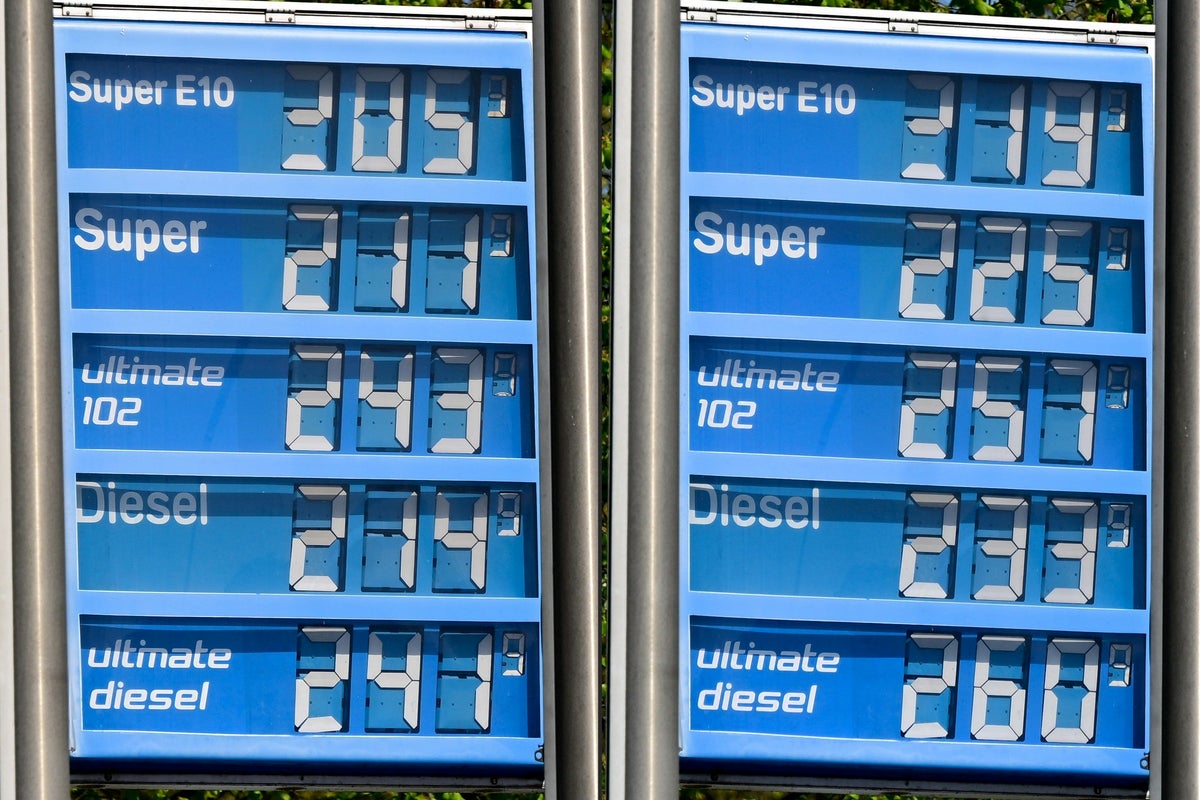
Oil prices edge higher as Trump weighs Iran’s latest proposal to open Hormuz

Political economy of power failure

‘The Voice’ star Dylan Carter died at 24: Cause of death revealed

-

 Sports1 week ago
NCAA men’s gymnastics championship: All-time winners list
-

 Sports1 week ago
WWE WrestleMania 42 Night 2: Live match results and analysis
-

 Fashion1 week ago
UK’s Sosandar returns to profitability amid robust FY26 performance
-

 Politics7 days ago
UK’s Starmer seeks to deflect blame over Mandelson appointment
-
 Entertainment1 week ago
Lee Anderson, Zarah Sultana kicked out of UK Parliament for calling PM ‘liar’
-
 Business1 week ago
How Trump’s psychedelics executive order could unlock stalled cannabis reform
-
 Business1 week ago
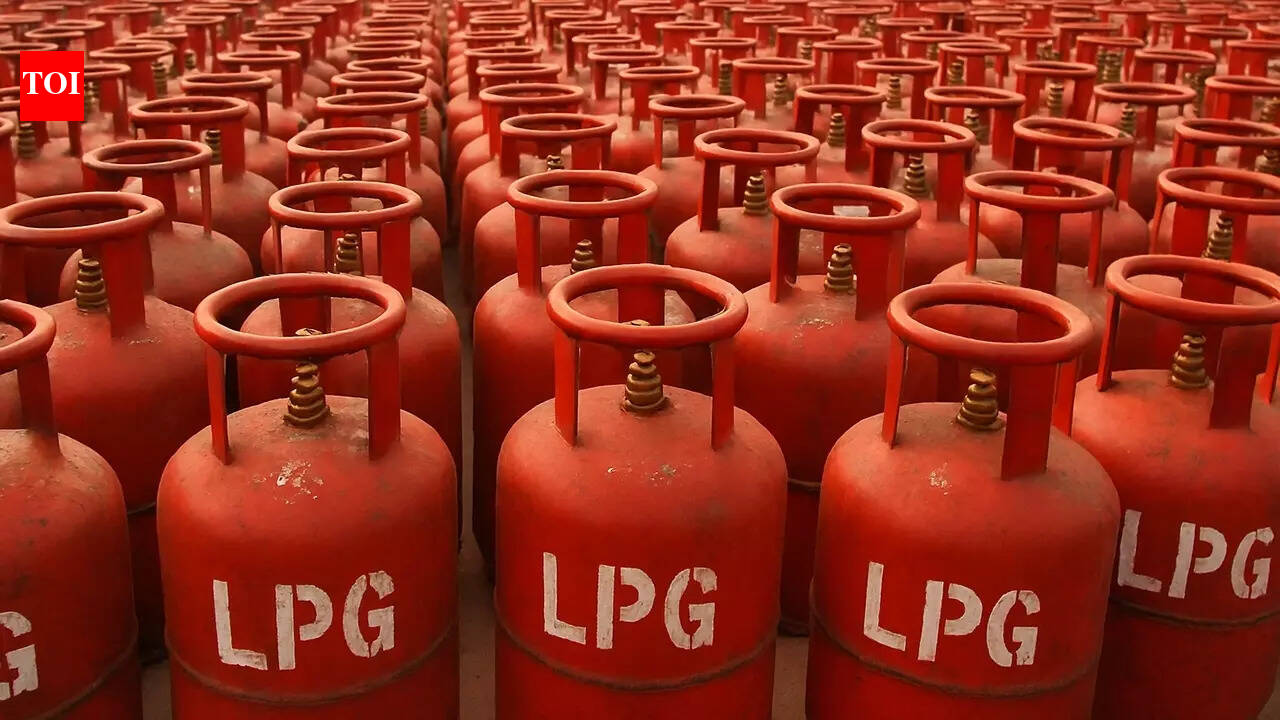
No fuel shortage: Govt assures 100% domestic LPG, PNG, CNG supply amid Hormuz energy crunch – The Times of India
-

 Sports1 week ago
Quetta Gladiators opt to bowl after winning toss against Peshawar Zalmi in PSL 11 clash