

Tech
A Library Dedicated Solely to the Epstein Files Is Opening in New York


I’m looking at Volume 1,536 of the Epstein files, page 311. It’s an early 2016 email thread between Jeffrey Epstein and a woman whose name is redacted by the Department of Justice.
In the thread, Epstein asks the unidentified woman for a “naughty selfie” and later sends her a camera. In late February, he replies with a different ask: “Do you have any friends that might want to work for me?…I will give you money if you find someone willing to travel, 22-25, educated. Personable.”
The exchange carries extra resonance when you consider that Epstein is accused of sex trafficking minors, with the Department of Justice estimating that he had more than 1,200 potential victims. But I just happen to flip to it randomly during my recent visit to the newly opened Donald J. Trump and Jeffrey Epstein Memorial Reading Room.
Photograph: Anna Maria Lopez/Courtesy of BPI Group
Tucked away in a nondescript gallery in New York City’s Tribeca neighborhood, the reading room is a massive library of all 3.5 million pages of Epstein-related records released by the Department of Justice earlier this year, compiled into more than 3,700 individual volumes. From May 8 to 21, the reading room will be open to the public by appointment only.
The library—essentially, the Epstein files in analog—is intended to represent the staggering scale of Epstein’s crimes, as well as the impunity with which he carried them out. More than 17,000 pounds of evidence is on display at the library, says David Garrett, the main organizer of the exhibit at the Institute for Primary Facts, a nonprofit intended to promote transparency and accountability in the US government.
“The evidence in this room is evidence of one of the most horrific crimes in American history,” Garrett says. “When people come through this room, I hope they realize that in America, we have the rule of law, and if they stand up they can take action and demand accountability for the crimes that were committed.”
Epstein, who died in prison in 2019, is now synonymous with systemic corruption and abuse, particularly in light of his ties to President Donald Trump. The installation features a detailed timeline of Epstein’s relationship with Trump, from their purported initial meeting in Palm Beach in 1987 to Epstein’s 1993 attendance at Trump’s wedding to Marla Maples to the end of Epstein’s membership at Mar-a-Lago in 2007, when Trump allegedly witnessed him behaving inappropriately toward the teenage daughter of another member. The shelves are organized around an exhibit in support of Epstein’s survivors, with candles laid out on the ground to represent the more than 1,200 victims. In response to a request for comment, White House spokesperson Abigail Jackson said Trump has “been totally exonerated on anything relating to Epstein,” claiming that he “has done more for Epstein’s victims than anyone.”





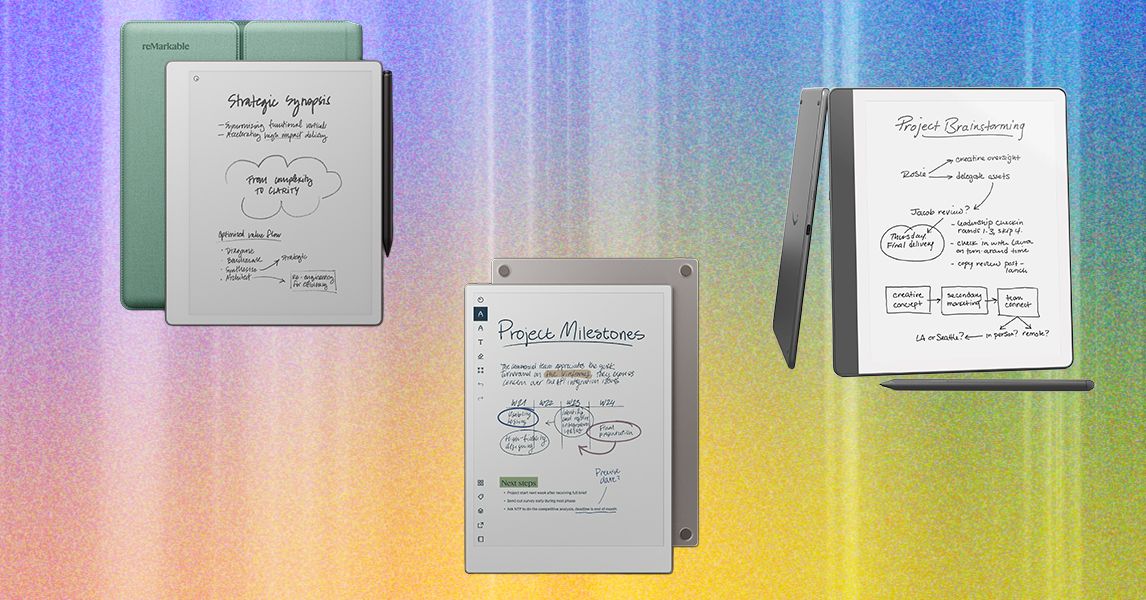
Comparing Our Favorite Digital Notebooks
Our Favorite Smart Pens
Neo Smartpen M1+ for $129: Skip the tablet and write directly on paper with a smart pen instead. The Neo Smartpen M1+ is the thinnest and lightest of all the pens I tried, which makes it feel a bit more like your standard pen. Importantly, it’s comfortable to hold and use. You should be able to find whatever size and style of notebook you need as well as planners. The Neo Studio app (iOS, Android) is nice, with an easy-to-navigate notebook system and the ability to search for pages by page number or date. You can change the color of the ink and thickness of the lines right on the page as you go, or you can switch them up later and edit the colors of what you’ve written. —Medea Giodiano
Moleskine Smart Writing Set for $251: Moleskine has garnered a devoted following for its classic notebooks and journals, but it has also moved into smart territory. The Smart Writing Set gets you a notebook and pen bundle, so this is the best option for most people starting out. Write in the notebook, and it’ll appear in the companion app! But you can buy the pen on its own, as well as the smart notebooks and planners in various sizes. The Moleskine Notes 2.0 app (iOS, Android) was easy to use once I settled into it. An older version of the app is available for download, but the 2.0 version is more streamlined. A pop-up let me know that 2.0 is still a work in progress and I might need to switch back to the older version if my device is having trouble, but my iPhone 11 didn’t have any issues. I tested the $149 2018 version of the Smart Writing Set, which is no longer available, but we plan to test the latest version soon. —Medea Giordano
Honorable Mentions
Kindle Scribe Colorsoft ($630) and Kindle Scribe (3rd Gen) ($500): The new versions of the Kindle Scribe are still solid all-around devices that have a good mix of e-reader and digital notebook features, but I still prefer the older model. While the new Scribe Colorsoft is a nice option if you want color, I think both are too expensive for what they are. The price comes from all the AI features packed into the device, but I don’t think any reader or digital notetaker was asking for more of those. Our picks above are a better price for similar features, though the Scribe does have the most impressive battery life of any digital notebook device I’ve tried (and that’s still true for the older model that I recommend above, too, so you don’t need the newest model for the best battery life).
Montblanc Digital Paper for $935: Yes, that Montblanc, the one with the famous pens, now has a digital notebook of its own. It’s no surprise that I’d call its digital pen one of the best. It’s got a super-lightweight feel while sporting three different buttons, two of which you can customize. (There’s no eraser, but I’ll give it up for that end of the pen to instead be a home button). I really like this device overall, but it’s pricey for what you get—aside from the customizable pen buttons, there’s not much to differentiate it from my top picks.
Neo Smartpen Dimo for $59: This is the cheapest smart pen option and uses replaceable batteries. It isn’t compatible with Google Calendar, iCal, or Outlook like our other picks.
ReMarkable 2 for $569 (with Marker Plus and Book Folio): This is the older ReMarkable digital notebook from 2020, and it’s still a great device with a great range of accessories (while they’re still available, that is). It feels similar to real paper with its matte screen, and works on the same platform as ReMarkable’s newer tablets. But the performance isn’t as snappy as newer models, and ReMarkable is no longer making it after launching the ReMarkable Paper Pure. I do really like using it with a Keyboard Folio as an e-paper tablet, though.
Rocketbook Fusion Plus for $30: If you really prefer the paper experience and don’t want something you need to charge, then Rocketbook is for you. Rocketbook makes several reusable notebooks, planners, and accessories like index cards and sticky notes. I like the Rocketbook Fusion Plus since it comes with a ton of different template styles, from your classic monthly and weekly pages to project management layouts and meeting notes, making it feel closer to the variety a digital notebook can offer you. Take notes with an erasable Pilot Frixion Pen (one comes with whichever item you buy), scan photos of the pages into the Rocketbook app, and erase the whole thing with the damp microfiber cloth (also included). The app is designed to keep everything organized and easily send things off to Google Drive, Slack, Trello, OneNote, and a handful of other options.
Supernote A6 X2 Nomad for $394 (with Standard Pen): This is a smaller version of the Supernote A5 X2 Manta, measuring almost 6 inches on one side and 7.5 inches on the other. Supernote designed it with travel in mind, but I find it to be a great size for a daily digital to-do list or writing down quick notes from a meeting. It’s too small for anything major, but if you’re looking for something compact, this is a good option with Supernote’s software (and with the same fantastic pens!). Like the Manta above, this model rose in price due to the tariffs, though it only went up $30.
FAQs
Do You Need a Digital Note-Taking Device?
The short answer is no. These devices are expensive, usually costing several hundred dollars when a simple notebook and pen costs a few bucks. But if you like the physical act of writing but need to have digital copies, they’re worth considering.
Pros:
- Digital notebooks are thin and light but hold hundreds of notes.
- You can transcribe your notes into text files, making them easier to read and manipulate.
- Depending on the device, you can export files as PDFs, Google Docs, Evernote files, and more.
- Instantly digitizes your art too.
Cons:
- Expensive.
- Need to be charged.
- Have a learning curve.
- Most smart pens need to be paired with an accompanying notebook. The upcoming Nuwa Pen promises smart notes on any paper.
E Ink notebooks are easier on the eyes and feel closer to paper than a glass-screened tablet. But in some cases, you might spend less getting an iPad and an Apple Pencil (and a keyboard if you also want to type sometimes). You can also do more on them thanks to the thousands of apps in the App Store. An iPad is pretty intuitive if you’re familiar with the Apple ecosystem (though both ReMarkable and Supernote’s ecosystems are also very intuitive). Former WIRED reviewer Jaina Grey recommended using her 11-inch iPad Pro with the GoodNotes and Notability apps for her writing, but there are other models that should work fine, including our top pick, the 2025 iPad. Check out our guide to the Best iPads for more advice on which to buy.
I also have an iPad, and I’ll say the upside of a digital notebook is that the battery tends to last longer, especially if you’re the type to use it for a day or two and then forget about it for a few days. My trusty Kindle Scribe usually manages to have plenty of battery available for whenever I feel the note-taking itch, even if it’s been a week or two since I last touched it.
Why Are Digital Notebooks So Expensive?
Just because these devices look like paper doesn’t mean they’re as cheap to make as a sheet of paper. Like any tablet or smartphone, these devices are packed with features, a special ecosystem, and the E Ink technology is no small feat to perfect, along with a sensation similar to writing on paper. It’s an impressive piece of technology.
Prices haven’t gotten cheaper for this category in the wake of tariffs’ causing technology prices to rise. ReMarkable recently raised the price of our top pick, the ReMarkable Paper Pro. Another favorite of ours from Supernote has gone up a little less than $50, and Kobo also slightly raised its prices, though the $10 increase is pretty minor compared to other increases we’ve seen. We’ll continue to monitor prices and flag if more price changes are to come.
Power up with unlimited access to WIRED. Get best-in-class reporting and exclusive subscriber content that’s too important to ignore. Subscribe Today.
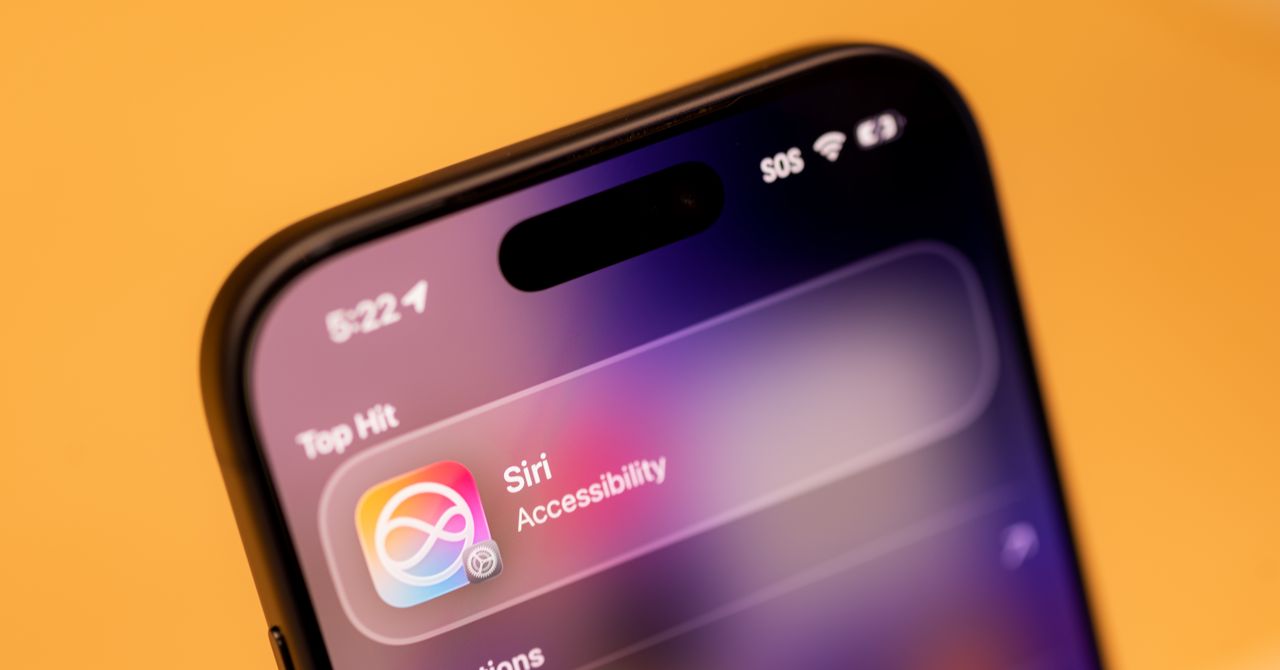
Apple has agreed to pay $250 million to settle a false advertising class-action lawsuit accusing the company of overhyping its Apple Intelligence features—specifically a promised AI overhaul of Siri that plaintiffs say never materialized and, according to their lawyers, may not arrive for years.
The announcement comes just before Apple is supposedly set to finally unveil some form of AI-enhanced Siri at its developer conference in June, which would mark another swing at detailing a radically improved digital assistant for the iPhone.
The legal complaint says that Apple allegedly saturated the market with deceptive ads, inducing consumers to purchase iPhones based on “the promise of certain Enhanced Siri features” that Apple had first announced at its Worldwide Developers Conference in 2024, a few months ahead of the release of the iPhone 16.
The proposed settlement, filed Tuesday in California federal court, is one of the largest Apple has ever reached. It covers only US customers who bought any model of an iPhone 15 or iPhone 16 between June 10, 2024 and March 29, 2025. Depending on the claim, those who qualify could possibly receive up to $95 per device.
Court documents state that a $250 million common fund will provide successful claimants with “a presumptive per-device payment of $25 for each eligible device, which may decrease or increase up to $95 per device depending on claim … The Settlement also reflects that Apple anticipates delivering additional Siri Apple Intelligence features in future software updates at no additional cost.”
The documentation goes on to cite that Apple’s advertising also drew the attention of the Better Business Bureau’s National Advertising Division, which found that “Apple’s claim that Apple Intelligence is ‘available now’ conveyed that the updated Siri was available at launch, when it was not.” In March 2025, Apple told consumers that Enhanced Siri features would not be delivered until a future date.
The settlement, which is still awaiting a judge’s approval, includes no admission of fault by the company. Marni Goldberg, an Apple spokesperson, gave a statement to The New York Times, claiming that with “the launch of Apple Intelligence,” Apple has “introduced dozens of features across many languages that are integrated across Apple’s platforms,” but the company has “resolved this matter to stay focused on doing what we do best, delivering the most innovative products and services to our users.”
Apple acknowledged last year that its AI upgrades to Siri were falling behind schedule. In a statement to Daring Fireball in March 2025, Apple spokesperson Jacqueline Roy said the company had “been working on a more personalized Siri, giving it more awareness of your personal context, as well as the ability to take action for you within and across your apps,” but confirmed that it was going to take the company “longer than we thought to deliver on these features and we anticipate rolling them out in the coming year.”
The next day, Apple reportedly pulled an advertisement starring Bella Ramsey showing the actor using a version of Siri that is capable of answering the query “What’s the name of the guy I had a meeting with a couple of months ago at Cafe Grenel?”
The is the second time in as many years Apple’s voice assistant has cost the company dearly. In May last year, Apple agreed to pay out $95 million to settle a class-action lawsuit over claims Siri listened in on private conversations.

The Children’s Wellbeing and Schools Bill is a wide-ranging bill from the Department for Education. The bill is intended to improve child safety by legislating the expected standards regarding the duty of care for children.
However, recent amendments to the bill, which were proposed by the Department for Science, Innovation and Technology, have included two provisions that lead to ethical concerns regarding content moderation and the sharing of personal data.
The timing of these amendments is especially concerning, as they were included after the third reading in the House of Lords. The bill is currently at the consideration of amendments stage, prior to submission for royal assent (after which the bill would be enacted into UK law).
“We’ve been clear that we will take action to make sure children have a healthy relationship with mobile phones and social media. That’s why we’ve launched a consultation looking at everything from age limits and safer design features to a social media ban – seeking views from experts, parents and young people to ensure we take the best approach, based on the latest evidence,” said a spokesperson for the Department for Science, Innovation and Technology (DSIT).
“The amendments made to the Children’s Wellbeing and Schools Bill will allow us to act quickly on the outcomes of this consultation and help give young people the childhood they deserve.”
The government, including the House of Lords, have been in recess for Easter. As such, MPs and peers have not been given much time to scrutinise amendments that potentially have far-reaching consequences, beyond what was intended. However, the government has said that MPs and peers will have the chance to debate and vote on any measures brought forward.
“Amendments are being introduced into bills at very late stages in the House of Lords, and then you have this last-minute scramble and disagreement between the Lords and the Commons as to how to create legislation to deal with the issue that has arisen,” says James Baker, platform power and free expression programme manager for the Open Rights Group.
“They are such politically controversial hot topics that the government can’t ignore what’s going on in the Lords. It’s a terrible way to create legislation and bypasses huge amounts of Parliamentary scrutiny. That’s why we’ve ended up with a motion to ban all 16-year-olds from social media in a bill that was about improving standards in schools.”
Age restrictions for VPNs
The first of these amendments would compel virtual private network (VPN) providers to verify the age of all their users in the UK.
The bill states: “Within 12 months of the day on which this act is passed, the secretary of state must, for the purpose of furthering the protection and wellbeing of children, make regulations which prohibit the provision to UK children of a relevant VPN service (the ‘child VPN prohibition’).”
Although the bill is aimed at children (anyone under the age of 18), everyone would have to undertake these checks for the VPN providers to identify the ages of their users in a “highly effective” manner. Although age verification could be undertaken by the VPN providers themselves, more often it is conducted by a third-party.
Despite the recent proliferation of age verification service providers, except for the core data protection legislation (Data Protection Act 2018 and UK GDPR), the industry is still a largely unregulated space.
This is despite the sensitive information (biometric data, identifying documents, etc) that is shared with these providers. Yoti, the market leader in the age-verification industry, was fined 950,000 euros (nearly £830,000) by the Spanish data protection authority earlier this year for excessive retention and unlawful processing of personal data.
The VPN age restriction amendment could also be used to enable further regulations that would require people to use a particular method for proving their age online, such as a government issued Digital ID. The digital ID system is a protocol the current government has been pursuing, despite wide-ranging resistance.
Censoring the internet
The second amendment that has caused concern would require providers of internet services to restrict children’s access to certain internet services. The bill states that: “By regulations made by statutory instrument require all regulated user-to-user services to use highly-effective age assurance measures to prevent children under the age of 16 from becoming or being users.”
Like the VPN age restriction amendment, this also raises ethical challenges around verifying everyone’s age, but for ISPs. For the service providers to safely protect children, they would have to correctly identify the age of their users. This would mean relying on age verification technologies to ensure that the service providers are adequately following the regulatory requirements.
The amendment also gives ministers the power “to require internet service providers to restrict access by children to certain internet services”. Although content blocking is intended to protect children from encountering unsuitable material online, it carries significant risks of insidious purposes.
Furthermore, the amendment could allow the government to restrict internet content without passing new legislation or the need to demonstrate that harm to children was likely. The amendment would effectively enable this government, or any future government, to determine what it would consider as harmful and block certain content arbitrarily.
“They’ve got this idea that all platforms are bad and that we know what’s best, so we’re going to tell the platforms what to do,” says Baker. “Whereas a lot of the platforms have trust and safety teams with intelligent people who’ve been working on these problems for a long time and are now having design solutions imposed on them.
“A better approach to government micromanaging features might be to regulate the business models that create this conflict between platforms need to maximise attention for ad revenue, and user experience or safety.”
It is also worth noting that this will apply to all internet services, not just to websites, so any service provider that has an online component will be affected. This includes streaming services such as YouTube or Netflix, videogames that have online multiplayer capabilities, and messaging services.
Significant concerns are raised
There is a valid concern that this amendment for protecting against “harmful” content could be used to restrict content that a government may be ideologically opposed to. A potential example of this would be a government choosing to block access to information and support regarding LGBTQIA+ identities.
This could therefore potentially pave the way for a digital version of Section 28 (a former amendment in the Local Government Act that prohibited local authorities from promoting homosexuality or teaching that it was acceptable, which was repealed in 2003).
There is also the consideration that ISPs provide internet connectivity to households and not just a specific person. So, if the amendment to the bill were to come into effect as written, it would be necessary for ISPs to determine who was using the internet at any given time. This issue would be compounded if multiple people were using the same ISP connection to access different content.
The Online Safety Act 2023, which came fully into force last year, mandates that social media and internet search services protect children via age assurance against pornography, self-harm and bullying content.
“The Online Safety Act received some criticism because AI chatbots aren’t included in it, so by making the categories really broad, it gives them flexibility,” explains Baker. “That way, if something comes up and there is public outcry about it, they have the power to pass secondary legislation and essentially place it behind an age ban.”
It is also worth noting that blocking harmful content ignores the underlying causes of online harm by not addressing the engagement-driven design and data-fuelled advertising business models that can lead to toxic content to provoke reactions. Neither does the amendment support digital literacy initiatives to develop resilience among young people or promote safer online platform alternatives.
The UK government already has age restrictions in place for accessing pornographic websites, courtesy of the Online Safety Act 2023, and online video platforms require users to verify their age before watching mature content. Additionally, the UK already has an age rating policy, courtesy of the British Board of Film Classification (BBFC), which applies age rating to “films, videos and websites”.
The human rights group Liberty is already calling for a new amendment to be added to the Children’s Wellbeing and Schools Bill to address some of the concerns regarding the proportionality of incorporating an age verification checkpoint.
The amendments to the Children’s Wellbeing and Schools Bill create significant ethical implications for the sharing and processing of personal data. By increasing the scope of their remit to incorporate children’s online experiences, the government would potentially be paving the way for unregulated age-verification, content moderation and internet monitoring.

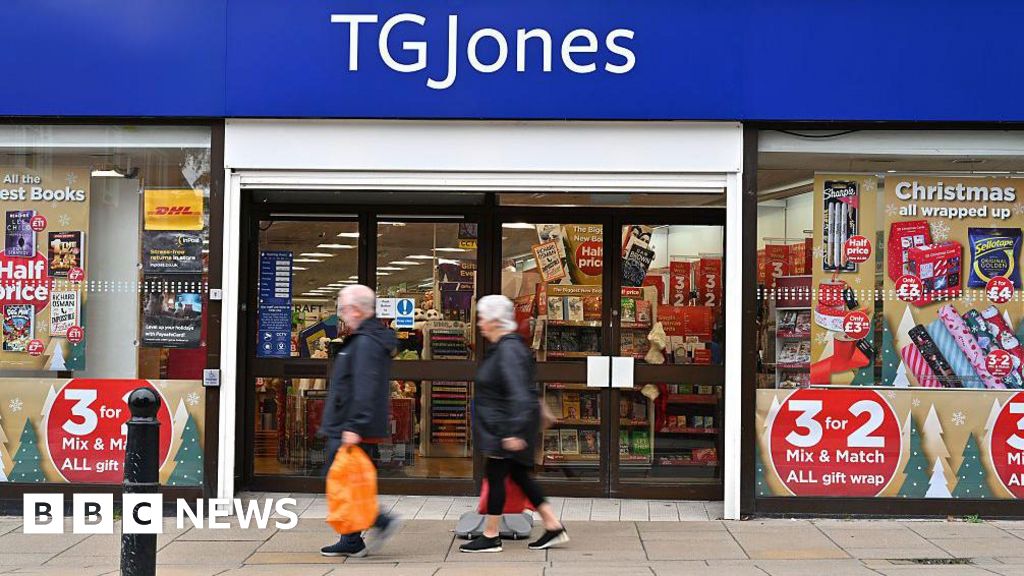
Up to 150 former WHSmith high street stores to close

‘Project Freedom’: Trump pauses Hormuz escort mission at Pakistan, others’ request

Strait of Hormuz traffic will not normalize until late 2026: World Bank

A Brain Implant for Depression Is About to Be Tested in Humans

Pro wrestling star Steph De Lander reveals how colleague’s advice helped lead her to title triumph at ACW

‘I had £20,000 stolen and had to fight a 13-month fraud reporting rule to get it back’

-
 Tech1 week ago
A Brain Implant for Depression Is About to Be Tested in Humans
-
 Sports1 week ago
Pro wrestling star Steph De Lander reveals how colleague’s advice helped lead her to title triumph at ACW
-
Business1 week ago
‘I had £20,000 stolen and had to fight a 13-month fraud reporting rule to get it back’
-

 Entertainment1 week ago
Norway joins Type 26 Frigate Programme to boost NATO naval power
-

 Entertainment1 week ago
Melania Trump says ABC should ‘take a stand’ on late-night host Kimmel
-
 Business7 days ago
PSX plunges over 4,800 points | The Express Tribune
-

 Tech1 week ago
This Ambitious Laptop Doesn’t Leave Much Room for Your Hands
-

 Tech6 days ago
Almost half of UK businesses hit by cyber attacks | Computer Weekly