

Entertainment
Issa Rae explores history of Black representation in TV in documentary: “It makes such a difference”

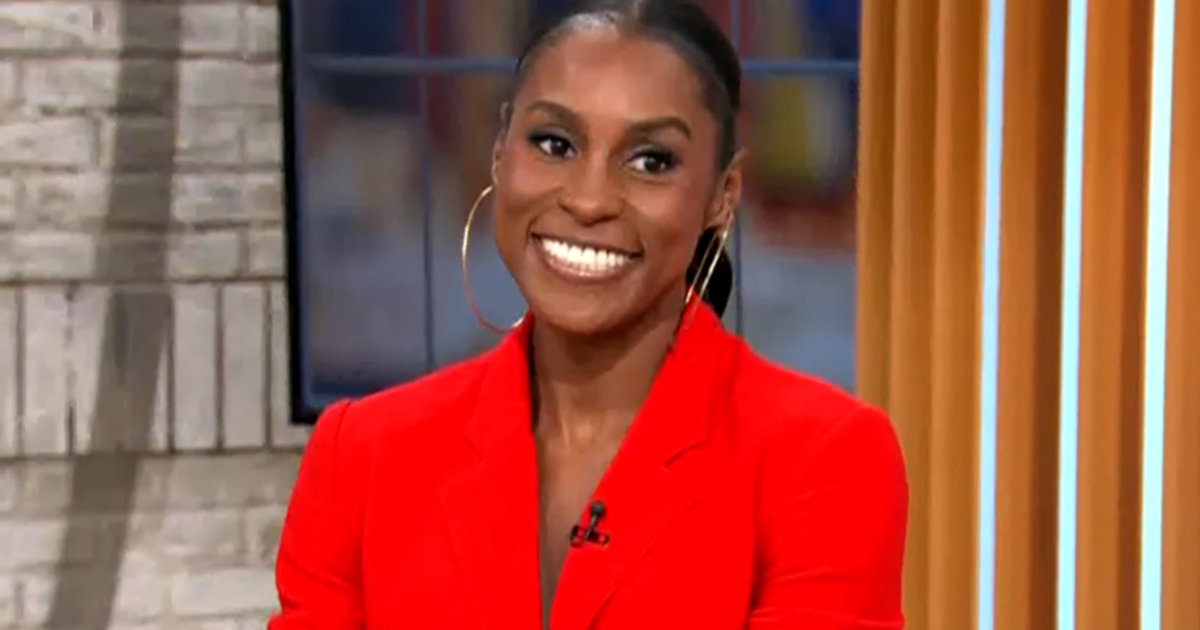
Award-winning actor producer and writer Issa Rae is opening up about what inspired her new documentary, “Seen and Heard: The History of Black Television.” She’s executive producer of the two-part series that explores the history of Black representation on TV and how Black artists and creators revolutionized the industry while confronting major challenges.
The series, which Rae and her collaborators started creating in 2019, features media icons such as Oprah Winfrey, Tyler Perry, Tracee Ellis Ross, Norman Lear and Shonda Rhimes.
“What inspired me to even get my start was just seeing the people that I love, the people that I know, the people that raised me on TV, and that representation was so essential for me to recognize that I could do it,” Rae told “CBS Mornings” Tuesday about her inspiration growing up in the 90s.
In the early 2000s, Rae said there was a “disappearance all of the sudden” of Black characters and shows on TV, but they reemerged about a decade later.
In the 2010s, “there were just so many new shows, new shows of color,” she said. But now, Rae said TV and media is once again in an era where Black characters and shows have disappeared.
“I think the advent of cable made a huge difference where, you know, now these networks had to try to capture the broadest audience possible because they were losing audiences to different niche cable networks and so they were like, ‘how can we maximize the audience we have?’ and they have a tendency to go broad then, and broad sometimes just means White, the most eyeballs that you can get,” she said.
Even though shows like “Family Matters” and “The Fresh Prince of Bel-Air” were universal and watched by a broad audience, there is sometimes a feeling that Black shows may exclude an audience, she said.
The documentary also explores the importance of representation behind the camera.
“It makes such a difference when you’re thinking about something as small as set design. I’ve seen that just even on my own productions and watching movies. Sometimes you’ll watch a movie and you’ll see a Black character’s bedroom, and you’ll be like ‘they would never, what? They would never have that.'”
The details in a show could also apply to how a character dresses or their hair.
“I don’t want to be taken out of a story. If I’m immersed, like those small details really, really matter, and there’s just — also there’s a different level of honestly, pride that goes in, in creating something that you know you’re a part of and you understand on a different level,” Rae said.
She said the changing media industry is challenging, “but it’s another time that I’m confident we’ll get through. There’s so many opportunities in the digital era and that’s where I came from. I find hope in knowing that I can create. If I want to tell a story I’m going to tell a story regardless.”
The HBO documentary film “Seen and Heard: The History of Black Television” debuts Sept. 9 on HBO and HBO Max.





Entertainment
Trump calls for Jimmy Kimmel to be fired over jokes made before White House Correspondents’ Dinner shooting
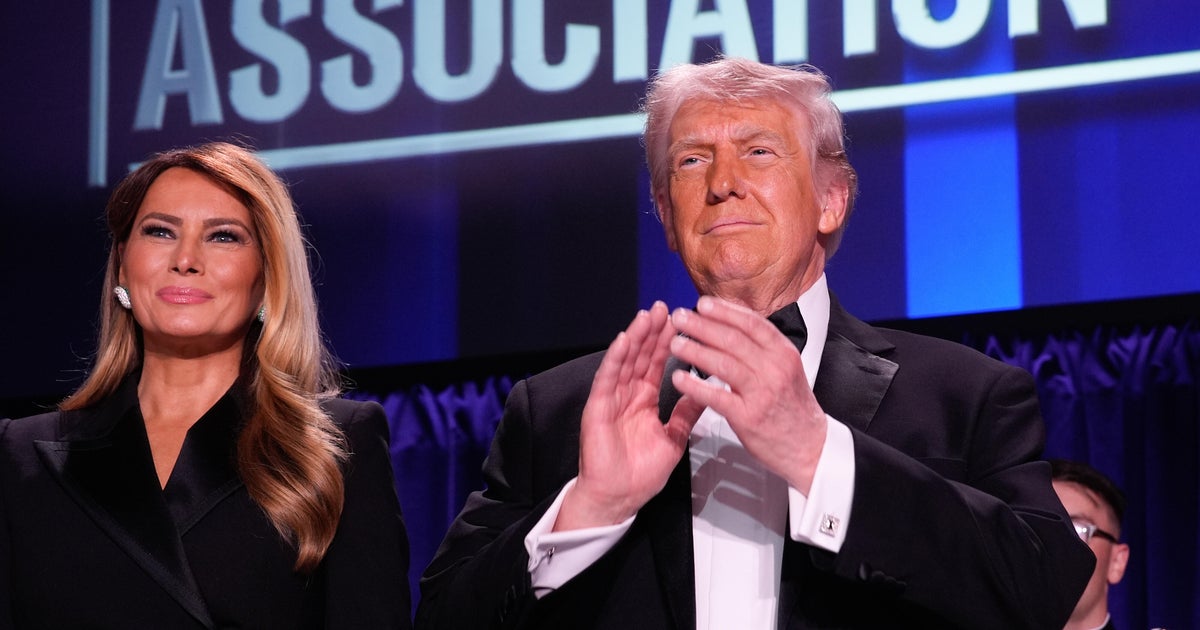
President Trump on Mondaycalled for comedian Jimmy Kimmel to be fired Monday over jokes the late-night host made days before the shooting at the White House Correspondents’ Dinner.
The president’s call for Kimmel’s firing came after hours after first lady Melania Trump, in a rare statement, called the jokes “hateful and violent rhetoric.”
On his show on Thursday, Kimmel said he was taking “a page from the Kid Rock alternative half-time show” and created a mock correspondents’ dinner, which has featured comedians in the past but this year was set to feature mentalist Oz Pearlman. In the skit, Kimmel referred to Melania Trump as having a “glow like an expectant widow.”
Mr. Trump called the joke a “call to violence.”
“I appreciate that so many people are incensed by Kimmel’s despicable call to violence, and normally would not be responsive to anything that he said but, this is something far beyond the pale,” the president wrote on Truth Social on Monday. “Jimmy Kimmel should be immediately fired by Disney and ABC.”
The first lady had said that ABC should “take a stand” against Kimmel.
“Kimmel’s hateful and violent rhetoric is intended to divide our country. His monologue about my family isn’t comedy- his words are corrosive and deepens the political sickness within America,” Melania Trump posted on social media. “People like Kimmel shouldn’t have the opportunity to enter our homes each evening to spread hate. A coward, Kimmel hides behind ABC because he knows the network will keep running cover to protect him.”
Melania Trump was sitting next to Mr. Trump on Saturday at the correspondents’ dinner when gunshots rang out and they were evacuated from the ballroom. No one was injured and the suspected gunman, Cole Allen, was tackled and taken into custody. He is set to appear in federal court on Monday.
CBS News has reached out to ABC for comment.
Kimmel was pulled from the air for several nights in September after being criticized by conservatives, including Mr. Trump, for his remarks in the aftermath of the Charlie Kirk assassination. Kimmel had said that America “hit some new lows over the weekend with the MAGA gang trying to characterize this kid who murdered Charlie Kirk as anything other than one of them, and doing everything they can to score political points from it.”
Kimmel did not issue a blanket apology for the remarks, but he did say he could see how they were offensive to some. When he returned to the air on Sept. 23, he said it was “not my intention to blame any specific group for the actions of what was obviously a deeply disturbed individual,” referring to the alleged gunman, who is in custody pending trial.
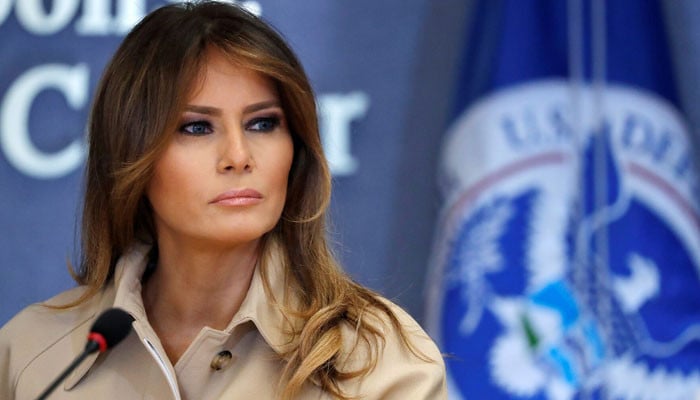
US first lady Melania Trump said on Monday it was time for ABC to “take a stand” on Jimmy Kimmel after a monologue the late-night talk show host delivered prior to a shooting near a gathering of journalists and politicians over the weekend.
“Enough is enough. It is time for ABC to take a stand. How many times will ABC’s leadership enable Kimmel’s atrocious behaviour at the expense of our community?” she said in a post on X.
Kimmel, in a parody of the White House Correspondents Dinner that aired last week before the actual event, said: “Mrs. Trump, you have a glow like an expectant widow.”
President Donald Trump and the first lady were rushed out of the dinner on Saturday after a shooting in the lobby of the Washington Hilton. A suspect identified as Cole Allen charged through a checkpoint and fired at Secret Service agents, wounding one, before he was subdued and arrested.
Disney and ABC did not immediately comment.
In September, the head of the Federal Communications Commission pressured broadcasters to take Kimmel off the air. ABC briefly suspended Kimmel’s show that month over comments he made about the assassination of conservative activist Charlie Kirk.
Hours before the suspension, FCC head Brendan Carr warned that local broadcasters who aired Kimmel could face fines or loss of licenses and said “it’s time for them to step up.” His comments garnered pushback from the entertainment industry and politicians on both sides of the aisle, including Republican Senator Ted Cruz, who likened his threats to that of an organised crime boss.
In September, Sinclair and Nexstar Media Group briefly took Kimmel’s show off the air on their 70 ABC-affiliated stations, covering nearly a quarter of US households. Carr wants to make it easier for local broadcasters to preempt national programming.
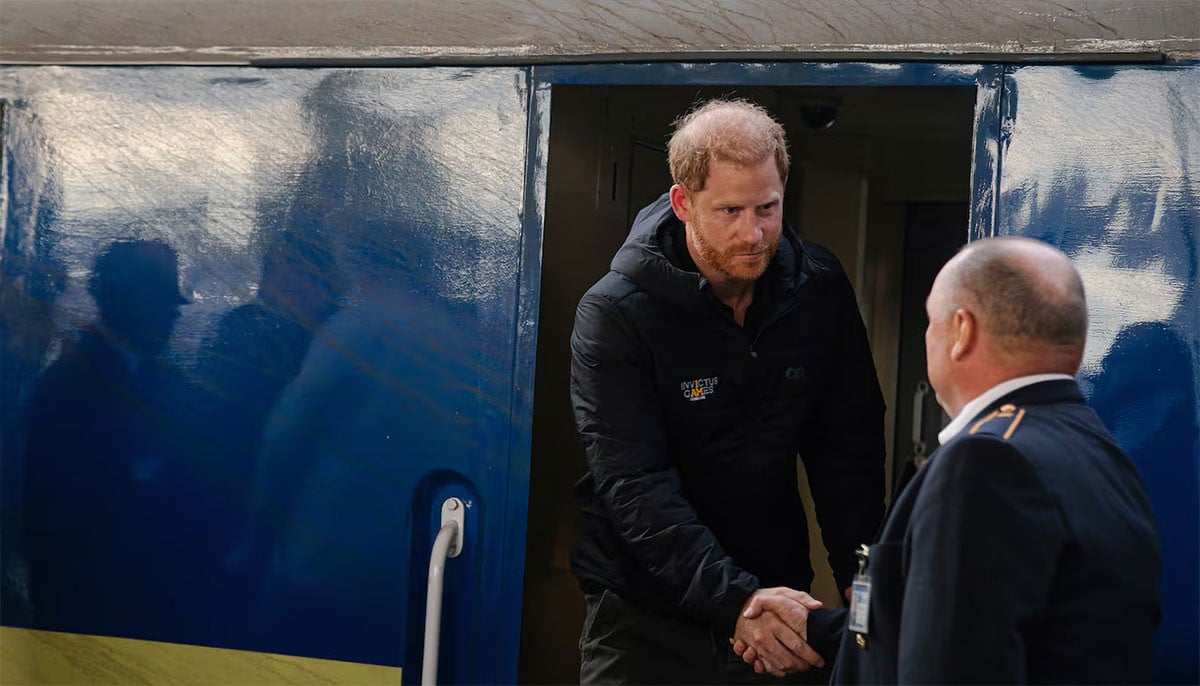
Prince Harry has made a significant statement pointing out urgent humanitarian concerns, drawing attention to the evolving crisis in Ukraine and the growing role of technology in modern mine clearance efforts.
On the ground, the Duke of Sussex saw how old-school manual clearance is being rapidly transformed by innovation.
Drones scanning hazardous land from above, advanced mapping systems flagging threats with precision, and smarter demining techniques are now being used to protect both civilians and the teams working on the front lines.
His comments come at a moment of heightened royal activity, as King Charles is almost set to begin a visit to the United States.
HALO Trust tweeted his remarks on Monday sharing a visit that brought the brutal reality of modern warfare and the technology fighting back into sharp focus.
Ukraine today is widely regarded as one of the most mine contaminated countries on Earth, with entire regions still unsafe long after the fighting has shifted elsewhere.
Harry also witnessed and praised the organisation’s forward thinking approach, stressing that this is about far more than removing explosives.


Trump calls for Jimmy Kimmel to be fired over jokes made before White House Correspondents’ Dinner shooting

Intellia Therapeutics says its Crispr-based treatment succeeds in pivotal trial

PCB shares ticket pricing details for PSL 11 Qualifier in Karachi – SUCH TV

-

 Sports1 week ago
NCAA men’s gymnastics championship: All-time winners list
-

 Sports1 week ago
WWE WrestleMania 42 Night 2: Live match results and analysis
-
 Politics6 days ago
UK’s Starmer seeks to deflect blame over Mandelson appointment
-

 Fashion1 week ago
UK’s Sosandar returns to profitability amid robust FY26 performance
-
 Business7 days ago
How Trump’s psychedelics executive order could unlock stalled cannabis reform
-
 Business1 week ago
No fuel shortage: Govt assures 100% domestic LPG, PNG, CNG supply amid Hormuz energy crunch – The Times of India
-
 Entertainment7 days ago
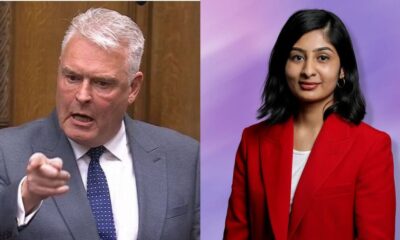
Lee Anderson, Zarah Sultana kicked out of UK Parliament for calling PM ‘liar’
-

 Sports1 week ago
Quetta Gladiators opt to bowl after winning toss against Peshawar Zalmi in PSL 11 clash