

Business
Oil prices jump on renewed US-Iran hostilities | The Express Tribune

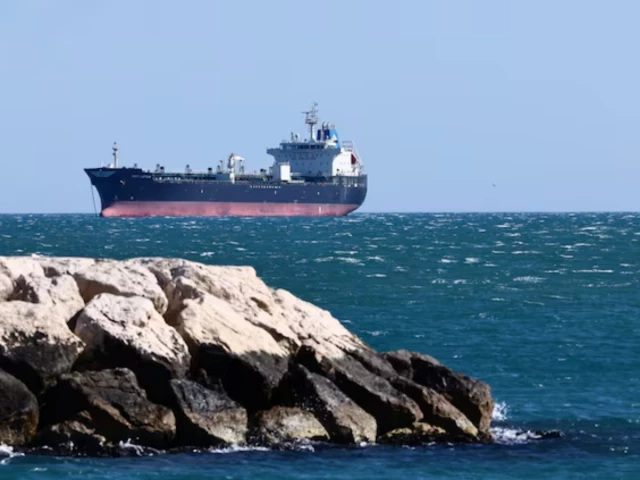
An oil tanker anchors near the oil hub of the port of Fos-Lavera at sunset near Marseille, southern France. PHOTO: REUTERS
Oil prices rose about 1% on Friday after renewed fighting broke out between the US and Iran, threatening a shaky ceasefire and dashing hopes for progress on a reopening of the Strait of Hormuz, a key transit route for oil and liquefied natural gas.
Brent crude futures were up $1.20, or 1.2%, at $101.26 a barrel. West Texas Intermediate (WTI) US crude futures rose by 85 cents, or 0.9%, to $95.66 a barrel. The benchmarks were up more than 3% at market open.
The gains snapped three days of decline on reports this week that the US and Iran were close to agreeing to a peace deal that would end the fighting but put off larger issues around Iran’s nuclear programme. For the week, both contracts are still set to fall about 6%.
“The market is on the cusp of a complete breakdown. Price formation is no longer anchored in a pragmatic reading of the war’s trajectory or the physical realities in the Strait of Hormuz,” said Vandana Hari, founder of oil market analysis provider Vanda Insights.
Friday’s jump in prices followed Iran’s accusations that the US violated the month-long ceasefire between them, while the US said its strikes were retaliatory after Iran fired on US Navy vessels transiting the Strait of Hormuz on Thursday.
Iran’s military said the US had targeted an Iranian oil tanker and another ship and civilian areas in the strait and on the mainland.
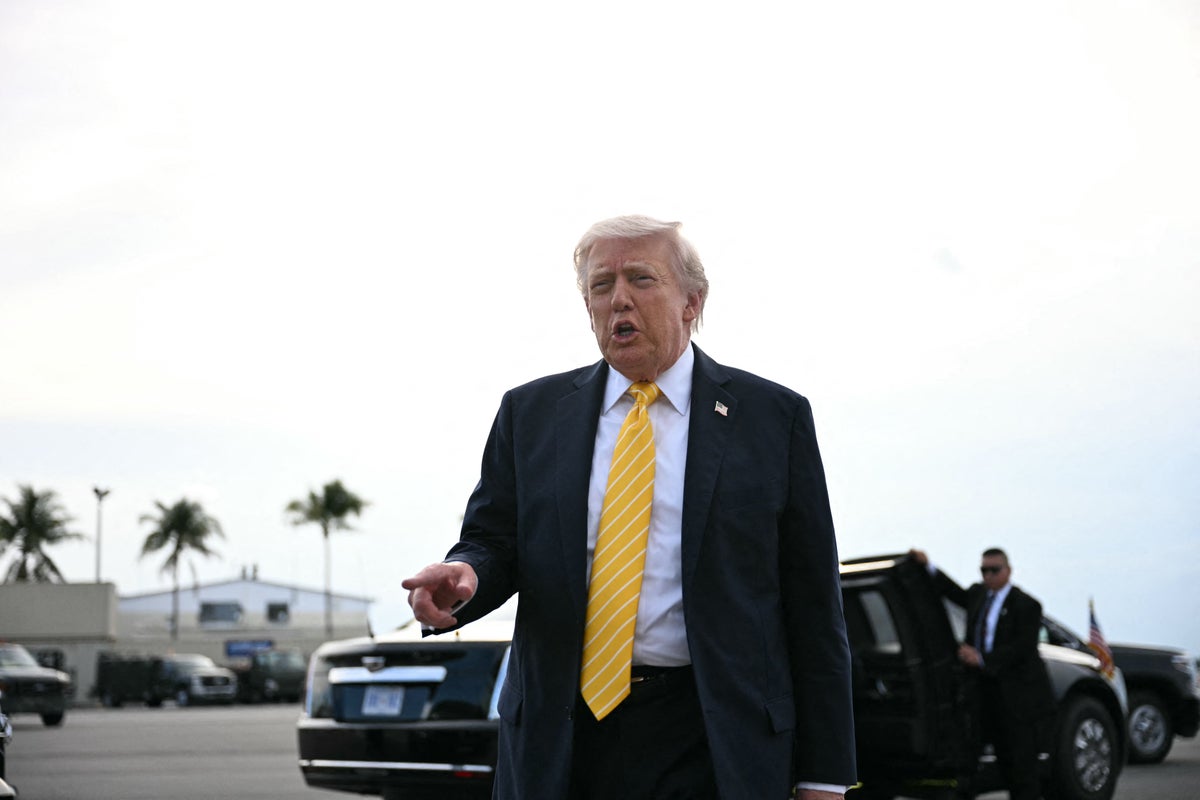
Despite the renewed combat, US President Donald Trump told reporters later on Thursday the ceasefire was still in effect.
Read: Oil prices rise as investors weigh Middle East peace prospects
“The US administration continues to oversell the prospects of a thaw, and an optimism-biased market buys into it. Curiously, each time, the rebound is gradual and incomplete, making the head fakes at least somewhat effective,” Vanda Insights’ Hari said.
The exchange of fire happened as Washington awaited Iran’s response to the latest peace proposal, which did not address a number of contentious issues, including the US demand to reopen the Strait of Hormuz, a conduit for one-fifth of the world’s oil and LNG supply, before the war began on February 28.
“On the supply front, the picture remains tight,” IG analyst Tony Sycamore said in a note.
Separately, the US Commodity Futures Trading Commission is investigating oil price trades totalling $7 billion ahead of key Iran war-related announcements by President Trump, Reuters reported on Thursday.
Most of the trades involved short positions, or bets on prices falling, placed on the Intercontinental Exchange (ICE) and Chicago Mercantile Exchange (CME) before Trump statements announcing attack delays, the ceasefire or other changes to Iran policy that led to a decline in oil markets.





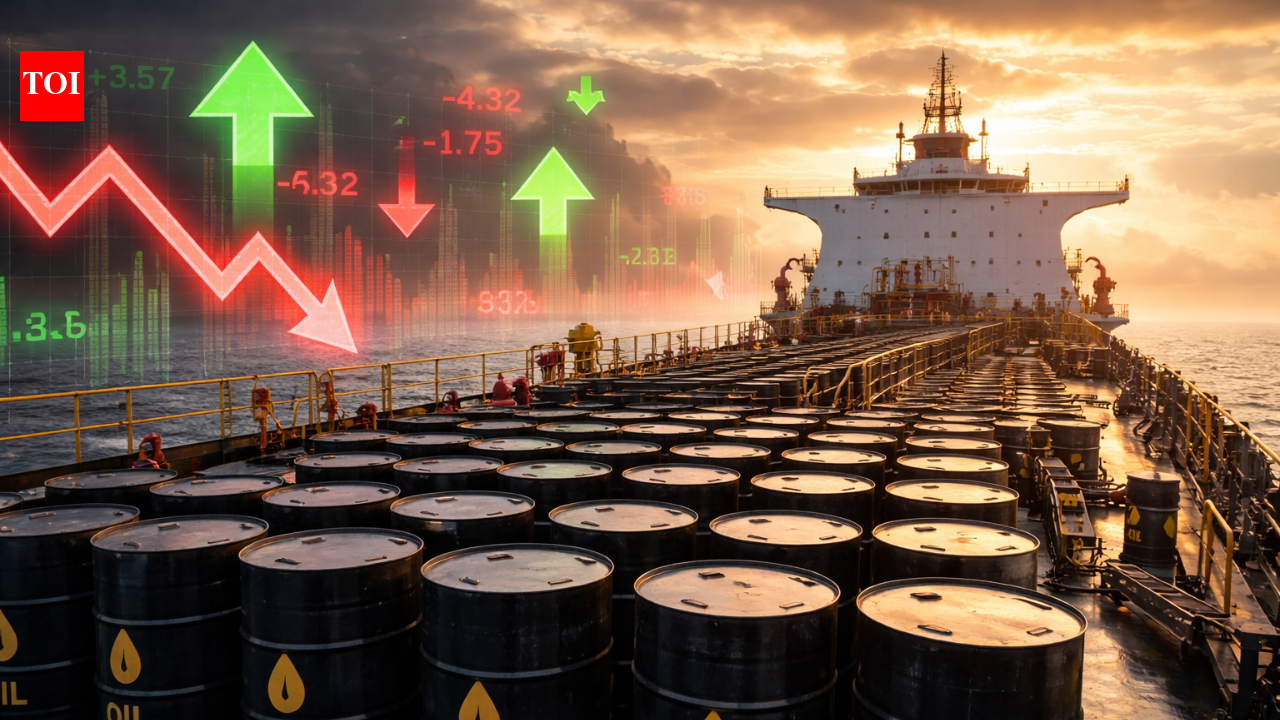
The world’s busiest oil supply passage is in a chokehold, and the ripple effects are being felt across nearly every corner of the globe. The pressure is already showing up everywhere: at petrol stations, in grocery bills, and along global trade routes. The conflict, which has continued to intensify since February 28, has already pushed crude prices beyond the $100 mark, but experts warn a far steeper surge may lie ahead, with prices potentially soaring past a whoppping $167 per barrel and even to $200.With war tensions escalating in the Middle East, economists and energy experts are warning that if the Strait of Hormuz remains closed through September, the fallout could trigger one of the worst energy and trade shocks in modern history.According to projections from the Federal Reserve Bank of Dallas, cited by The Washington Post, a prolonged closure of the Strait could send oil prices soaring above $167 a barrel. However, some analysts are warning of an even darker scenario with some believing crude prices could surge to $200 a barrel if disruptions intensify. A recent note from Australian investment bank Macquarie Group suggested that if the conflict continues through June, oil prices could briefly surge above $200 per barrel.However, Vikas Dwivedi, global oil and gas strategist at Macquarie, told CNN earlier that the probability of such a scenario is around 29%. At the same time, the expert also noted that even if the war ends, oil could still climb to $200 a barrel if the Strait of Hormuz remains largely closed, a possibility that US President Donald Trump also raised.
Biggest crisis in history
Fatih Birol, head of the International Energy Agency, had already described the current oil supply turmoil as “indeed the biggest crisis in history” in an interview with France Inter radio. But the fallout from the Middle East conflict spills far beyond soaring fuel prices, with its impact threatening to disrupt global trade, strain supply chains, and deepen economic uncertainty worldwide.An analysis by independent trade monitoring body Global Trade Alert, reported by the Financial Times, suggests that prolonged conflict-driven oil market instability could significantly weaken global commerce. Using models based on earlier shocks such as the Covid-19 pandemic and the 2008 commodity crash, the study found that continued fuel price volatility could reduce global trade growth by 1.75% by the end of next year, a steep drop from prewar expectations.Simon Evenett, founder of Global Trade Alert and trade expert at IMD Business School in Lausanne, warned that world merchandise trade may prove far less resilient than early signals suggest. He said sustained fuel price volatility slows global trade growth, with the full economic impact often taking up to 19 months to materialise. His warning was stark: “The worst may be ahead of us.”Such a downturn could seriously dent the World Trade Organization’s March forecast, which had projected global goods trade growth of 1.9% in 2026 before improving to 2.6% in 2027. The WTO had already estimated that sustained high oil prices could shave 0.5 percentage points off 2026 growth, but the latest worst-case scenarios suggest the hit could be far deeper.From surging fuel costs and strained supply chains to slowing trade and recession fears, the Middle East conflict is no longer just a regional war story. If the Strait of Hormuz remains trapped in crisis, the shockwaves may reshape the global economy long after the headlines fade.
Middle East continues to boil
Meanwhile, the Middle East crisis has shown occasional signs of cooling, every peace push so far has ended in a stalemate. The latest standoff came on Thursday when US President Donald Trump claimed that three American naval destroyers were fired upon while passing through the Strait of Hormuz, though none of the vessels sustained damage. Trump also issued a fresh warning to Iran, threatening stronger military action if Tehran does not move quickly to sign a deal.In a post on Truth Social, Trump said the three “world class” US destroyers had transited the Strait successfully despite coming under attack, adding that while the American ships were unharmed, Iranian attackers and several small boats were “completely destroyed.”The conflict began on February 28, when US and Israel launched joint attacks on Iran, after which Tehran tightened its noose on the crucial Strait of Hormuz. Since then, oil supplies across the globe have been disrupted and crude prices have continued to swing beyond $100 per barrel, even touching $126 per barrel mark.
Oil prices rose and stock markets pulled back slightly on Friday after the US and Iran exchanged fire in the Strait of Hormuz, although Asian markets remained on course for their strongest weekly performance in years on the back of an AI-driven rally.
Brent crude rose 1.3 per cent to $101.60 per barrel as the renewed Middle East hostilities unsettled markets that had spent much of the week pricing in a negotiated resolution.
Iran targeted three US destroyers with missiles, drones and small boats in the strait on Thursday, according to the US military, which said the attacks were successfully intercepted and none of the warships were damaged. Strikes were then carried out against Iranian military facilities, including launch sites and command and control centres, it claimed.
Iranian state media said the army and the navy exchanged fire with “the enemy” near Qeshm Island in the strait, while explosions were reported elsewhere.
President Donald Trump branded Iran’s leaders “lunatics” and warned that the US would “knock them out a lot harder, and a lot more violently” if they did not sign a deal to end the conflict “fast”.
“A normal country would have allowed these destroyers to pass, but Iran is not a normal country,” he posted on Truth Social. He nevertheless told reporters that the ceasefire was still in effect.
“They trifled with us today. We blew them away,” he said. “They have to understand – if it doesn’t get signed, they’re going to have a lot of pain.”
“It could happen any day,” the US president claimed when asked how close an agreement was, “and it might not happen.”
A further complication emerged this week when Lloyd’s List Intelligence reported that Iran had set up an agency, called the Persian Gulf Strait Authority, as the only valid authority to provide permission to vessels transiting the strait, and had begun emailing shipping firms an application form for passage. The firm said the move could be designed to ratchet up pressure on Washington.
The US and its Gulf allies are now seeking backing at the United Nations for a resolution condemning Iran’s stranglehold on the strait, though it faces a likely veto from Russia and China.
In spite of renewed hostilities in the Middle East, Asian stock markets enjoyed a good week, driven by surging demand for AI-linked chipmakers.
South Korea’s Kospi was heading for a weekly gain of 12 per cent, its largest since 2008, as Samsung and SK Hynix surged. Taiwan’s benchmark index was up 6.9 per cent for the week and Japan’s Nikkei 4.5 per cent, having hit a record intraday high on Thursday.
On Friday, however, MSCI’s broadest index of Asia-Pacific shares outside Japan fell 0.8 per cent and the Kospi slipped as traders locked in profits, while the Nikkei was 0.4 per cent lower, dragged down by a fall in SoftBank shares after Arm Holdings warned of trouble securing supply for its new AI chip. S&P 500 futures rose 0.2 per cent.
“Despite ongoing hostilities and still-elevated oil prices, markets are pricing a limited duration,” Marija Veitmane, head of equity research at State Street Markets, told Reuters, noting that Asia and America were attracting the most buying at Europe’s expense.
European stock futures fell 0.7 per cent.
Investors are watching Friday’s non-farm payrolls report in the US, where jobs are expected to have increased by 62,000 in April after rebounding 178,000 in March. Local government elections across Britain are also in focus, with poor results expected for the ruling Labour Party.
“Gilts are already under scrutiny due to inflation risks and adding political uncertainty to the mix could further push global investors to look elsewhere,” ING analysts said.
Sterling held steady at around $1.36. The yen was at 156.9 per dollar, having struggled to sustain gains beyond 155 after suspected Japanese intervention to the tune of nearly $70 billion since last Thursday. The euro bought $1.1731 and the Australian dollar $0.7210. China’s yuan, Asia’s best-performing currency since the war broke out, was on the cusp of strengthening past 6.8 to the dollar, near the strongest level since 2023. The 10-year US Treasury yield held at 4.39 per cent, while Bitcoin was inching towards a sixth straight consecutive weekly gain at $79,460.

Broadcasters in the two countries have yet to reach deals with Fifa, just weeks before the tournament is due to start.
Source link


India’s growth may moderate to 6.6% in FY27 amid global energy shocks

Prince William wishes Sir David Attenborough 'happy 100th' in special video

Australian wool market shows resilience amid currency headwinds

-

 Politics5 days ago
Iran weighs US reply delivered via Pakistan as Trump signals opposition to deal terms
-

 Tech1 week ago
Almost half of UK businesses hit by cyber attacks | Computer Weekly
-
 Business1 week ago
PSX plunges over 4,800 points | The Express Tribune
-
 Business7 days ago
Apollo Sports Capital and Tom Dundon make landmark $225 million investment in pickleball
-

 Entertainment1 week ago
David Allan Coe, country singer who wrote “Take This Job and Shove It,” dies at age 86
-
 Business1 week ago
Government hikes jet fuel prices by 5% for international airlines – The Times of India
-

 Fashion1 week ago
EU laws push APAC factories towards data over certificates
-

 Sports1 week ago
Drake Maye voices support for Patriots coach Mike Vrabel as off-field controversy continues to swirl