

Fashion
Bangladesh needs logistics upgradation to turn competitive: Think tank

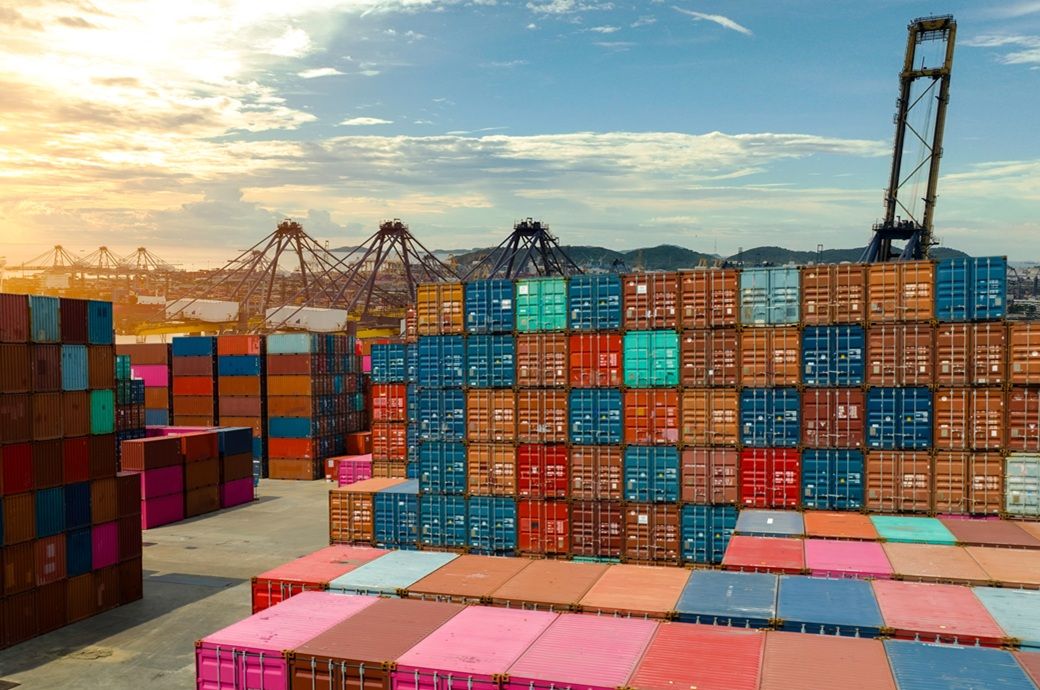
Reaz made the observations while presenting a keynote paper titled ‘Integrated Port and Logistics Development for a Trade-Driven Bangladesh’ at a roundtable organised by the Dhaka Chamber of Commerce and Industry (DCCI).
Policy Exchange Bangladesh has called for urgent modernisation of the country’s port infrastructure, overhaul of trade facilitation systems, and activation of its dormant National Logistics Policy to stay globally competitive.
A 25-per cent cut in logistics costs could boost exports by 20 per cent, while cutting container dwell time by just a day at Chattogram would raise exports by 7.4 per cent, it said.
Bangladesh’s overdependence on the readymade garments (RMG) sector, which accounted for 81.49 per cent of total exports in fiscal 2024-25, combined with a deteriorating logistics ecosystem, poses serious risks to the country’s long-term economic resilience, particularly as it approaches graduation from the least developed country (LDC) status, he cautioned.
Bangladesh ranks 88th on the World Bank’s Logistics Performance Index, far behind India at 38th and Vietnam at 43rd, while Chattogram Port sits at 356th on the Container Port Performance Index, compared to Haiphong at 30th.
Container dwell times at Chattogram remain critically high, with vessel turnaround averaging 3.23 days against just 0.86 days at Colombo.
Chattogram Port handles 92 per cent of the country’s seaborne trade and 98 per cent of container trade, yet operates under an outdated ‘tool port’ model, relies heavily on manual processes and has a draft depth of only 9.5 metres, insufficient for large vessels and forcing costly transshipment via third countries, he was cited as saying by domestic media outlets.
Port tariffs have not been revised since 2008.
A 25-per cent reduction in logistics costs could boost exports by 20 per cent, while cutting container dwell time by just one day at Chattogram would increase exports by 7.4 per cent, Reaz said citing World Bank research.
He called for a comprehensive reform agenda built around eight priorities: activating and implementing the National Logistics Policy; transitioning to a landlord port model to attract private operators; fully operationalising the National Single Window for customs; accelerating the Matarbari Deep Sea Port and Bay Container Terminal projects; integrating road-rail-waterway multimodal networks; deploying artificial intelligence and digital cargo tracking systems; revising the port tariff structure on a performance-linked basis; and strengthening regulatory safeguards for foreign investment in strategic infrastructure.
Private sector participation, backed by strong legal and regulatory frameworks, is indispensable for Bangladesh’s port transformation he added.
Fibre2Fashion News Desk (DS)











The revised scheme has been introduced at a time when the textile sector is facing rising operational and financial pressure due to disruptions linked to the West Asia crisis. Reflecting the resilience shown by the industry through improved PMI trends and export performance, the government has expanded the scheme with enhanced eligibility norms and a credit cap of up to ₹5000 million ($52.55 million) for stressed sectors.
The Southern India Mills’ Association (SIMA) welcomed the Government of India’s ECLGS 5.0 scheme, calling it a timely liquidity support measure for the textile industry amid the ongoing West Asia crisis.
The scheme offers collateral-free loans, extended repayment tenure, and enhanced credit support to help textile firms manage rising raw material costs, logistics disruptions, and financial stress.
According to industry sources, the textile sector has been significantly impacted by the prevailing geopolitical tensions, particularly because the man-made fibre segment remains dependent on the Middle East region for critical raw materials. At the same time, exports of value-added textile products have come under pressure due to abnormally high logistics costs and changing global consumption patterns, with buyers increasingly shifting towards lower-cost products.
The government had earlier launched ECLGS in 2020 during the COVID-19 crisis to provide immediate liquidity support to MSMEs and business enterprises facing operational stress. The scheme played a key role in helping companies meet operational liabilities and sustain manufacturing activities during the pandemic period. SIMA noted that ECLGS 5.0 extends similar support at a time when global geopolitical disruptions are again straining industrial operations.
In a press release, SIMA Chairman Durai Palanisamy expressed gratitude to Prime Minister Narendra Modi and the government for introducing the enhanced scheme. He said ECLGS 5.0 would provide critical liquidity support to businesses affected by the ongoing West Asia crisis and help the industry manage financial stress more effectively.
According to SIMA, the scheme covers both MSME and non-MSME sectors and offers loans with a repayment tenure of up to five years. Loan sanctions under the scheme will remain available until March 31, 2027, while borrowers will also benefit from a one-year moratorium on principal repayment.
The association highlighted that the scheme enables additional credit support of up to 20 per cent of the peak working capital as of the last quarter of the recently concluded fiscal 2025-26, subject to a maximum limit of ₹100 crore per borrower. The facility is fully collateral-free and does not carry any guarantee fee, making it highly accessible and beneficial for the textile industry.
Palanisamy pointed out that inadequate working capital has emerged as one of the biggest challenges for textile manufacturers, affecting their ability to maintain production capacity, retain workers, procure essential raw materials, and service existing bank loans. He further stated that ECLGS 5.0 would play a crucial role in stabilising production, safeguarding employment, and sustaining the textile industry’s contribution to exports and economic growth, especially at a time when raw cotton prices are witnessing abnormal and frequent fluctuations.
SIMA also emphasised that ECLGS 5.0, along with the TEEM scheme and the Mission for Cotton Productivity approved in the recent Union Budget with an outlay of ₹5,659.22 crore, would provide a strong boost to the long-term growth and competitiveness of the Indian textile industry in both domestic and international markets.
The association added that government initiatives related to export risk mitigation, logistics and trade facilitation, and the creation of new strategic markets through free trade agreements (FTAs) would help the textile sector maintain stability and competitiveness despite continuing geopolitical disruptions.
Fibre2Fashion News Desk (KUL)

The net income attributable to Steven Madden increased to $71.8 million, or $1 per diluted share, compared to $40.4 million, or $0.57 per diluted share, in the corresponding quarter of fiscal 2025. Adjusted net income attributable to the company declined to $32.1 million, or $0.45 per diluted share, from $42.4 million, or $0.6 per diluted share, a year earlier.
Steven Madden has reported an 18 per cent YoY rise in Q1 FY26 revenue to $653.1 million, driven by strong demand for Steve Madden and Kurt Geiger brands.
Net income rose to $71.8 million, while direct-to-consumer revenue surged 83.8 per cent.
The company raised FY26 revenue guidance to 10-12 per cent growth and introduced diluted EPS guidance of $2.55-2.65.
“We got off to a solid start to the year in the first quarter, with healthy underlying demand across our brands driven by compelling product assortments and strong marketing execution,” said Edward Rosenfeld, chairman and chief executive officer of Steven Madden.
The gross profit as a percentage of revenue rose to 54.7 per cent from 40.9 per cent in Q1 FY25. Adjusted gross margin improved to 46.3 per cent from 40.9 per cent. Income from operations climbed to $98.7 million, or 15.1 per cent of revenue, compared to $53.5 million, or 9.7 per cent of revenue, in the prior-year quarter.
Operating expenses increased to 39.5 per cent of revenue from 32.0 per cent in the same quarter last year. Adjusted operating expenses rose to 39.2 per cent of revenue from 30.8 per cent, Steven Madden said in a press release.
Wholesale business sees modest growth
Revenue from the wholesale business increased 1 per cent YoY to $443.6 million in Q1 FY26. Excluding Kurt Geiger, wholesale revenue declined 8.2 per cent.
Wholesale footwear revenue fell 5.8 per cent, or 12 per cent excluding Kurt Geiger, while wholesale accessories and apparel revenue increased 15.1 per cent. Excluding Kurt Geiger, accessories and apparel revenue slipped 0.5 per cent.
Gross profit margin for the wholesale segment improved to 49.2 per cent from 35.7 per cent in Q1 FY25. Adjusted gross margin for the segment rose to 39.2 per cent from 35.7 per cent, supported by higher average selling prices, favourable product mix and lower penetration of private label products.
DTC revenue jumped 83.8 per cent YoY to $206 million in the quarter. Excluding Kurt Geiger, DTC revenue increased 8 per cent.
Gross profit margin in the DTC segment improved to 65.9 per cent from 60.1 per cent in the prior-year quarter. Adjusted gross margin rose modestly to 60.8 per cent from 60.1 per cent, aided by the addition of the Kurt Geiger business and growth in the organic business.
At the end of the quarter, the company operated 387 brick-and-mortar retail stores, including 95 outlets, along with eight e-commerce websites and 162 company-operated concessions in international markets.
“The Steve Madden brand continued to gain momentum, as consumers responded favourably to our on-trend assortments, resulting in strong comps in our direct-to-consumer (DTC) business and robust sell-through performance in wholesale. The Kurt Geiger London brand also delivered another strong quarter, with continued momentum across channels,” added Rosenfeld.
Steven Madden raises FY26 revenue outlook
Steven Madden raised its FY26 revenue guidance and introduced earnings guidance for the fiscal year. The company now expects revenue to increase 10 per cent to 12 per cent compared to FY25.
The company expects diluted earnings per share (EPS) in the range of $2.55 to $2.65, while adjusted diluted EPS is projected between $2 and $2.1 for FY26.
“While earnings declined in the first quarter, we expect to return to earnings growth in the second quarter and deliver strong top- and bottom-line growth for the full year,” Rosenfeld said.
“Looking out further, we are confident that our powerful brands, proven business model and talented team position us to deliver sustainable growth for years to come,” he added.
Fibre2Fashion News Desk (SG)
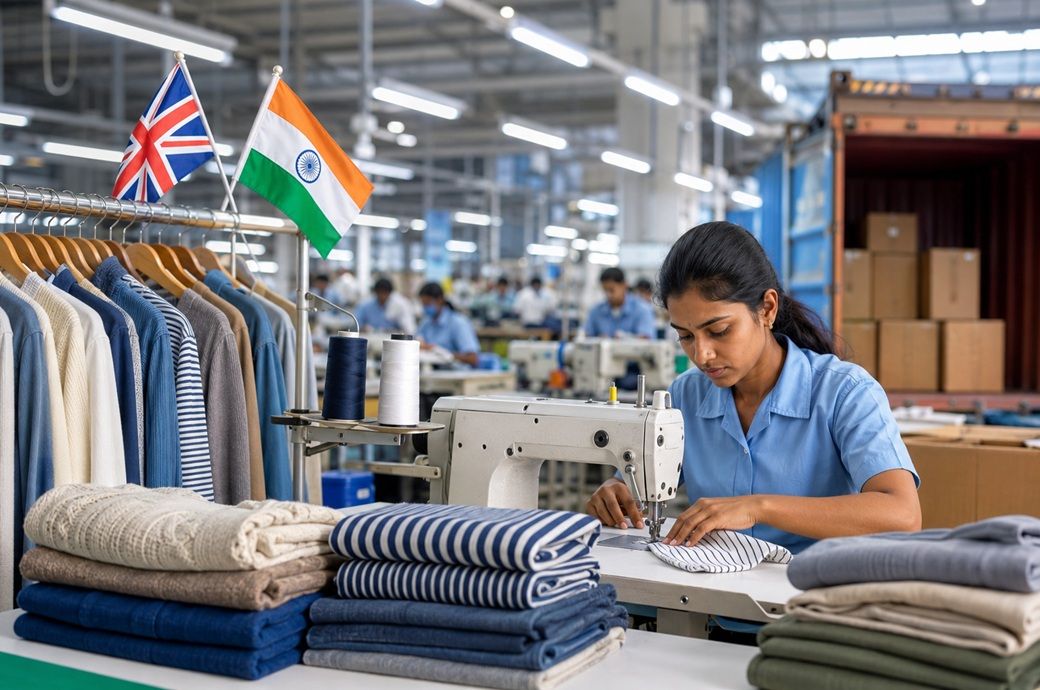
UK import duties on apparel from India have run as high as ** percent, with fabrics at * percent and yarns at * percent, as per the UK Trade Tariff and the UK Fashion & Textiles Association. CETA removes these duties for qualifying Indian goods. The UK Department for Business and Trade estimates duty savings of around £*** million for UK exporters at entry-into-force, rising to £*** million within ten years.
For inbound trade, the impact is just as direct. According to TexPro data, UK textile and apparel imports from India totaled $*.** billion in ****. The two apparel chapters alone—knitwear (HS **) and woven garments (HS **)—account for $*.** billion. Stripping a ** percent duty out of this basket implies up to $*** million in annual duty savings, to be split between UK buyers and Indian suppliers through price negotiation.


Bangladesh needs logistics upgradation to turn competitive: Think tank

Meghan Markle shares delightful family update amid rift with dad Thomas

Epstein files on display at New York pop-up exhibit, all 3.5 million pages

-

 Politics1 week ago
Iran weighs US reply delivered via Pakistan as Trump signals opposition to deal terms
-

 Tech1 week ago
DHS Demanded Google Surrender Data on Canadian’s Activity, Location Over Anti-ICE Posts
-
 Business1 week ago
Heineken to invest £44.5m in hundreds of pubs creating 850 jobs
-

 Tech1 week ago
I Lugged the Best Travel Totes on Work Trips, Weekends, and More
-

 Politics1 week ago
Two women die on migrant boat seeking to reach UK
-

 Entertainment1 week ago
Jelly Roll reacts to daughter Bailee Ann’s major life milestone
-
 Business1 week ago
Heineken plans huge investment in hundreds of UK pubs ahead of World Cup
-

 Tech1 week ago
The Asus Zenbook 16 Delivers Great Performance in an Otherwise Mediocre Laptop