

Fashion
S Korea to exempt tariffs on higher shipping costs for Hormuz reroutes


The measure, aimed at easing supply chain disruptions as the key Middle Eastern shipping route has effectively been closed since US-Israeli strikes on Iran in February, will apply retroactively to imports reported since March 1 that have already faced sharp increases in shipping costs.
Eligible shipments include vessels from the Middle East using alternative routes that bypass the Strait of Hormuz, emergency air cargo transport and ships stranded in the strait due to the conflict, South Korea’s customs authority was cited as saying by a domestic news agency.
The Korea Customs Service will exempt extra shipping costs from tariffs on imports rerouted due to the Strait of Hormuz closure.
The measure, aimed at easing supply chain disruptions, will apply retroactively to imports reported since March 1 that have faced sharp shipping cost hikes.
The exemption will cover not only standard freight charges, but also demurrage fees and transportation insurance premia.
The exemption will cover not only standard freight charges, but also demurrage fees and transportation insurance premia.
Fibre2Fashion News Desk (DS)










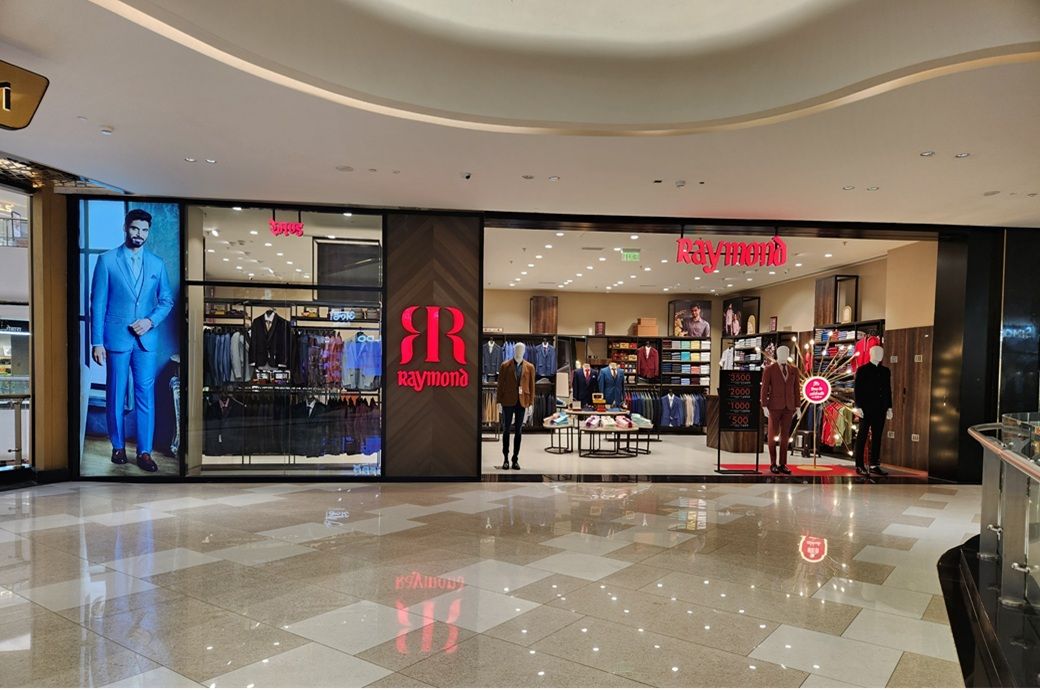
The company posted total income of ₹7,034 crore (~$746.87 million) in FY26, up 11 per cent year-on-year (YoY). EBITDA rose 23 per cent to ₹804 crore (~$85.37 million), while EBITDA margin improved to 11.4 per cent from 10.2 per cent a year earlier.
Raymond Lifestyle Limited has reported record FY26 performance, with total income rising 11 per cent YoY to ₹7,034 crore (~$746.87 million) and EBITDA increasing 23 per cent to ₹804 crore (~$85.37 million).
Q4 income grew 15 per cent, driven by strong demand across branded textiles, apparel, and garmenting.
The company highlighted benefits from the US-India trade deal.
Profit before tax (PBT), before exceptional items, increased 63 per cent YoY to ₹200 crore in FY26.
Commenting on the performance, Satyaki Ghosh, CEO of Raymond Lifestyle Limited said: “This past year, we prioritised revenue scale and consumer reach to build a robust foundation for future operational leverage.” He further said that the company, as it enters its ‘Year of Consolidation’, will focus on building a high-performance culture while emphasising sustainable profitability and stakeholder value creation.
Q4 income and EBITDA register strong growth
In the fourth quarter (Q4) of FY26, total income increased 15 per cent YoY to ₹1,810 crore (~$192.18 million). Quarterly EBITDA surged 53 per cent to ₹152 crore, with EBITDA margin improving to 8.4 per cent from 6.3 per cent in Q4 FY25, Raymond said in a press release.
The company said growth was supported by strong consumer demand across branded textiles and apparel, despite a challenging global environment and higher investments in marketing, retail expansion and digital transformation initiatives, including SAP S/4HANA implementation.
The branded textile segment reported revenue growth of 14 per cent YoY to ₹831 crore in Q4 FY26, while EBITDA more than doubled to ₹115 crore from ₹51 crore a year earlier. EBITDA margin improved sharply to 13.9 per cent due to better product mix, premiumisation and operating leverage.
Branded apparel revenue rose 20 per cent YoY to ₹469 crore during the quarter, supported by growth across large-format stores, exclusive brand outlets, multi-brand outlets and online channels. EBITDA for the segment increased to ₹19 crore from ₹2 crore in the same period last year.
The garmenting business recorded the strongest growth among segments, with revenue rising 38 per cent YoY to ₹342 crore in Q4 FY26. The segment returned to profitability with EBITDA of ₹14 crore compared to a loss of ₹7 crore in Q4 FY25.
Raymond Lifestyle attributed the recovery to improving demand following the US-India trade deal and onboarding of new customers ahead of the anticipated UK and EU free trade agreements.
However, the company cautioned that escalating geopolitical tensions involving the US, Israel and Iran are increasing freight and raw material costs through higher energy prices.
The high-value cotton shirting segment posted 6 per cent revenue growth to ₹197 crore, though EBITDA declined sharply due to the absence of a one-time subsidy received in Q4 FY25.
The company ended FY26 with a net cash position of ₹179 crore, compared to ₹90 crore a year earlier, despite capital expenditure of ₹180 crore during the year.
Ghosh added that the company remains committed to ESG goals, including increasing renewable energy usage, reducing emissions and advancing circularity initiatives such as Zero Liquid Discharge and Zero Waste to Landfill programmes. “By integrating digital agility with transparent oversight, we are building a resilient, future-ready institution for all stakeholders,” he said.
Fibre2Fashion News Desk (SG)

The scheme will contribute to achieving Germany’s energy and climate targets, as well as the EU’s sustainable prosperity and competitiveness objectives.
The European Commission has cleared a €5-billion German scheme to help companies in industrial sectors decarbonise production processes.
The scheme will contribute to achieving Germany’s energy and climate targets, as well as the EU’s sustainable prosperity and competitiveness objectives.
Projects must involve fundamental tech changes and replace fossil fuels or raw materials with low-carbon alternatives.
Eligible projects must involve fundamental technological changes and replace fossil fuels or raw materials with low-carbon alternatives like electrification, hydrogen, carbon capture and storage (CCS), carbon capture and use (CCU), the use of biomethane, as well as heat recovery and storage.
Projects will be selected through a competitive bidding process based on their cost efficiency, measured as the aid requested per tonne of avoided carbon dioxide emissions.
Projects must deliver substantial emission reductions, including at least 50 per cent within four years and 85 per cent by the end of the contract period in 15 years. Such reductions will be assessed against reference systems reflecting the most efficient conventional production technologies in the relevant sectors, a release from the Commission said.
The aid will take the form of two-way carbon contracts for difference with a duration of 15 years. Beneficiaries will receive annual payments linked to market developments, such as EU Emissions Trading System (ETS) allowances or energy input prices, compared to conventional technologies.
The measure only covers the additional costs of cleaner production processes. If these become cheaper to operate, beneficiaries will have to reimburse the difference.
The projects supported under the scheme will be in sectors covered under the ETS, including steel and other metals, plaster, glass and ceramics, paper and pulp, cement, lime or chemicals.
The measure follows a scheme approved by the Commission in February 2024 and replaces a scheme approved in March 2025, which the German authorities decided not to implement in that form and to redesign instead.
After an assessment, the Commission found that the scheme is necessary and appropriate to support decarbonisation in sectors covered by the ETS, in line with European and national environmental targets.
The scheme has an incentive effect, as the beneficiaries would not carry out such investments in decarbonisation without the public support.
The scheme has a limited impact on competition and trade within the EU. In addition, it is proportionate and any negative effect on competition and trade in the EU will be limited in view of the design of the competitive bidding process, which will ensure that the amount of aid is kept to the minimum.
Finally, Germany committed to ensure that the aid delivers overall carbon dioxide reductions and that it does not merely displace the emissions from one sector to another.
Fibre2Fashion News Desk (DS)

A US federal trade court has delivered a setback to President Donald Trump’s tariff agenda, calling the 10 per cent temporary global tariffs “invalid” and “unauthorised by law”.
However, the administration is expected to appeal, with the case likely moving to the US Court of Appeals for the Federal Circuit in Washington and potentially returning to the Supreme Court.
Source link


Papa Johns Is Getting Into Drone Delivery—but Not for Pizza

S Korea to exempt tariffs on higher shipping costs for Hormuz reroutes

Chevron Wants a School District Tax Break for a Data Center Power Plant in Texas

-

 Politics1 week ago
Iran weighs US reply delivered via Pakistan as Trump signals opposition to deal terms
-

 Fashion1 week ago
US cotton export sales show strong recovery, Upland rise 36%
-

 Sports1 week ago
Sajid Ali Sadpara summits world’s fifth-highest peak
-

 Tech7 days ago
DHS Demanded Google Surrender Data on Canadian’s Activity, Location Over Anti-ICE Posts
-
 Business1 week ago
Heineken to invest £44.5m in hundreds of pubs creating 850 jobs
-
 Business1 week ago
Government notifies FDI changes on China funds – The Times of India
-
 Business1 week ago
UK airlines to be allowed to cancel flights in advance over fuel shortages
-

 Fashion1 week ago
Middle East conflict clouds India’s FY27 GDP forecast of 7-7.4%: Govt