

Business
UK economy was on the right track –Trump’s Iran war has wrecked that

The UK economy has a habit of surprising. Even when the margins are fine – and the most minuscule growth was being celebrated as cautious small steps in the right direction – the point was being made that it was the right direction and, with a bit more time and support, good things could happen.
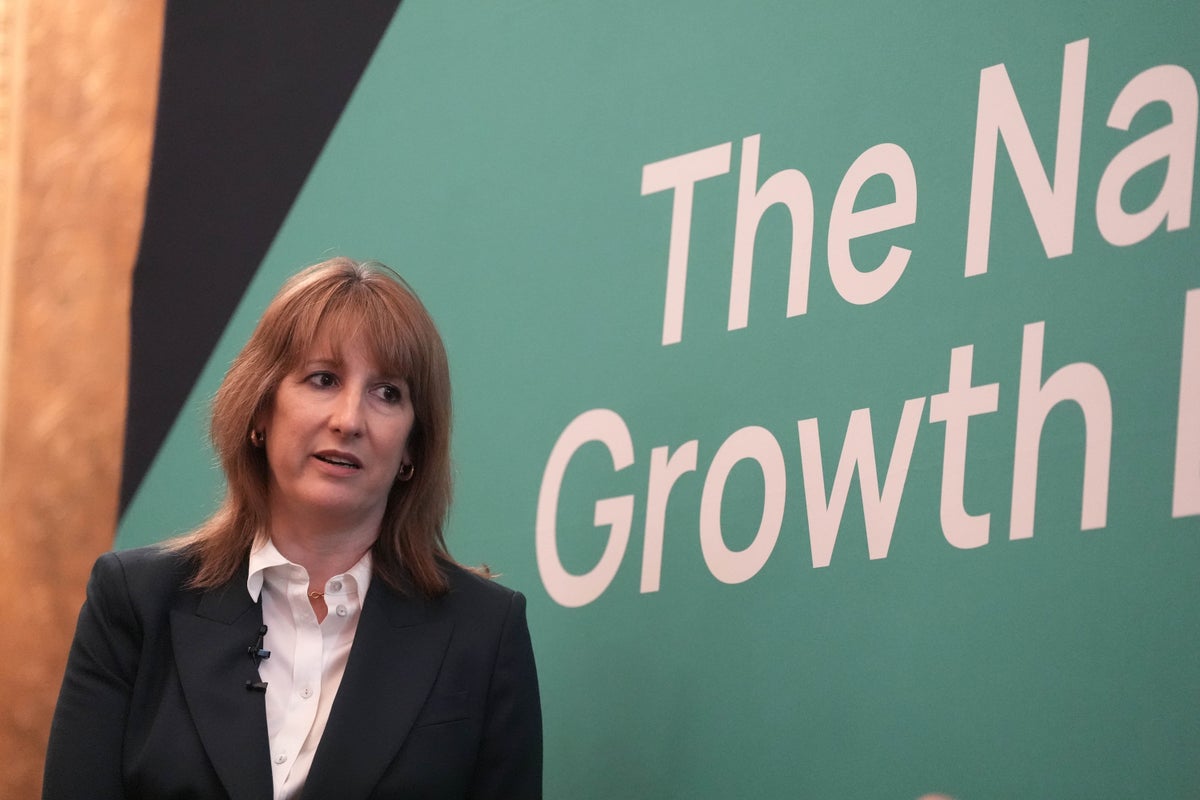
Much of 2024 and 2025 saw the narrative of hard decisions being made to enable prosperity in years to come. While the first three months of 2026 producing GDP growth of 0.6 per cent won’t exactly be seen as being on the cusp of riches, it has certainly allowed Rachel Reeves to point to a bullish outcome from her early decisions as chancellor.
“The numbers show that the economy is growing and that when we entered this conflict, our economy was growing strongly because of the decisions that I have made as chancellor,” she said on Thursday, before urging fellow members of Labour not to put that progress “at risk” by pushing Keir Starmer aside.
These economic figures have again surprised some with their relative overperformance, higher than many economists expected – even featuring growth in March, the first full month of the Iran war when some thought the immediate consumer reaction would be cautious, holding, hoarding.
But almost certainly, the growth is to be consigned to nothing more than a footnote of 2026 – a useful boost at the beginning of the year before matters, both economic and political, started to unravel.
It’s almost tempting to label it a case of – in the tradition of those British TV gameshows of yesteryear – “here’s what you could have won”.
The economy was growing, inflation was falling, the Bank of England had interest rates on the downward path.
Fast forward precisely one more war, the best part of 3,000 miles away, and all of that is effectively wiped from the slate. Donald Trump’s assault on Iran has seen the Strait of Hormuz shuttered, oil prices surging as a result and the knock-on effects have been higher prices in fuel, energy, production, manufacturing and food. Inflation back on the rise has sent mortgage deals up, based on the now-obsolete plan to further reduce interest rates, while households are facing another inevitable bout of higher costs from all angles, businesses are pausing hiring plans and the bond markets have sent government borrowing costs soaring.
Get a free fractional share worth up to £100.
Capital at risk.
Terms and conditions apply.
ADVERTISEMENT

Get a free fractional share worth up to £100.
Capital at risk.
Terms and conditions apply.
ADVERTISEMENT
And yet it is, as ever, absurd and simplistic to entirely blame one single event or decision for all the knock-on effects to come. After all, even in the early part of the year, when the economy as we can see was performing reasonably well, there were plenty of dissatisfied onlookers.
Business groups were bemoaning the increasing cost of hiring. Different industries were, and still are, demanding additional support, either by way of exemptions or outright lowered costs.
And while the Bank of England was on a downward path, unemployment had been on an upward path since mid-2022, with additional concerns arising in the past year over entry-level jobs and graduates finding work – all different pressures which, along with inflation, economic performance, pay growth and more, pull and push interest rates decisions in different directions at the same time.
There is also the economic aspect of bringing forward some purchases to the first half of the year, seasonality spending rather than increased overall consumption. This has been seen in previous years and could simply have been the case, in an alternative 2026, that growth was first-half heavy and still fairly flat over the whole year.
So it’s far from the case of going from all great to all bad, yet there’s no question the chances of real progress have been hampered.

The version of the economy which is described by first-quarter numbers no longer exists. That future has been wiped out for us, this year at least.
Yet, there’s also now reason to point to domestic matters which could have happened anyway (see local elections and their subsequent fallout) contributing to uncertainty and hampering national growth, too.
Either way, firms and households have to deal with the reality of what’s in front of them – and that looks like a tough period of balancing priorities and finances for all.
The hope will be that the resilience which British businesses and consumers have shown before will, against odds and expectations, be able to shine through once more, regardless of what muddles and messes are presented to them by leaders both near and far.

Ed Cullen says his mum had an unattended cremation which saved money but was “devastating” for him.
Source link
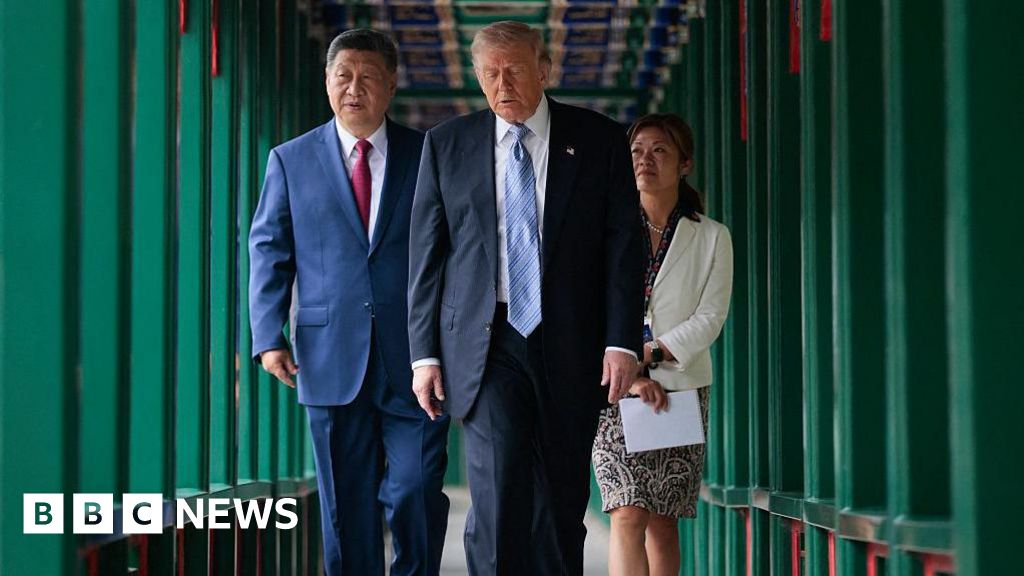
There were plenty of choreographed ceremonies but no sweeping trade breakthrough as Trump met Xi in Beijing.
Source link

NEW DELHI: Union govt has banned the export of sugar till Sept 30 this year with immediate effect, a move aimed at enhancing domestic availability and preventing any price rise. Earlier, the exports were under a restricted category, under which a licence was required for the outbound shipments. “The export policy of sugar (raw sugar, white sugar and refined sugar)… is amended from ‘restricted’ to ‘prohibited’ with immediate effect till Sept 30, 2026, or until further orders, whichever is earlier,” the directorate general of foreign trade (DGFT) stated in a recent notification.This order, however, does not apply to sugar being exported to the European Union and the US under the CXL and Tariff Rate Quota (TRQ) arrangement, respectively. The arrangements allow exporters to ship specified quantities of sugar to these destinations at significantly reduced or zero customs duties.The DGFT order is also not applicable to the shipments under the advance authorisation scheme, govt-to-govt exports and consignments already in the physical export pipeline.For the 2025-26 sugar marketing year (Oct to Sept), govt initially allowed 15 lakh tonne for exports, and then opened an additional 5 lakh-tonne pool, of which only 87,587 tonne were approved.The food ministry and sugar mills were expecting 7.5-8 lakh tonne of shipments in 2025-26 marketing year.India’s sugar production rose 7.3% to 275 lakh tonne till April in the 2025-26 marketing season, driven by higher output in Maharashtra and Karnataka, according to industry body ISMA. It has projected total production for the 2025-26 marketing season at 293 lakh tonne after ethanol diversion, up from 261 lakh tonne recorded in 2024-25.Banning exports of a commodity helps prevent a rise in prices amid inflation concerns and uncertainty caused by the West Asia conflict.

‘Cheaper’ funeral option left Somerset man unable to say goodbye

India’s KKCL posts strong FY26 growth under Vision 2028

Muslim American groups say Republicans are weaponising congressional hearings

-

 Tech7 days ago
A new frontier: Identity stack evolves for agentic systems | Computer Weekly
-

 Tech7 days ago
‘Orbs,’ ‘Saucers,’ and ‘Flashes’ on the Moon: Pentagon Drops New UFO Files
-

 Fashion7 days ago
New orders in German manufacturing up 5% MoM in Mar 2026: Destatis
-

 Tech7 days ago
Nick Bostrom Has a Plan for Humanity’s ‘Big Retirement’
-

 Sports7 days ago
Shaheen Afridi achieves landmark feat during opening Test against Bangladesh
-

 Tech1 week ago
What Microsoft Executives Really Thought About OpenAI in 2018
-

 Entertainment6 days ago
Rihanna embraces new tattoo given by children
-

 Fashion7 days ago
US’ Carter’s taps retail veteran Sharon Price John as new CEO