

Tech
The Baby Died. Whose Fault Is It?


Bi understood how far-fetched her allegations sounded. “If it were not for all the hard evidence, it’s too shocking to believe [Rebecca Smith] did what she did to kill my son,” Bi wrote on Facebook, using Smith’s real name. Perhaps a kind friend could have suggested to Bi that there were other explanations. Instead, Bi had a set of legal adversaries and a supportive echo chamber. On Facebook, GCs and IPs alike expressed sympathy for Bi’s tragic posts: Everyone knew bad surrogates existed, and based on Bi’s claims, it sounded like Smith was one. Aimee Eyvazzadeh, a Bay Area fertility doctor and influencer, called Smith “a criminal” and “a psycho.” Bi’s $1,275-an-hour lawyer, Elizabeth Sperling, wondered whether digging through social media posts might show Smith engaging in “strenuous activity” that could explain the death.
Bi’s husband focused on stabilizing the family, a move he credits with saving their marriage. He blamed the hospital, not Smith, but told me that the litigation is “her grieving process.” He tried to stay out of the legal stuff so that Bi couldn’t blame him too.
Smith had planned to go back to work shortly after giving birth. Instead, she couldn’t stop bleeding. Even though SAI had determined she hadn’t breached the contract, the escrow stopped paying, leaving Smith reliant on disability benefits as she faced an increasing pile of terrifying bills.
When Smith was finally cleared to return to work, a month after Leon died, Bi emailed Smith’s HR department to ask about her health plan. Bi also reported Smith to a federal agency, claiming that Smith was committing fraud. The stress on Smith was already high: Her supervisor at work had found her crying on and off for a day.
Smith hadn’t heard from Bi since her terse reply to the condolence email. Then, Bi texted her a screenshot of a Facebook post about another GC who’d had an abruption at almost 32 weeks—but that GC had called 911 and the baby had lived.
Next, Bi iMessaged a photo of Leon’s corpse to Smith’s 7-year-old son’s iPad.
In the months after Leon died, Bi:
Called the FBI 12 times. Reported Smith, SAI, the hospital, and Clarity escrow to more than a dozen state and federal regulators and numerous professional organizations. Launched a new round of her $30 million venture fund, backed by Marc Andreessen and David Sacks, President Trump’s “AI and crypto czar,” on Leon’s due date. Posted Leon’s ChatGPT-written endorsement from heaven, offering his “eternal blessings” for her work. Created TikToks, Instagram Reels, Facebook posts, X threads, LinkedIn Updates, and a website for her advocacy. Posted links disclosing Smith’s full name, photo, address, employer, mortgage license number, and son’s first name to her website. Asked her husband, again and again, how it was possible that Smith had carried her son but felt “nothing” about his death.
Bi has abandonment issues that she traces back to her twenties, when her father divorced her mom for the mistress who’d conceived his long-awaited son. She got on lithium for her bipolar disorder in early 2021 and began looking for surrogates as soon as she stopped feeling “sedated.” I spoke to the therapist Bi hired to consult with her and Valdeiglesias. She told me that, of the 792 intended parents she has evaluated for surrogacy or gamete donation in the last decade, she has declined to recommend only about a dozen. “I’m not gatekeeping,” she said. When it comes to serious mental illness, she added, it’s up to them to disclose. One of Bi’s fertility doctors, meanwhile, told me it’s not his place to scrutinize intended parents. He defers to the recommendation of the psychological interviewer.
If an intended parent gets turned down, they can usually find another therapist, another clinic, another agency. But without anyone questioning her plans, Bi seemed betrayed by the challenges of third-party reproduction. “Surrogacy is supposed to be the safest route,” she wrote on Instagram. It wasn’t just Leon’s death that pushed Bi into her spiral of legal action and social media posts. It was the apparent lack of control of having her child inside another woman’s body—the most basic fact of surrogacy.











The Microsoft 365 E7 licensing model was among the big focus areas during the earnings call for the company’s latest quarterly results.
Microsoft reported revenue of $82.9bn, an increase of 18% over last year’s third-quarter results.
Microsoft 365 Commercial cloud revenue increased 19%, and its Productivity and Business Processes business posted revenue of $35bn, an increase of 17% over the same period last year.
While the headline figure is its growth in cloud revenue, the company is attempting to shift to a value-based software licensing model, tied to a user-based licence base, with usage-based pricing to cover additional usage.
This additional usage is positioned by Microsoft executives as a way to show that the greater use of the software is generating additional business value for the customer.
The Microsoft 365 E7 licence becomes generally available on 1 May. The licensing model has been introduced to help fund the investments Microsoft is making to support artificial intelligence (AI) and the broader use of agentic AI across its product portfolio.
The E7 plan bundles base usage rights into seat-based pricing. According to Microsoft, it offers customers a convenient way to purchase consumption packs tied to seats or agents. Beyond the base usage covered by the user licence, customers are charged on pure consumption-based pricing, tied to token usage and consumption.
Over the next three to five years, Microsoft’s mix of consumption versus traditional seat-based models will evolve. It anticipates that customers will increasingly adopt hybrid models like E7, balancing predictability with the flexibility of consumption-based pricing. It expects IT budgets to adapt to this new model, driven by business outcomes and the value derived from token usage.
When asked about the shift in licensing, chief financial officer Amy Hood said: “As we go through using a model that’s been historically thought of as a per-seat business, suddenly, if you think about getting work done and being more productive, it’s thinking about being a seat or a worker plus an agent.”
She described the shift as a “licence business plus a consumption business”. “It’ll still have that per-seat licence logic, but it’ll also have a meter, just like you see in Azure.”
What this means for IT departments is that they will procure E7 licenses, but will also need to account for usage costs on top.
CEO Satya Nadella said this model will be rolled out to all software that is licensed on a per-user basis. “Any per-user business of ours, whether it’s productivity, coding, security, will become a per-user and usage business,” he said.
Given the intensity of usage the company has experienced, his response to the question on licensing changes implies that Microsoft needs to somehow fund investment in infrastructure. “Where are these dollars going to come from,” said Nadella.
He argued that Microsoft business customers, who see their costs decrease or revenue increase as they roll out AI agents, will drive greater usage. “It may not be, by the way, pure seat coverage-type of motions, like in the past,” said Nadella. “This is more about getting intense users and intense usage, and that’s what we’re focused on.”

In the midst of our reporting on Nike’s turbulent year, we failed to emphasize one fact: Even as Nike’s corporate leadership flails in a post-Covid world, the company’s shoes and athletic apparel still make up a huge market segment and are still the leading performance models in the industry. Every marathon shoe is just a copy of the iconic Nike Vaporfly, and the Air Force 1 is still one of the top-selling sneakers in the world. You can restock on your own iconic styles with a Nike promo code. Here’s how.
Score 15% Off App Orders With Our Nike Promo Code
Members get rewarded for shopping directly on the Nike app. Once you log on to the app, you’ll automatically become a member. And if you use Nike promo code APP15, you’ll get 15% off your first app purchase and free shipping on orders of $50 or more. So whether you’re in the market for a new pair of Air Jordans or some new leggings for training for your next Marathon, you’ll want to take advantage of this deal.
Celebrate With Nike Coupons For Your Birthday and Member Discounts Everyday
Nike offers a 10% birthday discount when you sign up on the website. You must be a Nike member and logged into your Nike account in order to redeem the discount. The minimum purchase is $100 and applies to the first $500 of a qualifying purchase. You can use it in combination with the Nike free shipping promo codes only. Nike members also receive exclusive access to certain products and member-exclusive sales and discount codes.
Remember earlier when I said Nike members get rewarded? Be sure to become a Nike Member before your birthday month to receive a special birthday Nike discount. Not only will you get that birthday perk, but as a Nike member you’ll also get free shipping on orders of $50 or more, a free 60-day Wear Test to ensure the purchase is right for you, and returns with receipts.
Nike Student Discount Code: 10% Off
All students over 16 in the US, whether you’re in high school, college, or a university, get 10% off at Nike, Nike.com. and in the Nike app. To get the Nike discount code, you’ll just need to verify your student status. To do this, you need to fill out a verification form, verify age, and you may need to provide documentation to verify your status. Once your status is successfully verified, you’ll be sent a single-use Nike promo code for 10% off most items. You’ll just need to make sure you’re signed in to your Nike Member profile while using your Nike promo code. This 10% Nike discount code can be used on all sorts of the best Nike apparel and shoes, including the bestselling Nike Vomero Plus men’s running shoes that are full-stack, with ultra-soft max cushioning for enhanced comfort while running.
Nike Discount Programs: Teachers, Military, and Healthcare Works Get 10% Off
There are also other Nike discounts, like 10% off for military and spouses, first responders and medical professionals, and teacher discounts after verification. Check to make sure the items you’re shopping are covered by the discount; certain products, like Nike By You, gift cards, select launch and SNKRS products, and Apple products, are not valid.
Teachers get rewarded with 10% too, just follow the steps for verification status. All military personnel, including active, reservist, veteran, retired US military, and spouses and dependents of active personnel also get 10% off at Nike as a thank you for service. Plus, medical professionals and first responders are also eligible for 10% discounts; that means doctors, nurses, technicians, medical researchers, EMTs, firefighters, and law enforcement.
To get any of these discounts, you’ll need to verify with SheerID, where you’ll receive a single-use promo code that can be used once every seven days. Just be aware, the code expires after two weeks, but you can re-verify your identity to receive a new one.
Trending Nike Styles to Score on Sale Today
Nike still outfits some of the top athletes in the world. If you’re a basketball player, I would say skip the Nike Dunks and get a pair of Kobe Protros like Caitlin Clark. If you’re a runner, Nike recently updated the classic running shoe, the Pegasus. If you’re looking for a low-key street shoe that’s not an Adidas Samba, get the Nike Blazers.
There are tons of Nike’s bestselling shoes on sale right now, including: Nike Dunk Low and Dunk Low Retro SE at 24% off (including multiple under $100 options), 24% off Zoom Vomero 5, 32% off Nike Free Metcon 6, and custom Metcon 10 for as low as $155. Plus, classics are also on sale, with Air Max 270 for up to 30% off, up to 33% off Air Force 1 Low Retro, or Air Force 1 ‘07 LV8 for under $80. Be sure to check out these heavy discounts on tons of Nike styles, from classic to contemporary.
Other Nike Products on Our Radar
Nike got its start as a running company and it still makes the best running apparel on the market. My particular favorites are the firm support, high-waisted ⅞ running leggings (because I’m short) and the running rain jacket, which is also understated enough to wear as an everyday rain jacket.
Be sure to check Nike often, with tons of upcoming launches soon to be released. One we’re most excited about is the Team US Collection, inspired by the upcoming Olympic games, with tons of sick US team Olympic apparel. Another hot new release is the Nike SB Dunk Low Pro x Bronx Girls Skate, a cool design inspired by urban landscapes and skate culture, which became available in late January 2026.
Support the US Soccer Team With Official Nike Gear
Show off your soccer pride this season with the Team US Soccer x Nike collab. Merchandise from this showy collaboration includes solid, striped, and patterned jerseys for women, men, and children, as well as replica shorts and jerseys from a multitude of favorite players.
Don’t Miss the Nike Skims Collection
For better or worse, Kim Kardashian is everywhere. Her body contouring undergarment and shapewear line, Skims, has quickly exploded and become one of the top, most sought-after shapewear brands in the world. The new Nike Skims line has been highly anticipated, blending the shapewear women love with the versatile athletic brand Nike. With styles for everything from ballet to HIIT workouts to running, the Nike Skims collection seamlessly blends style and athleticism.

Elon Musk returned to the witness stand on Wednesday to continue telling his side of the story in his legal battle against OpenAI and its CEO Sam Altman. Under cross-examination from OpenAI’s lawyers, Musk was pressed on all the ways he tried to squeeze the organization over a 2017 power struggle that he ultimately lost. Around this time, Musk tried to hire away OpenAI researchers and stopped sending it funding he had previously promised, according to emails presented as evidence in the case.
As the cross-examination began, tension rippled through the courtroom. Judge Yvonne Gonzalez Rogers started the day by reprimanding someone in the gallery for taking a picture of Musk. OpenAI president and cofounder Greg Brockman sat behind his lawyers with a yellow legal pad in his lap, giving Musk a cold stare as he testified. Musk grew visibly frustrated on the witness stand, pausing frequently to tell OpenAI’s lawyer, William Savitt, that he saw his questions as misleading. Meanwhile, Savitt’s cross-examination was derailed by objections, technical issues, and Musk continuously claiming he doesn’t recall key details of OpenAI’s history.
Savitt showed the courtroom emails from September 2017 between Musk, Brockman, and researcher Ilya Sutskever discussing the formation of what would become OpenAI’s for-profit arm. In the thread, Musk demanded the right to choose four members of its board of directors, giving him more voting power than his cofounders, who would be left with three in total. “I would unequivocally have initial control of the company, but this will change quickly,” said Musk in one message. Sutskever wrote back rejecting the idea because he said he feared it would give Musk too much power.
Months before these negotiations started, Musk had halted payments to OpenAI, which was particularly difficult for the organization because he was then its main source of funding. Since 2016, Musk had been sending $5 million payments to OpenAI quarterly as part of a broader $1 billion pledge he made at the organization’s launch. But in the spring of 2017, he stopped sending the money. In another email from August 2017, the head of Musk’s family office, Jared Birchall, asked Musk if he should continue withholding it. Musk responded simply, “Yes.”
Around the time Musk lost the power struggle, emails show that he held discussions with executives at Tesla and Neuralink, his brain-computer interface company, about hiring OpenAI employees. At the time, Musk was still a board member of OpenAI.
Musk sent an email to a Tesla vice president in June 2017 about hiring an early OpenAI researcher, Andrej Karpathy. “Just talked to Andrej and he accepted as joining as director of Tesla Vision,” Musk wrote. “Andrej is arguably the #2 guy in the world in computer vision … The openai guys are gonna want to kill me, but it had to be done.”
On the stand, Musk argued that Karpathy was already interested in leaving OpenAI when he tried to recruit him to Tesla. “Andrej had made his decision. If he’s going to leave OpenAI, he might as well work at Tesla,” Musk said.
In October 2017, Musk also wrote to Ben Rapoport, a cofounder of Neuralink. “Hire independently or directly from OpenAI,” said Musk. “I have no problem if you pitch people at OpenAI to work at Neuralink.”
When pressed about this by Savitt, Musk argued that it would have been illegal for him not to allow Tesla and Neuralink to hire from OpenAI. “It’s illegal to restrict employment. It would be illegal to say you can’t employ people from OpenAI. You can’t have some cabal that stops people from working at the company they want to work at,” Musk said.


Middle East conflict hits UK exports, down 20%: BCC

Queen Camilla makes stunning confession in interview with Jenna Bush Hager
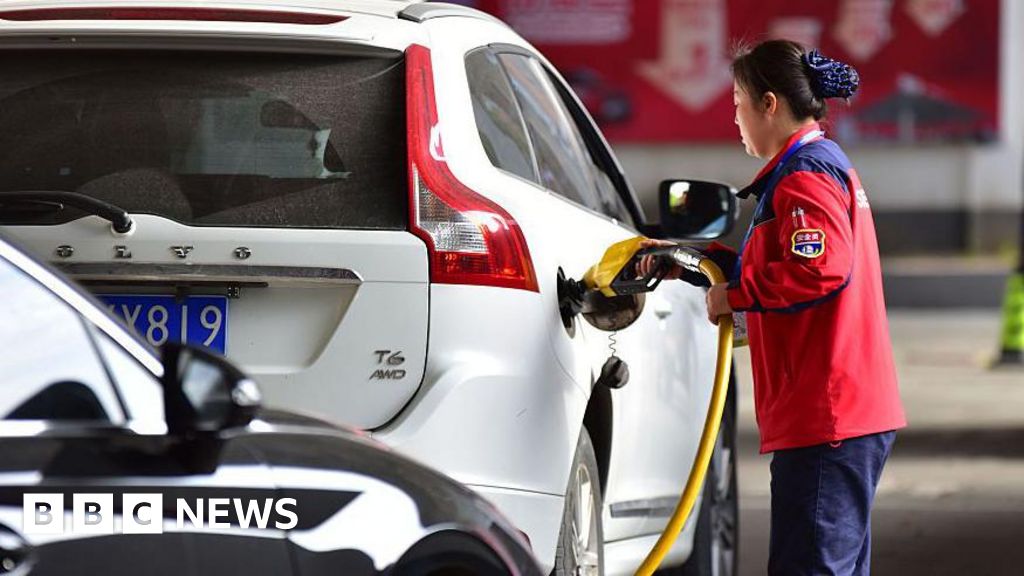
Oil jumps to highest price since 2022 after report Trump to be briefed on new Iran options

Us-India Trade Talks: US–India trade deal: Where do talks stand & what to expect – explained – The Times of India
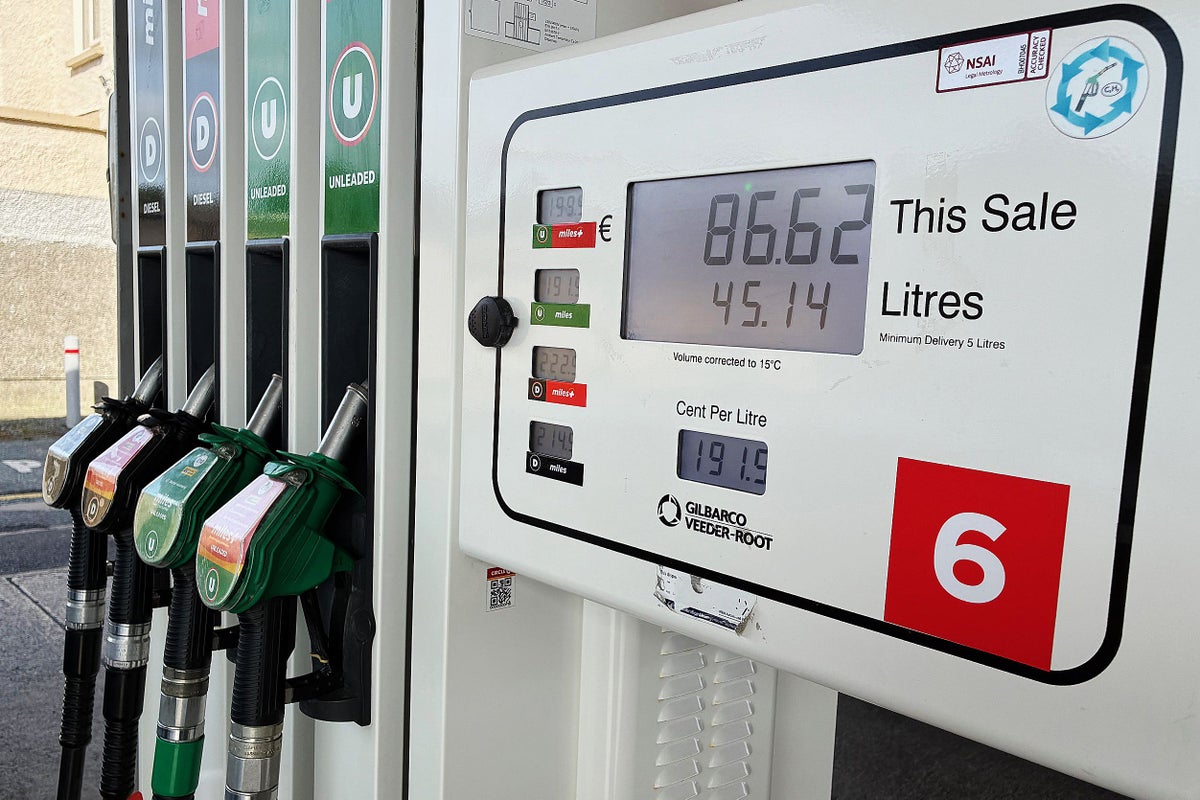
UK inflation accelerates after Iran war drives sharp rise in fuel prices

PSL 11: Hyderabad Kingsmen opt to field after winning toss against Multan Sultans

-
Business1 week ago
Us-India Trade Talks: US–India trade deal: Where do talks stand & what to expect – explained – The Times of India
-
Business1 week ago
UK inflation accelerates after Iran war drives sharp rise in fuel prices
-
 Sports1 week ago
PSL 11: Hyderabad Kingsmen opt to field after winning toss against Multan Sultans
-
 Business1 week ago
Trump administration in advanced talks for a rescue package for Spirit Airlines, source says
-

 Tech1 week ago
Nation states responsible for ‘nationally significant’ cyber attacks against UK, says NCSC chief | Computer Weekly
-

 Tech1 week ago
Microsoft faces court battle in £2bn Windows Server class action | Computer Weekly
-

 Tech1 week ago
Blackbox replaces two racks of HPE storage with 8U of Everpure | Computer Weekly
-

 Fashion1 week ago
Bangladesh RMG units call for allowing local FOC raw material sourcing