

Fashion
Nigeria Kwara Garment Factory, KWS Garment Production Village ink pact

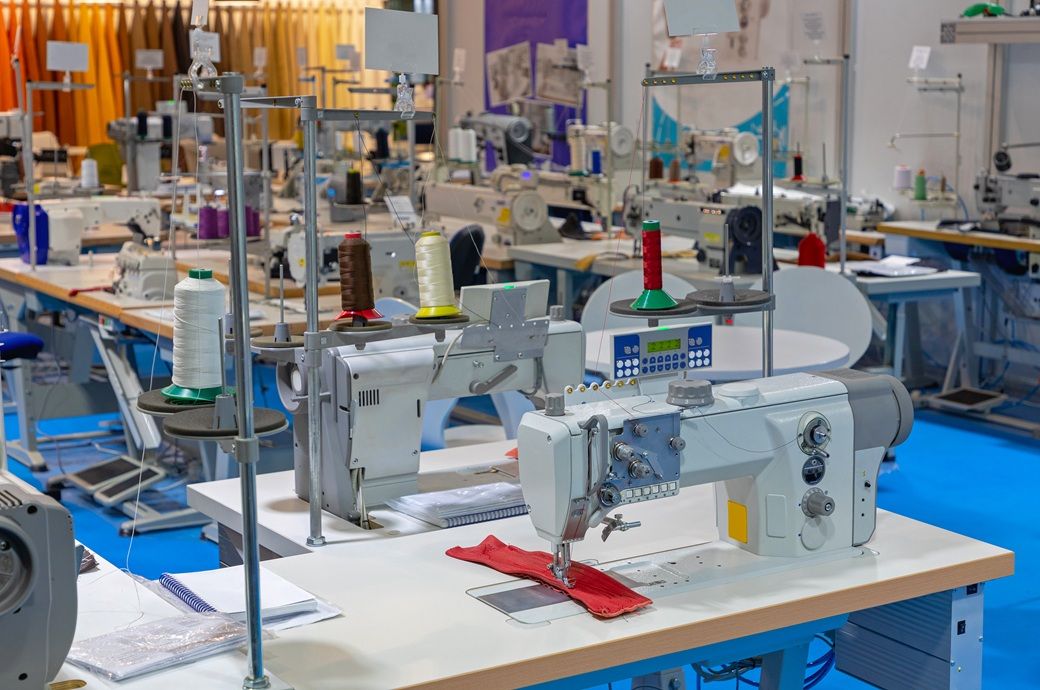
Both sides agreed that a minimum of 80 per cent of the factory’s production workforce will be women and indigenes of Kwara state.
Nigerian state-run Kwara Garment Factory has signed a pact agreement with KWS Garment Production Village, allowing the latter to manage and run the former.
A minimum of 80 per cent of the factory’s production workforce will be women and indigenes of Kwara state.
The management model has been carefully structured to protect the state’s investment while allowing private sector excellence to thrive.
The agreement was signed at the factory in Ilorin by its managing director Bukola Adedeji.
KWS Garment Production Village is led by Folake Akindele, an acclaimed figure in African fashion over the last three decades.
The management model has been carefully structured to protect the state’s investment while allowing private sector excellence to thrive, commissioner in the Ministry of Business, Innovation and Technology Damilola Yusuf-Adelodun was cited as saying by domestic media outlets.
“This occasion marks yet another bold step in the commitment of the Kwara state government under Mallam AbdulRahman AbdulRazaq, towards industrialisation, economic growth, job creation and sustainable development in our dear state,” Adedeji said, highlighting the scale of investment made by the state in preparing the facility.
“This factory represents the possibility. It represents scale. It represents structure. It is about building systems that allow Nigerian businesses, creative, institutional, and corporate alike, to produce competitively, efficiently and proudly within Nigeria. If you have been going outside Africa to manufacture and access world-class quality, you can get that same standard right here,” Akindele said.
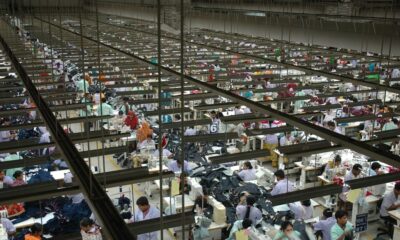
The factory is fully equipped with industrial-grade machinery covering the entire production chain, from cutting, sewing, embroidery, and printing to finishing, quality control and shipping.
It is designed to support large-scale apparel production across fashion, uniforms, sportswear, institutional, hospitality and corporate sectors.
Fibre2Fashion News Desk (DS)








According to market sources, raw material prices strengthened on May **, with PTA rising by ****;*.* to ****;***.* per kg, MEG increasing by ****;*.* to ****;**.** per kg and melt advancing by ****;*.** to ****;***.** per kg. The cost push encouraged Indian polyester yarn producers to revise selling prices upwards, although polyester staple fibre (PSF) prices remained unchanged for the second fortnight of May.
Indian producers increased POY and PTY prices by ****;* per kg across all deniers and lustres, with effect from May **. Following the revision, POY fine denier was priced at ****;*** per kg, while coarse denier stood at ****;*** per kg.
Current account excluding gold and energy indicated net deficit of $3.9 billion, while goods saw a deficit of $9.5 billion.
Turkiye recorded a current account deficit (CAD) of $9.6 billion in March, the country’s central bank said.
Treasury and Finance Minister Mehmet Simsek said the CAD is expected to widen this year, due to high energy and non-energy commodity prices.
Simsek said the deterioration is likely to remain temporary and manageable, thanks to stronger macroeconomic fundamentals and policy gains.
According to annualised data, current account deficit recorded as $39.7 billion (2.6 per cent of gross domestic product) in March, while the goods deficit recorded as $77.8 billion.
Simsek said the deterioration is likely to remain temporary and manageable thanks to stronger macroeconomic fundamentals and policy gains, domestic media outlets reported.
Turkiye is heavily reliant on imported energy, whose prices spiralled due to the Middle East conflict.
Simsek said elevated global commodity prices would put pressure on the external balance, but emphasised that the government’s economic programme had improved resilience against such shocks.
He said foreign direct investment (FDI) inflows totalled $1 billion in March, bringing annualised foreign direct investment to $12.6 billion.
The new investment incentive package under discussion in parliament now is expected to strengthen the country’s financing structure and support long-term capital inflows, he added.
Fibre2Fashion News Desk (DS)
During the first quarter of ****, the UK’s imports of textile fabrics eased down *.** to £*,*** million (~$*,*** million), against £*,*** million in January-March **** but slightly higher from £*,*** million in the fourth quarter of ****. Its imports of fibre were noted at £** million (~$***.** million) steady as £** million in Q*, **** but slightly lower than £** million in Q*, ****.
During the third month of this year, the country’s clothing imports declined *.** per cent to £*.*** billion (~$*.*** billion), compared with £*.*** billion in March ****. But the inbound shipment was slightly higher month on month compared with £*.*** billion in February ****.


No relief for rupee: Currency slips to 96.38 against US dollar amid Middle East tensions

Nigeria Kwara Garment Factory, KWS Garment Production Village ink pact

‘Barbie Girl’ band Aqua announces split after three decades together

-

 Entertainment6 days ago
Conan O’Brien hat tricks as Oscar host
-

 Tech1 week ago
Could Contact-Tracing Apps Help With the Hantavirus? Not Really
-

 Fashion6 days ago
Italy’s Zegna Group’s Q1 growth boosted by strong organic performance
-

 Entertainment1 week ago
Tom Brady gets back at Kevin Hart during Netflix roast
-

 Entertainment1 week ago
Martin Short: Facing tragedy with joy
-

 Sports1 week ago
Jacob Fatu unleashes vicious assault on Roman Reigns after World Heavyweight Championship loss at WWE Backlash
-

 Entertainment1 week ago
Martha Stewart: How to make an omelet
-

 Tech1 week ago
Papa Johns Is Getting Into Drone Delivery—but Not for Pizza