

Fashion
New Zealand to give duty-free access to Bangladesh post LDC graduation

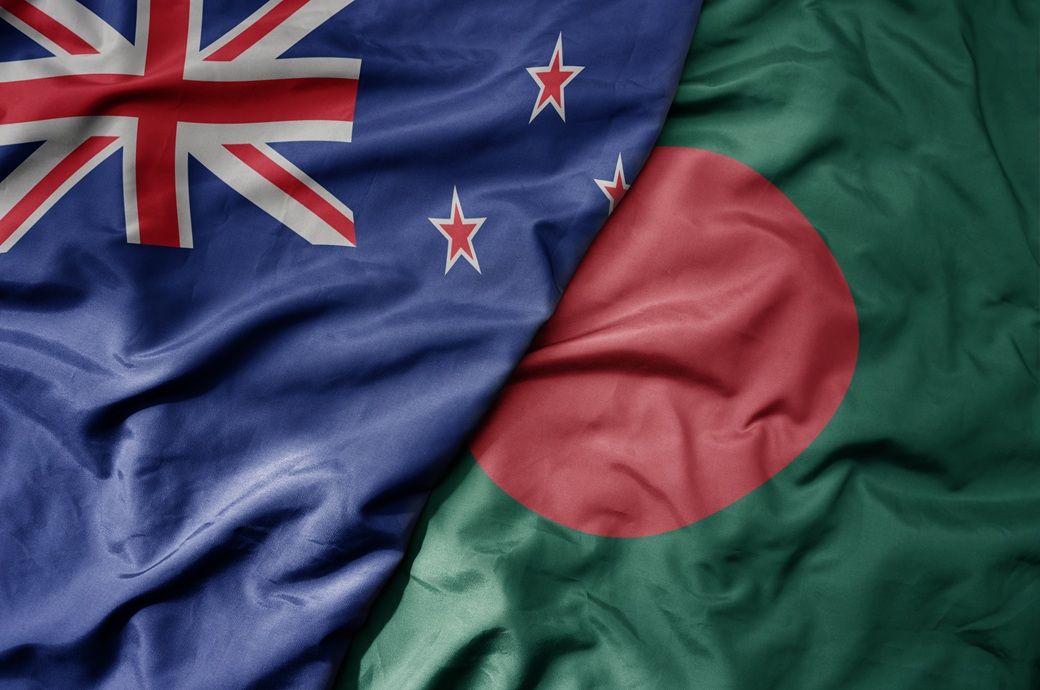
This was conveyed by New Zealand’s non-resident high commissioner to Bangladesh David Pine during a meeting with Commerce, Industries and Textiles and Jute Minister Khandakar Abdul Muktadir.
New Zealand is keen on continuing duty-free and preferential market access facilities for Bangladesh even after the country’s LDC graduation, the former’s non-resident high commissioner to the latter David Pine said.
Both sides discussed ways to further expand bilateral trade and investment ties, make use of existing regional trade frameworks and the possibility of signing a comprehensive bilateral FTA.
The two sides discussed ways to further expand bilateral trade and investment ties, make effective use of existing regional trade frameworks and the possibility of signing a comprehensive bilateral free trade agreement (FTA).
Muktadir told the envoy the Bangladesh government is according top priority to industrialisation, employment generation and export diversification to strengthen the economy and sustain growth momentum, according to Bangladesh media outlets.
He urged investors from New Zealand to take advantage of Bangladesh’s business-friendly initiatives and invest.
Fibre2Fashion News Desk (DS)







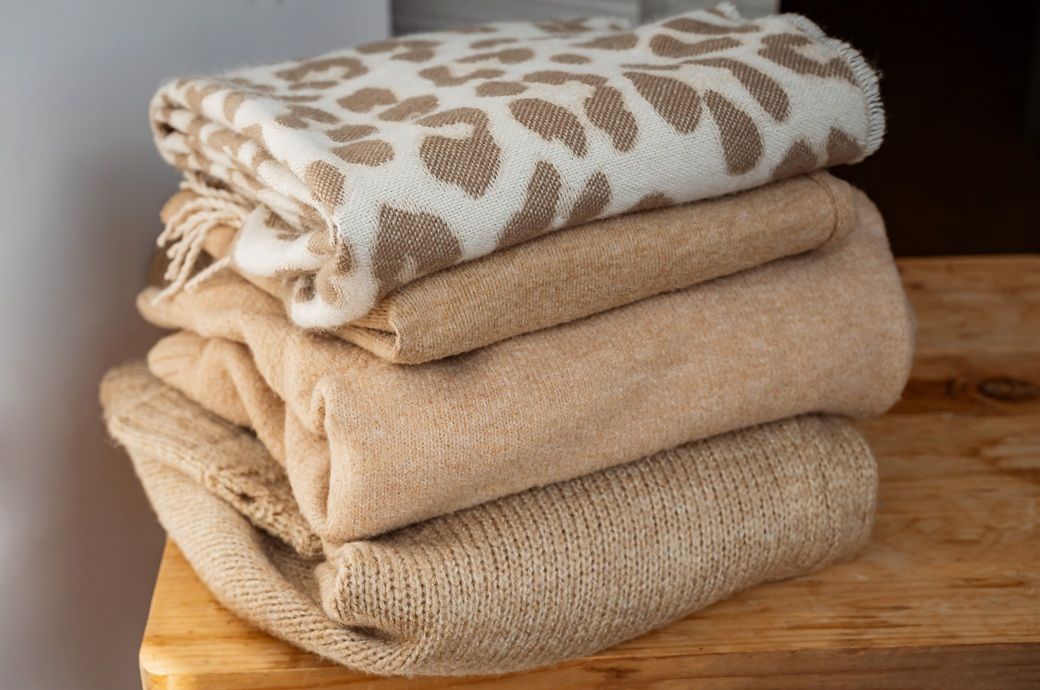
In April 2026, textile and apparel exports dipped to $2.881 billion from $2.983 billion in the same month of the last year. According to an analysis by the Confederation of Indian Textile Industry (CITI), apparel exports slipped to $1.211 billion in April, while textile shipment picked up to $1.670 billion.
India’s textile and apparel exports declined 3.42 per cent year on year to $2.88 billion in April 2026, as an 11.66 per cent fall in apparel exports outweighed a 3.59 per cent increase in textile shipments.
During FY26, overall textile and apparel exports also eased 2.21 per cent to $35.8 billion, reflecting pressure from weak global demand and geopolitical uncertainties.
Category-wise, exports of cotton yarn, fabrics, made-ups and handloom products increased 0.57 per cent to $968.38 million. Man-made fibre-based exports gained 2.34 per cent to $392.77 million. Carpet exports rose 9.93 per cent, while handicrafts excluding carpets rose 26.22 per cent, according to the latest trade data, released by the Ministry of Commerce and Industry.
Raw cotton and cotton waste imports dipped 6.10 per cent in March to $81.58 million. Imports of textile yarn, fabric and made-ups eased 7.17 per cent to $179.27 million in April 2026.
During FY26, India’s textile and apparel exports declined 2.21 per cent year on year to $35.799 billion, reflecting pressure from weak global demand and geopolitical disruptions. Textile exports fell 2.86 per cent to $20.027 billion, while apparel exports eased 1.36 per cent to $15.772 billion. The sector’s share in India’s total merchandise exports slipped to 8.10 per cent from 8.36 per cent, a year earlier. On the import side, raw cotton and cotton waste imports surged 54.91 per cent to $1.889 billion, while imports of textile yarn, fabric and made-ups rose 5.12 per cent to $2.602 billion, during April 2025-March 2026.
Fibre2Fashion News Desk (KUL)
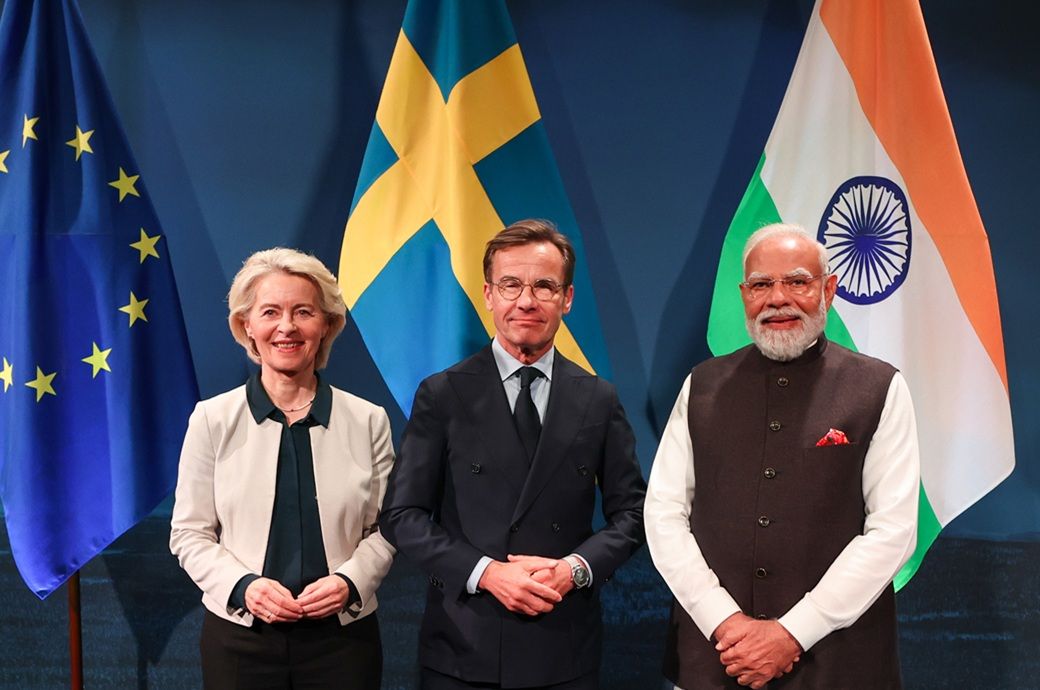
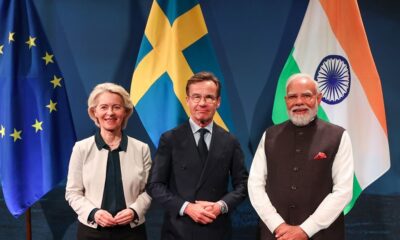
The moment will be marked by a large-scale business event for European and Indian companies, she said while addressing the European Round Table for Industry (ERT) in Gothenburg, Scandinavia’s largest trading port, yesterday.
European Commission President Ursula von der Leyen recently vowed to implement the India-EU FTA by 2026 end, announcing to make the deal ‘fully operational at record speed’.
The moment will be marked by a business event for European and Indian firms, she said in Gothenburg.
Indian PM Modi invited European industry leaders to partner with India in digital infrastructure, AI and clean energy.
The event was also attended by Swedish Prime Minister Kristersson and Indian Prime Minister Narendra Modi.
“But trade is only half the equation. Our next step must be to deliver an investment agreement. This is the missing piece of the puzzle in our reinforced economic cooperation, especially in a world where supply chains are being reshaped, and economic security challenges us as never before. Deepening our investment ties will help us to de-risk and diversify,” she said.
Modi invited European industry leaders to partner with India in areas like digital infrastructure, artificial intelligence, deep tech manufacturing, green transition and clean energy. He suggested holding the ERT annually and create an India desk there.
Fibre2Fashion News Desk (DS)
Both sides agreed that a minimum of 80 per cent of the factory’s production workforce will be women and indigenes of Kwara state.
Nigerian state-run Kwara Garment Factory has signed a pact agreement with KWS Garment Production Village, allowing the latter to manage and run the former.
A minimum of 80 per cent of the factory’s production workforce will be women and indigenes of Kwara state.
The management model has been carefully structured to protect the state’s investment while allowing private sector excellence to thrive.
The agreement was signed at the factory in Ilorin by its managing director Bukola Adedeji.
KWS Garment Production Village is led by Folake Akindele, an acclaimed figure in African fashion over the last three decades.
The management model has been carefully structured to protect the state’s investment while allowing private sector excellence to thrive, commissioner in the Ministry of Business, Innovation and Technology Damilola Yusuf-Adelodun was cited as saying by domestic media outlets.
“This occasion marks yet another bold step in the commitment of the Kwara state government under Mallam AbdulRahman AbdulRazaq, towards industrialisation, economic growth, job creation and sustainable development in our dear state,” Adedeji said, highlighting the scale of investment made by the state in preparing the facility.
“This factory represents the possibility. It represents scale. It represents structure. It is about building systems that allow Nigerian businesses, creative, institutional, and corporate alike, to produce competitively, efficiently and proudly within Nigeria. If you have been going outside Africa to manufacture and access world-class quality, you can get that same standard right here,” Akindele said.
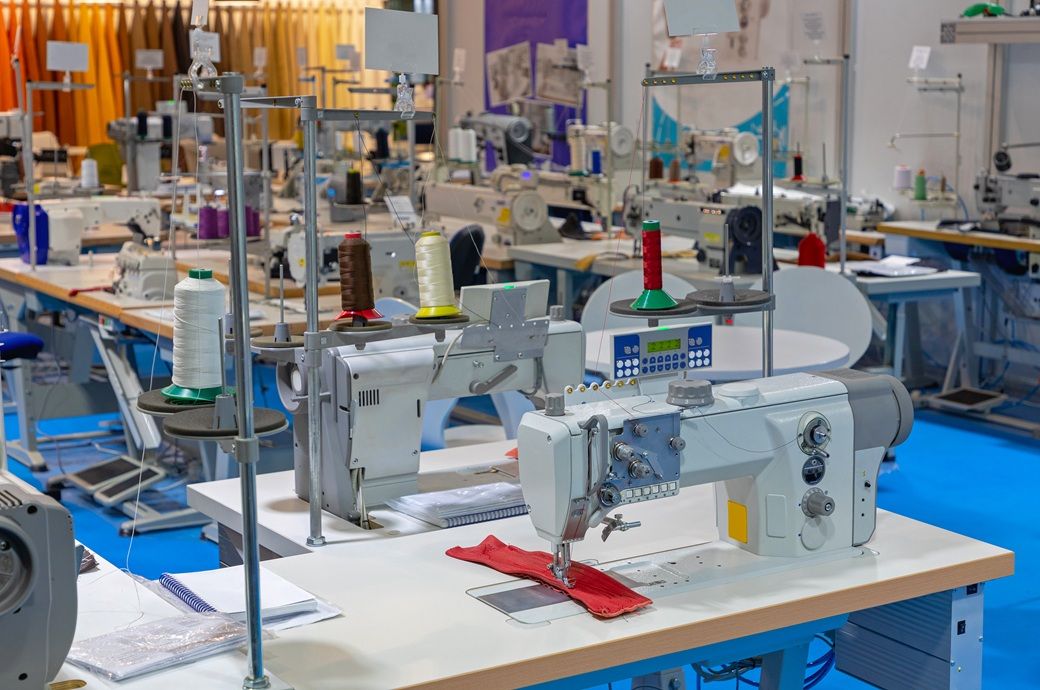
The factory is fully equipped with industrial-grade machinery covering the entire production chain, from cutting, sewing, embroidery, and printing to finishing, quality control and shipping.
It is designed to support large-scale apparel production across fashion, uniforms, sportswear, institutional, hospitality and corporate sectors.
Fibre2Fashion News Desk (DS)


India’s textile & apparel export down 3.4% to $2.88 bn in April 2026

Swinney defends food prices policy ahead of first minister vote

Iran says peace proposal includes reparations for war damage, US troop withdrawal

-

 Entertainment6 days ago
Conan O’Brien hat tricks as Oscar host
-

 Tech1 week ago
Could Contact-Tracing Apps Help With the Hantavirus? Not Really
-

 Fashion6 days ago
Italy’s Zegna Group’s Q1 growth boosted by strong organic performance
-

 Entertainment1 week ago
Tom Brady gets back at Kevin Hart during Netflix roast
-

 Entertainment1 week ago
Martin Short: Facing tragedy with joy
-

 Sports1 week ago
Jacob Fatu unleashes vicious assault on Roman Reigns after World Heavyweight Championship loss at WWE Backlash
-

 Tech1 week ago
Papa Johns Is Getting Into Drone Delivery—but Not for Pizza
-

 Tech1 week ago
CUDA Proves Nvidia Is a Software Company