

Politics
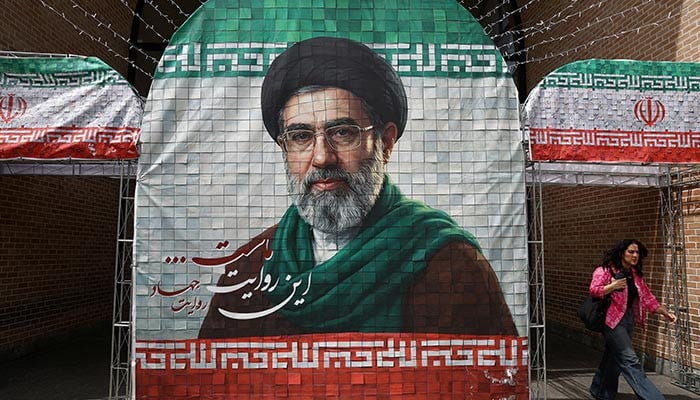
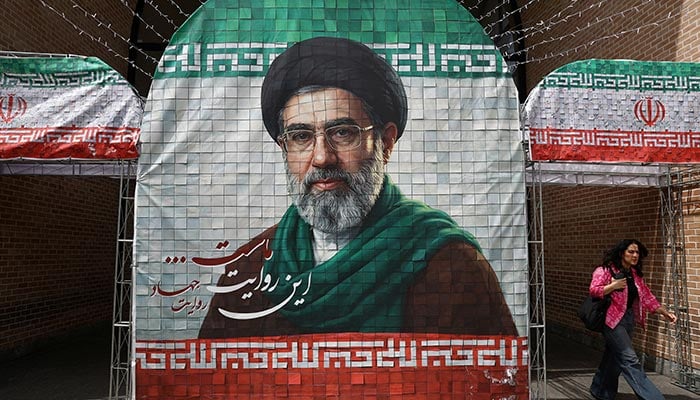
Supreme Leader Mojtaba Khamenei says ‘enriched uranium must stay in Iran’

- US wants Iran’s highly enriched uranium sent abroad.
- Trump told Israel this will happen: Israeli officials.
- Supreme Leader says uranium must stay in Iran: sources.
DUBAI: Iran’s Supreme Leader has issued a directive that the country’s near-weapons-grade uranium should not be sent abroad, two senior Iranian sources said, hardening Tehran’s stance on one of the main US demands at peace talks.
Ayatollah Mojtaba Khamenei’s order could further frustrate US President Donald Trump and complicate talks on ending the US-Israeli war on Iran.
Israeli officials have told Reuters that Trump has assured Israel that Iran’s stockpile of highly enriched uranium, needed to make an atomic weapon, will be sent out of Iran and that any peace deal must include a clause on this.
Israeli Prime Minister Benjamin Netanyahu has said he will not consider the war over until enriched uranium is removed from Iran, Tehran ends its support for proxy militias, and its ballistic missile capabilities are eliminated.
“The Supreme Leader’s directive, and the consensus within the establishment, is that the stockpile of enriched uranium should not leave the country,” said one of the two Iranian sources, who spoke on condition of anonymity because of the sensitivity of the matter.
Iran’s top officials, the sources said, believe that sending the material abroad would leave the country more vulnerable to future attacks by the United States and Israel. Khamenei has the last say on the most important state matters.
The White House and Iran’s foreign ministry did not respond to requests for comment.
Deep suspicion among top Iranian officials
A shaky ceasefire is in place in the war that began with US-Israeli strikes on Iran on February 28, after which Iran fired at Gulf states hosting US military bases and fighting broke out between Israel and Hezbollah in Lebanon.
But there has been no big breakthrough in peace efforts, with a US blockade of Iranian ports and Tehran’s grip on the Strait of Hormuz, a vital global oil supply route, complicating negotiations mediated by Pakistan.
The two senior Iranian sources said there was deep suspicion in Iran that the pause in hostilities was a tactical deception by Washington to create a sense of security before it renews airstrikes.
Iran’s top peace negotiator, Mohammad Baqer Qalibaf, said on Wednesday that “obvious and hidden moves by the enemy” showed the Americans were preparing new attacks.
Trump said on Wednesday the US was ready to proceed with further attacks on Tehran if Iran did not agree to a peace deal, but suggested Washington could wait a few days to “get the right answers.”
The two sides have started to narrow some gaps, the sources said, but deeper splits remain over Tehran’s nuclear programme — including the fate of its enriched uranium stockpiles and Tehran’s demand for recognition of its right to enrichment.
Iran hardens stance on enriched uranium stockpile
Iranian officials have repeatedly said Tehran’s priority is to secure a permanent end to the war and credible guarantees that the US and Israel will not launch further attacks.
Only after such assurances are in place, they said, would Iran be prepared to engage in detailed negotiations over its nuclear programme. Tehran has long denied seeking a nuclear bomb.
Israel is widely believed to have an atomic arsenal but has never confirmed or denied it has nuclear weapons, maintaining a so-called policy of ambiguity on the issue for decades.
Before the war, Iran signalled willingness to ship out half of its stockpile of uranium, which has been enriched to 60%, a level far higher than what is needed for civilian uses.
But sources said that the position changed after repeated threats from Trump to strike Iran.
Israeli officials have told Reuters it is still unclear whether Trump will decide to attack and whether he would give Israel a green light to resume operations. Tehran has vowed a crushing response if attacked.
However, the source said there were “feasible formulas” to resolve the matter.
“There are solutions like diluting the stockpile under the supervision of the International Atomic Energy Agency,” one of the Iranian sources said.
The IAEA estimates that Iran had 440.9kg of uranium enriched to 60% when Israel and the US attacked Iranian nuclear facilities in June 2025. How much of that has survived is unclear.
IAEA chief Rafael Grossi said in March that what remained of that stock was “mainly” stored in a tunnel complex in its Isfahan nuclear facility, and that his agency believed slightly more than 200 kg of it was there. The IAEA also believes some is at the sprawling nuclear complex at Natanz, where Iran had two enrichment plants.
Iran says some highly enriched uranium is needed for medical purposes and for a research reactor in Tehran which runs on relatively small amounts of uranium enriched to around 20%.
- Claimed zone extends near UAE port.
- Ships told to seek Iranian approval.
- UAE fast-tracks Hormuz bypass pipeline.
DUBAI/TEHRAN: A top UAE official denounced Iran’s claim of control over Emirati waters in the blockaded Strait of Hormuz as a “pipe dream” on Thursday, following an announcement by an Iranian body overseeing the strait.
“The regime is trying to establish a new reality born from a clear military defeat, but attempts to control the Strait of Hormuz or infringe on the UAE’s maritime sovereignty are nothing but pipe dreams,” said the United Arab Emirates’ presidential adviser Anwar Gargash in a post on X.
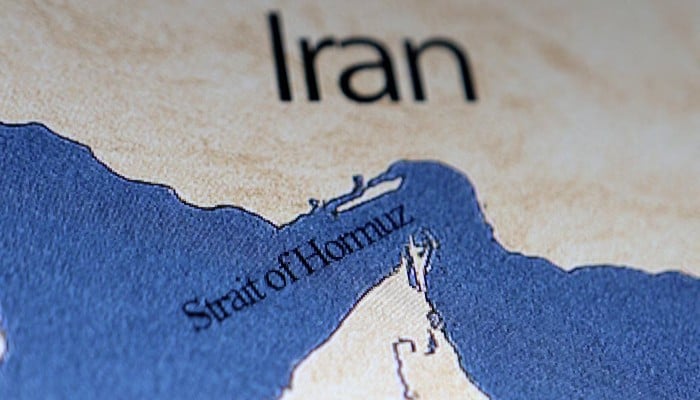
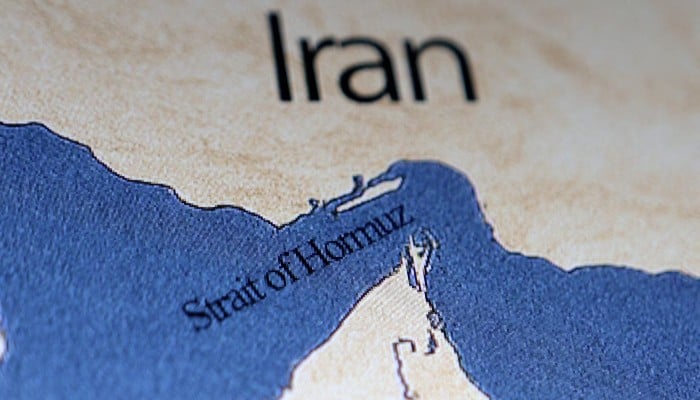
Iran’s new body overseeing the Strait of Hormuz has said its claimed area of control extends to waters south of the United Arab Emirates’ port of Fujairah, which hosts oil infrastructure designed to bypass the strategic waterway.
Traffic through Hormuz — a vital global shipping conduit — has come under Iranian control since the outbreak of war with Israel and the United States on February 28.
Iran, which has effectively closed the strait since the war and is seeking to charge ships for passage, has insisted that vessels transiting the waterway must obtain permission from the Iranian armed forces.
In a post on X on Wednesday, accompanied by a map, the Persian Gulf Strait Authority said it had outlined “the regulatory jurisdiction for the management” of the strait.
It said this covered the area between the line extending from “Kuh-e Mubarak in Iran to the south of Fujairah in the UAE… to the line connecting the tip of Qeshm island in Iran to Umm Al-Quwain in the UAE”.
It added that “transit through this area for the purpose of passing through the Hormuz Strait requires coordination with, and authorisation from, the Persian Gulf Strait Authority”.
Relations between Iran and the United Arab Emirates have been severely strained since the war, after Tehran launched retaliatory missile and drone strikes against Gulf countries in response to US-Israeli attacks.
The UAE has strongly opposed Iran’s control of the strait and called for joint action to ensure freedom of navigation through the waterway.
On Friday, the UAE announced it was fast-tracking the construction of a new oil pipeline bypassing Hormuz through Fujairah port.
The Abu Dhabi Media Office said the West-East Pipeline would double state oil giant ADNOC’s export capacity through Fujairah, adding that it is expected to become operational next year.
Iran has repeatedly accused regional states of allowing US forces to carry out attacks from their territory.
Gulf nations have repeatedly denied the accusations, saying even before the conflict that they would not allow their territory or airspace to be used to attack Iran.
On Wednesday, Iran’s Revolutionary Guards said they had allowed 26 ships, including oil tankers and other vessels, to pass through the strait over the previous 24 hours.
Last week, Iran said “more than 30 ships” had been allowed to pass, including some Chinese vessels.
- Pakistan, Qatar help refine proposal.
- Israel wants the war resumed.
- Iran reviewing updated peace draft.
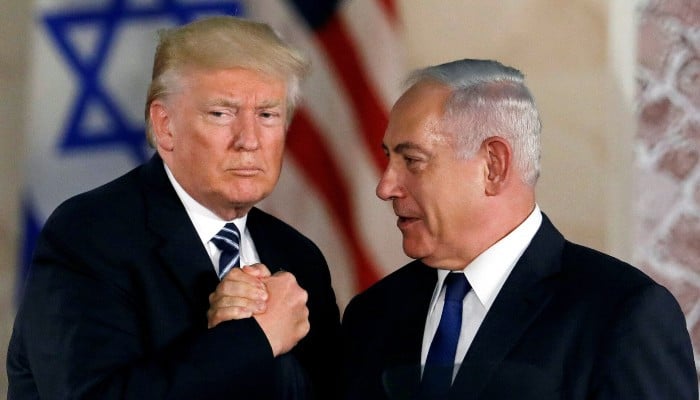
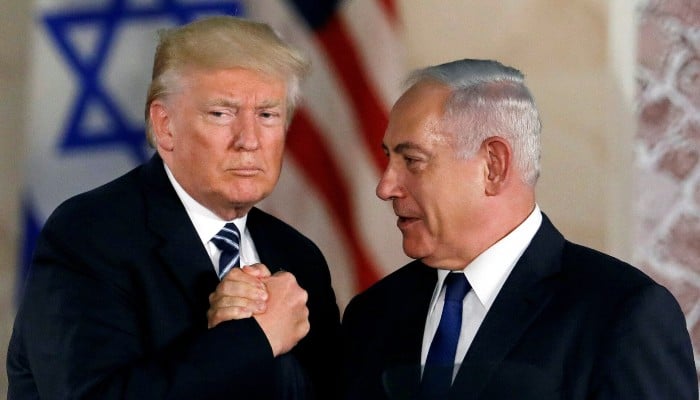
A revised Iran peace proposal drafted by Pakistan and Qatar triggered a tense call between US President Donald Trump and Israeli Prime Minister Benjamin Netanyahu, Axios reported, as Washington and Tehran weighed a possible deal to end the war.
The report said Qatar and Pakistan, with input from other regional mediators, worked on a revised peace memo to bridge gaps between the US and Iran while Trump considered whether to order a major strike or continue pursuing negotiations.
Netanyahu remains deeply sceptical of the talks and wants to resume the war to further degrade Iran’s military capabilities and weaken the regime by destroying critical infrastructure.
Trump, however, has continued to say he believes a deal can be reached, while warning that the war could resume if negotiations fail.
“The only question is do we go and finish it up or are they gonna be signing a document. Let’s see what happens,” Trump said on Wednesday at the Coast Guard Academy.
He later said the US and Iran were “right on the borderline” between reaching a deal and resuming the war. Trump also said Netanyahu “will do whatever I want him to do” on Iran, while adding that the two leaders had a good relationship.
Pakistan, Qatar, Saudi Arabia, Turkiye and Egypt have been working in recent days to refine the proposal. One source said there was no separate Qatari draft, but that Qatar was trying to bridge gaps from the previous Pakistani proposal.
A Qatari diplomat told Axios that Doha “has been and continues to support the Pakistani-led mediation efforts”, adding that Qatar had consistently advocated de-escalation “for the sake of the region and its people”.
Iran’s Foreign Ministry said negotiations were continuing “based on Iran’s 14-point proposal” and that Interior Minister Mohsin Naqvi was in Tehran to assist the mediation, marking his second visit in less than a week.
The latest effort aims to secure clearer Iranian commitments on its nuclear programme and more specific US assurances on how frozen Iranian funds would be gradually released, an Arab official told Axios.
However, the report said it remained unclear whether Iran would accept the new draft or significantly shift its position.
Meanwhile, Axios reported that Trump held a lengthy and “difficult” call with Netanyahu on Tuesday evening.
A US source briefed on the call said Trump told Netanyahu that mediators were working on a “letter of intent” that the US and Iran would sign to formally end the war and begin a 30-day negotiating period on Iran’s nuclear programme and the reopening of the Strait of Hormuz.
Two Israeli sources said Trump and Netanyahu disagreed over the way forward, while a US source said Netanyahu’s “hair was on fire” after the call.
Iran’s Foreign Ministry spokesperson said talks could succeed only if the US ended its “piracy” against Iranian ships and agreed to release frozen funds, while Israel would have to end its war in Lebanon.
Trump said the war could resume “very quickly” if Washington did not get “the right answer”, but added that he was willing to give talks a few more days.
“If I can save people from getting killed by waiting a couple of days, I think it is a great thing to do,” Trump said.
The White House and the Israeli Prime Minister’s Office declined to comment to Axios.
An Israeli source also said Netanyahu wants to travel to Washington in the coming weeks for a meeting with Trump.

- Oil flows may take 4 months to return to 80% of pre-war levels.
- Full flows may not return before first half of 2027: ADNOC chief.
- UAE planned decade ago infrastructure bypassing Hormuz.
DUBAI: The UAE’s new crude pipeline bypassing the Strait of Hormuz is about 50% complete, the head of ADNOC said on Wednesday, adding that global oil flows may take at least four months to recover to 80% of pre-conflict levels after the Iran war ends.
Tehran has largely kept the waterway critical for global oil and gas supplies shut to all ships other than its own since US-Israeli strikes on February 28, sending energy prices and inflation surging and fanning fears of an economic downturn.
The Abu Dhabi Media Office revealed the existence of the new West-East Pipeline project last week, saying Crown Prince Sheikh Khaled bin Mohamed bin Zayed directed state-owned oil giant ADNOC to fast-track its construction in order to double export capacity via the port of Fujairah by 2027.
“Today, it’s already almost 50% complete, and we are accelerating its delivery toward 2027,” Sultan Al Jaber said during a live-streamed Atlantic Council event, among his most extensive public remarks since the war began.
“Right now, too much of the world’s energy still moves through too few choke points. That is exactly why the UAE made the decision more than a decade ago to invest in infrastructure that bypasses the Strait of Hormuz.”
The existing Abu Dhabi Crude Oil Pipeline (ADCOP), which carries up to 1.8 million barrels per day, has proved crucial as the UAE seeks to maximise exports from the Gulf of Oman coast just outside the Strait.
Iran, which has attacked vessels to assert control over the Strait, has expanded its definition of the waterway to include the UAE’s Gulf of Oman coastline. The US has imposed its own blockade on Iranian ports and attempted an aborted operation to reopen the chokepoint.
UAE targeted
Gulf Arab countries, which host US military bases, have come under attack during the conflict, even since the fragile ceasefire that began on April 8.
The UAE was targeted by more than 3,000 missiles and drones aimed at civilian infrastructure, including ADNOC’s, where damage assessment is ongoing and full operational capacity could take weeks to months in some cases, Al Jaber said.
“The UAE was attacked for its model of development,” he said.
Even if the conflict ended tomorrow, Al Jaber warned that pre-conflict flows through the Strait would not return fully before the first or second quarter of 2027.
“Once you accept that a single country can hold the world’s most important waterway hostage, freedom of navigation as we know it is just finished,” he said.
“If we don’t defend this principle today, we will spend the next decade defending against the consequences.”
Co-investors
The accelerated pipeline timeline follows the UAE’s withdrawal, effective May 1, from the de facto Saudi-led Organisation of the Petroleum Exporting Countries (OPEC), freeing it from output quotas.
The exit was a “sovereign, strategic decision” driven by a global need for more energy, Al Jaber said, stressing it was “not aimed at anyone” and “not intended to rupture any relationship”.
He warned the global sector remains dangerously under-invested, noting current upstream investment of around $400 billion a year barely offsets natural decline rates. Global spare crude capacity, currently around 3 million bpd, needs to be closer to 5 million bpd, he added.
Looking forward, AI will strain global grids and the world is underestimating how energy-intensive the revolution will be, Al Jaber said.
“In many ways, the AI race is an electron race,” he said, noting that the speed of AI-driven decision-making can be the difference between continuity and disruption during a crisis.
Al Jaber reiterated the UAE’s commitment to investing heavily in the US, adding ADNOC, its international arm XRG and renewables investor Masdar, where Al Jaber is chairman, already have investments worth $85 billion across 19 states.
“The UAE and the United States are not just trading partners. We are co-investors in the economy of the next century,” he said.


Cambodia’s apparel exports rise 9.6% in January-April 2026

NYC and LA Are Teaming Up to Fight for EVs

US’ Aramark’s Q2 revenue grows on US, international gains

-

 Entertainment1 week ago
Conan O’Brien hat tricks as Oscar host
-

 Fashion1 week ago
Italy’s Zegna Group’s Q1 growth boosted by strong organic performance
-
 Business1 week ago
Pound wobbles and bonds suffer as Starmer battles on
-

 Entertainment5 days ago
Where Pete Davidson, Elsie Hewitt stand after breakup: Details revealed
-

 Sports1 week ago
2025-26 NBA Title Odds: Thunder, Spurs Favored; Knicks Rising
-

 Tech1 week ago
Hantavirus Conspiracy Theories Are Already Spreading Online
-
 Business1 week ago
Tui issues update on summer jet fuel shortage fears
-

 Tech1 week ago
Microsoft releases rare zero-day free Patch Tuesday update | Computer Weekly