

Tech
NYC and LA Are Teaming Up to Fight for EVs

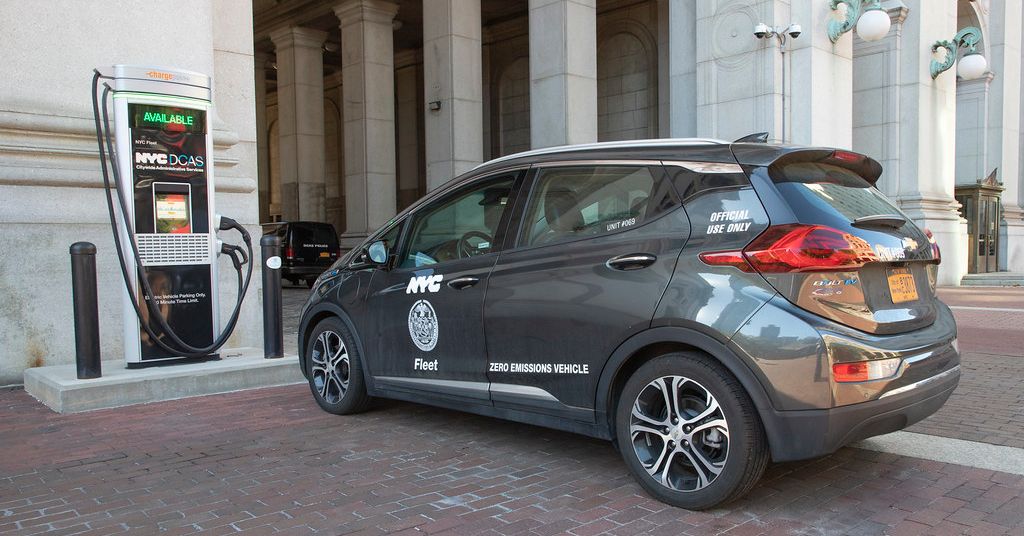
It is indeed a weird time to be an automaker, as US federal incentives disappear and support dwindles for newer electric-powered cars. “Manufacturers would really like to know what the future will be and what are the rules,” says Mike Finnern, the senior vice president and zero-emission fleet lead at WSP, a consulting firm. Guarantees of large, future orders from fleet managers like city governments, but also private businesses, “will help them be stable for a while.”
EVs are a nice fit for government fleets, Finnern says. Surveys suggest that regular car buyers are still plenty apprehensive about shifting to a plug-in from gas cars they’re used to, and they want cars with even longer ranges, even if they seldom use the whole battery. But governments know exactly how their vehicles are used, can more precisely control charging, and are able to see that today’s ranges of 250 to 400 miles per charge fit their needs fine. Plus, EVs might help governments save money on fueling and maintenance. Private operators like Amazon aren’t stopping their forays into EVs, and “they wouldn’t do it if it didn’t pencil out,” he says.
“I regret every electric and hybrid vehicle we haven’t bought yet,” says Kerman. “It would’ve shielded us from the doubling of fuel costs that we’re now enduring.” By partnering with the US Department of Transportation, his agency has found that switching to battery electrics improves New York City’s vehicle energy economy by 6 percent.
Still, both governments say they have plenty to learn about how and where EVs fit best and that the partnership will help them share and create best practices so that other cities might eventually follow.
One big takeaway from the government’s experience so far is that officials need to be proactive and mindful about getting city workers on board. There are technical challenges—maintenance workers need to be retrained to maintain EVs instead of gas-powered vehicles, and everyone needs to remember to plug them in—and trickier morale ones, too.
Workers don’t always appreciate sudden changes. And while New York’s data suggests that the intelligent speed assistance built into many of its new EVs reduces speeding and possibly crash severity in city vehicles, employees have lingering worries about workplace surveillance. (In March, the city workers’ union reached an agreement outlining how data collected from city vehicles might be used in disciplinary actions.)
A workforce that’s enthusiastic about EVs can make all the difference. “We’ve seen some deployments be really successful and some, not so much. They have the exact same problems, but some were able to overcome them because their people were excited about it and trained,” Finnern says.
Courtesy of California Internal Services Department
Haynes, who used to work with Kerman in New York before moving to Los Angeles, recalls that he was once an EV skeptic but changed his mind once Kerman coaxed him into trying out a Tesla. It was, above all, fun.
“I will tell you, no one goes into these electric cars, walks out and says, ‘I hate this car,’” Kerman says. “They all say, ‘I love the car.”










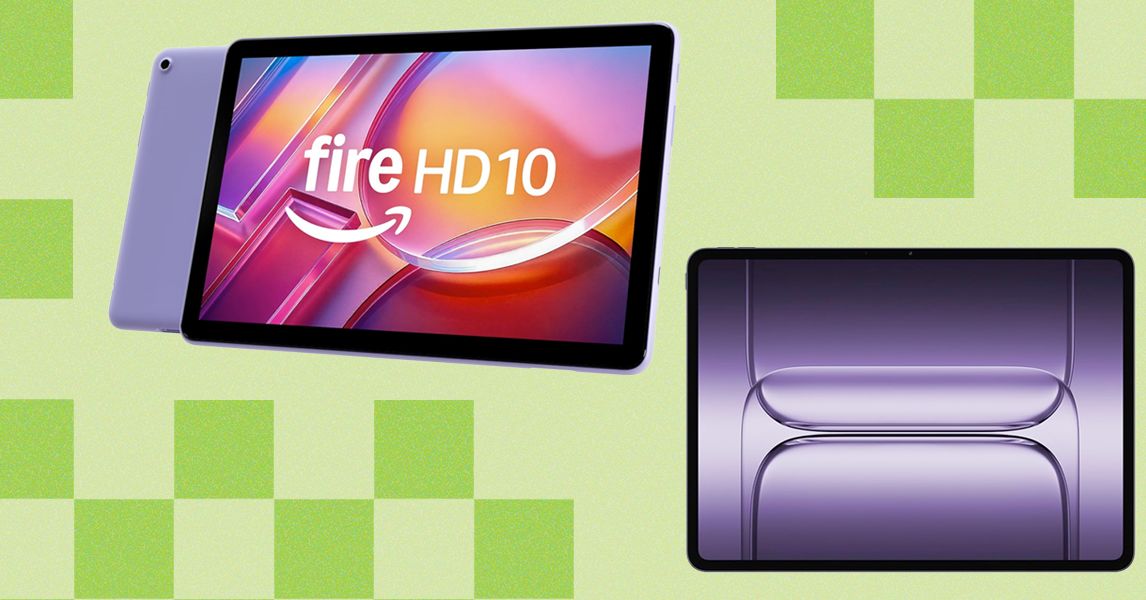
IPad? Never heard of it.
I have been using Android tablets pretty much since the first one came out, and I’ve never felt the need for anything made by any fruit companies. Android tablets make great “nice to have” entertainment centers, or they can be complete lightweight laptop replacements for travel.
Whatever your use case, I’ve tested just about all the Android tablets out there, and these are the best, depending on what you need them for. If you want to see how these stack up next to those iPad things, check out our guide to all the tablets on the market.
Be sure to check out our other buying guides, including the Best Amazon Fire Tablets, Best iPad, and Best iPad Accessories.
Table of Contents
The Best Android Tablet
-
Photograph: Julian Chokkattu
-
Photograph: Julian Chokkattu
-
Photograph: Julian Chokkattu


The best overall Android tablet I’ve tried in the OnePlus Pad 3. The Qualcomm Snapdragon 8 Elite chip offers great performance, with plenty of power for gaming, photo editing, and watching 4K video. The 13.2-inch LCD screen offers an excellent 3.4K resolution with a 144-Hz refresh rate (again great for gaming), and 12-bit color. Would I like to see an OLED screen? Sure, but no tablet at this price has one, not even the iPad Air. The Pad 3’s screen is one of the nicer LCD panels I’ve tested, and easy to read even in bright sunlight. One of the nice things about the LCD rather than OLED screen is that the Pad 3 has excellent battery life. I’ve watched back-to-back movies on plane flights and barely dipped below the halfway mark, and thanks to the 80-watt fast-charging point, you can recharge to 50 percent in under half an hour, with a full recharge taking about 1.5 hours. I also love that it loses hardly any power in standby mode. OnePlus rates it to 70 days of standby mode, but that’s with the WiFi off. In the real world, I can leave it lying around for a week, and it’ll still have 70 percent charge.
Part of the reason I think the Pad 3 is the best tablet for most people is that not only is it great for consuming content (it’s how I watch the majority of the baseball games I watch), it’s possible to get work done on it as well. OnePlus’ OxygenOS software is the best multi-tasking UI for Android tablets. I even prefer it to Apple’s iPadOS thanks to its Open Canvas system. Using Open Canvas, you can place three apps side by side, which is admittedly cramped, but still useful, or you can do what I do and use apps two side by side and expand a third at the bottom and scroll down to get to it. For me, that means a text editor at the bottom, which I effectively use in full screen, and then I can scroll up to get to my web browser and secondary app, which live side-by-side. It’s a great way to work; the only drawback is the OnePlus Pad keyboard, which I don’t love.
The keyboard is sold separately for $200 (it’s currently unavailable in the US), and while it’s a fine keyboard, with good key travel and a decent-sized trackpad, it really only works on a perfectly flat surface. In other words, it’s fine if you’re sitting at a table of some sort, but pretty much unusable in your lap. It really limits the usefulness of the Pad 3, and I’m hoping OnePlus will improve the design in a future version. Unfortunately, that’s somewhat unlikely as OnePlus is currently in a merger with Realme and its future is murky to say the least. We’ve already seen the Pad 4 debut in India (with little more than a chip and battery update), but so far, nothing for the rest of the world.
The Luxury Android Tablet
-
Photograph: Julian Chokkattu
-
Photograph: Julian Chokkattu


Samsung
Galaxy Tab S11 and Tab S11 Ultra
Samsung’s Galaxy Tab S11 and Tab S11 Ultra are the iPad Pro of the Android world. They’ve got the flagship specs, and at a mere 0.20 inches thick (5.1 mm), the Ultra matches the look at well. They are slightly heavier than an iPad Pro, but not enough that I actually notice the difference. Unlike the prior generation Tab S10 series, there’s no middle “Plus” model anymore. You have the 11-inch Tab S11 and the biggie, the 14.6-inch Tab S11 Ultra. Both run Android 16 out of the box, have 120-Hz AMOLED displays, and can hit a peak brightness of 1,600 nits. Samsung uses a MediaTek processor, the Dimensity 9400+, which is closely matched to the Qualcomm Snapdragon 8 Elite in the OnePlus Pad. Both models get 12 GB of RAM (if you go for the 1-terabyte Ultra model, the RAM goes up to 16 GB). Storage is expandable via microSD.

Margo Millet specializes in “constructive, recreational appendage analysis,” and for $20 on OnlyFans, she will tell you what Pokémon your penis most resembles and what attacks it might have.
Artfully detailing strangers’ private parts on the internet is not exactly the kind of work the protagonist of Margo’s Got Money Troubles dreamed of doing when she was little, but she’s strapped for cash, parenting solo, and has an uncanny gift for it (such as: “Your Bulbasaur’s special move is Ooze Attack, extremely potent pre-cum”). Before long, and with 200 new followers, Margo has learned her first lesson: “The ones that hate their dicks, they tip the most.”
TV has never shied away from portrayals of sex workers and the business of porn, but Apple TV’s adaptation of Rufi Thorpe’s 2024 novel of the same name, provides one of its most complex. The show’s season finale aired May 20.
OnlyFans is now its own subgenre in pop culture. A decade since it launched, and with more than 4 million creators on the platform, the adult content site, and everything it represents about the future of work for Gen Z, has emerged as one of Hollywood’s most human narratives. As Margo makes clear, “I can’t just go and get another job.” The creator class, also a pain point in the current season of HBO’s Euphoria, has become the ultimate allegory for society: online, we are all just entertainment for one another.
The very niche genre of erotic humiliation is just the tip of the iceberg for Margo (Elle Fanning), a book-smart 20-year-old college dropout who, after a brief affair with her literature professor, finds out she is pregnant, loses her job, and suddenly has to pay double in rent after two roommates move out because they can’t handle the baby’s relentless crying. Turning to OnlyFans, though, ends up being a blessing in disguise; it provides Margo with a stable income while also acting as a creative outlet for her.
Margo quickly runs into a common problem for creators on the platform who don’t have large social media followings: No one can find her. (According to OnlyFans, the platform intentionally limits its search feature as a safety precaution so users don’t accidentally encounter NSFW content they didn’t intend to see.) Online, she learns that posting multiple times a week and collaborating with like-minded creators is the best way to grow her following—and, with the help of her cosplay-obsessed bestie, she creates a persona called Hungry Ghost, an alien with an insatiable sexual appetite. “Give me your boredom, your sadness, your anxieties. I will eat it all,” she writes in her bio, realizing she will have to expand her social media presence beyond OnlyFans to gain more followers. “Find me on TikTok and Instagram to see how my story began.”
It’s the kind of sex work story, unsexy and mundane, rarely entrusted to an audience, and not because those stories don’t exist, but because they have never fit into the tidy—or sensationalized—narratives of how the business actually works. There isn’t anything particularly titillating about the granular details of how to grow your following—in Margo’s case, it’s more funny than anything else.
Thorpe created an OnlyFans account to do research for the book because she didn’t want Margo to be just another content creator who sells the same boring nudes and custom videos. “Part of what makes OnlyFans sexy is when it feels authentic and real, as opposed to hyperproduced pornography that makes it feel less intimate,” Thorpe said in an interview with Variety. Drawn to their ability to combine actual human elements into the profession, she pulled inspiration from unorthodox creators like BigHonkinCaboose, a comedian who incorporates a lot of humor into her OnlyFans, and HarperTheFox, a musician with a gift for creating parody songs about giving head and consensual anal sex.

As tensions between President Donald Trump and Europe continue to simmer, the continent is accelerating its moves to reduce its addiction to US technology. Cities and governments are ditching Microsoft Office for open-source alternatives, shifting to European cloud hosting for local AI, and moving defense data to systems without American involvement. Nowhere has this been more clear than in France.
Over the last few months, the French government has sped up its efforts to develop and deploy its own technology for government officials. The country has, arguably, emerged at the head of Europe’s growing digital sovereignty push, which aims to cut some reliance on US-based technology over concerns around data security, the Trump administration’s unpredictability, and changing prices. French budget minister David Amiel recently called for the state to “break free” from American systems and use those it can control.
“We are not just explaining what we want to do,” Stéphanie Schaer, the head of DINUM, France’s digital transformation ministry, tells WIRED over a call on the nation’s video-calling platform Visio. “We already did it in a few matters.” So far, more than 40,000 French government staff have started using the home-grown video platform, while the rest will move away from Zoom, Microsoft Teams, and others by 2027. “We are confident enough to use it every day and we are not dependent on just one actor that will tell us you have to use my video conference,” Schaer says.
Across France’s central government agencies and vast civil service, officials plan to shift to as many French, European, and open source technology alternatives as possible in the coming years. Schaer says it is important for the French government to be in control of the technology that it is using, with data being stored locally in the country, not abroad.
As part of this, DINUM has been developing a set of productivity tools, collectively called “LaSuite,” since at least 2023. As well as Visio, it includes instant messaging app Tchap, Messagerie instead of Gmail or Outlook, Fichiers for documents and file sharing, plus text editing software Docs, and Grist for spreadsheets. Some of the software is still in beta and has not been fully rolled out to French officials yet. However, Tchap already has 420,000 active users, Schaer says, with 20,000 civil servants adopting it each month.
“We are based on open source software. So we don’t develop all the code,” Schaer says. There are public plans for new features, although code is published on Microsoft-owned Github. All data handled by the alternatives has to be processed in France and stored with providers who have approval from the country’s cybersecurity agency ANSSI. Earlier this month, the Dutch government moved its open-source code off of GitHub and onto a Forgejo instance hosted on government-owned servers.
While open source is key, the French government is also working with other countries and private firms on the development of its tools. “We can reuse what has been developed by the community and we contribute to this community,” Schaer says. For instance, Visio, which can host calls of up to 150 people and has AI transcription of calls, is built on technology from French firms Outscale and Pyannote.
While Schaer’s department is aiming to lead by example, all of France’s central government agencies have to come up with plans to move away from US tech—across office software, antivirus, AI, databases, and more—by this fall. On April 23, French officials also announced the country will move its health data platform away from Microsoft to local cloud provider Scaleway, after a years-long decision process.


Cambodia’s apparel exports rise 9.6% in January-April 2026

NYC and LA Are Teaming Up to Fight for EVs

US’ Aramark’s Q2 revenue grows on US, international gains

-

 Entertainment1 week ago
Conan O’Brien hat tricks as Oscar host
-

 Fashion1 week ago
Italy’s Zegna Group’s Q1 growth boosted by strong organic performance
-
 Business1 week ago
Pound wobbles and bonds suffer as Starmer battles on
-

 Sports1 week ago
2025-26 NBA Title Odds: Thunder, Spurs Favored; Knicks Rising
-

 Entertainment5 days ago
Where Pete Davidson, Elsie Hewitt stand after breakup: Details revealed
-

 Tech1 week ago
Hantavirus Conspiracy Theories Are Already Spreading Online
-
 Business1 week ago
Tui issues update on summer jet fuel shortage fears
-

 Tech1 week ago
Microsoft releases rare zero-day free Patch Tuesday update | Computer Weekly