

Fashion
Vietnam, US to finalise reciprocal trade agreement soon


Hung said the agreement would help further deepen economic, trade and investment cooperation as the main driving force for Vietnam-US relations.
He stressed that Vietnam does not pursue a policy of overcapacity and that Vietnamese enterprises operate under market principles. He noted that the two economies are complementary rather than directly competitive.
Vietnam and the US will continue working towards a fair and balanced reciprocal trade agreement, Prime Minister Le Minh Hung said during talks with Deputy US Trade Representative Rick Switzer.
Both sides said the pact would deepen economic, trade and investment ties, while Vietnam reaffirmed its stance on market principles, forced labour and IP protection.
He also emphasised that Vietnamese law strictly prohibits all forms of forced labour, adding that Vietnam has actively implemented international commitments in this area, including conventions of the International Labor Organisation (ILO) and obligations under various free trade agreements.
He also reiterated that firmly combating and strictly handling violations of intellectual property rights remain a national priority of Vietnam.
Switzer underscored the significance of a reciprocal trade agreement for bilateral economic and trade cooperation. He praised the constructive cooperation and goodwill demonstrated by Vietnamese ministries, agencies, and the government negotiating team throughout the negotiation process.
He affirmed that both the Office of the US Trade Representative and he personally would continue to work closely with Vietnamese counterparts to soon reach the agreement, contributing to further advancing Vietnam-US relations in the years ahead.
Fibre2Fashion News Desk (JP)












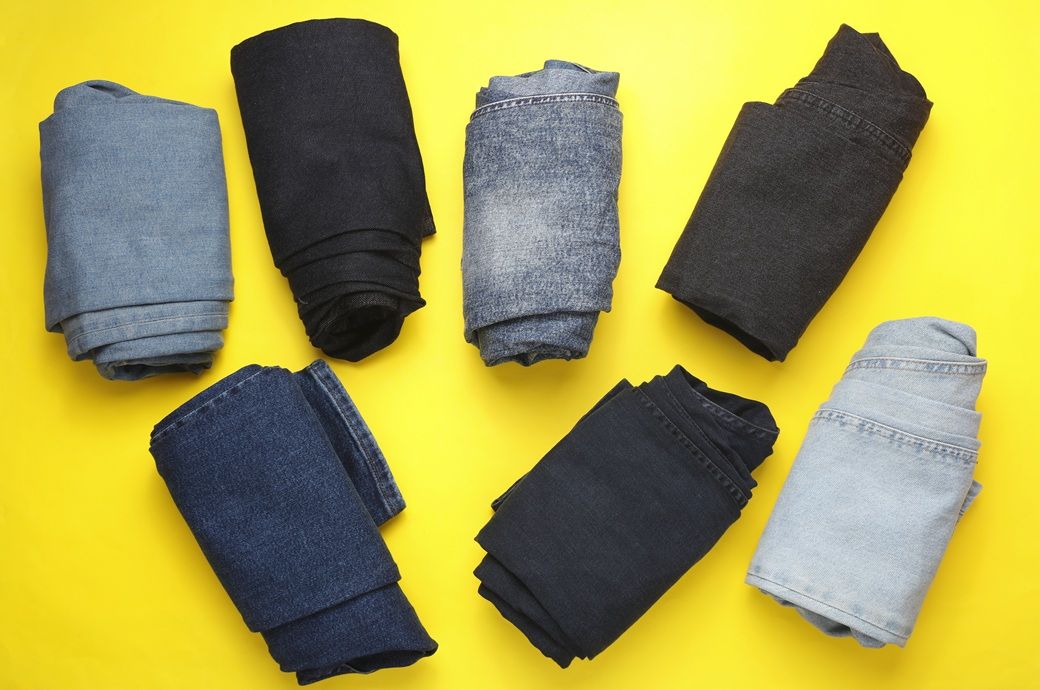
Imports of textile yarns and fabrics declined to $***.** million during the quarter, from $***.** million a year earlier. Imports of textile fibre and waste also dropped to $**.** million, compared with $**.** million in January-March ****. However, imports of articles of apparel and clothing accessories rose to $***.** million, against $***.** million in the corresponding period of the previous year.
In March ****, the Philippines’ imports of textiles and apparel declined as lower inflows of textile inputs outweighed a relatively smaller fall in apparel imports. Combined imports fell to $***.** million, compared with $***.** million in March ****. Imports of textile yarns and fabrics stood at $**.** million in March ****, down from $***.** million in the same month of the previous year. Imports of articles of apparel and clothing accessories also declined to $**.** million, compared with $**.** million in March ****. Meanwhile, imports of textile fibre and waste fell to $*.** million, from $**.** million a year earlier.
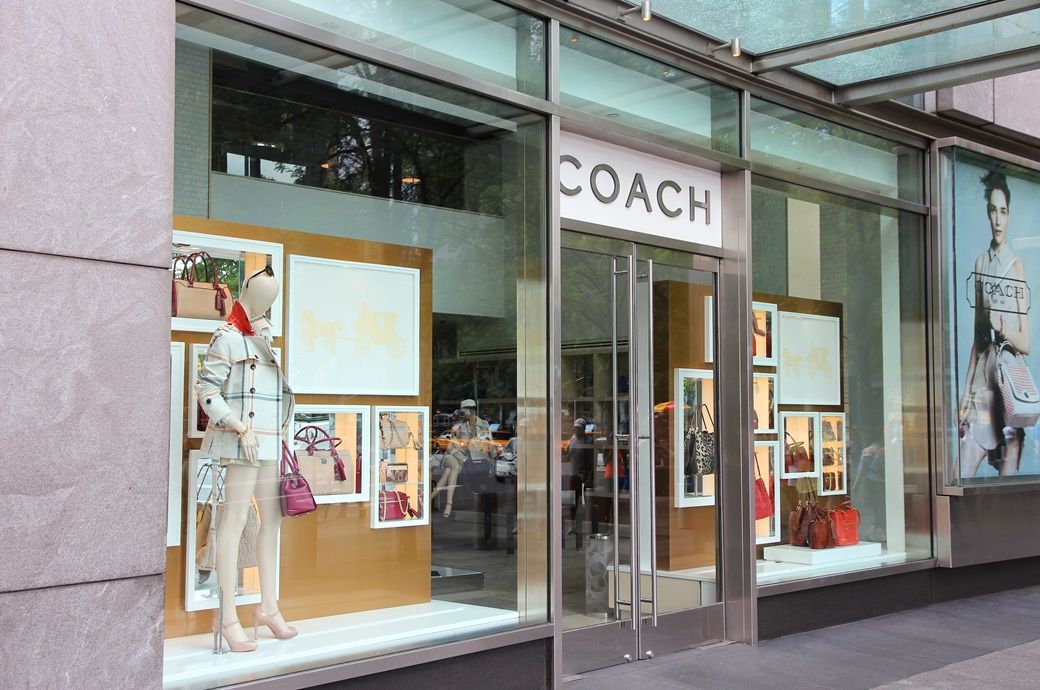
Net sales in Q3 of fiscal 2026 (FY26) ended March 28, increased 21 per cent year-over-year (YoY) to $1.92 billion, while pro forma net sales, excluding Stuart Weitzman, rose 25 per cent. On a constant currency basis, pro forma revenue increased 23 per cent.
Tapestry has posted strong Q3 FY26 results, driven by robust growth at Coach, higher margins, and strong demand across global markets.
Net sales rose 21 per cent to $1.92 billion, while operating income surged 69 per cent.
China led regional growth with a 61 per cent sales increase.
Strong digital and DTC momentum prompted the company to raise its FY26 revenue, margin, and EPS outlook.
“Our third quarter outperformance reflects the compounding benefits of our Amplify strategy, as we bring creativity, craftsmanship, and value to more consumers around the world,” said Joanne Crevoiserat, CEO of Tapestry, Inc.
She further said that with disciplined execution and the consumer at the centre of everything the company does, it is translating insights into action at scale, driving meaningful growth, expanding margins, and strengthening long-term brand desirability.
The gross profit rose 22 per cent to $1.48 billion, with gross margin improving by 80 basis points (bps) to 76.9 per cent. The company said operational improvements and the divestiture of Stuart Weitzman supported margin expansion, partly offset by tariff and duty-related pressures.
Operating income surged 69 per cent to $427.5 million, while operating margin improved sharply to 22.3 per cent from 16 per cent in the year-ago period, Tapestry said in a press release.
Coach drives growth as China sales surge 61 per cent
Net income climbed to $344 million from $203 million a year earlier, while diluted earnings per share (EPS) increased 74 per cent to $1.65.
Coach remained the key growth driver, with revenue increasing 31 per cent to $1.7 billion, while kate spade revenue declined 10 per cent to $219.6 million.
Regionally, China recorded the strongest growth, with revenue surging 61 per cent to $432.2 million. North America revenue rose 20 per cent to $1.1 billion, Europe increased 31 per cent to $118.6 million, and Other Asia grew 24 per cent to $116.3 million. Japan revenue declined 10 per cent.
During the quarter, Tapestry acquired over 2.4 million new customers globally, with Gen Z consumers accounting for more than 35 per cent of new customers. The company also reported over 20 per cent growth in handbag units at Coach alongside low double-digit growth in average unit retail (AUR).
Direct-to-consumer (DTC) revenue increased 23 per cent on a pro forma constant currency basis, supported by approximately 25 per cent growth in digital sales and more than 20 per cent growth in global brick-and-mortar sales.
Stronger-than-expected Q3 performance lifts FY26 outlook
The company now expects FY26 revenue of around $7.95 billion, representing reported growth of approximately 14 per cent YoY and 13 per cent growth in constant currency terms. Excluding Stuart Weitzman, pro forma revenue is projected to grow around 17 per cent.
Operating margin is expected to reach approximately 23 per cent, representing an expansion of around 300 bps over the prior year and exceeding earlier guidance.
Tapestry now expects diluted EPS of around $6.95, reflecting growth of more than 35 per cent over FY25 and above previous guidance of $6.4-6.45.
“We are raising our outlook for the fiscal year, underscoring the power of Tapestry and our commitment to driving durable growth and long-term shareholder value,” added Crevoiserat.
Fibre2Fashion News Desk (SG)

Global growth is now projected at 2.5 per cent in 2026 and 2.8 per cent in 2027—downward revisions to an already subdued outlook.
The global economy is under stress as the Middle East crisis clouds the growth outlook, stokes inflation and adds to uncertainty across financial markets, the UN ‘World Economic Situation and Prospects 2026: Mid-Year Update’ said.
Global growth is projected at 2.5 per cent in 2026 and 2.8 per cent in 2027—downward revisions to a subdued outlook.
Millions are at risk of being pushed into poverty.
Although these revisions are modest, forecast uncertainty has risen considerably, as outcomes hinge on the conflict’s duration and scale; a faster-than-expected resolution could restore confidence, while a prolonged disruption would deepen the downgrade, says the report.
The closure of the Strait of Hormuz is driving fuel, fertiliser and food prices higher and straining global supply chains. Global inflation is now expected to reach 3.9 per cent in 2026—0.8 percentage points above the January forecast—reversing a disinflationary trend and eroding household purchasing power.
Financial market volatility has increased, with risks of renewed portfolio outflows and tighter external financing conditions if the conflict persists. Central banks are expected to hold rates higher for longer to curb inflation, while governments face rising fiscal pressures from weaker growth alongside necessary expenditures to cushion crisis impacts, the report notes.
Resilient labour markets and artificial intelligence (AI)-driven trade and investment support global activity, but are unlikely to fully offset widespread headwinds.
The outlook is most challenging for fuel- and food-importing developing economies, where surging import costs risk widening fiscal deficits, straining external balances and deepening food insecurity.
Low-income households—which spend the largest share of their budgets on food and energy—bear the heaviest burden, with millions at risk of being pushed into poverty.
Combined with declining aid flows and mounting debt-service costs, these pressures threaten to reverse hard-won development gains and further slow progress toward the UN Sustainable Development Goals, the report adds.
Fibre2Fashion News Desk (DS)


Philippines’ T&A imports fall 9%, exports rise in Q1 2026

Vietnam, US to finalise reciprocal trade agreement soon

Cloudways vs Hostinger, tested by a tech expert

-

 Fashion1 week ago
Italy’s Zegna Group’s Q1 growth boosted by strong organic performance
-

 Entertainment6 days ago
Where Pete Davidson, Elsie Hewitt stand after breakup: Details revealed
-

 Entertainment1 week ago
Emilia Clarke recalls near-death incident while filming ‘Game of Thrones’
-
 Business1 week ago
Jersey Election 2026: Cost of living concern in St Helier Central
-

 Fashion1 week ago
Global cotton production, stocks to fall; consumption to rise: WASDE
-
 Fashion1 week ago
US’ Kontoor Brands’ posts strong Q1, plans Lee divestiture
-

 Politics6 days ago
Rising diesel costs from Iran war strain US school budgets
-

 Entertainment7 days ago
Drake drops highly anticipated "Iceman" album, plus two surprise albums