

Fashion
BTMA to showcase advanced fibre tech at ITMA Asia + CITME

The manufacture of medical sutures, for example, is a very specialised process and because these items are implanted directly into the human body, every stage of production is tightly controlled to ensure safety, sterility and reliable performance.
At ITMA Asia + CITME in Singapore, a 20-strong UK BTMA delegation will showcase innovations in medical sutures, UHMWPE, aerospace fibre placement, automation, and composites.
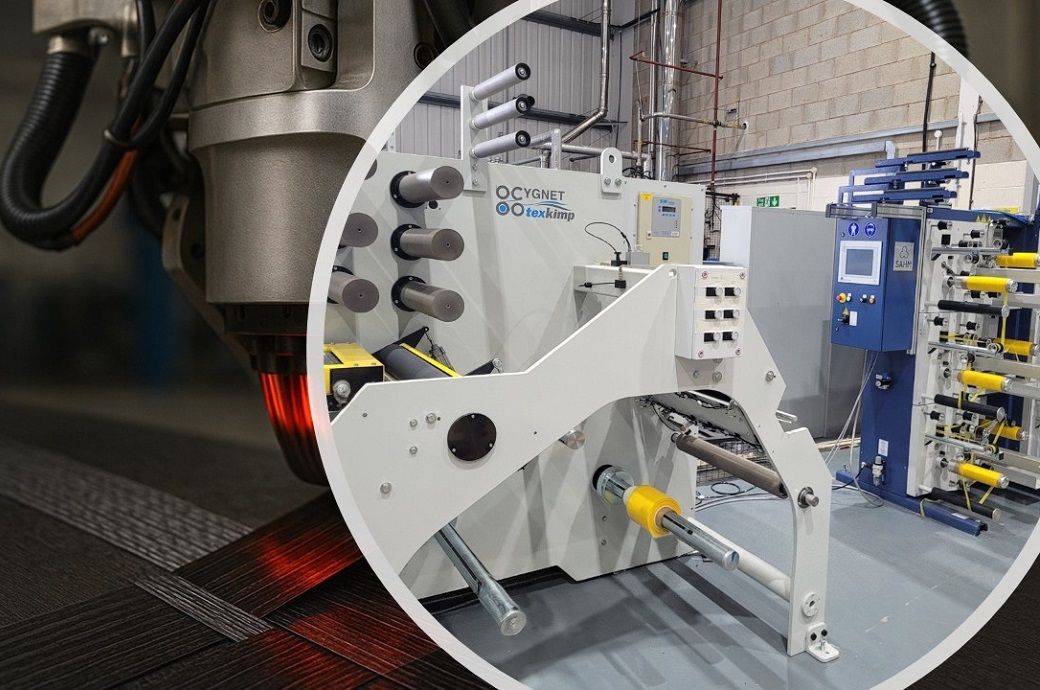
Highlights include FET’s supercritical CO₂ fibre tech and Cygnet Texkimp’s AFP solutions.
Collaboration with universities and new R&D-driven systems reflect the UK’s growing role in advanced fibres and technical textiles.
Absorbable sutures are usually made from polymers that degrade safely within the body, such as polyglycolic acid, polylactic acid or polydioxanone, while non-absorbable sutures use durable materials like nylon, polypropylene, polyester, silk or even stainless steel. All of these must be of medical grade and fully biocompatible.
The UK’s Fibre Extrusion Technology (FET) is a world leader in both the fibre selection and production technologies behind this industry and in Singapore will highlight a groundbreaking new parallel technology for the medical sector based on supercritical CO2. Further developments in the field of automation and control in advanced fibre production will be highlighted by BTMA members including Autofoam, James Heal, Roaches, Strayfield, Verivide and Wira Instrumentation.
AFP and ATL
From the micro to the macro, sophisticated aerospace technologies such as automated fibre placement (AFP) and automated tape laying (ATL) meanwhile involve the precise placement of carbon fibre tapes or tows on a mould surface, which are then cured to form lightweight yet strong components.
AFP allows for complex geometries by steering individual tows, making it ideal for fuselage sections, wing skins and other curved structures. ATL, on the other hand, is more efficient for larger, flatter surfaces such as wing covers or stabilisers, where wider tapes can be laid down at high speed with minimal gaps or overlaps. Together, these technologies significantly reduce material waste, improve repeatability and deliver structural performance beyond what traditional hand lay-up methods can achieve.
The UK’s Cygnet Texkimp has developed a new technology to greatly assist this industry which will be unveiled in Singapore.
Collaboration
“High value industries such as aerospace, defence, renewable energy, automotive and the medical sector are areas of high growth and opportunity and an important factor underpinning the success of our companies here is the strong collaboration between industry and the many universities and institutes in the UK,” says BTMA CEO Jason Kent. “Machine builders can also be important in driving material developments as well as technologies.”
UHMWPE
A good example of this is the flexible new process for manufacturing ultra high molecular weight polyethylene (UHMWPE) that will be introduced in Singapore by FET.
UHMWPE is prized in many industries due to its extraordinary properties, being for example, ten times stronger than steel by weight. It is increasingly used in medical implants, but the current systems for manufacturing it are on a huge scale, with very complex processing routes.
This restricts the opportunity for new product development – a disadvantage that is fully addressed with FET’s series lab and small scale gel spinning system, which is already industrialised.
“We have supplied many extrusion systems to the biomedical market and in exploring what else we could do for the same customers it became clear that there was a need for smaller quantities of UHMWPE fibres in bespoke sizes.” explains FET Managing Director Richard Slack. “We believe our introduction of a patented batch system for solvent extraction exploiting supercritical CO2 is a game changer.”
Early stage development
Cygnet Texkimp has meanwhile just introduced a next-generation, production-scale prepreg tape slitting machine at its UK Innovation Centre in Northwich.
This enables organisations to trial the slitting of continuous thermoset, thermoplastic and ceramic prepreg tapes for AFP and AFL processes in real-world conditions using their own materials or those produced on Cygnet Texkimp’s in-house R&D prepreg machines on the machine. The technology can slit tapes at speeds of up to 60 metres per minute, subject to the input material.
“We’re pleased to be able to offer partners the opportunity to engage with us at an early stage in process development, to test out their concepts, explore machine parameters, assess output quality and validate performance with support from our expert team,” says Graeme Jones, wide web product director at Cygnet Texkimp.
Splicing portfolio
Also providing back up services to the aerospace industry is Airbond, with splicing technologies which ensure resource efficiency in the processing of extremely expensive carbon and aramid fibres. Pneumatic yarn splicing is a process established in the textile industry for joining yarns and works by intermingling individual filaments closely together, to make joint which are stronger and flatter than knots.
“We are continuing to find new partners in the wind turbine, hydrogen and aerospace industries and are doing a lot of developmental work with research institutes and universities,” says technical director Carwyn Webb. “This is leading to us expanding our portfolio and we are currently working on systems for carbon tape splicing, for example, as well as an automated system for full weaving beams.”
Further developments for the technical textiles and composites sectors will be showcased by BTMA members including Garnett Controls, Roaches International, Slack & Parr and Tatham.
Spirit of openness
“Many BTMA members are currently developing new technologies, either in-house or increasingly through joint projects, and we have much to reveal in Singapore,” says Jason Kent in conclusion. “There’s a new spirit of openness and adventurous interaction in the UK right now – especially in the fields of advanced fibres and technical textiles – which is very encouraging for the future.”
BTMA companies taking part in ITMA Asia + CITME 2025 are Airbond (stand A202, Hall 2), Autofoam (B309, Hall 7), AVA CAD/Cam (C210, Hall 6), Cygnet Texkimp (B493, Hall 8), Fibre Extrusion Technology (B306, Hall 4), James Heal (B306, Hall 3), MCL (A203, Hall 5), Roaches (A112 Hall 2), Saurer Fibrevision (C301c, Hall 3), SDC Enterprises (B107, Hall 8), Sellers (B207, Hall 7), Shelton Vision (B308, Hall 7), Slack & Parr (D305, Hall 4), Society of Dyers and Colourists (B203, Hall 3), Strayfield (B509, Hall 7), Tatham (D205, Hall 2), The Textile Institute (B105, Hall 8), Verivide (B201, Hall 3), Vickers Oils (B102, Hall 5) and Wira Instrumentation (A108, Hall 3).
Note: The headline, insights, and image of this press release may have been refined by the Fibre2Fashion staff; the rest of the content remains unchanged.
Fibre2Fashion News Desk (HU)













“The improved order situation in industry has brightened sentiment somewhat. However, as a result of the Iran war, energy costs have risen sharply, and uncertainty among companies has also increased. That runs counter to a stronger economic recovery,” said Timo Wollmershauser, head of forecasts at ifo.
Firms in Germany have raised investment plans, with ifo expectations rising to 0.2 points in March from -3.1 in December 2025.
Industry led gains, especially non-energy sectors, while energy-intensive segments and chemicals remained weak.
Services showed modest optimism, but trade stayed pessimistic.
Rising energy costs and geopolitical uncertainty temper recovery.
The most notable rise in the willingness to invest was in industry. Expectations rose to +0.1 points in March, up from -6.9 points in December. The outlook improved particularly strongly in non-energy-intensive industries, where significantly more companies were planning to expand their investments this year, ifo said in a press release.
In energy-intensive industries, however, the willingness to invest remains subdued. At -9 points in March, the balance remained virtually unchanged from December (-8.9 points). In the chemical industry, investment expectations even declined further, from -15.8 to -16.2 points.
Overall, the corresponding balance in manufacturing rose from -4.1 to +1.2 points. “Companies across all sectors also want to invest more in software. The growing use of artificial intelligence is likely to play a role in that,” said ifo economic expert Lara Zarges.
In trade, companies remain the most pessimistic. The balance of investment expectations stood at -9.6 points in March, virtually unchanged from the level in December. Service providers, on the other hand, confirmed their slightly positive outlook from December: Their investment expectations improved from +1.1 to +2.8 points.
The points for the ifo investment expectations indicate the percentage of companies that intend to increase their investments on balance.
Fibre2Fashion News Desk (SG)

The report highlighted that although overall energy demand growth slowed compared with 2024 and remained slightly below the previous decade’s average, electricity demand rose by around 3 per cent, driven by increased usage across buildings, industry, electric vehicles, and data centres.
Global energy demand growth slowed to 1.3 per cent in 2025, while electricity demand rose around 3 per cent, driven by EVs, industry, and data centres, according to IEA.
Solar PV led supply growth for the first time.
Oil demand grew modestly, and coal growth slowed.
CO2 emissions rose slightly.
Renewables and nuclear expansion highlighted an accelerating shift towards cleaner energy systems.
Solar photovoltaic (PV) emerged as the largest contributor to global energy supply growth for the first time, accounting for over 25 per cent of the increase. Natural gas followed with a 17 per cent share, while renewables and nuclear together met nearly 60 per cent of additional demand.
Global oil demand rose modestly by 0.7 per cent, reflecting the continued expansion of electric vehicles, with sales surpassing 20 million units in 2025. Coal demand growth slowed overall, with declines in China offset by increases in the United States due to high natural gas prices.
“Global energy demand continued to increase in 2025 against a complex economic and geopolitical backdrop, with one trend unmistakeable: the expanding electrification of economies,” said Fatih Birol, IEA executive director.
He added that electricity consumption was growing much faster than overall energy demand, with one energy source outpacing all others. He noted that solar PV accounted for over a quarter of global energy demand growth for the first time, followed by natural gas, and added that countries prioritising resilience and diversification would be better placed to manage volatility and ensure secure, affordable energy.
Regional trends varied significantly. Energy demand growth in the United States rose sharply, supported by industrial activity, data centre expansion, and colder weather, while China’s growth slowed to 1.7 per cent due to rising renewable adoption and improved efficiency.
Global energy-related CO2 emissions increased marginally by around 0.4 per cent. Emissions declined in China and remained flat in India, aided by renewable deployment and favourable weather conditions, while advanced economies recorded higher emissions growth due to colder winter conditions.
In the power sector, solar PV generation surged by a record 600 terawatt-hours, marking the largest annual increase for any electricity generation technology. Battery storage emerged as the fastest-growing segment, with around 110 gigawatts of new capacity added, while nuclear energy also saw renewed momentum with over 12 gigawatts of new reactors under construction.
The IEA noted that cumulative deployment of low-emissions technologies since 2019 now offsets fossil fuel consumption equivalent to the entire energy demand of Latin America, underscoring the accelerating transition towards cleaner energy systems.
Fibre2Fashion News Desk (SG)

In a blog post, Alfred Kammer, director of the IMF’s European department, said his organisation sees growth slowing down in the continent. Initial data point already to weaker private investment and consumption.
The energy shock that has hit Europe due to the Middle East conflict, though smaller than in 2022, is weighing on growth and pushing inflation higher, an IMF expert recently cautioned.
IMF sees growth slowing down in the continent.
Initial data point already to weaker private investment and consumption.
Central banks must remain laser focused on keeping inflation expectations anchored, he wrote.
The outlook for euro area growth is projected at just 1.1 per cent in 2026, for the European Union it is 1.3 per cent; and this forecast comes with a high degree of uncertainty.
In a more severe scenario as described in the World Economic Outlook—a persistent supply shock compounded by tightening financial conditions—the EU could come close to recession with inflation approaching 5 per cent. No European country is spared, Kammer observed.
Policymakers face intense pressure—to act fast, visibly and for all, which results in policies that have more long-term downsides than short-term benefits, he wrote.
Targeted support is much more effective. Europe’s response to this shock should be shaped by two imperatives, he suggested. First, robust macroeconomic policy that is fit for a world with unpredictable and frequent shocks, and second, resilience built without wasting fiscal resources or getting in the way of markets.
The first imperative involves getting monetary and fiscal policy right. Central banks must remain laser focused on keeping inflation expectations anchored, the IMF expert wrote.
In the euro area, where inflation is close to target and medium-term expectations are broadly anchored, the European Central Bank has some scope to wait and observe the shock evolve before acting. IMF now expects a cumulative 50 basis point increase in the policy rate by the end of this year, maintaining a broadly neutral monetary stance in light of higher near-term inflation expectations, Kammer noted.
A rise in core inflation or increasing medium-term expectations would warrant a more restrictive stance, he wrote.
“Europe must reform under pressure. The current shock is not an argument for delay. It is all the more reason to push forward the reform agenda,” Kammer added.
Fibre2Fashion News Desk (DS)


Soccer’s incredible shrinking shin guards could be a big problem

Leave, holidays and encashment: What India’s changing labour laws mean for employees – The Times of India

Here’s full list of airlines hit by cancellations, reroutes, delays

-

 Fashion5 days ago
France’s LVMH Q1 revenue falls 6%, shows resilience amid Iran war
-

 Sports1 week ago
The case for Man United’s Fernandes as Premier League’s best
-

 Entertainment1 week ago
Palace left in shock as Prince William cancels grand ceremony
-
 Business1 week ago
UK could adopt EU single market rules under new legislation
-

 Entertainment6 days ago
Is Claude down? Here’s why users are seeing errors
-

 Fashion1 week ago
Energy emerges as biggest cost driver in textile margins
-
 Business1 week ago
Delta Air Lines unveils first new Delta One suite in premium cabin arms race
-

 Fashion1 week ago
Asia claims largest share of markets on Kearney FDI Confidence Index