

Fashion
Christian Louboutin Beauty to open Fétiche fragrance pop-up in NYC

Published
September 10, 2025
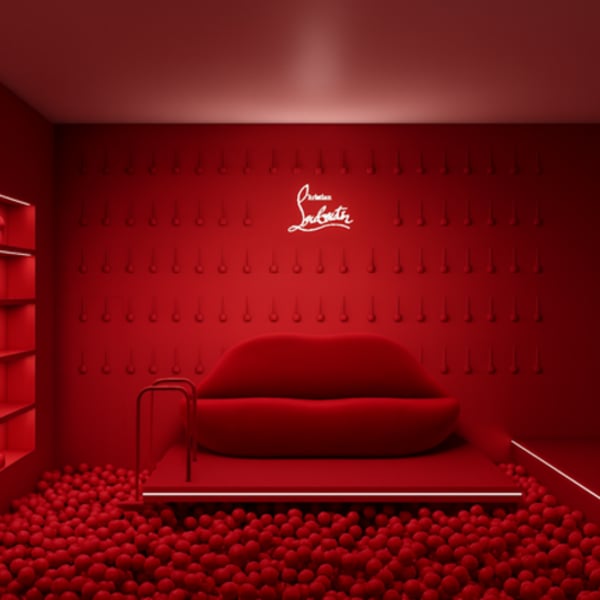
Christian Louboutin Beauty is set to open an immersive NYC pop-up in the heart of Soho, dedicated to its Fétiche fragrance collection.
Designed by Wild Buzz Agency, the temporary space offers visitors a sensory journey that brings the brand’s olfactory world to life. The event is free and open to the public from Friday, September 12 to Sunday, September 14 at 21 Spring Street.
Notably, the Fétiche collection will be on display, featuring signature scents such as Cuir Fétiche, Ambre Fétiche, Ébène Fétiche, Iris Fétiche and Encens Fétiche, joined by three new scents: Rose Fétiche, Santal Fétiche and Lavande Fétiche.
Each fragrance is meant to embody an attitude and emotion, much like a pair of Christian Louboutin stilettos, encouraging wearers to express their individuality and unique presence in the world.
Christian Louboutin Beauty launched in 2014 with nail polish before expanding into fragrances, lipsticks, foundations, eyeshadows, mascaras, liners and brushes. Now, the Fétiche pop-up offers a new way to explore the brand’s vision of beauty.
Copyright © 2025 FashionNetwork.com All rights reserved.











As the May report marks the official debut of the 2026/27 forecast, all figures are being compared year-on-year (YoY) with the 2025/26 season. Such YoY comparison is standard for the May release, as it establishes the initial baseline for the new crop cycle before month-on-month tracking begins from June onwards.
United States Department of Agriculture (USDA) has forecast lower global cotton production and ending stocks, alongside higher consumption for 2026/27, indicating tighter global supplies.
The WASDE report projects world output at 116 million bales and consumption at a six-year high of 121.7 million bales, supported by higher synthetic fibre costs and stronger cotton demand.
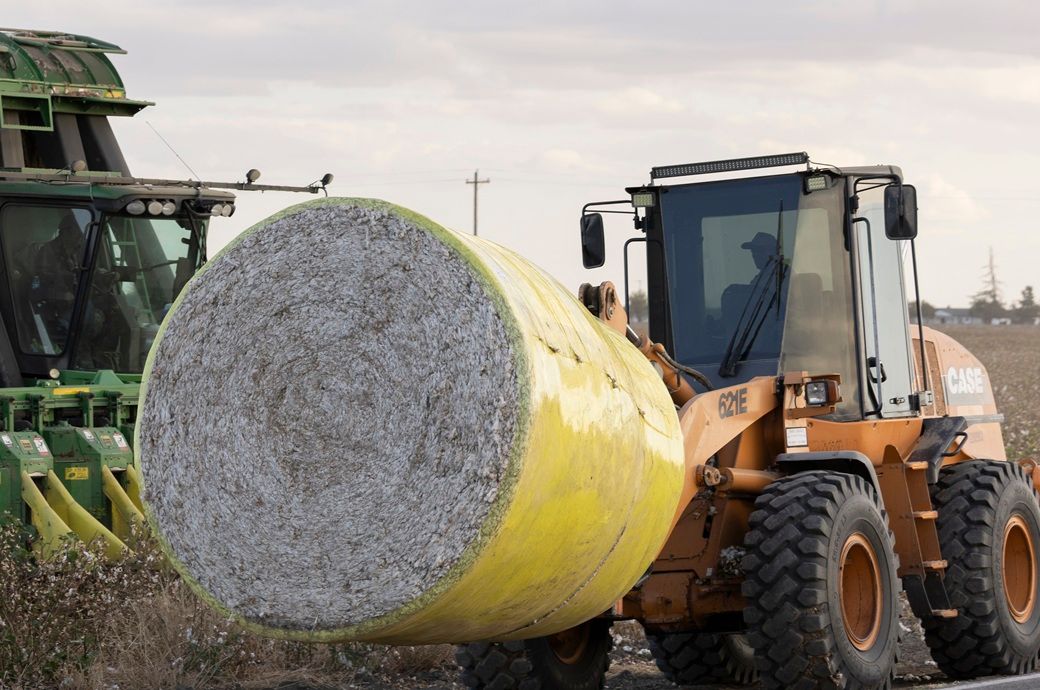
According to the first report for next marketing year 2026-27, world cotton production is forecasted to decline by 5 per cent to 116.0 million bales of 480 pounds or 220 kg each. This production drop is attributed to lower output in major exporting countries, including Australia, Brazil, China, Pakistan, and the US, which is more than offset gains in India and Argentina. Conversely, the global consumption forecast is raised to a six-year high of 121.7 million bales. This demand surge is driven by an oil supply shock that has increased the cost of synthetic fibres, making cotton more price-competitive for global textile manufacturers.
The tightening market is further reflected in global ending stocks, which are projected to fall by 5.4 million bales to 71.8 million bales due to production shortfalls in key regions. In the export market, Brazil is expected to lead with 15 million bales, followed by the US at 12.3 million bales.
Meanwhile US cotton production for 2026-27 is projected at 13.3 million bales, down 600,000 bales from the 2025-26 season, while US ending stocks are also expected to move lower to 3.9 million bales. Reflecting these tighter supplies, the season-average farm price is forecast to rise significantly to 73 cents per pound, up from the 61 cents per pound recorded in the previous marketing year.
Fibre2Fashion News Desk (KUL)
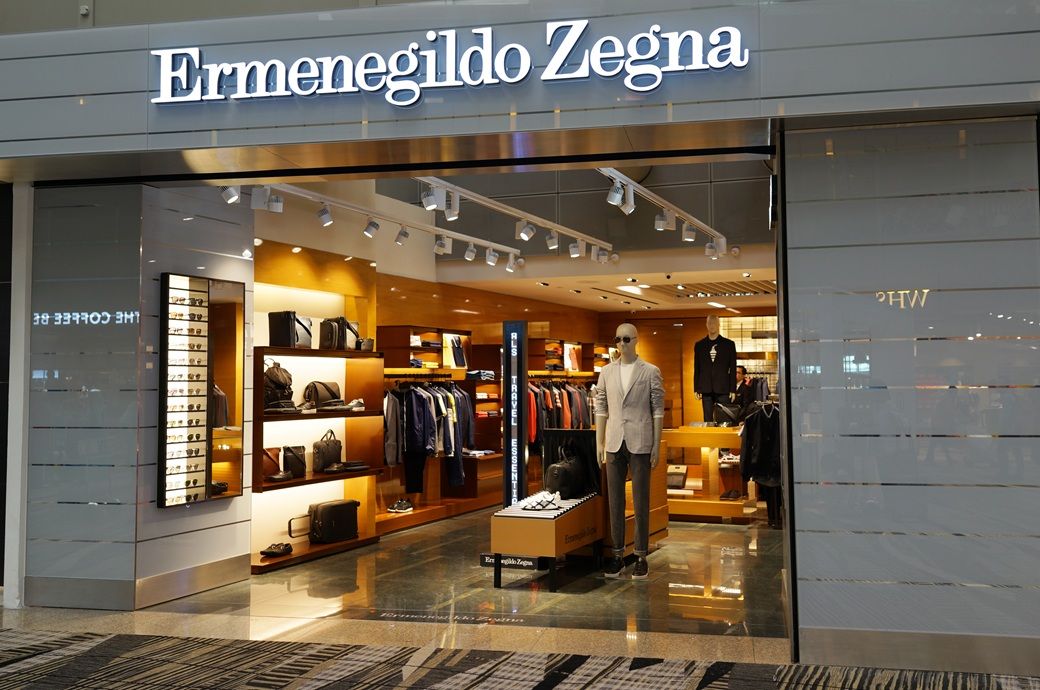
The group’s revenue rose to €470.2 million (~$550 million) in the first quarter (Q1), up 2.5 per cent year on year (YoY) and 7.4 per cent on an organic basis, supported by strong direct-to-consumer (DTC) performance.
Ermenegildo Zegna Group has reported revenue of €470.2 million (~$550 million) in Q1 2026, up 2.5 per cent YoY and 7.4 per cent organically, driven by strong DTC growth.
DTC sales rose 7.8 per cent to €371.9 million (~$435.12 million), while wholesale fell 19.1 per cent.
Zegna led brand growth, with the Americas being the strongest region.
The group will continue its retail-first strategy.
Ermenegildo “Gildo” Zegna, executive chairman of the Group, said: “We entered 2026 with growing momentum across all our brands.” He emphasised the continued strength of the retail channel and noted that the Americas delivered another quarter of double-digit organic growth.
DTC growth offsets wholesale decline; Zegna leads brand performance
DTC revenues increased 7.8 per cent to €371.9 million (~$435.12 million), with organic growth of 14.2 per cent, accounting for 85 per cent of branded product sales. All three brands, Zegna, Thom Browne and Tom Ford Fashion, recorded solid DTC momentum across regions.
In contrast, wholesale revenues declined 19.1 per cent to €64.3 million, reflecting the group’s deliberate move to reduce reliance on the channel and enhance brand control, exclusivity and pricing power, Zegna Group said in a press release.
By brand, Zegna remained the primary growth engine, with revenues rising 5.9 per cent to €310.3 million (~$363.05 million), or 11.3 per cent on an organic basis. The brand saw strong traction in the Americas and EMEA, alongside a return to growth in China (Including Hong Kong, Macau, and Taiwan).
Thom Browne revenues declined 9.4 per cent to €58.2 million, although organic performance was more resilient at -3.0 per cent, supported by strong DTC growth and the successful launch of its collaboration with Asics.
Tom Ford Fashion posted modest growth of 0.4 per cent to €67.7 million, or 5.4 per cent organically, aided by retail strength and brand visibility following its March fashion show.
Americas leads growth; China rebounds, EMEA steady amid mixed trends
Region-wise, Americas emerged as the strongest region, with revenues rising 9.6 per cent to €137 million and 17.5 per cent organically, driven by robust demand across all brands. China returned to growth, up 0.7 per cent (5.3 per cent organic) to €124.1 million, indicating improving momentum.
Europe, Middle East, and Africa (EMEA) revenues were broadly stable at €152.9 million, down 0.8 per cent but up 1.4 per cent organically, as DTC gains were offset by wholesale weakness. The rest of Asia-Pacific recorded a slight decline of 0.6 per cent to €55.5 million, though organic growth stood at 7.7 per cent, led by strong performance in Japan and South Korea.
The group’s textile segment also posted steady growth, with revenues rising 4.3 per cent to €31.2 million, while ‘other’ revenues declined sharply due to lower third-party brand agreements.
Looking ahead, Zegna said it will maintain its ‘think slow, act fast’ approach to navigate evolving market conditions, while remaining focused on long-term strategic objectives centred on retail expansion, brand elevation and operational agility.
Fibre2Fashion News Desk (SG)
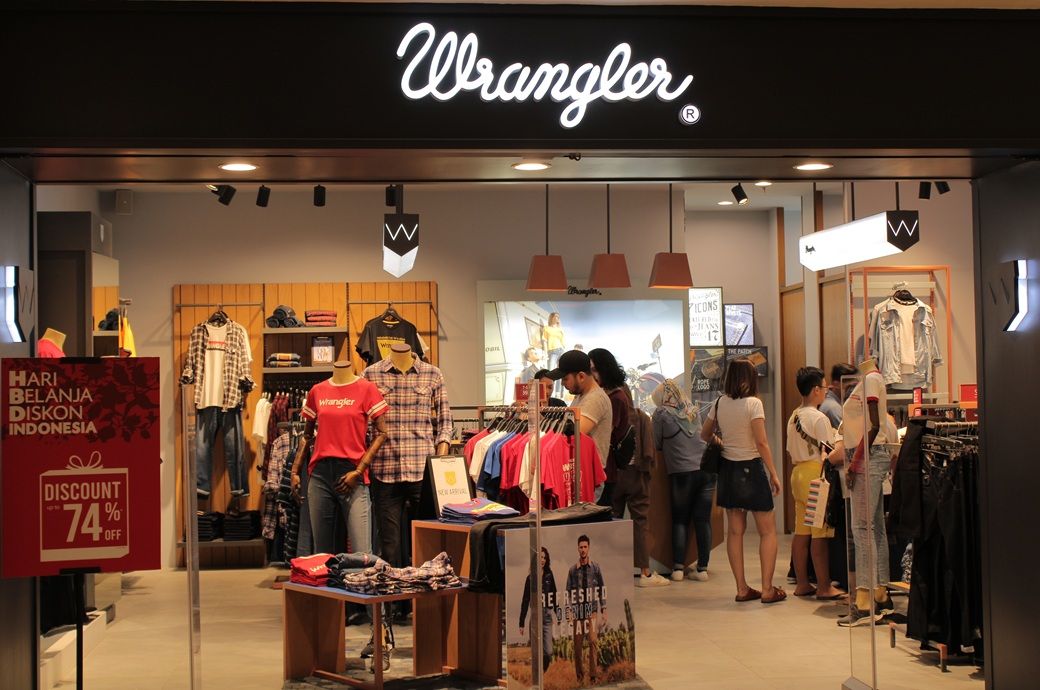
Total revenue for the quarter ended March 2026, including discontinued operations, stood at $808 million. Revenue from continuing operations reached $613 million, supported by 4 per cent growth in Wrangler and 16 per cent growth in Helly Hansen on a pro-forma basis.
“Our strong first quarter results reflect the power of our operating model combined with strong execution,” said Scott Baxter, president, chief executive officer and chairman of Kontoor Brands. “Wrangler drove another quarter of broad-based growth and market share gains, and Helly Hansen delivered better-than-expected revenue and profitability.”
Kontoor Brands has posted stronger-than-expected Q1 FY26 results, driven by growth in Wrangler and Helly Hansen, and raised its full-year outlook.
Total revenue reached $808 million, while continuing operations generated $613 million.
The company plans to divest Lee, now treated as a discontinued operation.
Adjusted EPS guidance was raised to $6.6-6.7 for FY26.
Brand-wise, Wrangler global revenue increased 4 per cent year-on-year (YoY) to $436 million. Wrangler US revenue rose 1 per cent, aided by a 6 per cent rise in direct-to-consumer sales and a 1 per cent increase in wholesale revenue. International Wrangler revenue climbed 20 per cent, driven by strong direct-to-consumer and wholesale growth.
Helly Hansen generated $176 million in global revenue during the quarter, with sport and workwear segments contributing $120 million and $45 million respectively.
The gross margin from continuing operations on a reported basis improved 810 basis points to 53.7 per cent. Adjusted gross margin increased 470 basis points to 50.6 per cent, driven by the contribution from Helly Hansen, channel mix improvements and benefits from Project Jeanius, Kontoor Brands said in a press release.
Adjusted operating income from continuing operations rose 60 per cent YoY to $87 million, while adjusted earnings per share (EPS) from continuing operations reached $1.06. Total reported EPS, including discontinued operations, stood at $1.65.
The company said the Lee business is now being treated as discontinued operations after initiating a competitive divestiture process during Q1 2026. Kontoor expects to sign a definitive agreement for the sale in 2026, with multiple parties reportedly showing interest.
At the end of the quarter, Kontoor held $56 million in cash and cash equivalents and $1.14 billion in long-term debt. Inventory stood at $464 million, including Helly Hansen inventory.
The company additionally disclosed that it recognised a net receivable of $54 million linked to the expected recovery of tariffs previously paid under the US International Emergency Economic Powers Act (IEEPA), following a recent court ruling against the tariffs.
Raises FY26 Outlook
The company has raised its FY26 revenue outlook, including discontinued operations, to $3.41-3.46 billion from the earlier guidance of $3.40-3.45 billion. Revenue from continuing operations is expected between $2.66 billion and $2.71 billion.
Adjusted EPS guidance, including discontinued operations, has been revised upwards to $6.6-6.7 from the previous $6.4-6.5 range. Adjusted EPS from continuing operations is expected between $5.15 and $5.25.
“Our updated outlook reflects better than expected first quarter results and improving visibility for Wrangler and Helly Hansen,” said Joe Alkire, executive vice president, chief financial officer and global head of operations at Kontoor Brands.
Fibre2Fashion News Desk (SG)


What It Will Take to Make AI Sustainable

Israel’s Netanyahu held meeting in UAE with president during Iran war: PM office

Army officer among five soldiers martyred, 7 terrorists killed in Balochistan operation

-

 Tech5 days ago
A new frontier: Identity stack evolves for agentic systems | Computer Weekly
-

 Tech5 days ago
‘Orbs,’ ‘Saucers,’ and ‘Flashes’ on the Moon: Pentagon Drops New UFO Files
-

 Tech5 days ago
Nick Bostrom Has a Plan for Humanity’s ‘Big Retirement’
-
 Fashion5 days ago
New orders in German manufacturing up 5% MoM in Mar 2026: Destatis
-
 Business1 week ago
India among most resilient large EMs, better placed for future global shocks; policy reforms & strong buffers help: Moody’s – The Times of India
-

 Tech6 days ago
What Microsoft Executives Really Thought About OpenAI in 2018
-

 Sports5 days ago
Shaheen Afridi achieves landmark feat during opening Test against Bangladesh
-

 Tech6 days ago
The Canvas Hack Is a New Kind of Ransomware Debacle