

Fashion
With Youngor, Bonpoint aims for acceleration in Asia


Published
September 10, 2025
On January 8, Bonpoint changed hands. After seventeen years with the family-owned EPI group, the high-end children’s fashion house joined the portfolio of Chinese giant Youngor. This is the first 100% acquisition in the luxury goods sector for the Shanghai-listed group, which until now has been better known for its textile activities and minority holdings in fashion, such as Alexander Wang, or licenses such as Helly Hansen.
“Unlike an investment fund, Youngor is a family business with a long-term vision,” emphasized Bonpoint chairman, Pierre-André Cauche. “Their ambition is to make the brand shine even brighter, without touching its fundamentals or know-how. On the other hand, we can expect an acceleration in China.”
Already present in China via some thirty points of sale, Bonpoint has opened three new stores there since its takeover, including a space devoted exclusively to cosmetics; a concept unique to the Chinese market. In the Middle Kingdom, where the brand now benefits from the local expertise of its new owner to strengthen its foothold, Bonpoint is positioned in the very luxury segment, with its stores flourishing alongside the likes of Dior and Loro Piana.
In addition to its future development in Asia, cosmetics are an essential pillar of growth for the brand: they now account for around 30% of its 150 million euros in sales. In Asia, Bonpoint’s customers are particularly attracted by skincare products, while in Europe, perfumes are the main focus.
Today, Bonpoint generates over 80% of its sales from exports. In addition to its 130 points of sale and corners around the world, the brand relies on some thirty wholesale partners. With growth judged “steady” by its president, Bonpoint confirms its appeal in a demanding market.
And as the brand celebrates its 50th anniversary this year, it is preparing to revive one of its most symbolic rituals: the fashion show. Scheduled for October 4 in its historic Paris boutique on Rue de Tournon, it will mark the first presentation since 2019 and will be the occasion for the unveiling of a brand-new capsule, a sign of a future focused on creativity and innovation.
For Youngor, with sales of 1.7 billion euros, this acquisition marks a strategic step: to further anchor its presence in international luxury. For Bonpoint, it’s the promise of new momentum, with China as a major springboard, but always in keeping with its DNA.
This article is an automatic translation.
Click here to read the original article.
Copyright © 2025 FashionNetwork.com All rights reserved.










The rise was largely driven by a rebound in energy costs. Prices of non-regulated energy products surged from a 2 per cent decline to a 9.9 per cent increase, while regulated energy prices rose 5.7 per cent after previously contracting, Istat said in a press release.
Italy’s inflation rose to 2.8 per cent YoY in April 2026 from 1.7 per cent in March, driven by a sharp rebound in energy prices, Istat said.
Monthly inflation stood at 1.2 per cent.
Goods inflation strengthened, while services inflation eased.
Transport costs increased notably.
The harmonised index (HICP) rose 2.9 per cent YoY, reflecting higher prices and seasonal factors.
In contrast, services inflation showed signs of moderation. Prices for recreation-related services eased to 2.6 per cent YoY, while transport services slowed sharply to 0.5 per cent. Overall services inflation decelerated to 2.4 per cent from 2.8 per cent in March.
Goods inflation, however, strengthened significantly, rising 3.2 per cent YoY compared with 0.8 per cent in the previous month. This narrowed the inflation gap between goods and services to -0.8 percentage points, down from +2 percentage points in March.
The monthly increase in the index was primarily led by higher prices for non-regulated energy (+5.7 per cent), transport services (+1.6 per cent), and recreation-related services (+1.4 per cent).
Among major consumption categories, water, electricity and fuels recorded a sharp 5.3 per cent annual increase, while transport prices rose 3.8 per cent.
Italy’s harmonised index of consumer prices (HICP), which allows comparison across the euro area, rose 2.9 per cent YoY in April, up from 1.6 per cent in March. On a monthly basis, HICP increased 1.7 per cent, partly reflecting the end of seasonal discounts in clothing and footwear.
Fibre2Fashion News Desk (SG)
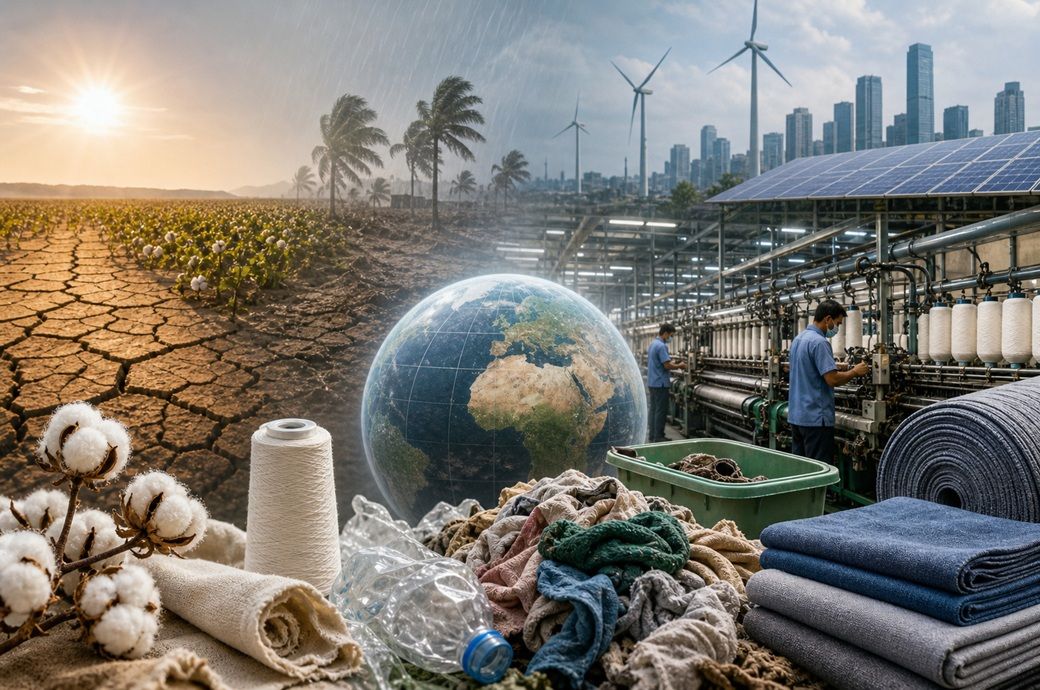
The apparel climate story has moved out of the ESG report and into the cost sheet. In ****–****, climate risk is showing up as cotton quality loss, import dependence, energy volatility, cooling capex, carbon-price exposure and mandatory textile-waste fees. For brands and suppliers, the question is no longer whether climate action is ‘responsible’. It is whether delay will make product margins uncompetitive.
The latest data makes the shift visible. Textile Exchange says global fibre production reached *** million tonnes in **** and could hit *** million tonnes by **** if business continues as usual. Polyester alone now makes up ** per cent of global fibre output, with ** per cent still fossil-based. That scale gives apparel a low-cost material engine, but it also ties the sector to fossil energy, petrochemical volatility and future carbon accounting.
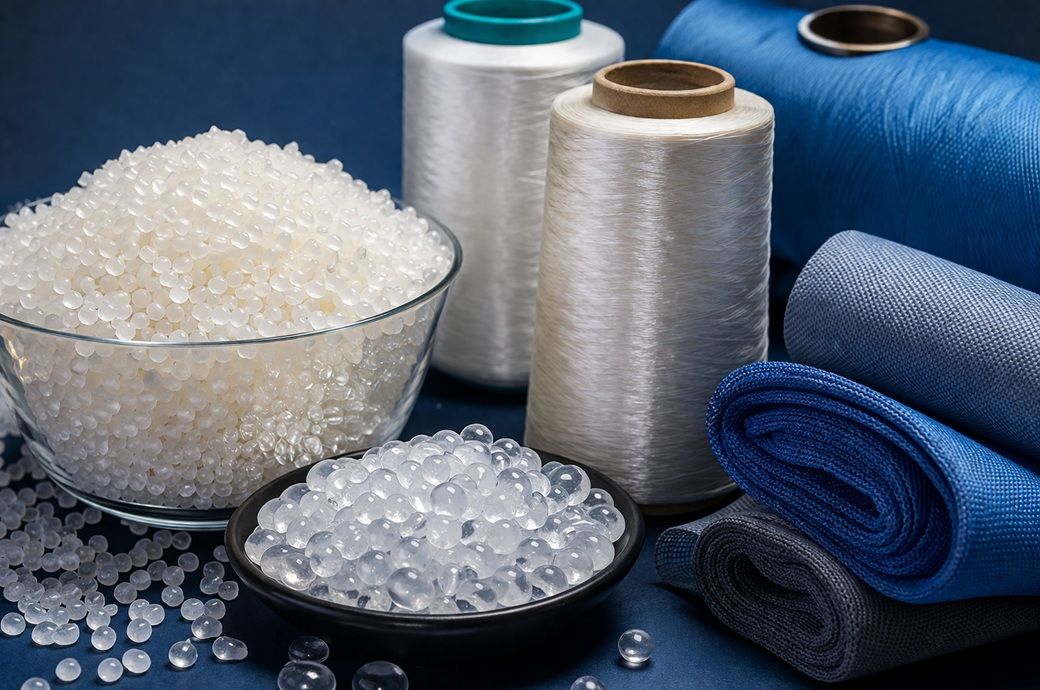
Caprolactam (CPL) prices initially held near $*.**–*.**/kg with minimal movement, while nylon chips saw uptick to ~$*.***/kg (+*.* per cent WoW) driven by short-term restocking. Nylon filament yarn (DTY **D/**F) prices remained stable at ~$*.**–*.**/kg, supported by existing inventory and steady downstream textile operations.
By the second week (April * to April **), benzene stabilised, but caprolactam began to weaken to ~$*.**–*.**/kg (−*.* per cent WoW), signalling the start of broader chain pressure. Nylon chips responded with a mild correction to ~$*.***/kg (−* per cent WoW), while filament yarn prices continued to hold steady due to inventory buffers and ongoing execution of prior textile orders. In the third week (Apr **–**), caprolactam stable to ~$*.*/kg, and chips followed to ~$*.***/kg (Stable WoW).


Italy’s inflation rises to 2.8% in April on energy spike
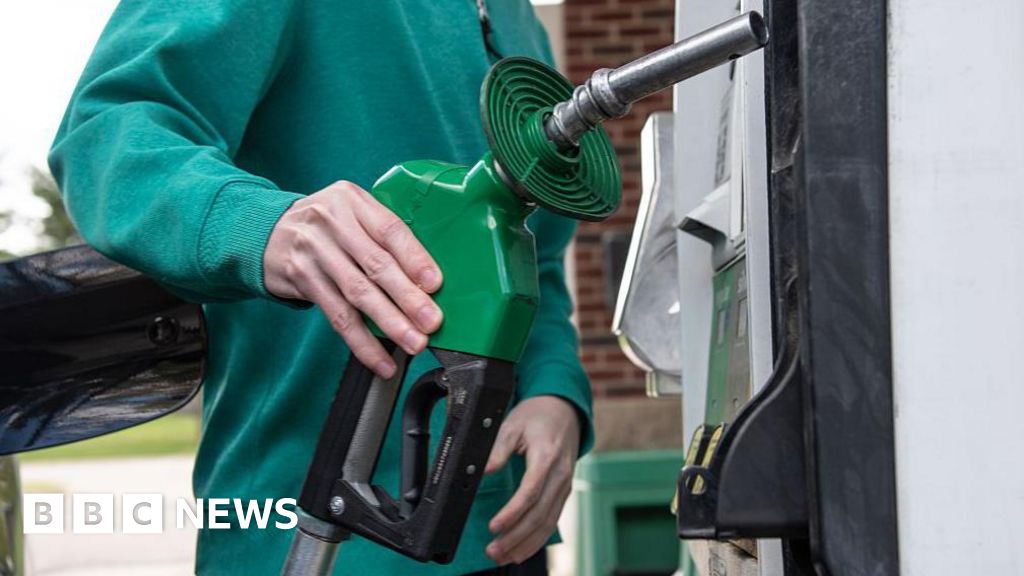
Oil prices ease as US pauses Project Freedom to seek Iran deal

Kadeem Hardison calls ‘Euphoria’ costar Zendaya ‘a boss’

-

 Tech1 week ago
A Brain Implant for Depression Is About to Be Tested in Humans
-

 Tech1 week ago
Almost 90% of women leave tech industry within 10 years | Computer Weekly
-

 Sports1 week ago
Pro wrestling star Steph De Lander reveals how colleague’s advice helped lead her to title triumph at ACW
-
 Business1 week ago
‘I had £20,000 stolen and had to fight a 13-month fraud reporting rule to get it back’
-

 Entertainment1 week ago
Norway joins Type 26 Frigate Programme to boost NATO naval power
-

 Tech1 week ago
Are tech leaders risking a cyber resourcing crisis? | Computer Weekly
-

 Entertainment1 week ago
Melania Trump says ABC should ‘take a stand’ on late-night host Kimmel
-
 Business6 days ago
PSX plunges over 4,800 points | The Express Tribune