

Fashion
Zara opens redesigned store at Trafford Centre with modular concept

By
Europa Press
Translated by
Nazia BIBI KEENOO
Published
September 10, 2025
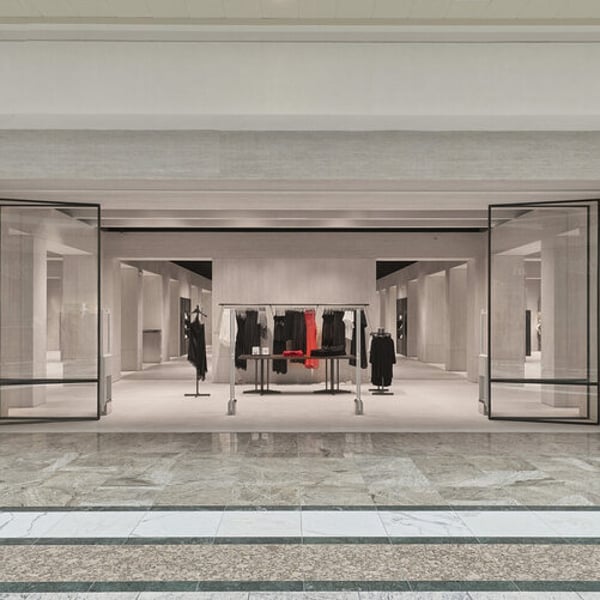
Zara has unveiled its latest store concept at the Trafford Centre shopping center in Manchester (England), characterized by individualized spaces and new technology.
Inditex has reopened this flagship location following a major renovation, expanding the store’s commercial area by 40% to 4,800 square meters. The updated layout reflects the brand’s latest concept focused on personalization and retail innovation.
The store, which offers women’s, men’s, and children’s fashion collections, has also grown its workforce by 40%, now employing 270 people. This reinforces Zara’s commitment to delivering an innovative retail experience that blends fashion, architecture, sustainability, and customer-centric technology into one unified space.
Each section, an autonomous unit
A core feature of the new store is that each section operates as an autonomous unit, using distinct visual cues while maintaining a cohesive design language across the space. The result is a differentiated shopping experience that remains connected to Zara’s broader brand identity. Dedicated areas have also been introduced for perfumes and exclusive product lines such as Zara Origins and Zara Athleticz.
The project, designed by Zara’s in-house architectural team, organizes the store as a series of interconnected rooms, each with a refreshed layout, updated displays, and a refined, immersive atmosphere.

“The space is conceived as a neutral container, layered with modular and lightweight architectural elements, configuring each section as an independent unit within the whole,” the company explained. This concept was developed based on customer research, aiming to highlight the uniqueness of each room while maintaining an overarching narrative. Flexibility and rapid adaptability are key to the design.
Furniture also plays a strategic role in these boutique-style spaces. Materials such as wood, steel, ceramic, and marble are mixed to create visual harmony. Dedicated zones highlight footwear, handbags, and lines like Zara Athleticz, with displays positioned to draw visibility from outside the store.
The façade reflects the interior’s layout, dividing the women’s, men’s, children’s, and TRF sections into clearly marked zones with separate entrances and visual treatments—almost as if they were independent stores. Inside, the layout is designed to support seamless navigation across all departments.
“The portico, featuring the main logo, anchors the overall concept and visually unites each section,” Zara added. The brand also debuted a redesigned shopping and returns area aimed at delivering a faster, more personalized customer journey.
New version of the assisted checkouts
The Spanish brand—now celebrating its 50th anniversary—is continuing its push for tech-driven retail innovation. Its goal is to enhance the customer experience while allowing staff to focus more on customer interaction and less on operational tasks.

A key feature is the integration of smart sales tables. These enable customers to place selected items directly on the table and pay using a card or mobile device, streamlining the process. For cash payments, Zara has introduced a new version of assisted checkouts with an upgraded design.
To improve back-end efficiency, the store also incorporates an automated sorting and replenishment system. It processes both fitting room returns and online order returns, automatically identifying each item and redirecting it to its proper section for restocking.
Additionally, the Manchester location is piloting a project that utilizes this automation to expedite the receipt of new merchandise, resulting in faster and more precise restocking.
This article is an automatic translation.
Click here to read the original article.
Copyright © 2025 Europa Press. Está expresamente prohibida la redistribución y la redifusión de todo o parte de los contenidos de esta web sin su previo y expreso consentimiento.











The apparel climate story has moved out of the ESG report and into the cost sheet. In ****–****, climate risk is showing up as cotton quality loss, import dependence, energy volatility, cooling capex, carbon-price exposure and mandatory textile-waste fees. For brands and suppliers, the question is no longer whether climate action is ‘responsible’. It is whether delay will make product margins uncompetitive.
The latest data makes the shift visible. Textile Exchange says global fibre production reached *** million tonnes in **** and could hit *** million tonnes by **** if business continues as usual. Polyester alone now makes up ** per cent of global fibre output, with ** per cent still fossil-based. That scale gives apparel a low-cost material engine, but it also ties the sector to fossil energy, petrochemical volatility and future carbon accounting.
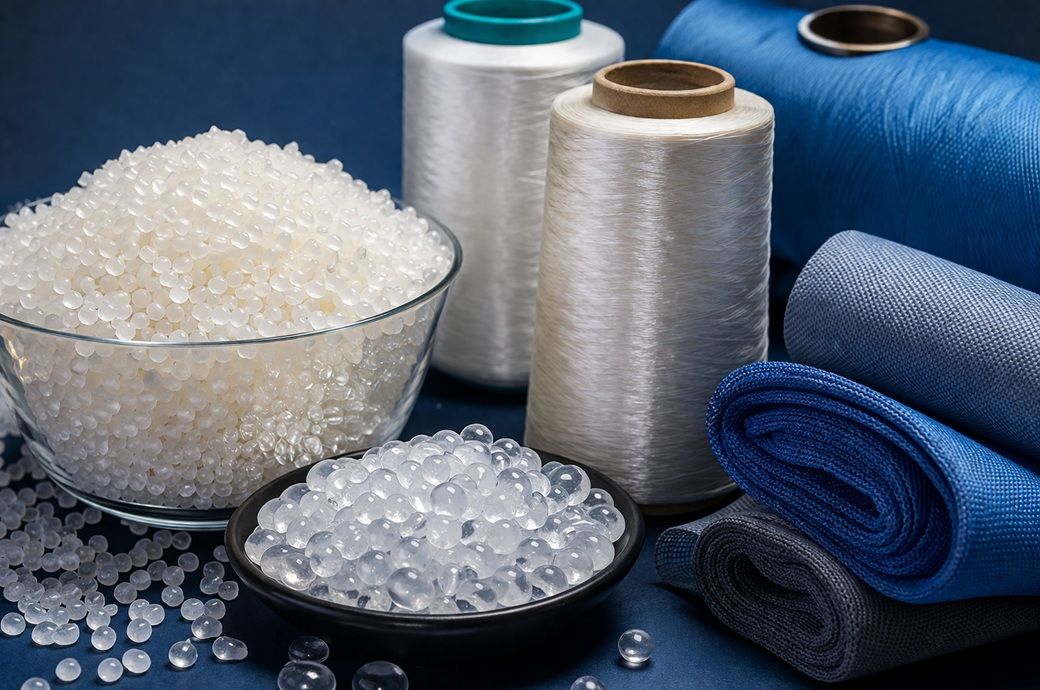
Caprolactam (CPL) prices initially held near $*.**–*.**/kg with minimal movement, while nylon chips saw uptick to ~$*.***/kg (+*.* per cent WoW) driven by short-term restocking. Nylon filament yarn (DTY **D/**F) prices remained stable at ~$*.**–*.**/kg, supported by existing inventory and steady downstream textile operations.
By the second week (April * to April **), benzene stabilised, but caprolactam began to weaken to ~$*.**–*.**/kg (−*.* per cent WoW), signalling the start of broader chain pressure. Nylon chips responded with a mild correction to ~$*.***/kg (−* per cent WoW), while filament yarn prices continued to hold steady due to inventory buffers and ongoing execution of prior textile orders. In the third week (Apr **–**), caprolactam stable to ~$*.*/kg, and chips followed to ~$*.***/kg (Stable WoW).

Total registered FDI, including newly registered and adjusted capital, along with foreign investors’ contributions and share purchases, reached $18.24 billion as of April 27, up 32 per cent year on year (YoY), according to the Ministry of Finance’s National Statistics Office (NSO).
Vietnam attracted $18.24 billion in FDI in January–April 2026, up 32 per cent, driven by manufacturing and processing.
Realised FDI hit a five-year high, signalling continued capacity expansion.
Trade surged to $344.17 billion, supported by strong US demand and rising imports from Asia, highlighting deeper global supply chain integration and export momentum.
A total of 1,249 new projects were licensed with combined registered capital of $12.15 billion, reflecting a 3.7 per cent annual increase in project numbers and a 2.2-fold rise in value. Manufacturing and processing dominated, attracting $8.12 billion, or 66.8 per cent of total newly registered capital.
Realised FDI in the January–April period was estimated at $7.40 billion, up 9.8 per cent YoY and marking the highest level for the period in the past five years. Of this, the manufacturing and processing sector disbursed $6.12 billion, accounting for 82.7 per cent. Meanwhile, 316 existing projects registered additional capital of $3.13 billion, representing a sharp 51 per cent decline compared to the same period last year. Combining newly registered and adjusted capital, total FDI into manufacturing and processing reached $10.49 billion, or 68.6 per cent of the total.
Foreign investors carried out 976 capital contribution and share purchase transactions worth $2.96 billion, up 61.9 per cent YoY. Among these, 325 deals increased enterprises’ charter capital by $445.13 million, while 651 share acquisitions without capital increases totalled $2.51 billion. Wholesale and retail trade led these investments, capturing $1.89 billion, or 63.9 per cent.
Among 53 countries and territories with newly licensed projects, Singapore was the largest investor with $6.05 billion, accounting for 49.8 per cent of the total. It was followed by the Republic of Korea with $4.08 billion (33.6 per cent), China with $524.1 million (4.3 per cent), Japan with $462 million (3.8 per cent), Hong Kong (China) with $329.2 million (2.7 per cent), and the Netherlands with $318.5 million (2.6 per cent).
On the trade front, Vietnam’s total trade with the rest of the world was estimated at $344.17 billion in the first four months of 2026, a significant increase from $277.21 billion in the same period last year, the NSO said. In April alone, trade volume reached an estimated $94.32 billion, rising 8 per cent from March and 26.7 per cent YoY.
The United States remained the largest importer of Vietnamese goods, with imports valued at $53.9 billion, while China continued as the top supplier with $69 billion. Imports from traditional markets also surged, with South Korea and ASEAN recording growth rates of 57.8 per cent and 44.3 per cent, respectively.
Fibre2Fashion News Desk (MS)


‘I Actually Thought He Was Going to Hit Me,’ OpenAI’s Greg Brockman Says of Elon Musk

WWE star Chelsea Green reveals she underwent ‘heart procedure’ to address SVT

EV maker Lucid suspends production guidance amid incoming CEO’s business review

-

 Tech1 week ago
A Brain Implant for Depression Is About to Be Tested in Humans
-

 Tech1 week ago
Almost 90% of women leave tech industry within 10 years | Computer Weekly
-

 Sports1 week ago
Pro wrestling star Steph De Lander reveals how colleague’s advice helped lead her to title triumph at ACW
-
 Business1 week ago
‘I had £20,000 stolen and had to fight a 13-month fraud reporting rule to get it back’
-

 Entertainment1 week ago
Norway joins Type 26 Frigate Programme to boost NATO naval power
-

 Tech1 week ago
Are tech leaders risking a cyber resourcing crisis? | Computer Weekly
-
 Business6 days ago
PSX plunges over 4,800 points | The Express Tribune
-

 Entertainment1 week ago
Melania Trump says ABC should ‘take a stand’ on late-night host Kimmel