

Fashion
Unode50 advances in U.S. market with entry into Bloomingdale’s

Published
September 10, 2025
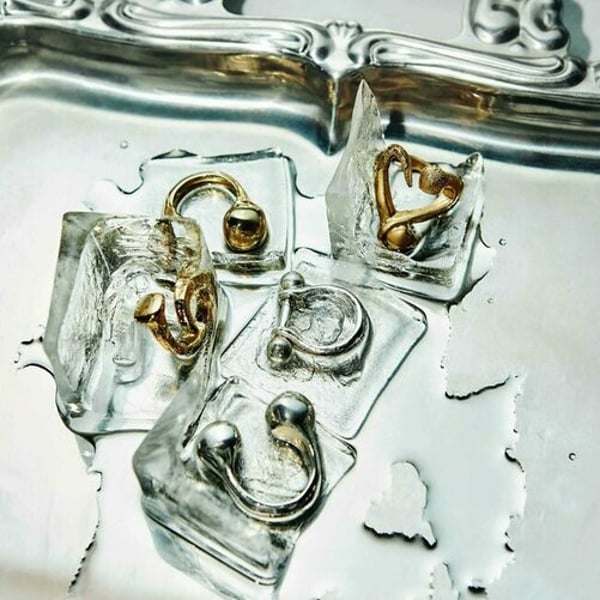
Unode50 is moving forward with its plan to expand in the U.S. market by entering Bloomingdale’s, a high-end department store chain with more than thirty stores in the country.
“Being present in Bloomingdale’s marketplace is for us not only an opportunity for growth, but also a natural alignment with a platform that shares our values of quality, design, and exclusivity,” said Javier González de Vega, head of marketplaces at Unode50.
“This step is part of a broader strategy that seeks to position Unode50 as a global benchmark within contemporary jewelry, reinforcing our visibility in selective digital channels,” added the executive.
In parallel to its entry into Bloomingdale’s digital platform, the Spanish jewelry brand is also joining ShopSimon, Simon Property Group‘s digital marketplace specializing in premium brands and so-called accessible luxury. On this portal, Unode50 will market items from previous seasons, as reported.
The brand adds these two steps forward in its distribution in the United States to another key move: last April, it entered the Nordstrom marketplace, a key retail chain in the country. All these moves are part of Unode50’s strategy to grow in the U.S., its second largest market.
The Spanish jewelry firm, in addition to U.S. players, operates in the marketplaces of El Corte Inglés, Palacio de Hierro, Macy’s, Amazon, and TikTok Shop. On the physical level, it operates more than 90 of its own stores, is present in 70 countries, and has an extensive network of multi-brand points of sale.
Founded in the late 1990s and headquartered in Madrid, Unode50 presented its new brand identity at the beginning of 2024, with the aim of reaching out to a new generation of consumers.
This article is an automatic translation.
Click here to read the original article.
Copyright © 2025 FashionNetwork.com All rights reserved.











The company’s consolidated revenues stood at $921 million for the quarter ended March 31, 2026, down 1.7 per cent year on year (YoY), or 4 per cent on a constant currency basis. DTC revenues rose 12.1 per cent, while wholesale revenues declined 9.9 per cent. Gross margin fell to 56.8 per cent from 57.8 per cent, while operating income declined 9.9 per cent to $201 million. Diluted earnings per share (EPS) slipped to $2.71 from $2.83.
Crocs has reported better-than-expected Q1 2026 results, with revenue at $921 million, down 1.7 per cent, driven by 12.1 per cent DTC growth. Gross margin fell to 56.8 per cent, while EPS dipped to $2.71.
The Crocs brand grew modestly, but HEYDUDE declined.
CEO Andrew Rees highlighted strong consumer demand and raised FY26 guidance, projecting EPS of $13.20-13.75.
“We are pleased to have started the year with better-than-expected results, fuelled by broad consumer relevance for both of our brands and disciplined execution,” said Andrew Rees, chief executive officer (CEO) at Crocs. “We delivered enterprise revenue of over $900 million, supported by strong consumer response to product newness and consistent brand storytelling.”
The Crocs brand posted modest growth, with revenues up 0.8 per cent to $767 million, supported by a 12.9 per cent rise in DTC sales. International markets remained resilient, growing 7.2 per cent. However, North America revenues declined 6.1 per cent, Crocs said in a press release.
HEYDUDE revenues fell 12.3 per cent to $154 million, weighed down by a sharp 24.7 per cent drop in wholesale sales, although DTC revenues rose 8.6 per cent.
The company ended the quarter with $131 million in cash and reduced total borrowings to $1.34 billion.
Crocs lifts FY26 outlook; sees modest margin expansion
For full-year 2026, Crocs now expects revenues to range from down 1 per cent to up 1 per cent, with adjusted diluted earnings per share projected between $13.2 and $13.75. The company also anticipates modest expansion in adjusted operating margin.
For the second quarter, revenues are expected to decline slightly, with Crocs brand growth of 1–3 per cent and HEYDUDE projected to fall 12-14 per cent. Adjusted operating margin is forecast at around 24.7 per cent.
“Based on our first quarter performance, we are raising our full-year outlook on both the top- and bottom-line,” added Rees. “We remain confident in the long-term health of the business as we drive diversified growth across brands, channels and markets.”
Fibre2Fashion News Desk (SG)

The rise was largely driven by a rebound in energy costs. Prices of non-regulated energy products surged from a 2 per cent decline to a 9.9 per cent increase, while regulated energy prices rose 5.7 per cent after previously contracting, Istat said in a press release.
Italy’s inflation rose to 2.8 per cent YoY in April 2026 from 1.7 per cent in March, driven by a sharp rebound in energy prices, Istat said.
Monthly inflation stood at 1.2 per cent.
Goods inflation strengthened, while services inflation eased.
Transport costs increased notably.
The harmonised index (HICP) rose 2.9 per cent YoY, reflecting higher prices and seasonal factors.
In contrast, services inflation showed signs of moderation. Prices for recreation-related services eased to 2.6 per cent YoY, while transport services slowed sharply to 0.5 per cent. Overall services inflation decelerated to 2.4 per cent from 2.8 per cent in March.
Goods inflation, however, strengthened significantly, rising 3.2 per cent YoY compared with 0.8 per cent in the previous month. This narrowed the inflation gap between goods and services to -0.8 percentage points, down from +2 percentage points in March.
The monthly increase in the index was primarily led by higher prices for non-regulated energy (+5.7 per cent), transport services (+1.6 per cent), and recreation-related services (+1.4 per cent).
Among major consumption categories, water, electricity and fuels recorded a sharp 5.3 per cent annual increase, while transport prices rose 3.8 per cent.
Italy’s harmonised index of consumer prices (HICP), which allows comparison across the euro area, rose 2.9 per cent YoY in April, up from 1.6 per cent in March. On a monthly basis, HICP increased 1.7 per cent, partly reflecting the end of seasonal discounts in clothing and footwear.
Fibre2Fashion News Desk (SG)

The apparel climate story has moved out of the ESG report and into the cost sheet. In ****–****, climate risk is showing up as cotton quality loss, import dependence, energy volatility, cooling capex, carbon-price exposure and mandatory textile-waste fees. For brands and suppliers, the question is no longer whether climate action is ‘responsible’. It is whether delay will make product margins uncompetitive.
The latest data makes the shift visible. Textile Exchange says global fibre production reached *** million tonnes in **** and could hit *** million tonnes by **** if business continues as usual. Polyester alone now makes up ** per cent of global fibre output, with ** per cent still fossil-based. That scale gives apparel a low-cost material engine, but it also ties the sector to fossil energy, petrochemical volatility and future carbon accounting.

Oil prices fall as Trump pauses Project Freedom to seek final peace deal with Iran

US’ Crocs’ Q1 strong on DTC growth; margins, EPS decline

Italy’s inflation rises to 2.8% in April on energy spike

-

 Tech1 week ago
A Brain Implant for Depression Is About to Be Tested in Humans
-

 Tech1 week ago
Almost 90% of women leave tech industry within 10 years | Computer Weekly
-

 Sports1 week ago
Pro wrestling star Steph De Lander reveals how colleague’s advice helped lead her to title triumph at ACW
-
 Business1 week ago
‘I had £20,000 stolen and had to fight a 13-month fraud reporting rule to get it back’
-

 Entertainment1 week ago
Norway joins Type 26 Frigate Programme to boost NATO naval power
-

 Tech1 week ago
Are tech leaders risking a cyber resourcing crisis? | Computer Weekly
-

 Entertainment1 week ago
Melania Trump says ABC should ‘take a stand’ on late-night host Kimmel
-
 Business6 days ago
PSX plunges over 4,800 points | The Express Tribune