

Sports
The strangely specific transfer obsessions of elite clubs, and what the summer window taught us about them

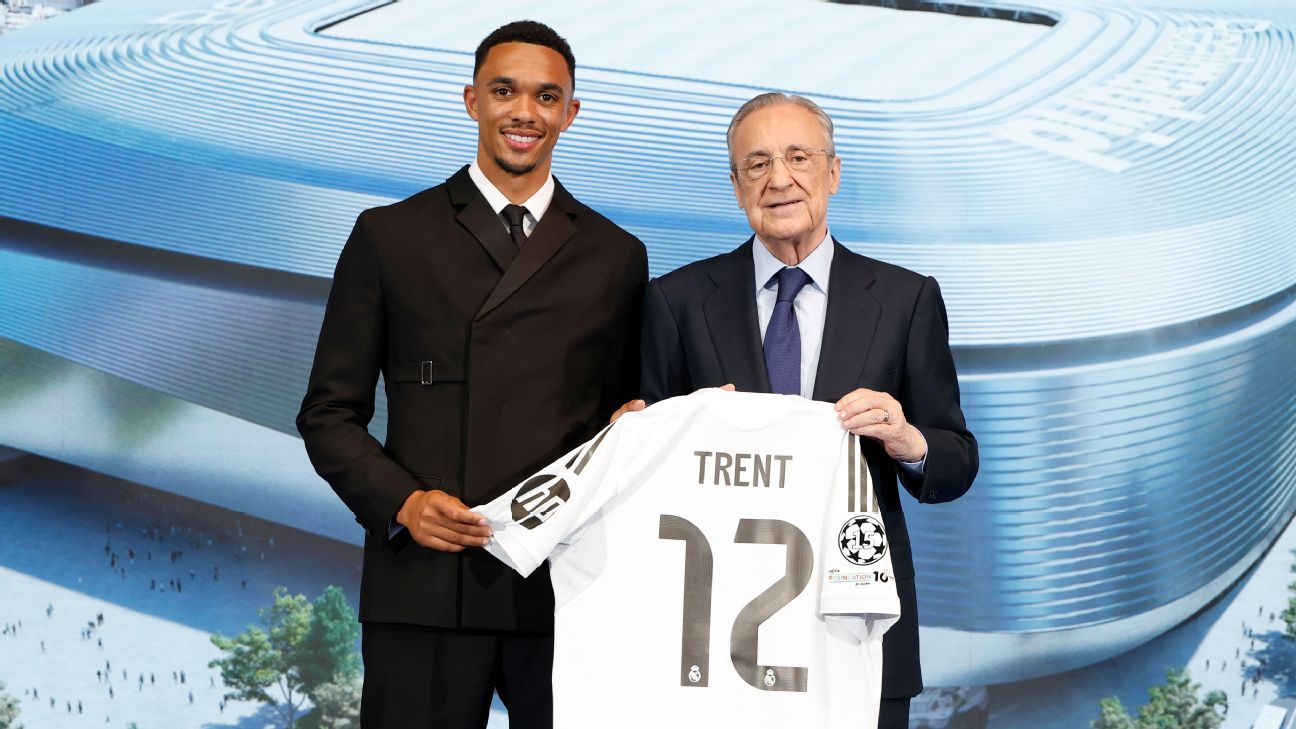
Everyone has a “type.” This concept of preference extends far and wide, to all walks of life, and can ring especially true in soccer, where managers and clubs cannot hide what they truly desire.
Sometimes, the wish is simple: the best players in the world, whatever the cost. But at times it’s weirdly specific, such as Real Madrid targeting free transfers, or Arsenal manager Mikel Arteta’s taste in defenders.
This transfer window once again laid bare the infatuations — and at times, borderline obsessions — that have developed within the sport. So, with tongue firmly lodged in cheek, let’s take a look at what this summer’s moves revealed about elite clubs’ obsessions.
Mikel Arteta and the hybrid center back/fullback
In Bukayo Saka, Martin Ødegaard & Co., Arteta has some of the world’s most luxurious attacking talents to work with. He also has a brand new striker in Viktor Gyökeres to unleash and an incredible midfield pool to call upon. But you know what really excites him? Players who can play both center back and fullback.
– Tighe: How players use data to show worth in contract negotiations
– O’Hanlon: Top 50 most expensive summer transfers, ranked by true cost
– Marcotti: Making sense of Premier League clubs’ record spending
The Spaniard has stuffed his squad full of them over the years. It started with Ben White and continued with Jakub Kiwior, Jurriën Timber and Riccardo Calafiori. Then late in this summer’s window, Arsenal added Piero Hincapié from Bayer Leverkusen.
Arteta probably awards bonus points to a deal if the player can cover both fullback positions (like Timber), or if they’re left-footed (like Calafiori and Hincapié) as this makes them even more versatile or coveted. Even Arteta’s more “regular” fullbacks barely look traditional: Oleksandr Zinchenko and Myles Lewis-Skelly love to invert into midfield and arguably look more at home in central positions.
Chelsea and signing teenagers whenever they can
In 2022, their first summer transfer window in charge of Chelsea, Todd Boehly and Clearlake Capital splurged on a series of experienced talents. Pierre-Emerick Aubameyang (33), Kalidou Koulibaly (31) and Raheem Sterling (27) were the most notable names in a group that, quite frankly, failed.
Was it a scarring experience, or was the impending pivot simply always in the cards? Perhaps it was a bit of both, as the ownership group suddenly focused on signing exciting prospects, many of whom were still teenagers, to long-term deals.
From January 2023 to now, they have signed an astonishing 22 teenagers — a figure that includes the pending transfers of Geovany Quenda and Denner, due in 2026. On top of that, a lot of 20- and 21-year-olds have arrived, flooding the squad with high-potential players.
1:09
Is Chelsea a good fit for Garnacho?
Gab Marcotti and Julien Laurens discuss Alejandro Garnacho’s move from Man United to Chelsea.
There have been times when Chelsea have overindexed so heavily on prospects and ignored gaping holes in their squad makeup that, if plugged, could have allowed them to compete more closely with Liverpool and Arsenal in the past couple of seasons. The prime example of that is at goalkeeper, which has long been brushed aside.
An interesting quirk of the Blues’ relentless acquisition of top prospects is how many players they signed from Man City’s academy. There could easily be a game this season where you’d see five players developed by City — Roméo Lavia, Cole Palmer, Tosin Adarabioyo, Jamie Gittens, Liam Delap — play for Chelsea’s first team. That quintet cost a combined total of at least £171 million. Perhaps that’s the real obsession here.
Manchester United and buying specific players for specific managers
Manchester United operate in total contrast to Chelsea in the transfer market.
Chelsea’s scattershot approach yields so many players that any manager they employ would find it impossible not to craft a workable team out of the talent available. United sign incredibly specific players who suit their chosen manager. There’s nothing wrong with that in principle — why wouldn’t you sign players your manager can use effectively? — but the extent to which the Red Devils lean into this can be very damaging if things go awry, in part because they flit between managers whose styles differ so wildly.
A strong example of this disconnect is Cristiano Ronaldo, who was signed for Ole Gunnar Solskjaer’s counterattacking style in summer 2022, yet by November was being coached by gegenpressing magnate Ralf Rangnick. It’s a ridiculous situation to find yourself in.
Erik ten Hag was appointed in 2022 and by the time he was sacked, in 2024, the club had furnished him with six former Ajax players (Lisandro Martínez, Antony, Christian Eriksen, André Onana, Matthijs de Ligt, Noussair Mazraoui), perhaps erroneously thinking he would recreate Dutch total football at Old Trafford.
Current manager Rúben Amorim has jettisoned Antony and Onana, while Eriksen has departed. He also willingly waved goodbye to Jadon Sancho, Marcus Rashford and Alejandro Garnacho this summer, effectively uprooting the winger department to sign Matheus Cunha and Bryan Mbeumo, who suit the “wide No. 10” roles in his 3-4-2-1 system.
What happens if Amorim departs the club and the next manager asks where all the wingers are? It sounds too silly a situation to happen, except it essentially has already in other guises.
Real Madrid and illustrious free transfers
After winning the UEFA Champions League an incredible 15th time in 2023-24, it appears Real Madrid began to think things had gotten too easy and decided to up the difficulty level.
They’ve seemingly chosen to spend as little on transfer fees as possible while still remaining a dominant force. In the past five years, they’ve signed four elite-level players on pre-contracts, coming close to adding a fifth. Antonio Rüdiger (Chelsea), David Alaba (Bayern Munich), Kylian Mbappé (Paris Saint-Germain) and Trent Alexander-Arnold (Liverpool) were all poached for free from close rivals at the top table of Europe. (OK, they did end up paying a fee for Alexander-Arnold, but only to register him early so he could feature at this summer’s FIFA Club World Cup.)
For much of the 2024-25 season, it looked as though they’d add Alphonso Davies from Bayern in this fashion too, but in the end, the Canadian international renewed with the German giants.
Los Blancos‘ prestige and pull means they are genuinely capable of convincing elite players to see out their contracts and patiently wait for a move to the Bernabéu. For a club long famous for its galácticos philosophy, it’s an intriguing and surprisingly responsible wrinkle.
Barcelona and signing players when they probably shouldn’t
The following two statements are unequivocally true:
1. Barcelona are over €1 billion in debt
2. Barcelona have one of — if not the — best and most prolific academies in the world
You would think that a combination of these points would result in an almost complete reduction in spending and a complete reliance on La Masia, which in the last five years alone has pumped out Alejandro Baldé, Pau Cubarsí, Nico González, Gavi, Fermín López and, of course, Lamine Yamal — and that’s not even the full list. But it hasn’t. Barça are a competitive animal, so rather than experience a withdrawn couple of seasons, they’ve pulled every possible lever (literally) to allow continuous spending, which has seen the Blaugrana sell off major future revenue streams and wage a constant war against LaLiga’s spending limits.
This summer’s signing of Joan García captured this internal strife. The opportunity to sign an incredible goalkeeper directly from crosstown rivals Espanyol was just too good to pass up, but in order to register him, they forced club captain Marc-André ter Stegen to sign an injury report that would allow them to take advantage of a long-term injury rule in LaLiga.
Last summer, they signed Dani Olmo for €55 million off the back of an impressive Euro 2024 campaign, despite not really needing a player in his position and the fact that they would struggle to register him — so much so that they had to go to court to keep him registered for the second half of the season.
To millions of onlookers, the solution at Barcelona seems relatively simple: Stop spending big, rely on the current crop and burgeoning academy, and let the reopening of the Camp Nou fill the coffers to repay those debts. But that’s just not how president Joan Laporta rolls.
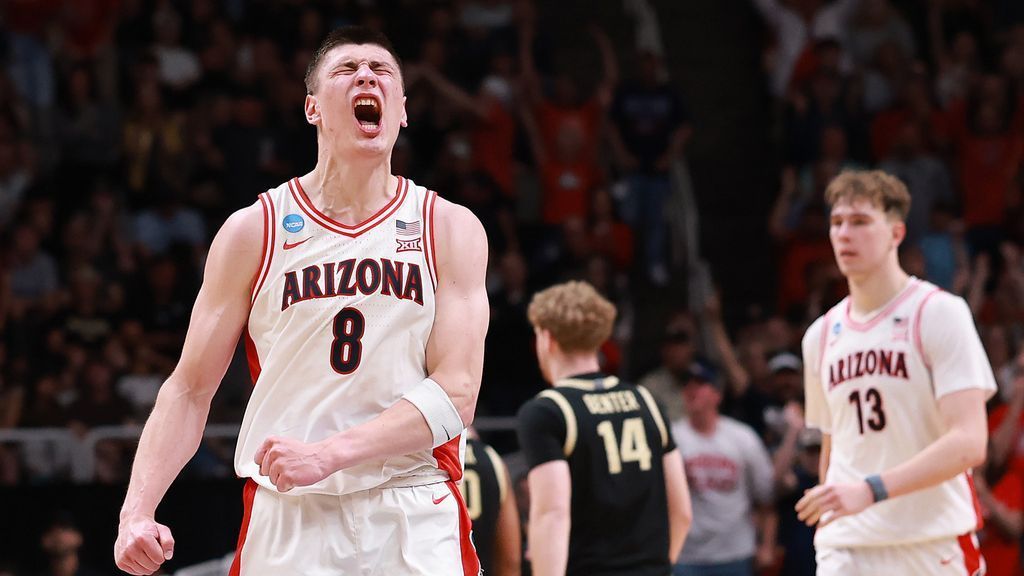
SAN JOSE, Calif. — For the first time since 2001, the Arizona Wildcats are headed to the Final Four.
The top-seeded Wildcats punched their ticket with a 79-64 win against No. 2 Purdue, setting the school record for wins in a season (36) in the process. The previous wins record had stood since 1988, when Arizona reached the first of its four Final Fours — including the national title in 1997 — under legendary coach Lute Olson.
Shortly after the game ended, Arizona coach Tommy Lloyd held a microphone and spoke to the jubilant, heavily pro-Arizona crowd at the SAP Center.
“I know this,” he said. “There’s a good-looking guy with white hair looking down on us right that happy.”
The reference to Olson, who died in 2020, brought even more cheers from Arizona fans.
“Lute’s given me a great life,” Lloyd said. “He and I shook hands only a few times, kind of in a handshake line or something at a game. … His legacy in Tucson is so powerful that he’s the guy, there’s others before him, but he’s the main catalyst to make our program the center of the community.”
But this year’s team, in Lloyd’s fifth season in Tucson, has a chance to surpass all its predecessors as the best in school history. The Wildcats will take a 13-game winning streak to Indianapolis, where they will play the winner of Sunday’s game between Michigan and Tennessee.
Lloyd’s impact at Arizona has been historic. The longtime Gonzaga assistant’s 148 wins over the past five seasons are an NCAA record for most wins by a coach in their first five seasons, eclipsing the record set by Brad Stevens at Butler. He guided the Wildcats to 33 wins in his first year and had three trips to the Sweet 16 in his first four seasons. But the Final Four had remained elusive — until Saturday.
Against a veteran Purdue team, Arizona was led by its talented freshmen. The Wildcats’ three freshmen starters — Brayden Burries (14), Ivan Kharchenkov (18) and Koa Peat (20) — combined for 52 points and were unphased by the biggest stage of their young careers. Senior guard Jaden Bradley added 14 points.
Arizona jumped out to a 19-12 lead at the 12:37 mark of the first half and looked like it might be ready to put the Boilermakers to bed early. But even after Purdue star Trey Kaufman-Renn picked up an early second foul, Purdue started to claw its way back.
One key change came when coach Matt Painter inserted sophomore big man Daniel Jacobsen into the game just as Arizona’s lead stretched to seven. The 7-foot-4 Jacobsen had played just four combined minutes in the previous two games and had mostly been out of the rotation this month, but his size was needed against Arizona, and his presence helped shift the tide. But it didn’t last.
Inside the locker room at halftime, Lloyd addressed the team before leaving them with a parting message.
“I said, ‘Guys, the coaching staff and I are going to leave right now. You guys got a few minutes to talk amongst yourselves and kind of figure this deal out and let’s go kick their ass in the second half,”‘ Lloyd said.
Arizona needed just over five minutes in the second half to reclaim the lead and slowly pulled away.
“I was literally a spectator just like you guys were in that second half,” Lloyd said. “That’s what it felt like.”
Purdue (30-9) falls short of its second Final Four in three seasons, and the loss spells the end of one of the great careers in college basketball history in Braden Smith, who broke Bobby Hurley’s career assist record earlier this season and finishes with 1,103. Smith led Purdue with 13 points but was just 4-of-15 from the field.
During Purdue’s last possession, with the game’s outcome having long been decided, Smith looked at Painter as if to ask whether to dribble it out or keep playing. Painter told him to play and what followed was a final assist to Fletcher Loyer, who added to his Purdue record with one final 3.
“Braden was [a great player] for us for four years,” Painter said. “Very, very consistent, very competitive, good guy.”
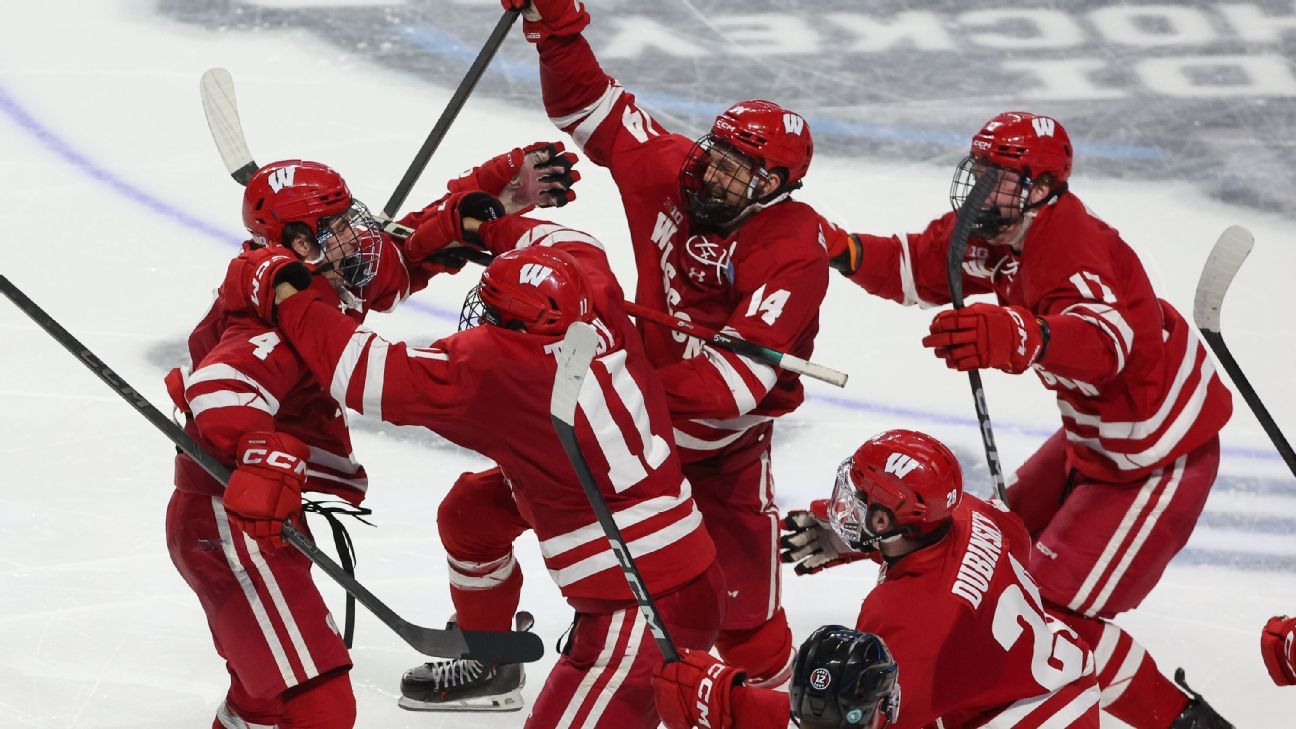
Half of the 2026 men’s Frozen Four is set, with North Dakota and Wisconsin earning trips to Las Vegas to play for the national championship.
The Fighting Hawks, who were the top seed in the Sioux Falls regional, advanced with a 5-0 rout of Quinnipiac, while the Badgers won the Worcester regional with a 4-3 overtime victory over top seed Michigan State.
This is North Dakota’s first Frozen Four appearance since 2016, when it won the national title. Wisconsin is in the Frozen Four for the first time since 2010.
The other two spots will be determined Sunday in the regional finals at Albany, New York, where Michigan plays Minnesota Duluth, and Loveland, Colorado, where Denver meets Western Michigan.
The six winners of their conference tournaments earned automatic berths, with the next top 10 teams in the NPI rankings filling out the NCAA field. The four regional winners will advance to the Frozen Four at Las Vegas on April 9 and 11.
Every game of the men’s hockey tournament will air on the ESPN networks and will stream live on the ESPN App. The Frozen Four semifinals will air on ESPN2 and the final airs on ESPN.
Below is the complete schedule for the tournament, video features and a look at each of the 16 teams in the field.
Jump to a section:
Video features | Teams at a glance

Schedule
All times Eastern.
Worcester (Massachusetts) Regional
Semifinals, Thursday
No. 1 Michigan State 2, No. 4 UConn 1
No. 3 Wisconsin 5, No. 2 Dartmouth 1
Final, Saturday
Wisconsin 4, Michigan State 3 (OT)
Sioux Falls (South Dakota) Regional
Semifinals, Thursday
No. 3 Quinnipiac 5, No. 2 Providence 2
No. 1 North Dakota 3, No. 4 Merrimack 0
Final, Saturday
North Dakota 5, Quinnipiac 0
Albany (New York) Regional
Semifinals, Friday
No. 1 Michigan 5, No. 4 Bentley 1
No. 2 Minnesota Duluth 3, No. 3 Penn State 1
Final, Sunday
Michigan vs. Minnesota Duluth, 5:30 p.m., ESPN
Loveland (Colorado) Regional
Semifinals, Friday
No. 1 Western Michigan 3, No. 4 Minnesota State 1
No. 2 Denver 5, No. 3 Cornell 0
Final, Sunday
Western Michigan vs. Denver, 3 p.m., ESPN2
FROZEN FOUR
at T-Mobile Arena, Las Vegas
National semifinals, April 9
Wisconsin vs. North Dakota, 5 or 8:30 p.m., ESPN2
Albany winner vs. Loveland winner, 5 or 8:30 p.m., ESPN2
National final, April 11
5:30 p.m., ESPN
Highlights
0:41
Wisconsin scores winner 24 seconds into OT to book ticket to Frozen Four
Ben Dexheimer buries the winning goal in overtime for Wisconsin to knock off Michigan State and reach the Frozen Four.
1:26
Penn St. Nittany Lions vs. Minn. Duluth Bulldogs Game Highlights
Penn St. Nittany Lions vs. Minn. Duluth Bulldogs Game Highlights
1:26
Cornell Big Red vs. Denver Pioneers Game Highlights
Cornell Big Red vs. Denver Pioneers Game Highlights
1:26
Minnesota St. Mavericks vs. Western Mich. Broncos Game Highlights
Minnesota St. Mavericks vs. Western Mich. Broncos Game Highlights
1:29
Bentley Falcons vs. Michigan Wolverines Game Highlights
Bentley Falcons vs. Michigan Wolverines Game Highlights
Top storylines
NIL and college hockey: Will big-money behemoths skew the sport’s balance of power? Adam Rittenberg
Michigan’s Michael Hage: How hockey helped the Wolverines star cope with tragedy. Emily Kaplan
8:04
How Michael Hage is honoring his father’s legacy for Michigan
Emily Kaplan shares how Michael Hage is carrying his late father’s legacy with him on the ice for Michigan.
5:33
Penn State’s Frozen Four run draws top prospect Gavin McKenna
After a historic run to the Frozen Four, the Penn State Nittany Lions inspired generational talent Gavin McKenna to leave Canadian juniors for Happy Valley.
6:44
Zacch Wisdom’s journey has been anything but easy
P.K. Subban shares the story of how a childhood of struggle turned into a way out through the game of hockey for Western Michigan’s Zacch Wisdom.
4:39
How Providence men’s hockey has built a winning culture
With just one senior on the roster, the Friars have leaned into their youthful core in one of the most compelling success stories of the season.
4:39
How Quinnipiac’s Ethan Wyttenbach has quickly made a name for himself
Jeremy Schaap tells Ethan Wyttenbach’s story after the Quinnipiac freshman led the nation in scoring with 58 points in 38 games.
4:35
How Rand Pecknold built Quinnipiac into a college hockey powerhouse
The Quinnipiac Bobcats had no rink or winning tradition until Rand Pecknold made them into one of most formidable programs in college hockey.
Teams at a glance
Records, statistics entering NCAA tournament
Worcester Regional
 No. 1 Michigan State
Record: 25-8-2
NPI ranking: 3
How the Spartans got here: At-large bid
Last 10 games: 5-3-2 (lost to Ohio State in Big Ten semifinal)
NCAA history: 30th appearance; seeking 12th Frozen Four and fourth national title (last won in 2007). … Third straight NCAA appearance after 11-year absence. … Lost to Cornell in first round as No. 1 seed in 2025.
Fast fact: Michigan State’s roster features four first-round NHL draft picks and 15 picks overall, both the most among tournament teams.
 No. 2 Dartmouth
Record: 23-7-4
NPI ranking: 6
How the Big Green got here: ECAC champion
Last 10 games: 6-1-3 (beat Princeton in ECAC final)
NCAA history: Fifth appearance; seeking fifth Frozen Four and first national title. … First NCAA appearance since 1980.
Fast fact: Sophomore Hayden Stavroff, an undrafted NHL free agent, leads the country with 29 goals. He has seven goals and five assists in his last eight games.
 No. 3 Wisconsin
Record: 21-12-2
NPI ranking: 12
How the Badgers got here: At-large bid
Last 10 games: 6-4 (lost to Ohio State in Big Ten quarterfinal)
NCAA history: 29th appearance; seeking 13th Frozen Four and seventh national title (last won in 2006). … In the NCAA tournament for the second time in three seasons under coach Mike Hastings.
Fast fact: Wisconsin’s season has been a bit of a roller coaster, with a 14-2-2 start and 6-2 finish but a 2-7 stretch in between. The Badgers lost 7-1 to Ohio State in the Big Ten tournament the last time they took the ice.
 No. 4 UConn
Record: 20-12-5
NPI ranking: 14
How the Huskies got here: At-large bid
Last 10 games: 3-5-2 (lost to Merrimack in Hockey East final)
NCAA history: Second appearance; seeking first Frozen Four and first national title. … Recorded program’s first NCAA victory last year, beating Quinnipiac in first round before falling to Penn State in regional final.
Fast fact: UConn rebounded from a 1-4-2 closing stretch of the regular season to advance to the Hockey East final, then made the NCAA field as the last at-large team.
Albany Regional
 No. 1 Michigan
Record: 29-7-1
NPI ranking: 1
How the Wolverines got here: Big Ten champion
Last 10 games: 6-3-1 (beat Ohio State in Big Ten final)
NCAA history: 42nd appearance; seeking 29th Frozen Four appearance and 10th national title (last won in 1998). … Missed tournament last year after making four straight appearances.
Fast fact: Michigan is the highest-scoring team in the country (4.57 goals per game) and has the best power play (31% conversion rate). The Wolverines converted two of three chances in the Big Ten final against Ohio State.
 No. 2 Minnesota Duluth
Record: 23-14-1
NPI ranking: 8
How the Bulldogs got here: At-large bid
Last 10 games: 6-3-1 (lost to Denver in NCHC final)
NCAA history: 16th appearance; seeking ninth Frozen Four and fourth national title (last won in 2019). … First NCAA appearance — and first winning season — since 2022. … Had made eight straight tournaments before that.
Fast fact: The Bulldogs’ special teams are just that: They are second nationally in power-play conversions (29.9%) and third in penalty killing (89.3%).
 No. 3 Penn State
Record: 21-13-2
NPI ranking: 9
How the Nittany Lions got here: At-large bid
Last 10 games: 3-5-2 (lost to Michigan in Big Ten semifinal)
NCAA history: Sixth appearance; seeking second Frozen Four and first national title. … Defeated 1-seed Maine and 2-seed UConn in 2025 regionals before losing to Boston University in national semifinal. … All six NCAA appearances have come in the past 10 years.
Fast fact: Highly touted freshman Gavin McKenna, expected to be the No. 1 pick in June’s NHL draft, ranks second in the country with 51 points (15 goals, 36 assists) in 34 games.
 No. 4 Bentley
Record: 23-11-5
NPI ranking: 23
How the Falcons got here: Atlantic Hockey champion
Last 10 games: 7-3 (beat St. Thomas in Atlantic final)
NCAA history: Second appearance; seeking first Frozen Four and first national title. … Lost 3-1 to top overall seed Boston College in last year’s tournament.
Fast fact: Bentley hasn’t lost in nine overtime games this season (4-0-5).
Sioux Falls Regional
 No. 1 North Dakota
Record: 27-9-1
NPI ranking: 2
How the Fighting Hawks got here: At-large bid
Last 10 games: 7-2-1 (lost to Minnesota Duluth in NCHC semifinals)
NCAA history: 36th appearance; seeking 23rd Frozen Four and ninth national title (last won in 2016). … Fifth NCAA appearance in the past seven years.
Fast fact: North Dakota has only two regulation losses since Nov. 28: 3-2 vs. Denver on Jan. 17 and 5-1 to Minnesota Duluth in the NCHC tournament.
 No. 2 Providence
Record: 23-10-2
NPI ranking: 7
How the Friars got here: At-large bid
Last 10 games: 7-3-0 (lost to Merrimack in Hockey East quarterfinals)
NCAA history: 17th appearance; seeking sixth Frozen Four and second national title (won in 2015). … Lost to Denver in first round as 2-seed in 2025 tournament. … Second straight NCAA appearance after five-year absence.
Fast fact: The Friars rolled to their first regular-season Hockey East title, going 14-2 to close their schedule before losing to No. 8 seed Merrimack 3-2 in overtime in the conference quarterfinals.
 No. 3 Quinnipiac
Record: 26-9-3
NPI ranking: 10
How the Bobcats got here: At-large bid
Last 10 games: 6-4 (lost to Clarkson in ECAC quarterfinals)
NCAA history: 12th appearance; seeking fourth Frozen Four and second national title (won in 2023). … Lost to UConn in first round of 2025 tournament. … Sixth straight NCAA appearance and 11th in 14 seasons.
Fast fact: Ethan Wyttenbach, a 19-year-old freshman, leads the NCAA with 58 points (24 goals, 34 assists) in 38 games. He was a fifth-round pick of the Calgary Flames in last year’s NHL draft.
 No. 4 Merrimack
Record: 21-15-2
NPI ranking: 19
How the Warriors got here: Hockey East champion
Last 10 games: 6-3-1 (beat UConn in Hockey East final)
NCAA history: Fourth appearance; seeking first Frozen Four appearance. … First NCAA bid since 2023 (first-round loss to Quinnipiac).
Fast fact: Sophomore goalie Max Lundgren leads the country with 1,109 saves (.920 percentage). He made a career-high 49 stops, 22 in the third period, in the Warriors’ win over UConn in the Hockey East championship game.
Loveland Regional
 No. 1 Western Michigan
Record: 26-10-1
NPI ranking: 4
How the Broncos got here: At-large bid
Last 10 games: 7-2-1 (lost to Denver in NCHC semifinals)
NCAA history: 11th appearance; seeking second Frozen Four and second national title (won last year). … Defeated Denver in national semifinals and Boston University in championship game in 2025.
Fast fact: Western Michigan faced one of the toughest schedules in the country, going 9-6 against ranked opponents.
 No. 2 Denver
Record: 25-11-3
NPI ranking: 5
How the Pioneers got here: NCHC champion
Last 10 games: 9-0-1 (beat Minnesota Duluth in NCHC final)
NCAA history: 34th appearance; seeking 20th Frozen Four and 11th national title (last won in 2024). … Defeated overall No. 1 seed Boston College in regional final last year before losing to Western Michigan in national semifinal. … Has reached Frozen Four three of the past four seasons.
Fast fact: No one is hotter than the Pioneers, who extended their unbeaten streak to 13 (12-0-1) in winning the NCHC championship with a 4-3 double-overtime victory over Minnesota Duluth.
 No. 3 Cornell
Record: 22-10-1
NPI ranking: 11
How the Big Red got here: At-large bid
Last 10 games: 5-4-1 (lost to Princeton in ECAC semifinals)
NCAA history: 26th appearance; seeking ninth Frozen Four and third national title (last won in 1970). … Beat 1-seed Michigan State in first round last year before losing to Boston University in regional final. … Has made eight of the past nine tournaments, with first-year coach Casey Jones picking up where longtime coach Mike Schafer left off.
Fast fact: Cornell has the stingiest defense in the country, allowing 1.94 goals per game.
 No. 4 Minnesota State
Record: 22-10-7
NPI ranking: 13
How the Mavericks got here: CCHA champion
Last 10 games: 6-2-2 (beat St. Thomas in CCHA final)
NCAA history: 12th appearance; seeking third Frozen Four and first national title. … Eighth tournament appearance in the last nine years. … Lost to eventual national champion Western Michigan in double overtime in first round of last year’s tourney.
Fast fact: The Mavericks are in the tournament for the second straight year under Luke Strand after making the field in nine of 11 seasons under Mike Hastings, who left after the 2020-21 season to coach Wisconsin.
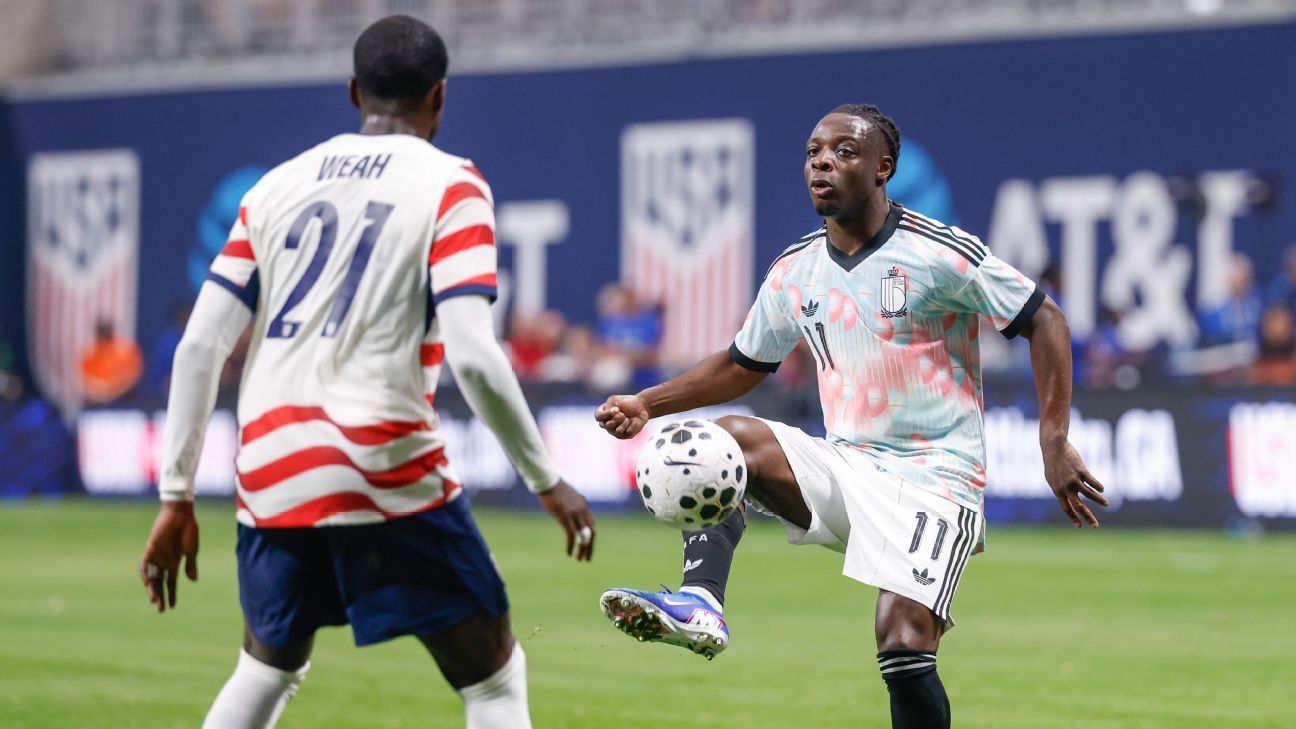
ATLANTA — The preparation of the United States men’s national team for the World Cup has entered its final phase. Not only will individual performances be scrutinized, but teamwide cohesion will be as well.
As such, Saturday’s match against Belgium provided a sobering assessment of where the USMNT currently stands, with the Americans enduring a heavy 5-2 defeat. Granted, it was one game, but the U.S. doesn’t look remotely ready for when the games start for real in June.
The U.S. looked competitive in the first half. Weston McKennie continued his fine run of form, scoring the Americans’ goal to put them up 1-0. But while the U.S. back line held up well into the second half, it had no answer for an electric performance from Belgian winger Jérémy Doku and saw its five-game unbeaten streak come to an abrupt end.
– USMNT player ratings: Weah poor as U.S. suffer heavy Belgium defeat
– O’Hanlon: Can USMNT’s depth at the 2026 World Cup make a difference?
– USMNT players speak up about what Mauricio Pochettino is like
It was a match where the deployment of the USMNT’s center backs was the main area of focus. FC Cincinnati‘s Miles Robinson and Crystal Palace‘s Chris Richards were out injured with groin and knee ailments, respectively, while FC Augsburg defender Noahkai Banks remains noncommittal to the U.S. squad. There are other reasons to be worried about the back line. Charlotte FC‘s Tim Ream hasn’t been at his best this season, while Mark McKenzie still has a few levels to climb in consistency with the USMNT. Those factors left manager Mauricio Pochettino to revert to the old standby formation of 4-3-3, with Ream and McKenzie anchoring the defense.
In the end, it wasn’t so much the center backs that were the issue. This was a teamwide humbling that will do little to inspire confidence in this U.S. side. In particular, the Americans’ defending on the flanks was abysmal. Belgium repeatedly found Doku isolated out wide either in transition or via a big switch of the point of attack and, even when he was double-teamed, he still found a way to torment the USMNT. Case in point was Amadou Onana‘s go-ahead goal in the 53rd minute. McKenzie didn’t do badly to contain Doku’s run, but the Belgian managed to suck nearly the entire U.S. defense toward him, leaving space for others. Doku played the ball to Charles De Ketelaere, who laid the ball off to Onana to fire home.
To be fair, Doku is an outstanding player. He wouldn’t be on the books of Manchester City if he weren’t. But this is a USMNT side that has set big goals for itself at this summer’s World Cup. If the U.S. is to make a deep run, it needs to beat a team of Belgium’s caliber, probably more than one. That Timothy Weah was the player usually victimized by Doku is somewhat surprising given he has played as an outside back plenty of times this season. It leaves one to wonder if anyone on the U.S. squad could have done better. Alex Freeman certainly couldn’t have done any worse.
That said, the U.S. also needed to do a better job of providing help out wide while also picking up late runners into the box and not resort to just watching the ball. This falls on the entire team, not just the back line, and is a fairly basic defense concept. That the U.S. seemed so incapable of executing in this area is probably the most concerning aspect of the performance. A return to three at the back — even with the depleted complement of center backs — is probably in order.
There are questions to be answered about the U.S. midfield as well. With Tyler Adams not even making the trip stateside due to a quad injury, an opportunity beckoned for Johnny Cardoso. After a rough first five months of the season with Atletico Madrid due to ailments of his own, Cardoso has ramped up his performance level at his club to the point that he appears indispensable. The problem with the USMNT is that Cardoso has never come close to replicating that level of form.
On Saturday, Cardoso showed flashes. He was 13 for 13 with his passes. His clever pick allowed McKenzie to break free on his goal and redirect Antonee Robinson‘s corner. He also had a vital tackle in the 17th minute that thwarted a Belgian counterattack. It was a surprise then to see him substituted at halftime with Cristian Roldan taking his place, although Pochettino explained after the match that the change was pre-planned due to discomfort the player felt earlier in the week.
For a team that didn’t possess the ball that well in the first half it was a strange decision, one that calls into question the level of the team’s depth. The second half witnessed a deluge of goals from Belgium with the U.S. continuing to show its inability to defend one-on-one situations. Goalkeeper Matt Turner, who was a surprise starter in place of Matt Freese, was continually left exposed. What will also give Pochettino pause is that he made liberal use of his bench, and things actually got worse. The only bright spot was when Ricardo Pepi deflected a pass out of the back that allowed Patrick Agyemang to score a consolation goal.
Is there reason to panic? Not yet. Four years ago, the U.S. fell 2-0 to Japan in its penultimate friendly prior to the 2022 World Cup that wasn’t nearly as close as the score indicated. In that instance, then-manager Gregg Berhalter got some data on who he could count on to deliver at the World Cup and who he couldn’t. Pochettino will need to do the same.


Arizona beats Purdue to make first Final Four since 2001

Pakistan hosts quadrilateral meeting to discuss Middle East tensions

Saudi Arabia pumps 7 million bpd via east-west pipeline amid Hormuz disruption – The Times of India

-
 Business1 week ago
Flipkart group CFO to leave co amid IPO plans – The Times of India
-

 Fashion1 week ago
China’s textile & apparel exports surge 17% to $50 bn in Jan-Feb 2026
-

 Sports1 week ago
Rating Adidas’ 2026 World Cup away shirts: Argentina, Spain, Mexico and more
-

 Sports1 week ago
American Conference Commissioner Tim Pernetti thanks Trump for Army-Navy game executive order
-
Tech1 week ago
The Corsair 4000D RS PC Case Keeps Your System Cool
-

 Tech1 week ago
Gamers Hate Nvidia’s DLSS 5. Developers Aren’t Crazy About It, Either
-
 Business5 days ago
Property Play: Home flippers see smallest profits since the Great Recession, real estate data firm says
-
 Business1 week ago
‘Marriage penalty’ in Washington state’s new millionaire tax stirs debate