

Fashion
The Denim Institute and Museum will open its doors in Los Angeles in June 2026

Published
September 11, 2025
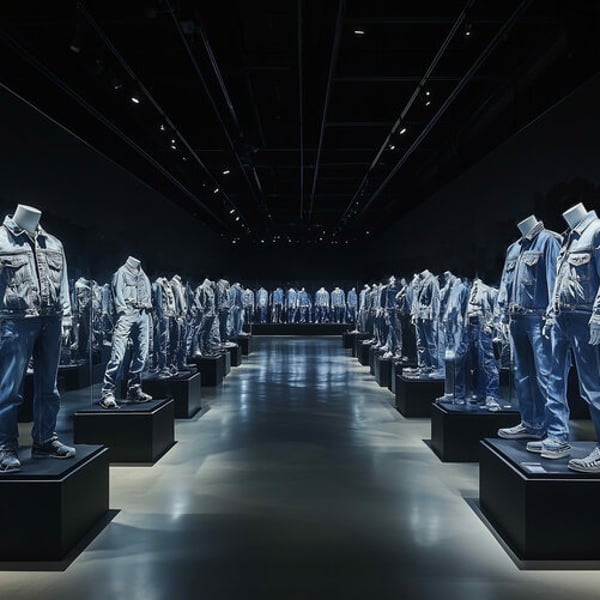
Founded by Jonny Saven and Loren Cronk, The Denim Institute and Museum will open its doors next June in Downtown Los Angeles’ Gerry Building. The two men have collaborated for decades with brands such as Levi’s, Ralph Lauren, L’Agence, Diesel, and Wrangler. Saven, known for his leadership in fashion and business strategy, serves as lead advisor, while Cronk — one of the industry’s most respected denim creatives — oversees design and operations. Together they’re building an 11,000-square-foot institution in LA’s Fashion District to protect denim’s heritage and shape its future.
FashionNetwork.com: When did the Denim Institute and Museum project first start?
Loren Cronk : I first approached Jonny Saven, co-founder of The Denim Institute and Museum and CEO of L’Agence about six or seven years ago with the idea of a short-course denim school. At the time, I owned a boutique in Brooklyn where we made custom jeans, handled repairs and alterations, and sold our ready-to-wear brand, Blksmth Denim. Our open sewing studio often drew curiosity from customers who asked if we offered classes in hemming, repair, or even jean-making. We didn’t but the idea stuck with me. When I later moved to LA to explore opening another store. I knew this city was the right place to bring the concept to life. It wasn’t until 2020, when Covid forced me to close my business, that I fully committed to developing it.
FNW : With the idea of offering a place that is both an institute and a museum?
L.C.: Over the past four years, Jonny and I have refined the idea into what it has become today: a denim hub with a short-course school and learning center focused on a sustainable future. And we realized that if we going to teach denim, we can’t do it without sharing its history. At the heart of it all is the denim Museum, wich completes The Denim Institute & Museum.
FNW: Had no one else in the denim industry thought of this project before you?
L.C: Not that I know of. Some brands have created small museums. For example, Lee once displayed its history in Kansas City, and Levi’s has its story featured in the lobby of Levi Plaza in San Francisco. But for us, the museum component is a central part of The Denim Institute and Museum. It’s not just about one brand; it’s about the history of denim as a whole. Of course, certain brands have had a bigger presence and impact, but ultimately this is about the entire denim community – the “legacy brands” and all those that followed. The story of denim is simply too rich not to have a place where everyone can come to experience it.
FNW: The Denim Institute and Museum will be located in the Gerry building in Downtown. How did you find and choose this location?
L.C.: One of our business advisors introduced us to the owners, we pitched them our idea and as some of their background was rooted in fashion, they welcomed the idea.

FNW: Was the location in Downtown, where the retail sector is struggling, a natural and obvious choice?
L.C.: We felt it was important to place this project in the heart of the Fashion District in Downtown. It’s a beautiful part of the city that needs more business and investment, and we’re excited to bring a project that not only shares denim’s history but also helps revitalize the area. We hope the city will support not only initiatives like ours, but also broader growth and development that can strengthen the entire community.
FNW: How was this project financed?
L.C.: As a non-profit, we’re currently in our fundraising phase. While the economic climate can make this a challenging moment, the response we’ve received has been overwhelmingly encouraging. Nearly everyone we’ve approached has wanted to be involved in some way, whether through support, collaboration, or simply helping to spread the word. The vision for Denim Institute and Museum has proven to be an easy one to share – people immediately understand its value and want to see it succeed – and that positivity has given us great momentum as we move forward.
FNW: What values and missions did you want to incorporate into it?
L.C.: The Denim Institute and Museum is dedicated to preservation, education, and innovation. As a world-class museum and educational hub, it documents and celebrates denim’s rich history and cultural significance. Through its immersive exhibits and short-course denim school, it empowers students, scholars, industry professionals, and enthusiasts to explore denim’s roots, and shape its future.
FNW: In the museum section, you will present denim master pieces under the banner of ‘Legacy Brands’. What criteria were used to select those brands?
L.C: We have identified 25 global brands that will make up our Legacy Brand Hall, the first place visitors will experience. This hall will present a chronological timeline beginning with Levi’s, moving through the pivotal brands that followed, and carrying the story into the late 1980s. Each legacy brand will have a dedicated exhibit, giving them a platform to share their history and impact in depth. Beyond the Legacy Brand Hall, visitors will discover hundreds of additional brands – from the explosion of premium denim during the Y2K era to influential Japanese and European brands, designer labels, as well as rare and collectible names. The museum will also feature rotating seasonal exhibits, such as “Rock Stars in Denim” or “Women in Denim Workwear During WWII”, ensuring there is always something new and relevant to explore.

FNW: What types of events and exhibitions will the public be able to attend?
L.C.: We’re building an ambitious calendar of events designed to engage the industry and the public. Highlights include a Jean Makers Festival, where ten designers compete to create the most extraordinary pair of jeans, and Chainstitch Embroidery Art showcases celebrating denims as a canvas for creativity. We’ll host sustainability forums with leading companies sharing how the industry is working toward a more responsible future, as well as special gatherings like a Denim Gala and Denim Auctions. Interactive features will make the experience even more fun: an ’80s-themed-photo booth with outfits for guests to try on and share on social media, a denim recycling drop-off station sponsored by major mills and even a laser design studio where visitors can customize denim in real time. There are just a few of the engaging, innovative experiences we have planned to bring denim’s story to life.
FNW: Will young designers working with denim also be highlighted?
L.C.: We’ll most definitely feature young designers that are making an impact in the market. Along with makes, unique individuals who make custom one off pieces.
FNW: What type of scenography did you opt for?
L.C.: Overall, the mood will reflect classic museum aesthetics with modern touches. We’ll be paying close attention to the space and flow, using lighting and sound to shape the atmosphere. The overall mood and visitor experience are central to our vision and will receive significant focus throughout the design process.
FNW: The Denim Institute and Museum will also include the Los Angeles School of Denim. What will be taught there?
L.C.: We are focused on short, workshop-style courses designed to give students both knowledge and hands-on experience. Examples include “Day Denim Deep Dive”, an intensive overview covering the entire journey of denim, “Week Beginner’s Jean-Making Course”, “Week Expert Jean-Making Course”, “Day Apparel Business Course” and more. These short courses are designed to be immersive, practical, and accessible, giving participants a meaningful entry point into the world of denim.
Copyright © 2025 FashionNetwork.com All rights reserved.






The pivot is urgent because the old model is under pressure. April **** looked strong: Ready-Made Garment (RMG) exports rose **.** per cent year on year to $*.** billion. But the ten-month picture is weaker. From July-April FY****–**, apparel exports stood at $**.** billion, down *.** per cent. Knitwear fell *.** per cent to $**.** billion; woven fell *.** per cent to $**.** billion. The rebound is real, but so is the drag underneath.
AWARE is the sharpest EU-facing signal: blockchain-backed product data for Digital Product Passport (DPP) readiness. Open Supply Hub adds the factory-identity layer, pushing production information into an open platform. GIZ brings the longer reform spine, from May **** to February ****, covering energy efficiency, circularity, chemical management, renewable-energy skills and textile-waste transparency.
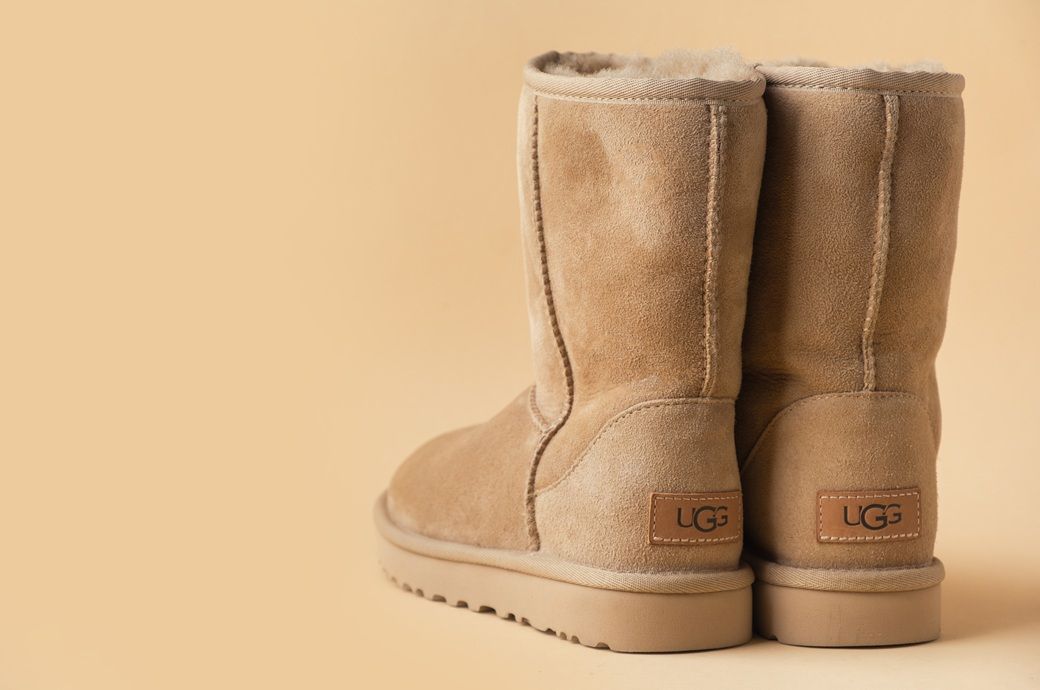
Kenneth Straka, Senior Product Development Manager at Deckers Outdoor Corporation, said that Deckers places strong emphasis on sustainability, noting that founder John Luke often reminded the team that the French word for sustainability is durability. This idea aligned with discussions at the Global Fashion Summit, where the theme centred on “Building Resilient Futures” in the sustainable and circular economy.
Durability has helped UGG become one of the most sought-after boot brands and a key sales driver for Deckers, alongside its sportswear brand Hoka. “One of the things we think about in terms of circularity is making products that last a long time and remain with consumers throughout their lives. We want products that consumers can wear for ** or ** years,” Straka said in an interview with Fibre*Fashion on the sidelines of the Global Fashion Summit in Copenhagen.
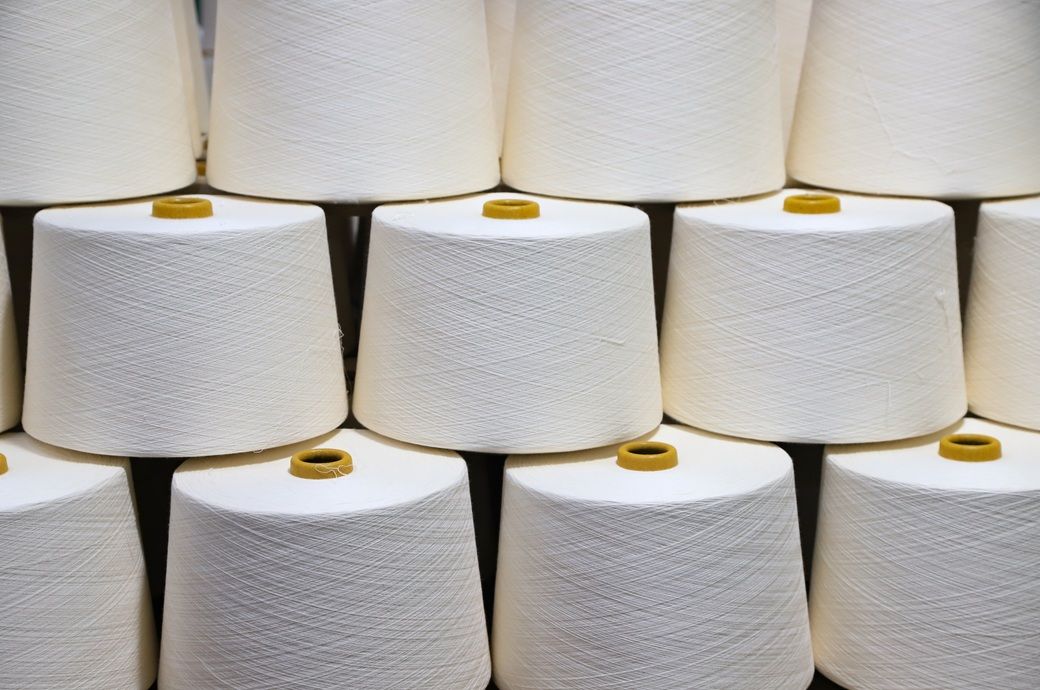
In the Tiruppur market, cotton yarn prices increased by ****;*–* per kg in this week despite sluggish local demand. Prices were quoted higher because of limited supply from spinning mills. A trader from the Tiruppur market told Fibre*Fashion, “Domestic demand remained limited, but spinning mills are not relying solely on the domestic market for cotton yarn sales. They are focusing more on exports, where demand and prices remain attractive. Mills have raised yarn prices following higher ICE cotton prices and the CCI’s increase in auction base prices, although ICE cotton has witnessed a sharp decline over the past two days.”
In Tiruppur, knitting cotton yarn prices were noted as: ** count combed cotton yarn at ****;***–*** (~$*.**–*.**) per kg (excluding GST), ** count combed cotton yarn at ****;***–*** (~$*.**–*.**) per kg, ** count combed cotton yarn at ****;***–*** (~$*.**–*.**) per kg, ** count carded cotton yarn at ****;***–*** (~$*.**–*.**) per kg, ** count carded cotton yarn at ****;***–*** (~$*.**–*.**) per kg, and ** count carded cotton yarn at ****;***–*** (~$*.**–*.**) per kg.


The border as lifeline

Bangladesh apparel reset: Compliance edge or energy trap?

Military jets’ crew members safely eject after Idaho air-show collision

-

 Entertainment5 days ago
Conan O’Brien hat tricks as Oscar host
-
 Tech1 week ago
Could Contact-Tracing Apps Help With the Hantavirus? Not Really
-

 Tech1 week ago
I Tried the Best Captioning Smart Glasses, and Only One Leads the Pack
-
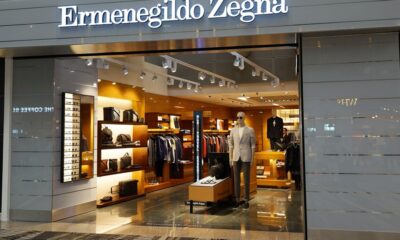
 Fashion5 days ago
Italy’s Zegna Group’s Q1 growth boosted by strong organic performance
-

 Sports1 week ago
Bobby Cox, legendary Atlanta Braves manager who led 1995 World Series champions, dead at 84
-

 Entertainment1 week ago
Martin Short: Facing tragedy with joy
-

 Entertainment1 week ago
Tom Brady gets back at Kevin Hart during Netflix roast
-

 Entertainment1 week ago
Martha Stewart: How to make an omelet